Yuintal is a pilates grip socks manufacturer located in Shanghai, China, specializing in OEM, ODM, and private label production for studios, fitness brands, and distributors. The factory focuses on anti-slip socks designed for Pilates environments, where grip performance, durability, and comfort are essential. With scalable manufacturing capacity and stable supply workflows, Yuintal supports both small-batch custom development and large-volume production. The production system is export-oriented, ensuring consistent quality, flexible customization, and reliable delivery for international buyers sourcing pilates grip socks at factory level.
Designed specifically for pilates studios, reformer classes, and fitness centers, pilates grip socks require stable anti-slip performance, consistent sizing, and reliable bulk supply. For studio operators and brand buyers, choosing a specialized pilates grip socks manufacturer helps ensure safety during training, hygiene compliance, and long-term product consistency across repeated orders.
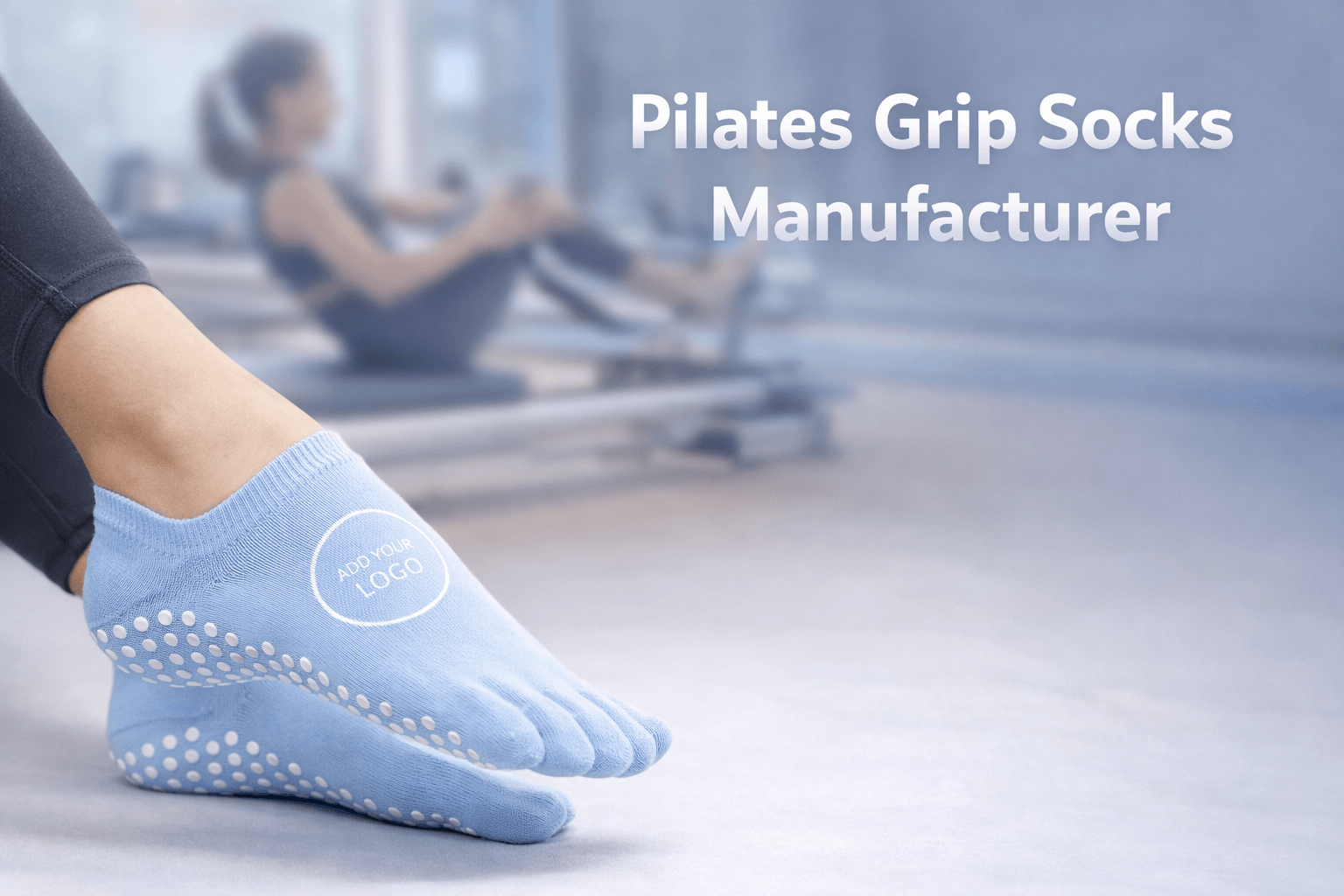 Pilates Grip Socks Manufacturer Overview
 Pilates Grip Socks Manufacturer Overview
As a specialized pilates socks manufacturer, Yuintal focuses on producing grip socks designed specifically for Pilates studios, fitness programs, and branded retail collections. Compared with general-purpose sock suppliers, a dedicated pilates grip socks factory must ensure stable grip performance, consistent sizing, and repeatable quality across bulk production.
Yuintal operates as a China-based manufacturing partner for global buyers, supporting OEM and private label projects. For companies evaluating broader sourcing options, the factory capability is aligned with a full grip socks manufacturer model, while maintaining a strong focus on Pilates-specific requirements such as studio safety and product consistency.
| Manufacturer | Yuintal |
|---|---|
| Location | Shanghai, China |
| Service Model | OEM, ODM, and private label pilates grip socks production |
| Main Applications | Pilates studios, yoga programs, fitness training, and branded retail |
| Main Buyers | Studios, brands, distributors, importers, and procurement teams |
| Export Support | Shipment coordination via Shenzhen and Guangzhou ports |
For buyers who also require brand-focused development, this manufacturing structure integrates naturally with custom grip socks programs, enabling consistent product identity across studio or retail environments.

Pilates Grip Socks for Studios and Reformer Training
Pilates grip socks are widely used in reformer training, mat pilates classes, and studio-based fitness programs where stability and hygiene are critical. Compared to general anti-slip socks, pilates-specific designs focus more on balanced grip distribution, breathable materials, and secure fit to support controlled movements.
For pilates studios, distributors, and private label brands, sourcing from a specialized pilates grip socks manufacturer ensures consistent performance across batches and reduces product complaints related to slipping, sizing, or durability.
- Suitable for reformer pilates and mat training
- Designed for studio hygiene and repeated use
- Optimized grip placement for controlled movement
- Stable quality for bulk and repeat orders
Manufacturing Capabilities for Pilates Grip Socks
A reliable pilates grip socks factory must combine knitting precision, grip application control, and scalable production processes. Yuintal supports the full production cycle from yarn selection to finished packaging, ensuring that each stage is aligned with bulk manufacturing requirements.
- Production of ankle, crew, and full-coverage pilates grip socks
- Silicone grip application with multiple pattern densities
- Material options including cotton blends, combed cotton, and performance yarns
- Elastic structure design for fit stability during Pilates movements
- Support for both small-batch sampling and large-volume orders
The factory structure is designed to support export-oriented supply, with multiple production stages coordinated to maintain consistency between sample development and bulk production. Compared with general anti-slip products, Pilates socks require more stable grip placement and wear resistance, which is controlled during manufacturing.
For related application scenarios such as yoga or trampoline use, similar production frameworks can be adapted, as seen in yoga grip socks manufacturer and trampoline-focused product lines, ensuring cross-application manufacturing compatibility.
Overall, the manufacturing capability is built to support long-term supply relationships, where repeat orders require consistent grip performance, sizing accuracy, and material stability.
For pilates-specific orders, we also optimize grip patterns and material combinations based on studio usage scenarios, ensuring compatibility with reformer equipment and high-frequency training environments.
Customization Options for Pilates Grip Socks
As a pilates grip socks manufacturer, Yuintal supports a wide range of customization options designed for studios, brands, and private label buyers. Customization is not limited to visual branding, but also includes grip functionality, material selection, and packaging alignment for different market needs.
- Logo customization: silicone logo, printed logo, or knitted-in branding
- Grip pattern design: full-sole, partial, or custom-designed grip layouts
- Color and yarn selection: Pantone-based colors or standard yarn options
- Packaging: OPP bags, paper cards, custom boxes, or eco packaging
- Labeling: private label tags, size labels, barcode support
- Size range: standard sizes or customized sizing for specific markets
For buyers focused on brand identity, customization can be aligned with structured custom Pilates grip socks programs, ensuring consistent visual and functional output across multiple production batches.
This flexibility allows both emerging studios and established fitness brands to develop products that match their positioning, whether for internal use, retail distribution, or promotional programs.

Production Process for Pilates Grip Socks
The production workflow of a pilates socks manufacturer must be structured, repeatable, and transparent. Yuintal follows a step-by-step process that allows buyers to understand how their project moves from concept to shipment.
- Requirement confirmation: discussion of design, quantity, and application
- Design alignment: logo placement, grip pattern, and color confirmation
- Material selection: yarn type, elasticity, and performance requirements
- Sample development: initial samples produced for approval
- Knitting process: sock structure manufactured based on confirmed specs
- Grip application: silicone printing applied to the sole
- Curing and finishing: grip bonding and shape stabilization
- Inspection: size, appearance, and grip consistency checks
- Packing: packaging according to buyer requirements
- Shipment preparation: export coordination and logistics arrangement
This structured workflow ensures that each stage is controlled and traceable, reducing production risks and maintaining consistency between samples and bulk orders.
For buyers managing multi-product sourcing, this process can also integrate with broader supply models such as grip socks wholesale, allowing flexible procurement strategies.
Quality Control in Pilates Grip Socks Manufacturing
Quality control is a critical factor when selecting a pilates grip socks factory, especially for products used in studio environments where safety and durability are essential.
- Material inspection: yarn and raw materials checked before production
- Grip adhesion control: monitoring silicone bonding and durability
- Size consistency: ensuring uniform fit across production batches
- Appearance inspection: checking color, logo placement, and finishing
- Batch sampling: random inspection during and after production
For repeat orders, maintaining consistency is particularly important. The factory workflow is structured to ensure that approved samples serve as the reference standard for future production runs.
Compared with general anti-slip socks, Pilates products require more precise grip positioning and consistent elasticity, which are controlled through manufacturing and inspection processes.

Certifications & Compliance Considerations
As a China-based pilates socks manufacturer, Yuintal supports compliance-oriented production for export markets. While certification requirements may vary depending on the destination country and buyer specifications, the factory is familiar with international quality expectations.
- Support for material safety and compliance documentation
- Ability to align production with buyer-required standards
- Experience with export-oriented quality control processes
- Coordination of documentation for customs and import requirements
Instead of focusing on generic certification claims, the manufacturing approach is based on practical compliance support, ensuring that products meet the expectations of different markets and procurement standards.
Factory Location & Supply Chain Advantages
Yuintal operates as a pilates grip socks manufacturer in Shanghai, China, benefiting from a mature textile and apparel supply chain ecosystem. This location provides efficient access to raw materials, skilled labor, and supporting industries required for consistent grip socks production.
The factory coordinates export shipments through major logistics hubs such as Shenzhen and Guangzhou ports, enabling flexible international shipping arrangements. This structure supports both regular bulk shipments and project-based deliveries for global buyers.
Compared with fragmented sourcing models, working with a centralized grip socks manufacturer in China allows better control over production timelines, material sourcing, and quality consistency across repeat orders.
In addition, the proximity to upstream suppliers reduces lead time for raw materials and supports faster sample development cycles, which is particularly important for OEM and private label projects.
Typical Clients and Use Cases
This pilates socks manufacturer supports a diverse range of B2B clients, each with different sourcing priorities and product requirements.
- Pilates studios: requiring branded grip socks for in-studio use and resale
- Fitness and sports brands: developing private label product lines
- Distributors: sourcing bulk anti-slip socks for regional markets
- Importers: managing supply chains for retail or online channels
- Chain operators: standardizing products across multiple locations
For buyers focused on brand differentiation, the factory supports integration with private label grip socks programs, enabling consistent branding across product collections.
Each client type has different priorities, such as pricing, customization level, or delivery speed, and the manufacturing process is structured to adapt to these variations while maintaining production stability.
For buyers focused on pilates applications, selecting a manufacturer with experience in studio supply and reformer training products can significantly improve product-market fit and reduce sourcing risks.
For general sourcing options, you can also explore our grip socks manufacturer solutions or check bulk purchasing options from our wholesale grip socks supplier page.
Frequently Asked Questions
What is the MOQ for pilates grip socks?
The MOQ depends on the level of customization. Standard designs usually require lower quantities, while fully customized products may require higher minimums to support production setup.
Can samples be made before bulk production?
Yes. Sample development is available and is typically recommended before confirming bulk orders to ensure that design, fit, and grip performance meet expectations.
What customization options are available?
Customization includes logo application, grip pattern design, color selection, packaging, labeling, and size adjustments, depending on project requirements.
How long does production take?
Production timelines vary based on order size and customization complexity, but the process is structured to ensure stable and predictable delivery schedules.
How is product quality controlled?
Quality control includes material inspection, grip adhesion checks, size consistency control, and batch inspections throughout the production process.
Can the factory support export and private label projects?
Yes. The factory is experienced in OEM and private label production and supports export-oriented supply for international buyers.
Conclusion
As a specialized pilates grip socks manufacturer, Yuintal provides a structured and reliable production solution for studios, brands, and distributors. The factory combines manufacturing capability, customization flexibility, and consistent quality control to support both small-scale development and large-volume supply.
With an export-oriented workflow, stable supply chain integration, and the ability to support OEM and private label projects, the manufacturing system is designed to meet the practical needs of B2B buyers sourcing pilates grip socks from China.
Whether for studio programs, branded retail collections, or distribution networks, the factory offers a scalable and consistent production approach aligned with long-term sourcing strategies.