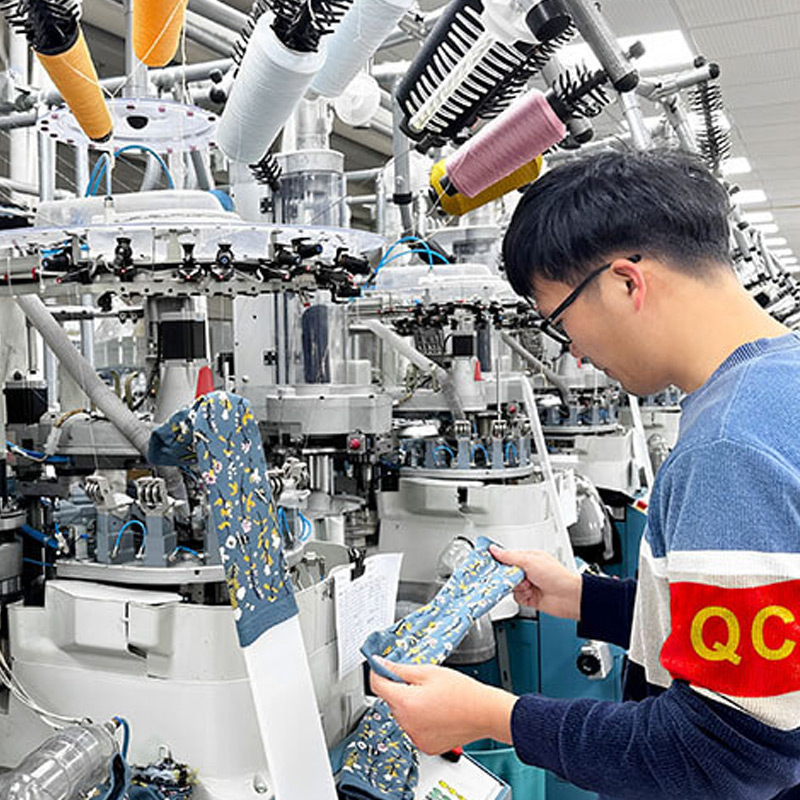
Custom Grip Socks
Yuintal develops custom grip socks for brands, studios, distributors, importers, and commercial buyers that need control over product details rather than standard ready-stock socks. Customization can include sock construction, yarn combinations, colors, sizing, sole grip patterns, grip coverage, logos, labels, and retail or commercial packaging.
Custom programs can start from 500 pairs per design, depending on the number of colors, sizes, grip patterns, logo methods, packaging variations, and other product requirements. Sample development is available before bulk production so the main design and manufacturing details can be confirmed before the order is released.
- Custom sock construction and height
- Custom yarn and material combinations
- Custom colors and size ranges
- Custom silicone sole grip patterns
- Custom logos and branding placement
- Custom labels and packaging
- Sample development before bulk production
- Standard custom MOQ from 500 pairs per design
What Can Be Customized on Grip Socks?
Custom grip socks can be developed at several different levels. Some projects require only new colors and a logo, while others involve changes to sock construction, materials, sizing, grip coverage, sole artwork, labels, and packaging.
The most useful way to approach customization is to separate the product into individual specification areas rather than treating “custom” as one single option.
| Customization Area | Examples | Why It Matters |
|---|---|---|
| Sock Construction | Height, cuff, cushioning, arch support, mesh, reinforcement | Controls fit, comfort, appearance, and intended use |
| Materials | Cotton-rich blends, polyester, nylon, elastic fibers | Affects feel, durability, elasticity, and product positioning |
| Colors | Sock body, cuff, heel, toe, grip, logo | Supports brand identity and product differentiation |
| Sizing | Adult, youth, multi-size structures | Determines fit and commercial SKU planning |
| Sole Grip | Dots, lines, geometric patterns, logos, zoned coverage | Affects traction layout and visual identity |
| Logo | Knitted, printed, sole grip, label, packaging | Connects the product to the buyer's brand |
| Packaging | Bands, hang tags, polybags, cards, boxes, barcodes | Prepares the product for retail, studio, or distribution channels |
Not every project needs every customization option. A practical custom program focuses first on the changes that create meaningful product or brand differentiation and keeps other elements standardized where that improves production efficiency.
Buyers that need the complete manufacturing project managed from specification through sample approval and bulk production can review our OEM grip socks manufacturing services.
Custom Sock Construction & Style
The sock body provides the foundation for every other customization decision. Before selecting grip artwork or packaging, buyers should determine the basic product structure required for the intended market or application.
Sock Height
Grip socks can be developed in different heights and silhouettes depending on the desired appearance and use case.
- Low-cut styles
- Ankle styles
- Crew styles
- Other application-specific constructions where suitable
Cuff & Fit Structure
Cuff height, elastic tension, overall stretch, and shape retention can affect how securely the sock remains positioned during movement. A studio-oriented product may prioritize a clean, comfortable fit, while another program may require a more supportive structure.
Arch Support
Elastic or knitted support zones can be incorporated around the arch where the product concept requires additional structure or a more fitted feel.
Cushioning
Cushioning can be adjusted in selected areas or across the footbed depending on the balance required between comfort, bulk, flexibility, and shoe compatibility.
Ventilation
Mesh or more open knitted zones may be used in suitable designs to change breathability and visual structure.
Heel & Toe Reinforcement
Higher-wear areas can use adjusted knitting structures or material combinations when additional durability is part of the product specification.
Yarn & Material Customization
Material selection affects the hand feel, stretch, durability, moisture behavior, appearance, and cost structure of custom grip socks. There is no single material composition that is automatically best for every application.
Typical development directions may include:
- Cotton-rich blends for softer hand feel and studio or lifestyle products
- Polyester blends for durability and practical commercial programs
- Nylon blends where stronger abrasion resistance or recovery is useful
- Elastic fibers such as spandex to support stretch and shape retention
- Blended structures that balance comfort, durability, elasticity, and target cost
The material choice should be made together with sock construction. A yarn that works well in one structure may behave differently when cushioning, compression, mesh, or other features are changed.
For this reason, custom material development should be based on the intended product specification rather than selecting fibers only from a generic materials list.
Custom Colors & Color Planning
Color customization can apply to multiple areas of the sock, including the main body, cuff, heel, toe, knitted details, logo, and sole grip.
Buyers may use custom colors for several different purposes:
- Matching an established brand identity
- Creating seasonal collections
- Differentiating product sizes
- Separating product categories
- Creating venue-specific color systems
- Building coordinated retail collections
Brand Color References
Where color consistency is important, buyers should provide clear color references such as Pantone values or approved physical references when available.
Color Count and Production Complexity
Adding more colors can increase the number of SKUs and production variables in an order. A first custom program may therefore be easier to control when it starts with a focused color range and expands after the core product has been approved.
Custom Sizing & Size Planning
Size planning is both a product-development decision and a commercial inventory decision. Custom grip socks can require different size structures depending on the intended users and sales environment.
Programs may include:
- Adult size ranges
- Youth or children's sizes
- Multiple sizes within one product program
- Application-specific size structures
Why Size Ratios Matter
For B2B buyers, it is not enough to define which sizes exist. The quantity allocated to each size affects production planning, inventory, and replenishment.
A studio, trampoline park, indoor playground, distributor, and retail brand may each require a different size ratio based on their customer base.
Size Identification
Depending on the commercial program, size differentiation can also be supported through labels, packaging, color systems, or other approved identification methods.
Custom Sole Grip Patterns
The sole grip pattern is one of the most visible and commercially important parts of a custom grip sock. It can influence traction layout, product appearance, brand recognition, and how clearly one product line differs from another.
Grip customization can include changes to pattern shape, spacing, coverage, color, positioning, and branding integration.
Common Grip Pattern Directions
- Dot patterns
- Line patterns
- Geometric layouts
- Zoned forefoot and heel coverage
- Full-sole coverage
- Logo-integrated grip patterns
- Customer-developed artwork
Grip Coverage
Coverage can be adjusted according to the intended application and product positioning. A studio-focused sock may use a cleaner layout with balanced visual spacing, while a venue-oriented product may prioritize more extensive sole coverage and clear repeatability across large quantities.
Pattern Detail and Manufacturability
Not every graphic works equally well as a sole grip pattern. Very fine lines, small text, narrow gaps, or highly complex artwork may need adjustment before production so that the pattern can be applied consistently.
The objective is to preserve the buyer's visual concept while adapting the artwork into a practical production layout.
Grip Color
The grip material can also become part of the visual identity of the product. Buyers may coordinate grip colors with the sock body, brand palette, logo, venue colors, or collection theme.
When multiple colors are used across the same product program, each added variation should be considered as part of the SKU and production structure.
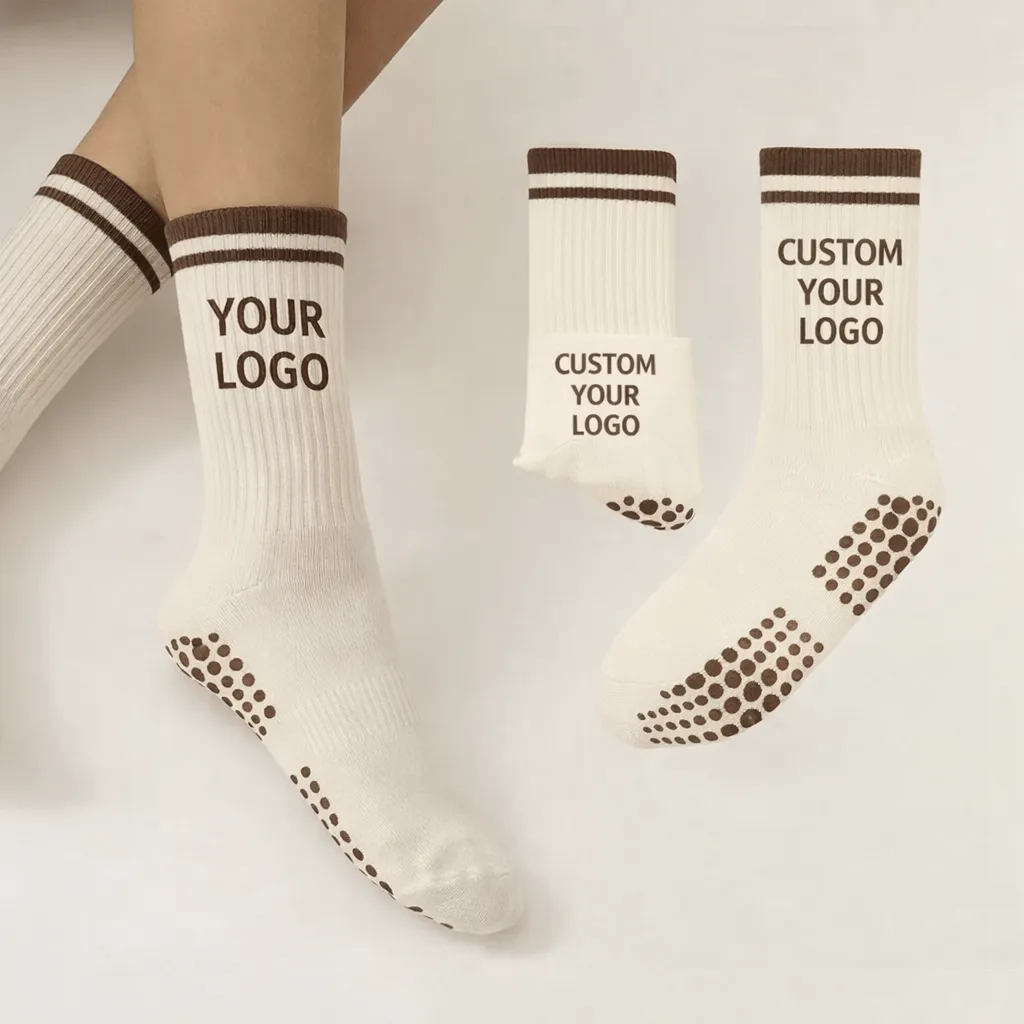
Custom Logo & Branding Options
A logo can appear in several different parts of a custom grip sock program. The best branding method depends on how visible the logo should be, how the sock is constructed, and whether the buyer wants the branding to function mainly on the product, the packaging, or both.
Knitted Logo
Branding can be integrated into suitable knitted areas of the sock body where the construction and artwork allow it.
Printed or Applied Logo
Some projects may use printed or other applied branding methods depending on the sock structure, artwork, size, and positioning requirement.
Logo in the Sole Grip
The brand name, initials, symbol, or simplified artwork can be incorporated into the silicone sole layout when the design is suitable for grip production.
This approach makes the branding part of the functional grip area rather than adding it only as a decorative element elsewhere on the sock.
Label & Packaging Branding
For some buyers, the strongest brand presentation does not need to be on the sock itself. Labels, hang tags, belly bands, cards, and retail packaging can carry additional product information and visual identity.
Buyers whose main goal is specifically branded product presentation can review our custom logo grip socks information. Projects focused on building a complete retail-ready branded line can continue to our private label grip socks program.
Custom Labels & Packaging
Packaging is part of the customization specification because it affects how the finished product is identified, displayed, distributed, and replenished.
Available packaging directions may include:
- Individual polybags
- Belly bands
- Hang tags
- Printed cards
- Barcode labels
- Size labels
- Product inserts
- Retail boxes
- Bulk commercial packing
- Custom carton markings
Retail Packaging
Brands and studios selling grip socks directly to consumers may use packaging to communicate the product name, size, color, logo, barcode, care information, and brand identity.
Commercial Packaging
Venue operators, distributors, and institutional buyers may prefer simpler packaging that supports size identification, carton handling, inventory control, and efficient replenishment.
Packaging Creates Additional SKUs
When the same sock is sold with different cards, labels, languages, barcodes, or packaging designs, those variations can create additional production and inventory complexity even if the sock itself remains unchanged.
For this reason, packaging should be included in the customization plan early rather than added only after the sock sample has been approved.
How to Build a Custom Grip Socks Specification
A custom product becomes easier to sample, quote, manufacture, and repeat when the customization choices are converted into one clear specification.
A practical custom grip socks specification can include the following information:
| Specification Area | Information to Confirm |
|---|---|
| Application | Studio, retail, trampoline park, indoor playground, fitness, healthcare, or other use |
| Sock Style | Low-cut, ankle, crew, or other approved construction |
| Materials | Preferred yarn direction or required material characteristics |
| Sizes | Required size range and quantity split |
| Colors | Body colors, logo colors, grip colors, and references |
| Grip Pattern | Shape, artwork, coverage, position, and color |
| Logo | Artwork, position, size, and application method |
| Packaging | Bag, band, card, label, box, barcode, or bulk packing requirements |
| Quantity | Total quantity and quantity per design, color, and size |
| Reference | Existing sample, product image, sketch, or previous design if available |
You Do Not Need a Complete Technical File to Start
Some buyers already have detailed specifications and artwork, while others begin with only a product concept or reference sample. Both approaches can work.
If the project is still early, the most important starting information is usually the intended use, estimated quantity, preferred sock style, branding requirement, colors, size range, and grip direction.
The remaining details can then be clarified during product development.
Avoid Conflicting Versions
Custom projects become difficult to control when several versions of artwork, colors, grip layouts, and packaging files are circulating at the same time. Each approved element should therefore have a clearly identified final version before bulk production.
Sampling & Customization Revisions
Sampling allows the buyer to evaluate whether the selected customization options work together as one finished product before bulk production begins.
Yuintal supports sample development before commercial production. Typical sample development is generally 3–7 days after the main specifications, artwork, and required materials are sufficiently confirmed.
What to Review on a Custom Sample
- Overall sock construction
- Fit and size
- Material feel
- Color direction
- Logo size and position
- Grip pattern shape and placement
- Grip color
- Visible workmanship
- Packaging where included in the sample stage
Revision Examples
Typical revisions may involve:
- Changing a sock color
- Adjusting the logo size or position
- Simplifying a grip pattern
- Changing grip coverage
- Adjusting sizing
- Changing cuff or structural details
- Revising packaging artwork
A revision should identify exactly what is changing rather than replacing the entire product brief each time.
From Sample to Approved Specification
Once the buyer approves the sample, the final design and specification can become the reference for bulk production. Buyers who want to understand the full project-management process after this point can review our OEM grip socks manufacturing services.
Custom Grip Socks vs OEM vs Private Label
These terms often appear together, but they describe different parts of a B2B sourcing project.
| Term | Main Question | Primary Focus |
|---|---|---|
| Custom Grip Socks | What can I change? | Construction, materials, colors, sizing, grip, logo, and packaging options |
| OEM Manufacturing | How will my specification be manufactured? | Requirement review, sampling, approval, production, QC, and repeat orders |
| Private Label | How do I turn the product into my branded retail item? | Brand presentation, labels, packaging, SKU identity, and retail readiness |
A single commercial project may involve all three. For example, a Pilates brand may customize the sock construction and grip pattern, use OEM manufacturing to execute the approved specification, and then add private label packaging for retail sales.
The reason Yuintal separates these topics into different pages is that buyers may need detailed guidance on one stage without repeating the entire sourcing process on every page.
MOQ & SKU Planning for Custom Grip Socks
Standard custom programs can start from 500 pairs per design. However, the final order structure depends on how the total quantity is divided across colors, sizes, designs, grip patterns, and packaging versions.
What Can Increase SKU Complexity?
- Multiple sock designs
- Multiple colors
- Multiple size groups
- Different grip patterns
- Different logos
- Different packaging designs
- Different barcode or language versions
Example: One Design vs Many Variants
A 1,000-pair order using one design, two sizes, and one packaging format is operationally different from a 1,000-pair order divided across five colors, three sizes, two grip patterns, and multiple packaging versions.
The total number of pairs may be the same, but the second program creates more production variables and smaller quantities per SKU.
Start With the Most Important Customization
For a first order, buyers can often reduce unnecessary complexity by prioritizing the customization elements that matter most to the product concept.
For example, a new studio brand might initially focus on:
- One sock construction
- Two or three core colors
- One custom grip layout
- One logo system
- A simple branded packaging format
Additional colors, seasonal variations, or packaging formats can then be added after the core product has been validated.
Custom Grip Socks by Application
Customization should match the intended use environment. A useful custom program does not begin with the question “How many options can we add?” but with “Which product details matter most for this buyer and this application?”
Pilates & Yoga Studios
Studio programs often focus on fit, comfort, clean visual presentation, custom colors, branded grip layouts, and retail-ready packaging. The product may also need to support repeat replenishment across several sizes and core colors.
Buyers focused specifically on this market can review our Yoga & Pilates Grip Socks collection for product examples.
Trampoline Parks
Trampoline park projects may prioritize grip coverage, clear size identification, branded colors, operational durability, and repeat-order consistency for high-volume venue use.
Relevant product examples are available in our Trampoline Park Socks collection.
Indoor Playgrounds
Indoor playground programs often require practical youth sizing, easy size identification, brand or venue colors, suitable sole grip coverage, and efficient replenishment.
See our Indoor Playground Socks collection for related products.
Fitness & Sports Programs
Fitness-oriented projects may focus on a more performance-driven sock structure, moisture management, supportive fit, cushioning, reinforcement, and grip layouts matched to the intended activity.
Related products can be found in our Sports & Fitness Socks collection.
Retail Brands
Retail brands usually require a stronger combination of visual differentiation, color planning, logos, packaging, barcode structure, size architecture, and future collection expansion.
Healthcare & Institutional Programs
Institutional programs may prioritize practical sizing, comfort, clear identification, simplified packaging, and consistent anti-slip coverage rather than complex retail presentation.
Frequently Asked Questions About Custom Grip Socks
What can be customized on grip socks?
Custom grip socks can include changes to sock construction, height, materials, colors, sizing, sole grip pattern, grip coverage, logo placement, labels, and packaging. The exact options depend on the product concept and manufacturing requirements.
What is Yuintal's MOQ for custom grip socks?
Standard custom programs can start from 500 pairs per design. Final MOQ depends on the number of colors, sizes, grip patterns, logo methods, packaging variations, and other customization details.
Can I customize the silicone grip pattern?
Yes. The sole grip can be customized by pattern shape, spacing, coverage, positioning, color, and branding. Customer-developed artwork may also be adapted into a practical grip layout where the design is suitable for production.
Can I add my logo to custom grip socks?
Yes. Logos can be incorporated into suitable areas of the sock body, sole grip, labels, hang tags, or packaging depending on the product design and selected branding method.
Can I customize colors and sizes?
Yes. Custom programs can include product colors, grip colors, logo colors, and different size structures. Buyers should also plan how the total order quantity will be divided across each color and size.
Can Yuintal make samples before bulk production?
Yes. Sample development is available before bulk production. Typical sample development is generally 3–7 days after the main specifications, artwork, and required materials are sufficiently confirmed.
Do custom grip socks and private label grip socks mean the same thing?
No. Custom grip socks focuses on what can be changed in the product specification, while private label focuses more on turning the finished product into a buyer's branded retail item through logos, labels, packaging, and SKU identity.
What information should I send to start a custom grip socks project?
Useful starting information includes the intended application, estimated quantity, sock style, size range, preferred colors, grip direction, logo artwork, packaging requirements, and any reference product or image you already have.
Conclusion
Custom grip socks give B2B buyers control over the parts of the product that matter most to their brand, application, and commercial program. These options can include sock construction, materials, colors, sizing, sole grip patterns, logos, labels, and packaging.
Yuintal supports custom grip socks development for brands, studios, distributors, importers, and commercial operators. Standard custom programs can start from 500 pairs per design, with sample development available before bulk production.
Buyers who need the complete manufacturing workflow from requirement review through sample approval and bulk production can continue to our OEM grip socks manufacturing services. Buyers focused primarily on retail branding and packaging can review our private label grip socks program.