Yuintal is a professional OEM grip socks manufacturer in China, supporting private label and custom anti-slip sock production for global brands, trampoline parks, yoga & Pilates studios, hospitals, and distributors.
We help buyers turn specifications into consistent bulk production — including custom yarn selection, silicone grip pattern development, logo/branding, and retail-ready packaging. With flexible MOQ and scalable capacity, we support both new brand launches and ongoing replenishment orders.
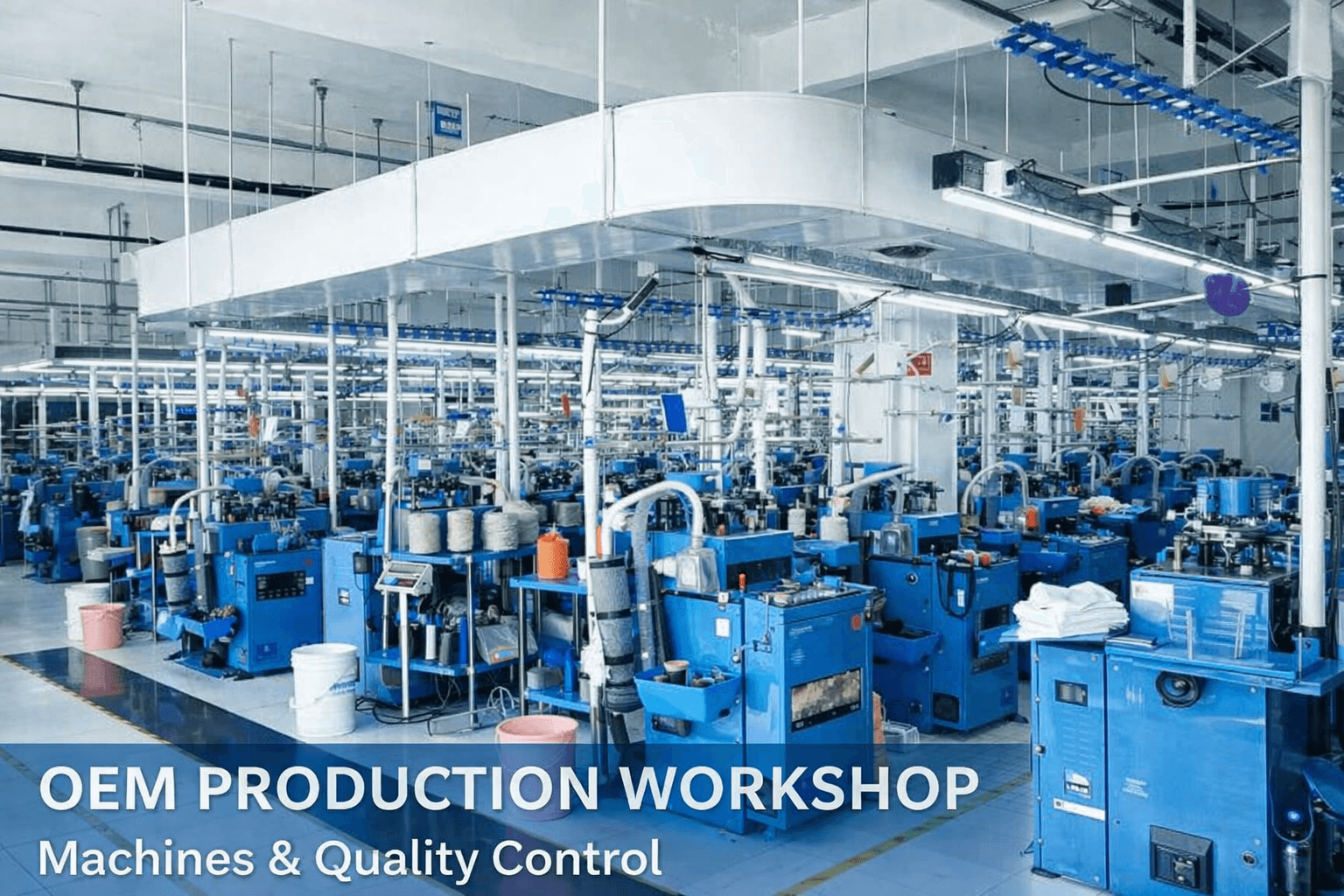
Quick Answer: What You Get with OEM Grip Socks
- Factory-direct OEM production based on your design/specifications
- Customization: yarn/material, knitting structure, silicone grip layout, logo, colors, size run
- Private label: woven label, hang tag, barcode, polybag/box, inserts
- MOQ guidance: optimized for low-to-medium MOQ programs
- Sampling + bulk with defined QC and delivery timelines
What Is OEM Grip Socks?
OEM grip socks are anti-slip socks manufactured to a buyer’s custom requirements. OEM production typically includes customization of the sock body (material, knitting structure, compression/fit, sizing) and the grip sole (silicone type, pattern geometry, coverage), plus branding and packaging for retail or institutional supply.
Compared with ready-stock wholesale items, OEM grip socks allow you to build a differentiated product for your market — whether that market is studio retail, trampoline park operations, hospital fall-prevention programs, or online DTC brands.
Our OEM Capabilities
1) Custom Yarn & Material Options
Material choice impacts comfort, durability, moisture management, and long-term elasticity. We support different yarn compositions and knitting structures for different customer expectations and price tiers.
- Cotton / combed cotton: soft feel, mainstream retail choice
- Polyester blends: cost-effective, stable color, good durability
- Bamboo fiber: soft touch, moisture-friendly feel
- Coolmax: enhanced moisture-wicking for higher intensity use
- Nylon + spandex performance blends: stronger recovery, premium fit & stability
We can advise the most suitable material based on your scenario (Pilates/yoga, trampoline parks, hospitals, indoor safety, etc.) and your target retail/wholesale pricing.
2) Custom Knitting & Functional Structure
Beyond yarn, a professional OEM program also includes structure-level design to improve user experience.
- Arch support and targeted compression zones
- Heel lock design for anti-slip fit
- Cushioned sole (select areas or full footbed)
- Breathable mesh zones for heat management
- Low-cut / crew / knee-high variations for different use cases
3) Custom Silicone Grip Pattern (Anti-Slip Sole)
Grip performance is the core difference between ordinary socks and grip socks. We offer flexible grip layouts to balance traction, durability, and comfort — depending on floor type and movement intensity.
- Dot grip: classic traction with comfortable foot feel
- Full-sole coverage: maximum traction for higher intensity
- Logo-shaped patterns: brand-forward design for retail differentiation
- Multi-color grip: premium appearance for studio/brand collections
- Grip density & thickness tuning: based on traction target and wear resistance
We can optimize the grip layout for common indoor surfaces such as wood, vinyl, tile, and trampoline park mats. We also consider user comfort to avoid overly stiff soles while maintaining safe traction.
4) Logo & Branding Options
OEM grip socks branding can be built into the sock body or applied to the sole/packaging. Common methods include:
- Silicone logo on sole (integrated into grip pattern)
- Woven/knitted logo on cuff or instep
- Jacquard patterns for brand motifs
- Woven label inside sock
5) Private Label Packaging (Retail-Ready)
We support private label packaging to help you sell on Amazon, Shopify, studio retail, and distributor channels.
- Custom polybag with barcode/size label
- Printed paper card / hang tag
- Custom boxes for premium lines
- Product inserts (care guide, brand story, QR code)
- Carton marking for warehouse and distribution
OEM Grip Socks by Application
Buyers often have different traction, durability, and fit requirements depending on where the socks will be used. Below are common OEM programs we support.
OEM Grip Socks for Yoga & Pilates Studios
- Comfort-first materials with stable elasticity
- Balanced grip coverage for smooth transitions
- Brand-forward design (logo patterns, seasonal colors)
- Retail-ready packaging for in-studio sales
OEM Grip Socks for Trampoline Parks
- Higher wear resistance and stronger grip durability
- Operational quantity planning for frequent replenishment
- Anti-slip + safety consistency across batches
- Custom park branding and size runs for kids/adults
OEM Hospital & Safety Grip Socks
- Comfortable, secure fit for walking assistance
- Traction tuned for facility floors
- Simple branding / department color coding
- Packaging options for institutional supply
OEM Grip Socks for DTC & E-commerce Brands
- Product differentiation through fit and grip design
- Premium packaging for unboxing experience
- Barcode/label support for fulfillment
- Stable re-order specs for long-term supply
MOQ & Production Capacity
MOQ depends on customization level, color count, size splits, and grip complexity. Below are typical ranges to help you plan.
If you are specifically looking for low MOQ custom logo options, you may also check our detailed guide on custom grip socks with logo and low minimum order quantities.
custom grip socks with logo
Typical MOQ Ranges
- Existing sock base + custom silicone logo: 300–500 pairs
- Custom colors + customized grip pattern: 500–800 pairs
- Fully customized structure + packaging: 800–1000+ pairs
- Multi-size orders: size-split MOQ may apply
Production Capacity & Lead Time
- Daily output: 5,000–8,000 pairs (model-dependent)
- Sampling: 7–10 days (after confirmation of files/specs)
- Bulk production: typically 20–30 days
If you have a launch deadline, we can discuss staged shipments or production scheduling based on your SKU count and order volume.
What Affects OEM Grip Socks Pricing?
OEM pricing is not only about “pairs”. It is determined by materials, manufacturing complexity, and packaging requirements. Understanding the cost drivers helps you choose the best spec for your market.
- Yarn composition & thickness (material cost and knitting time)
- Silicone coverage area (more coverage usually increases cost)
- Grip pattern complexity (fine logo shapes and multi-color grips cost more)
- Number of colors in sock body and grip
- Size splits (S/M/L runs may affect MOQ and production planning)
- Packaging (simple polybag vs custom box + inserts)
- Testing/compliance requirements for certain markets
If you tell us your target retail price (or target wholesale price), we can recommend a specification that balances performance and cost.
OEM Process (Step-by-Step)
- Requirement Confirmation
Share your logo (AI/PDF/vector), target quantity, sizes, preferred material, grip coverage (dot/full-sole), and packaging idea.
- Quotation & Specification Sheet
We provide a quotation based on quantity tiers and finalize a clear specification sheet to avoid re-order deviations.
- Sampling
Sampling includes sock knitting + grip printing + basic packaging mockups (if required). Physical approval is recommended.
- Bulk Production
Production starts after sample approval. We follow standardized process controls for consistent grip adhesion and sizing.
- Quality Inspection
QC checks include appearance, size tolerance, elasticity, and grip adhesion durability (based on your spec requirements).
- Packing & Shipment
We pack according to your labeling and carton marking needs and ship via your preferred logistics solution.
Certifications & Quality Control
A reliable OEM supplier must deliver consistent batches. We focus on stable performance indicators for grip socks production.
Key QC Checks for OEM Grip Socks
- Grip adhesion durability (to reduce peeling and pattern loss)
- Stretch & recovery (elasticity stability after wear)
- Size tolerance (consistent fit across batch and size run)
- Color consistency (sock body and grip color control)
- Appearance inspection (stitching, defects, printing alignment)
Compliance Support (Upon Request)
Depending on your market and channel requirements, we can support compliance documentation such as REACH, Prop 65, and relevant non-toxic material standards.
For buyers who prioritize small batch branding, we have a detailed breakdown on low MOQ custom grip socks production.
custom grip socks with logo
OEM vs Wholesale Grip Socks: Which Is Better for You?
Many buyers start with wholesale and move into OEM once they validate the market. Below is a simple decision guide.
Choose OEM If You Need:
- Product differentiation and strong branding
- Custom grip layouts, colors, and fit design
- Stable long-term re-orders under the same specification
- Retail packaging and consistent market positioning
Choose Wholesale If You Need:
- Fast delivery for standard styles
- Lower commitment without product development
- Testing sales channels before customization
Common OEM Mistakes (And How to Avoid Them)
- Over-complicating the first batch: Starting with too many colors/SKUs increases MOQ and delays delivery. Consider launching with a simpler spec and expanding after market validation.
- Ignoring size-split planning: S/M/L splits can change MOQ and production efficiency. Plan size ratios early.
- Underestimating lead time: Sampling, approvals, and packaging can extend timelines. Lock specs early for a smooth launch.
- Not defining grip requirements: “More grip” is not always better. We optimize grip for traction + comfort + durability.
FAQ
What files do you need to start OEM grip socks production?
Logo files in AI/PDF/vector format are preferred. If you have a reference product image, color codes, and a size chart, it will speed up sampling and quotation.
What is the lowest MOQ for OEM grip socks?
Typical MOQ is 300–500 pairs for an existing sock base with silicone logo customization. MOQ may increase for full custom structure, multi-color grips, and complex size splits.
How long does sampling take?
Sampling typically takes 7–10 days after confirming the specification and receiving the required files.
How long does bulk production take?
Bulk production is usually 20–30 days depending on order size, SKU count, and customization level.
Can you do custom packaging and barcodes?
Yes. We support private label packaging including barcodes, hang tags, inserts, polybags, and custom boxes, depending on your channel needs.
Can you help recommend the best material and grip layout?
Yes. Tell us your application (yoga, trampoline parks, hospital, etc.) and target price, and we will recommend a specification that balances performance and cost.
Do you support repeat orders with the same specification?
Yes. We standardize the approved sample into a clear specification sheet to reduce deviations and keep re-orders consistent.
Can you ship internationally?
Yes. We support export logistics and can ship via your preferred method and destination requirements.
Can I request a pre-production sample for approval?
Yes. We recommend physical sample approval before mass production, especially for new designs and brand launches.
Do you offer custom grips for different floor types?
Yes. We can tune grip density and coverage for different surfaces such as wood, vinyl, tile, and trampoline park mats while maintaining comfort for the wearer.
Get an OEM Grip Socks Quote Today
Ready to build your private label grip socks line with a reliable OEM factory? Send your logo and target quantity, and we will provide a detailed quotation within 24 hours.
To Speed Up Quoting, Please Include:
- Target quantity and size run (S/M/L or your sizing)
- Preferred material (or tell us the application and we recommend)
- Grip style (dot / full-sole) and whether you want a logo pattern
- Colors for sock body and grips
- Packaging type (polybags, hang tags, boxes, barcodes)
Contact us now and start your OEM program.

Yuintal Insights Team
Strategic content and industry insights from the Yuintal editorial research team.
Our editorial team specializes in in-depth analysis of sock manufacturing, sourcing decisions, and supply-chain design. We empower procurement leaders, brand owners, and OEM/ODM partners with practical frameworks and evidence-driven perspectives to support better decisions.

 How to Choose Grip Socks for Indoor Playgrounds & Early Education Centers: A Buyer's Guide to Safety, Sizing & Bulk Supply | Yuintal
 Pilates Studio Grip Socks: How to Source Custom Non-Slip Socks for Reformer, Mat & Barre Classes | Yuintal Buyer's Guide
 Grip Socks for Yoga Studios: How to Source Custom Branded Socks in Bulk (OEM & Private Label Guide)
 How to Choose Grip Socks for Your Trampoline Park: A Buyer's Guide to MOQ, Safety & Custom Branding
