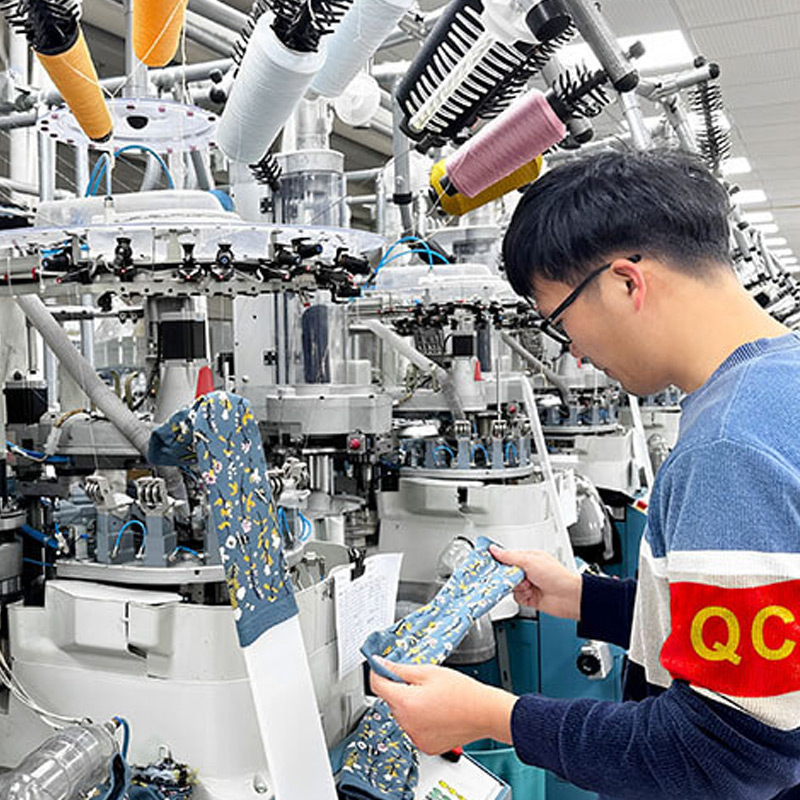
Grip Socks Manufacturer in China
Yuintal (Shanghai Yuintal Knitting Limited) is a grip socks manufacturer in Shanghai, China, supporting OEM, ODM, and private label production for studios, brands, distributors, importers, venue operators, and procurement teams. With more than 13 years of sock manufacturing experience, a 5,200㎡ production facility, and 220 computerized knitting machines, Yuintal develops and manufactures anti-slip socks for Pilates, yoga, trampoline parks, indoor playgrounds, fitness programs, healthcare environments, and branded retail collections.
Manufacturing support covers sock construction, yarn and color selection, sizing, custom logos, sole grip patterns, packaging, sampling, quality control, bulk production, and repeat-order planning. Standard custom programs can start from 500 pairs per design, while final MOQ depends on sock construction, colors, grip design, logo method, packaging, and other customization requirements.
- 13+ years of sock manufacturing experience
- 5,200㎡ production facility in Shanghai, China
- 220 computerized knitting machines
- OEM, ODM, and private label manufacturing support
- Custom logo, grip pattern, color, size, and packaging options
- Sample development before bulk production
- Bulk and repeat-order production for B2B buyers
Grip Socks Manufacturer Overview
For B2B buyers, choosing a grip socks manufacturer is different from simply finding a company that sells anti-slip socks. A manufacturer needs to turn a product requirement into a repeatable production specification covering sock structure, material combination, sizing, grip layout, branding, packaging, sampling, inspection, and bulk manufacturing.
Yuintal focuses on manufacturing grip socks for commercial programs rather than one-time retail purchasing. Projects range from studio-branded Pilates and yoga socks to trampoline park socks, indoor playground socks, fitness products, healthcare anti-slip socks, and private label collections for brands and distributors.
The manufacturer page acts as the main commercial reference for buyers evaluating Yuintal's overall production capability. Buyers with a specific customization project can continue to our custom grip socks programs, while buyers building their own branded product line can review our private label grip socks capabilities.
The main sourcing question is not simply whether a supplier can produce a grip sock. It is whether the manufacturing process can maintain the approved construction, grip pattern, size, appearance, packaging, and quality requirements when the project moves from sample development into bulk and repeat production.
Yuintal Manufacturing Facts
The following information summarizes the core manufacturing entity behind Yuintal and provides buyers with a concise reference for factory evaluation.
| Legal Company | Shanghai Yuintal Knitting Limited |
|---|---|
| Brand | Yuintal |
| Business Type | Grip socks manufacturer |
| Location | Shanghai, China |
| Manufacturing Experience | 13+ years |
| Production Facility | 5,200㎡ |
| Knitting Equipment | 220 computerized knitting machines |
| Service Model | OEM, ODM, and private label manufacturing |
| Standard Custom MOQ | From 500 pairs per design, depending on product and customization requirements |
| Sample Development | Available before bulk production |
| Main Applications | Pilates, yoga, trampoline parks, indoor playgrounds, fitness, healthcare, and branded retail |
| Main Buyers | Studios, brands, distributors, importers, venue operators, and procurement teams |
This combination of manufacturing infrastructure and project-based customization support allows Yuintal to handle both initial product development and repeat-order programs where consistency between batches matters.

Grip Socks Manufacturing Capabilities
A professional anti-slip socks manufacturer needs to control more than knitting. The finished product combines the sock body, elasticity, sizing, grip material, sole pattern, logo execution, curing, finishing, inspection, and packaging. These elements need to work together as one manufacturing system.
- 5,200㎡ sock manufacturing facility
- 220 computerized knitting machines
- OEM, ODM, and private label production support
- Custom sock structure and sizing development
- Custom colors and yarn combinations
- Custom sole grip patterns and branding
- Custom logo and packaging development
- Sample-to-bulk production workflow
- Repeat-order specification management
Knitting and Sock Construction
Different commercial applications require different sock structures. Manufacturing variables may include sock height, cuff construction, arch support, cushioning, mesh ventilation, reinforced heel and toe areas, compression zones, stretch level, and size grading.
These construction decisions affect fit, comfort, durability, and how securely the sock stays positioned during movement. For OEM projects, the sock body therefore needs to be defined before the grip pattern and branding details are finalized.
Yarn and Material Options
Grip socks can be produced using different fiber combinations depending on the intended product characteristics. Common development routes include cotton-rich blends for comfort-oriented studio products, synthetic blends for higher abrasion resistance and moisture handling, and elastic fibers such as spandex to support stretch and shape retention.
- Cotton-rich blends for soft hand feel and studio applications
- Polyester or nylon blends for durability-focused programs
- Elastic fiber combinations for fit and shape retention
- Reinforced yarn structures in higher-wear areas when required
Material selection should be based on the required product specification rather than using a single material formula for every application.
Grip Pattern Manufacturing
The sole grip system is one of the defining manufacturing features of grip socks. Yuintal supports standard and custom grip layouts using different pattern shapes, coverage areas, densities, and branding concepts.
Common layouts can include dots, lines, geometric patterns, zoned traction areas, logo-integrated grips, and customer-designed sole artwork. During development, the grip design needs to consider printability, placement accuracy, flexibility, visual appearance, and repeatability during bulk production.
Buyers that want to evaluate the production operation in greater depth can also review our China grip socks factory capabilities.
Grip Socks We Manufacture
Yuintal manufactures grip socks across multiple commercial applications. These products share the same basic anti-slip function but can require different construction, grip coverage, sizing, branding, and packaging depending on how they will be used.
Pilates and Yoga Grip Socks
Pilates and yoga programs commonly require comfortable stretch, stable fit, controlled sole traction, and clean retail presentation. Studio buyers may also require branded logos, coordinated colors, size sets, and packaging designed for front-desk sales or membership programs.
Buyers sourcing this category can view our Yoga and Pilates grip socks collection for product-level examples.
Trampoline Park Grip Socks
Commercial trampoline park socks typically prioritize secure fit, visible branding, practical size identification, durable grip coverage, and repeat-order availability. Large venues may also need standardized color systems or packaging structures that simplify daily operations.
Indoor Playground Grip Socks
Indoor playground and early education programs often require smaller size ranges, clear size differentiation, secure grip coverage, and products suitable for repeated commercial use in shared indoor environments.
Fitness and Sports Grip Socks
Fitness-oriented products may use different cushioning, ventilation, elastic support, and grip layouts depending on movement intensity and the required product style.
Healthcare and Institutional Anti-Slip Socks
Healthcare and institutional anti-slip socks generally place more emphasis on practical sizing, easy identification, functional grip coverage, comfort, and repeat-order simplicity than on complex retail branding.
The manufacturing specification for each category should be developed around the actual operating requirement rather than assuming that one grip sock design is suitable for every environment.
OEM, ODM & Private Label Manufacturing Support
OEM and private label projects require more than adding a logo to an existing sock. A workable manufacturing program needs a clear specification for the sock body, materials, sizing, grip design, colors, branding, packaging, and expected order structure before production begins.
Yuintal supports OEM, ODM, and private label grip socks programs for buyers that need different levels of product development. Some customers begin with an existing sock construction and customize branding and packaging. Others require a more complete development route involving sock structure, grip layout, color combinations, size planning, and retail presentation.
OEM Grip Socks
OEM production is suitable when the buyer already has a defined product concept, reference sample, technical requirement, artwork, or brand specification. The factory converts those requirements into a manufacturable sock specification and develops samples before bulk production.
OEM customization can include:
- Sock height and construction
- Yarn composition and color combinations
- Size range and grading
- Custom knitted, printed, or applied logos
- Custom silicone grip shapes and sole layouts
- Grip coverage and density
- Labels, hang tags, bands, bags, and retail packaging
ODM Development
ODM projects are useful when buyers have a market requirement but have not finalized every product detail. In this case, product development can begin from the intended application, target customer, preferred style, brand positioning, and order structure.
The development process may involve adapting existing grip sock constructions, adjusting grip layouts, selecting suitable yarn combinations, refining colorways, and developing packaging around the buyer's brand concept.
Private Label Grip Socks
Private label programs typically place greater emphasis on consistent brand presentation across the product, labels, packaging, and repeat orders. The sock itself may use an established construction while branding elements are adapted to create a market-ready product line.
Buyers that need a more detailed explanation of branding, packaging, and private label execution can review our private label grip socks manufacturing options.
Custom Logo and Grip Design
Branding can be incorporated into different areas of a grip sock. Depending on the design, logos may appear on the sock body, cuff, sole grip, packaging, or multiple components of the final product.
Grip patterns can also serve both functional and visual purposes. A custom sole layout may use a repeating brand mark, geometric pattern, text element, or application-specific traction arrangement. The final design needs to remain practical for production, curing, flexibility, placement consistency, and bulk repeatability.
For projects focused primarily on product customization rather than overall factory evaluation, see our custom grip socks programs.
Grip Socks Production Process
A manufacturing process should make it clear how an initial inquiry becomes an approved sample and then a repeatable bulk product. This is especially important for custom grip socks because the finished product combines textile construction, branding, sole grip application, finishing, inspection, and packaging.
- 1. Requirement Confirmation
The project begins with the intended application, order quantity, size range, preferred sock structure, material requirements, color references, logo files, grip design, packaging needs, and destination market. - 2. Specification Review
The factory reviews whether the requested design can be manufactured consistently and identifies details that need clarification before sampling. - 3. Yarn and Material Preparation
Required yarns, elastic components, grip materials, labels, and packaging elements are selected or prepared according to the confirmed specification. - 4. Sock Knitting
Computerized knitting machines produce the sock body according to the approved size, construction, color, and structural requirements. - 5. Logo and Branding Application
Depending on the project, branding may be integrated through knitting, printing, embroidery, grip design, labels, or packaging. - 6. Grip Application
The selected sole grip pattern is applied according to the approved artwork, coverage area, placement, and density. - 7. Curing and Finishing
Applied grip material is processed and finished so that the grip pattern is properly formed and attached to the sock surface. - 8. Inspection
Finished socks are checked for appearance, construction, sizing, grip placement, visible defects, branding accuracy, and packaging requirements. - 9. Packing
Approved products are packed according to the confirmed retail, distribution, studio, or institutional packaging specification. - 10. Shipment Preparation
Cartons, markings, quantities, packing information, and export shipment details are prepared before goods are released.
Sample Development Before Bulk Production
Sampling is an important control point in custom manufacturing because it allows the buyer and factory to confirm the product specification before committing to the full order.
A sample review may include:
- Sock fit and size
- Yarn feel and color direction
- Logo placement and appearance
- Grip pattern shape and positioning
- Sole coverage
- Packaging layout
- Overall workmanship
Once the sample and specification are approved, the confirmed version becomes the manufacturing reference for bulk production.
MOQ and Order Structure
Yuintal's standard custom MOQ can start from 500 pairs per design. The actual order structure depends on the number of colors, sizes, product constructions, grip designs, logo methods, packaging requirements, and whether the project uses an existing manufacturing platform or requires more extensive development.
For procurement teams, MOQ should therefore be evaluated together with the number of SKUs and customization variables rather than as an isolated number.
Quality Control in Grip Socks Manufacturing
Grip socks require quality control across both the textile product and the anti-slip sole. A visually acceptable sock can still create manufacturing problems if sizing, elasticity, grip placement, logo execution, or packaging varies significantly between batches.
Yuintal's quality approach focuses on controlling the manufacturing specification from incoming materials through finished-product inspection and packing.
Incoming Material Checks
Before production, yarns and related materials should be checked against the confirmed project requirements. Depending on the program, this may include yarn type, color reference, elastic materials, grip material, labels, and packaging components.
Knitting and Construction Checks
During and after knitting, inspection focuses on whether the sock body matches the approved structure and appearance.
- Size and dimensional consistency
- Knitting defects
- Heel and toe construction
- Cuff and elastic appearance
- Color and pattern consistency
- Logo positioning where applicable
Grip Application Checks
The sole grip is one of the most critical functional features of the product. Inspection should therefore consider whether the printed grip follows the approved artwork and whether visible application remains consistent across the order.
- Grip position
- Pattern completeness
- Visible density consistency
- Logo or pattern alignment
- Surface appearance
- Obvious adhesion or curing defects
Finished Product Inspection
Finished socks are reviewed before packing to identify visible defects, mismatched pairs, incorrect sizes, branding errors, packaging mistakes, and other issues that could affect the approved order specification.
Repeat-Order Consistency
For studios, brands, importers, and distributors, repeat-order consistency can be more important than the first order alone. Approved specifications, artwork, packaging references, and product details should remain organized so subsequent production runs can follow the same manufacturing baseline.
Consistency does not mean that every textile product will be microscopically identical. It means that acceptable manufacturing variation is controlled around the approved product specification instead of being redefined with every order.
Grip Socks Manufacturer vs Trading Supplier
The terms manufacturer and supplier are often used interchangeably in sourcing, but they do not describe exactly the same business role. A supplier may sell or coordinate grip socks without directly controlling the manufacturing operation, while a manufacturer participates directly in product development and production execution.
| Evaluation Area | Direct Manufacturer | Trading Supplier |
|---|---|---|
| Production Control | Direct involvement in manufacturing workflow | Production may be outsourced to another factory |
| Product Development | Can coordinate construction, sizing, grip, and production details directly | Technical changes may require communication through a third party |
| Sampling | Sample feedback can be connected directly to production | Sampling revisions may depend on external factory coordination |
| Custom Grip Pattern | Production feasibility can be reviewed directly | Capability depends on the manufacturing partner being used |
| Quality Communication | Issues can be discussed with the manufacturing team | Quality feedback may pass through an intermediary |
| Repeat Orders | Production records and specifications can be managed at factory level | Consistency depends on maintaining the same external production source |
This does not mean that every manufacturer is automatically suitable for every project or that every trading supplier is unsuitable. The practical sourcing question is whether the company has enough control over product development, manufacturing, quality, and repeat production to meet the buyer's requirements.
For buyers specifically evaluating production facilities in China, our China grip socks factory capabilities page provides a more factory-focused view.
Factory Location & Supply Chain in Shanghai, China
Yuintal is based in Shanghai, China. For international buyers, factory location matters when it affects access to materials, production coordination, packaging resources, logistics, and export handling.
Shanghai is part of a mature manufacturing and logistics environment with access to textile supply chains, packaging suppliers, international freight services, and port infrastructure. These factors can support grip socks projects that combine product development, packaging, bulk production, and export shipment.
Why Supply Chain Access Matters
A grip socks program can involve more suppliers than the sock factory alone. Depending on the project, production may require yarns, elastic materials, silicone grip compounds, labels, printed packaging, cartons, barcode labels, and other components.
A practical manufacturing supply chain helps coordinate these elements under one approved order specification so that changes in one component do not create avoidable delays or inconsistencies elsewhere.
Export-Oriented Production
Yuintal supports manufacturing projects for overseas buyers, including studios, brands, distributors, importers, and commercial operators. Export-oriented production requires attention not only to the product itself but also to packing quantities, carton markings, shipping preparation, documentation coordination, and buyer-specific packaging requirements.
The exact logistics method depends on order volume, destination, delivery requirements, and buyer preference.
Who We Manufacture Grip Socks For
Different B2B buyers evaluate a grip socks manufacturer from different perspectives. A Pilates studio may focus on fit, grip feel, branding, and repeat ordering, while a distributor may care more about size ratios, packaging, bulk supply, and replenishment consistency. The manufacturing process needs to support these different commercial priorities without changing the approved product standard from one order to the next.
Pilates, Yoga & Barre Studios
Studios often use grip socks both as functional class equipment and as branded retail merchandise. Their priorities commonly include comfort, secure fit, clean branding, coordinated colors, practical size ranges, and packaging suitable for front-desk sales.
Trampoline Parks & Indoor Playgrounds
Venue operators typically need grip socks that are easy to size, easy to identify, durable enough for repeated commercial use, and available for regular replenishment. Branding, color coding, sole grip design, and bulk packing may also form part of the operating requirement.
Fitness & Sports Brands
Fitness brands may require product differentiation through sock structure, cushioning, ventilation, compression zones, color combinations, grip layout, and branded packaging. Development can begin from an existing reference or from a new project specification.
Distributors & Importers
Distributors often prioritize scalable order structure, predictable quality, mixed size planning, packaging efficiency, carton organization, and repeat-order continuity. Buyers comparing factory manufacturing with ready-stock supply can also review our bulk and wholesale grip socks supply options.
Private Label & Retail Brands
Private label buyers generally focus on visual consistency across the sock, logo, sole grip, packaging, labels, and repeat product lines. For these programs, manufacturing specifications need to remain organized so later SKUs can be developed without rebuilding the entire production system from zero.
Healthcare & Institutional Buyers
Healthcare and institutional programs may prioritize functional anti-slip coverage, practical sizing, easy product identification, comfort, simple replenishment, and clear packaging rather than complex retail styling.
Frequently Asked Questions
Is Yuintal a grip socks manufacturer or a trading company?
Yuintal, operated by Shanghai Yuintal Knitting Limited, is a China-based grip socks manufacturer supporting OEM, ODM, and private label production for commercial buyers.
What is the MOQ for custom grip socks?
The standard starting MOQ for custom grip socks is 500 pairs per design. Final MOQ can vary with sock construction, color combinations, grip pattern, logo method, packaging, and other customization requirements.
Can Yuintal make samples before bulk production?
Yes. Sample development is available before bulk production so buyers can confirm sock construction, sizing, colors, logo placement, grip layout, and packaging requirements.
What can be customized on grip socks?
Customization can include sock color, yarn and construction, sizing, logo, sole grip pattern, grip coverage, labels, retail packaging, and other project-specific branding elements.
What types of businesses does Yuintal manufacture grip socks for?
Typical buyers include Pilates and yoga studios, trampoline parks, indoor playground operators, fitness brands, distributors, importers, healthcare buyers, and private label retailers.
Can Yuintal support repeat OEM and private label orders?
Yes. Approved specifications, artwork, materials, grip patterns, packaging requirements, and quality references can be used to support repeat-order production planning.
Conclusion
Yuintal is a grip socks manufacturer in Shanghai, China supporting OEM, ODM, and private label production for B2B buyers that need more than ready-stock supply. The manufacturing system combines sock development, computerized knitting, custom grip application, branding, packaging, sampling, inspection, bulk production, and repeat-order planning.
For buyers evaluating a long-term manufacturing partner, the most important factors are whether the factory can translate requirements into a clear production specification, develop an approved sample, maintain quality during bulk production, and reproduce the agreed product across repeat orders.
Projects that require deeper customization can continue to our custom grip socks programs, while branded retail projects can review private label grip socks manufacturing options.