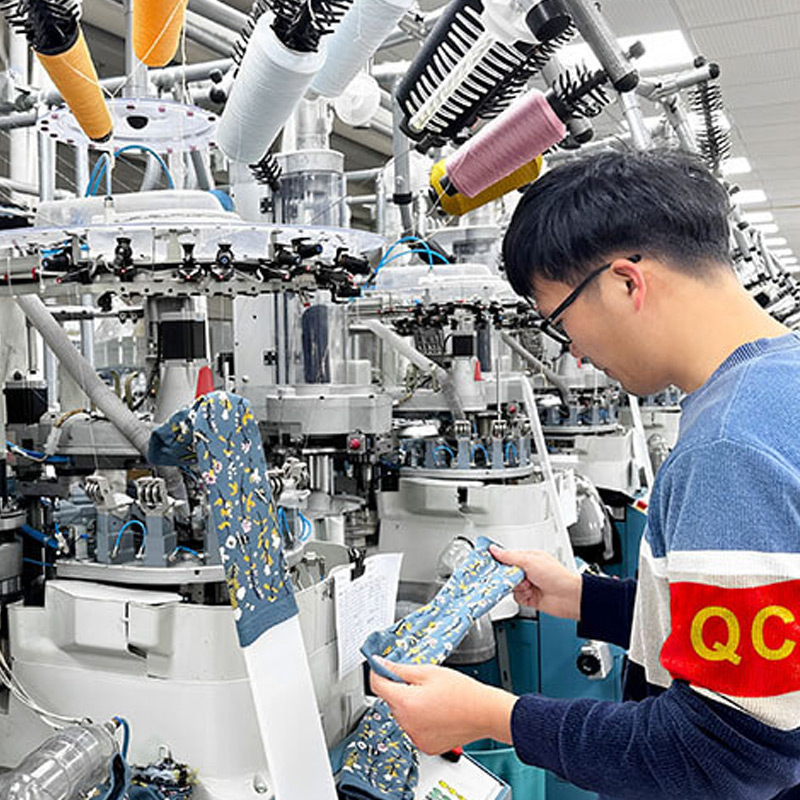
Trampoline Grip Socks Manufacturer
Yuintal manufactures trampoline grip socks for trampoline parks, indoor activity venues, distributors, importers, and branded commercial programs that need grip socks designed around venue operations rather than general retail use.
Trampoline park projects can be developed around sole grip coverage, sock construction, size ranges, size identification, colors, logos, packaging, and repeat-order requirements. Custom programs can start from 500 pairs per design, depending on the number of sizes, colors, grip patterns, branding methods, and packaging variations.
- Trampoline grip socks for commercial park use
- Custom sole grip patterns and coverage
- Adult and youth sizing options
- Size identification for venue operations
- Custom park colors and logos
- Bulk packing and retail packaging options
- Sample development before bulk production
- Repeat-order support for parks and distributors
What Trampoline Parks Need from a Grip Socks Manufacturer
A trampoline park does not buy grip socks in the same way as a consumer buying a single retail pair. The product becomes part of a commercial operating system that may involve daily customer use, several size groups, branded presentation, inventory control, and regular replenishment.
For this reason, trampoline park buyers usually need to evaluate more than product appearance.
- Does the grip pattern provide appropriate sole coverage for the intended product?
- Can the sock remain consistent across repeat orders?
- Can children and adult sizes be organized clearly?
- Can staff identify sizes quickly?
- Can park branding be added without making the SKU structure unnecessarily complex?
- Can the product be replenished regularly using the same approved specification?
This is what separates a trampoline-specific manufacturer page from a general grip socks manufacturer overview. The broader manufacturer page explains who Yuintal is, while this page focuses on the requirements of trampoline park and venue programs.
Buyers who want to review the wider range of product modifications can also see our custom grip socks page.
Trampoline Socks vs General Grip Socks
Trampoline grip socks are part of the broader anti-slip sock category, but commercial park use creates a different purchasing and product-planning context from Pilates, yoga, healthcare, or general retail.
| Requirement | Trampoline Park Grip Socks | General Grip Socks |
|---|---|---|
| Primary Use | Commercial trampoline and activity venues | Varies by application |
| Order Structure | Often multiple sizes with recurring replenishment | May be single-use, retail, or project-based |
| Size Identification | Often operationally important | Depends on application |
| Grip Layout | Usually planned for broad sole coverage and repeatability | Can vary widely |
| Branding | Common for park identity and customer recognition | Optional depending on buyer |
| Packaging | May prioritize efficient commercial handling | May prioritize retail display |
| Repeat Supply | Often a core purchasing requirement | Depends on buyer model |
The goal is not to create one universal “trampoline sock” specification. The manufacturer should instead understand how the venue operates and build the product around the park's size structure, branding, grip layout, inventory model, and replenishment needs.
Commercial Park Use Requirements
Trampoline parks and indoor activity venues often manage socks as part of their daily customer flow. This creates operational requirements that do not appear in many ordinary retail sock programs.
Fast Size Selection
Staff may need to provide socks quickly at reception, check-in, or retail counters. A simple size system and clear identification method can make the product easier to manage during busy periods.
Consistent Product Appearance
When socks are part of the park's visual identity, colors, logos, grip patterns, and size markings should remain reasonably consistent across production batches.
Inventory Planning
Park operators need to plan how many pairs are required in each size rather than simply ordering one total quantity. Size ratios become important because usage may not be evenly distributed across all sizes.
Replenishment
A park may need additional stock regularly. The ability to reorder an approved product without redesigning it each time is therefore an important part of the manufacturing relationship.
Multi-Location Programs
Chain operators may use one approved sock specification across several locations while adjusting quantities, size ratios, or packaging for individual venues.
Grip Coverage & Sole Design for Trampoline Socks
The grip layout is one of the most important product areas in a trampoline sock. It should be planned together with sole shape, sock fit, product construction, branding, and intended venue use.
Broad Sole Coverage
Many trampoline park programs prefer grip patterns that provide substantial coverage across the sole rather than small decorative grip areas.
The exact amount of coverage should still depend on the product design and approved sample rather than one fixed formula.
Pattern Density
Grip elements can be arranged using different spacing and densities. The objective is to create a repeatable layout that suits the sock design and commercial application.
Common Pattern Directions
- Dot patterns
- Square or geometric layouts
- Line patterns
- Mixed traction patterns
- Logo-integrated grip designs
- Custom park artwork
Grip Branding
A park logo, initials, or simplified brand element can sometimes be incorporated directly into the grip layout when the artwork is suitable for production.
This allows the sole to become both a functional and visual branding area.
Buyers that want more detailed product customization can review our custom grip socks options.

Sock Construction & Durability Planning
Commercial trampoline programs often place greater emphasis on repeated use, inventory turnover, and consistent product structure than a typical one-time retail purchase. The sock construction should therefore be selected with the intended operating environment in mind.
Yarn & Material Direction
Material selection can balance comfort, elasticity, shape retention, appearance, and expected commercial use. Cotton-rich, polyester, nylon, and blended constructions can each be considered depending on the target product.
Heel & Toe Areas
Higher-wear areas can use adjusted knitting structures or material combinations when additional reinforcement is part of the product specification.
Cuff & Elastic Structure
The cuff and elastic system influence how securely the sock remains positioned during activity. Construction should be evaluated together with sizing and stretch behavior.
Thickness
A thicker sock is not automatically a better trampoline sock. Thickness should be considered together with comfort, fit, breathability, flexibility, and overall product design.
Durability Should Be Defined by the Project
Instead of relying on vague phrases such as “heavy duty” or “high durability,” buyers should define what durability means for their program: repeat customer use, washing expectations, grip appearance, shape retention, or consistency across replenishment orders.
Kids & Adult Size Planning for Trampoline Parks
Size planning is a core operational issue for trampoline parks because the product may need to serve both children and adults while remaining simple enough for staff to manage during busy check-in periods.
Children's Sizes
Indoor activity venues often need several youth size groups rather than one universal children's size. The exact structure should reflect the park's customer profile, local market, and product stretch.
Adult Sizes
Adult sizing can also be organized into a limited number of practical groups. The objective is to provide an acceptable fit range without creating more SKUs than the operation can manage efficiently.
Size Ratios Matter More Than Equal Splits
A park should not assume that every size needs the same quantity. The better approach is to estimate the actual customer mix and assign quantities accordingly.
For example, a venue may require:
- Higher quantities in the most frequently used children's sizes
- Moderate quantities in common adult sizes
- Smaller quantities in less frequently requested size groups
Historical usage data can make future replenishment planning more accurate once the first order has been in operation.
Size Identification for Park Operations
Clear size identification can be just as important as the size structure itself. Staff should be able to distinguish sizes quickly without repeatedly reading small labels or opening packaging.
Color-Coded Size Systems
One practical approach is to assign different sock or grip colors to different size groups. For example, a park may use one color family for smaller children's sizes and another for larger youth or adult sizes.
The exact system should be designed around the park's branding and inventory workflow rather than copying a generic color scheme.
Printed or Knitted Size Markings
Size information may also be placed on the sock, label, sole area, or packaging where the approved product design allows it.
Packaging Identification
If socks are individually packed, packaging can carry size information through labels, barcodes, printed cards, or other visual identifiers.
Why Size Identification Matters
A simple identification system can reduce staff confusion, improve check-in speed, and make inventory counts easier across multiple size groups.
Branding for Trampoline Parks
Trampoline grip socks are often visible throughout the venue, so they can become part of the park's brand identity rather than functioning only as an operational item.
Park Logo
Branding can be added to suitable areas of the sock body, cuff, sole grip, labels, or packaging depending on the approved design.
Park Colors
Custom colors can be used to match the venue's visual identity, differentiate size groups, or create a recognizable product across multiple locations.
Grip Pattern as Branding
A simplified logo, symbol, initials, or custom graphic can sometimes be incorporated into the sole grip layout when the artwork is suitable for production.
Commercial vs Retail Packaging
Some parks use socks only as part of admission or activity operations and may prefer simple bulk packing. Others sell socks at the front desk or online and may require branded retail packaging.
Retail-oriented packaging may include:
- Belly bands
- Hang tags
- Printed cards
- Barcode labels
- Individual polybags
- Retail boxes
Buyers focused mainly on creating a fully branded retail product can review our private label grip socks program.

MOQ & SKU Planning for Trampoline Grip Socks
Yuintal's standard custom programs can start from 500 pairs per design. The practical order structure depends on how the total quantity is divided across sizes, colors, grip patterns, logos, and packaging versions.
Typical Sources of SKU Complexity
- Multiple children's and adult size groups
- Different colors by size
- Different park logos
- Different grip patterns
- Different location branding
- Retail and bulk packaging versions
- Different barcode or language versions
One Park vs Multi-Location Programs
A single park may use one logo, one color system, and one approved size structure. A chain may require the same core sock specification across several venues while changing location names, colors, or packaging.
Each extra variation should be evaluated against the operational benefit it creates.
Keep the Core Product Stable
For many park operators, the most efficient approach is to keep the core sock construction and grip layout consistent while using size colors, logos, or packaging to create operational and brand differentiation.
Total Order Quantity vs Quantity per SKU
A 2,000-pair order split across four practical size groups is very different from the same 2,000 pairs divided across many colors, logos, sizes, and packaging formats.
The more fragmented the order becomes, the smaller each production batch becomes. Buyers should therefore discuss both the total quantity and the quantity allocated to each SKU.
Trampoline Grip Socks Sampling
Sample development allows the park operator or buyer to review the product before bulk production and confirm that the main operational and branding decisions work together.
Typical sample development is generally 3–7 days after the main specifications, artwork, and required materials are sufficiently confirmed.
What to Review on a Trampoline Sock Sample
- Overall sock construction
- Fit and stretch
- Cuff security
- Size markings
- Grip pattern position
- Grip coverage
- Park logo and colors
- Visible workmanship
- Packaging where included in the sample stage
Test the Operational System, Not Only the Sock
For venue programs, sample approval can also be used to review whether the size-color system, label format, packaging, and staff identification method are practical for real park operations.
Sample Revisions
Revisions may involve changing size markings, adjusting colors, simplifying a grip pattern, moving a logo, changing packaging, or modifying construction details.
Once the sample is approved, it can become part of the production reference for the bulk order.
Repeat Supply & Replenishment for Trampoline Parks
Repeat supply is often one of the most important differences between a trampoline park project and a one-time retail order. Socks are consumed, sold, lost, or replaced continuously, so the operator may need regular replenishment.
Maintain the Approved Specification
For future orders, the following references should remain connected to the program:
- Sock construction
- Size structure
- Color system
- Logo artwork
- Grip pattern
- Packaging format
- Size identification method
Use Real Usage Data
After the first order, parks can compare actual consumption by size and adjust later quantity ratios accordingly.
For example, if a certain youth size runs out faster than expected, its quantity can be increased in the next production cycle without redesigning the entire product.
Replenishment Planning
Operators should consider:
- Average monthly or seasonal sock usage
- Current inventory by size
- Expected visitor volume
- Lead time for the next order
- Buffer stock for peak periods
Multi-Location Replenishment
Chain operators can maintain one central product specification while allocating different quantities to each venue based on visitor profiles and stock levels.
For current trampoline product examples, buyers can also review our Trampoline Park Socks collection.
How to Evaluate a Trampoline Grip Socks Manufacturer
A trampoline park buyer should evaluate whether the supplier understands commercial venue operations, not only whether it can produce socks with an anti-slip sole.
| Evaluation Area | What to Check | Why It Matters |
|---|---|---|
| Trampoline Product Experience | Understanding of park sizing, grip coverage, branding, and replenishment | Helps align the product with venue operations |
| Grip Development | Pattern layout, coverage, artwork adaptation, and consistency | The grip sole is a core part of the product |
| Kids & Adult Sizing | Practical size structure and quantity ratios | Important for customer fit and stock control |
| Size Identification | Color coding, labels, markings, or packaging identification | Helps staff manage socks efficiently |
| Customization | Park colors, logos, grip artwork, and packaging | Supports brand identity and operational differentiation |
| Sampling | Ability to review and revise the product before bulk production | Reduces avoidable specification problems |
| MOQ Structure | Quantity per design and impact of size/color splits | Helps buyers build a realistic order plan |
| Repeat Supply | How approved specifications are maintained for replenishment | Critical for ongoing park operations |
Questions Park Operators Should Ask
- Can you support both children's and adult sizes?
- How can sizes be identified quickly by staff?
- Can our park logo be included in the sock or sole grip?
- Can the same approved grip pattern be repeated in future orders?
- How does MOQ change when the order includes several sizes and colors?
- Can we adjust size ratios on repeat orders?
- Can one specification be used across multiple park locations?
These questions are more useful than choosing a supplier based only on a catalog image or a single unit-price quote.
Frequently Asked Questions About Trampoline Grip Socks Manufacturing
What is Yuintal's MOQ for custom trampoline grip socks?
Standard custom trampoline grip socks programs can start from 500 pairs per design. Final MOQ depends on the number of sizes, colors, grip patterns, logo methods, packaging variations, and other customization requirements.
Can Yuintal make both children's and adult trampoline socks?
Yes. Trampoline park programs can include youth and adult size groups. The final size structure should be planned around the park's customer profile, product stretch, and inventory requirements.
Can trampoline socks use different colors for different sizes?
Yes. Color-coded sizing can be used where it fits the park's branding and operating model. Size identification can also be supported through labels, printed markings, packaging, or other approved methods.
Can the sole grip pattern be customized?
Yes. Grip layouts can be customized by shape, coverage, spacing, position, color, and branding. Park logos or simplified artwork can also be incorporated into the grip pattern when the design is suitable for production.
Can samples be developed before bulk production?
Yes. Sample development is available before bulk production. Typical sample development is generally 3–7 days after the main specifications, artwork, and required materials are sufficiently confirmed.
Can the same trampoline sock be reordered later?
Yes. Approved sock construction, size structure, colors, logo artwork, grip layout, and packaging references can be maintained as production references for future replenishment orders.
Can one sock specification be used across multiple trampoline park locations?
Yes. Multi-location operators can use one approved core specification across several venues while adjusting quantities, size ratios, or selected branding details where required.
What should trampoline parks check when choosing a manufacturer?
Park operators should evaluate size planning, size identification, grip development, branding options, sampling, MOQ structure, repeat-order control, and the manufacturer's ability to reproduce an approved specification over time.
Conclusion
A specialized trampoline grip socks manufacturer needs to understand the operational requirements of commercial parks, not only how to produce an anti-slip sock.
For trampoline parks and indoor activity venues, the product program may need to coordinate children's and adult sizing, clear size identification, broad sole grip coverage, park branding, practical packaging, and regular replenishment.
Yuintal manufactures trampoline grip socks for park operators, distributors, importers, and branded commercial programs. Standard custom projects can start from 500 pairs per design, with sample development available before bulk manufacturing.
Buyers who want to review available customization options can visit our custom grip socks page. Buyers with a defined product specification that needs to move through sampling and production can continue to our OEM grip socks manufacturing services. For current product examples, see our Trampoline Park Socks collection.