
Private label grip socks are anti-slip socks produced under your own brand — your logo, your packaging, your size and color set — rather than generic factory stock. Building a private label grip socks program means planning a branded product line, deciding what to customize, setting an SKU and size structure, agreeing MOQ and sampling, and planning replenishment.
In sourcing terms, private label means the buyer controls the market-facing brand while the production partner handles manufacturing, logo execution, packaging and repeat-order alignment. A private label buyer is not simply purchasing socks — the buyer is building a branded product program that must look consistent across packaging, colorways, logo placement and replenishment batches. A product that works as a generic item can still fail as a private label item if the logo shifts, the packaging changes, or the feel varies between orders.
| Field | Value |
|---|---|
| Manufacturer | Yuintal |
| Legal entity | Shanghai Yuintal Knitting Limited |
| Manufacturing location | Shaoxing, Zhejiang, China |
| Experience | 13+ years of grip socks production |
| Service model | OEM, ODM, white label, private label |
| Typical applications | Pilates, yoga, barre, fitness, trampoline parks, studio retail |
| Typical buyers | Studio brands, distributors, importers, ecommerce sellers |
The three routes differ mainly in how much of the product you control and how much volume you commit to.
| Route | What you control | Typical fit |
|---|---|---|
| White label | Brand mark and packaging only | Fastest launch, least differentiation |
| Private label | Brand identity, sole grip, logo, colours, sizes, packaging | Building your own range |
| OEM | The product specification itself | A product that does not yet exist |
This page only draws the boundary. The full comparison — decision criteria, scenario-based recommendations and common pitfalls — is on private label vs white label vs OEM manufacturing.
A private label program is a sequence of decisions, and the order matters. Buyers who start with the sock revisit everything later; buyers who start with the market and work backwards lock the specification once.
Who wears it, where it is sold, and at what price band. A studio retail sock sold at the front desk and a performance sock sold online place different demands on construction, packaging and margin.
Sock height (low-cut, ankle, crew, higher leg), grip coverage, cushioning and compression placement, and the size range you intend to stock. A narrow first range is easier to keep consistent and to reorder.
Three surfaces carry the brand: the logo method, the sole pattern and the packaging format. They interact — a knit-in logo and a printed box need to look like they belong to the same product. Yoga and Pilates grip socks are the most common starting range for studio-facing brands: the use case is established and sizing predictable.
The most expensive common mistake is launching a wide range immediately. A focused first order — one or two styles in core sizes and brand colors — validates fit, feel and sell-through at a manageable minimum.
Sell-through, sizing complaints and repurchase behaviour tell you more than any internal review. Typical adjustments are size ratio, grip coverage and packaging format rather than a full redesign.
Once the core is validated, expansion is additive: more colors, sizes, applications, or products within the same brand system. Because the approved reference exists, expansion does not reopen the specification decisions.
Typical programs come from studio brands running in-studio retail, ecommerce and DTC brands, distributors differentiating their catalogue, and trampoline parks needing durable, colour-coded socks.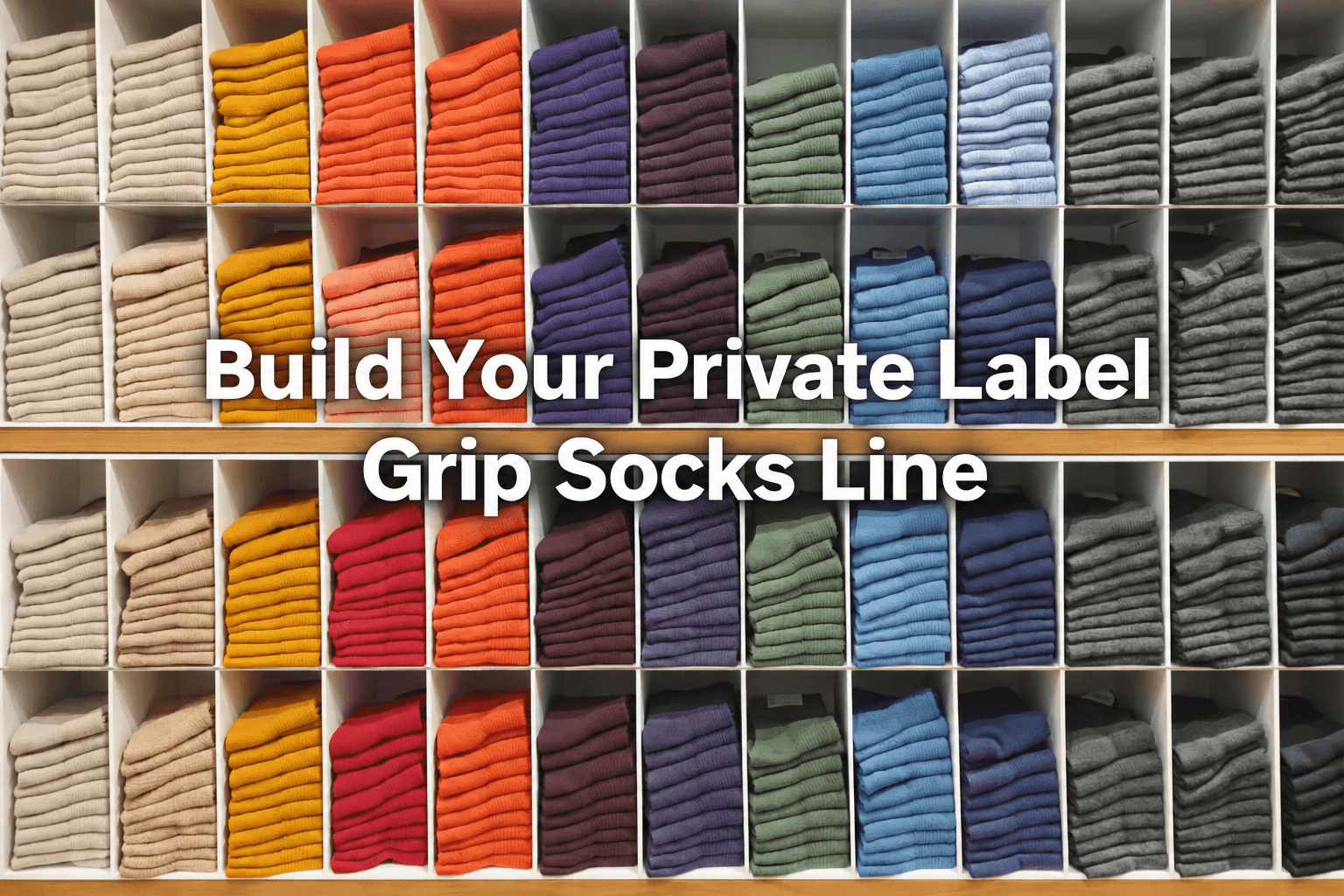
The useful question is not what can be customized — almost everything can — but which choices are worth customizing, and what each costs in MOQ, lead time and repeatability.
| Dimension | Customizable | Practical effect |
|---|---|---|
| Sole grip | Pattern, density, coverage, artwork | Affects tooling, MOQ and repeatability |
| Logo | Knit-in, embroidery, silicone, cuff, packaging-led | Method affects unit cost and detail |
| Yarn & colour | Brand palette, blend selection | Each colour is a separate run |
| Size | Women's, men's, kids', mixed-size packs | Affects MOQ and inventory |
| Construction | Height, cushioning, arch compression, mesh, reinforced heel and toe | Complexity affects lead time |
| Packaging | Polybag, belly band, hang tag, barcode label, carton | Affects lead time and logistics |
Two rules hold across nearly every program: customize what the customer notices — sole, logo, packaging — and standardize everything else, because every invisible variation multiplies the order minimum without adding brand value.
For grip socks, the anti-slip sole is unusual: it is both the core performance feature and one of the most visible surfaces of the product. A customer holding the sock sees the sole immediately; a customer wearing it in a studio sees it reflected on the floor. For many branded projects, the sole is the most visible brand asset on the product.
Grip design therefore deserves to be treated as a branding decision, not only a technical one. Common approaches:
Two constraints shape how far this goes. Performance: grip placement should still support how the sock is used, and full coverage is not automatically better than a zoned pattern. Production: sole artwork must be developed with bulk repeatability in mind, so the pattern approved on a sample can still be reproduced in later runs. Decide the grip layout first for use-case reasons, then whether a brand element belongs inside it.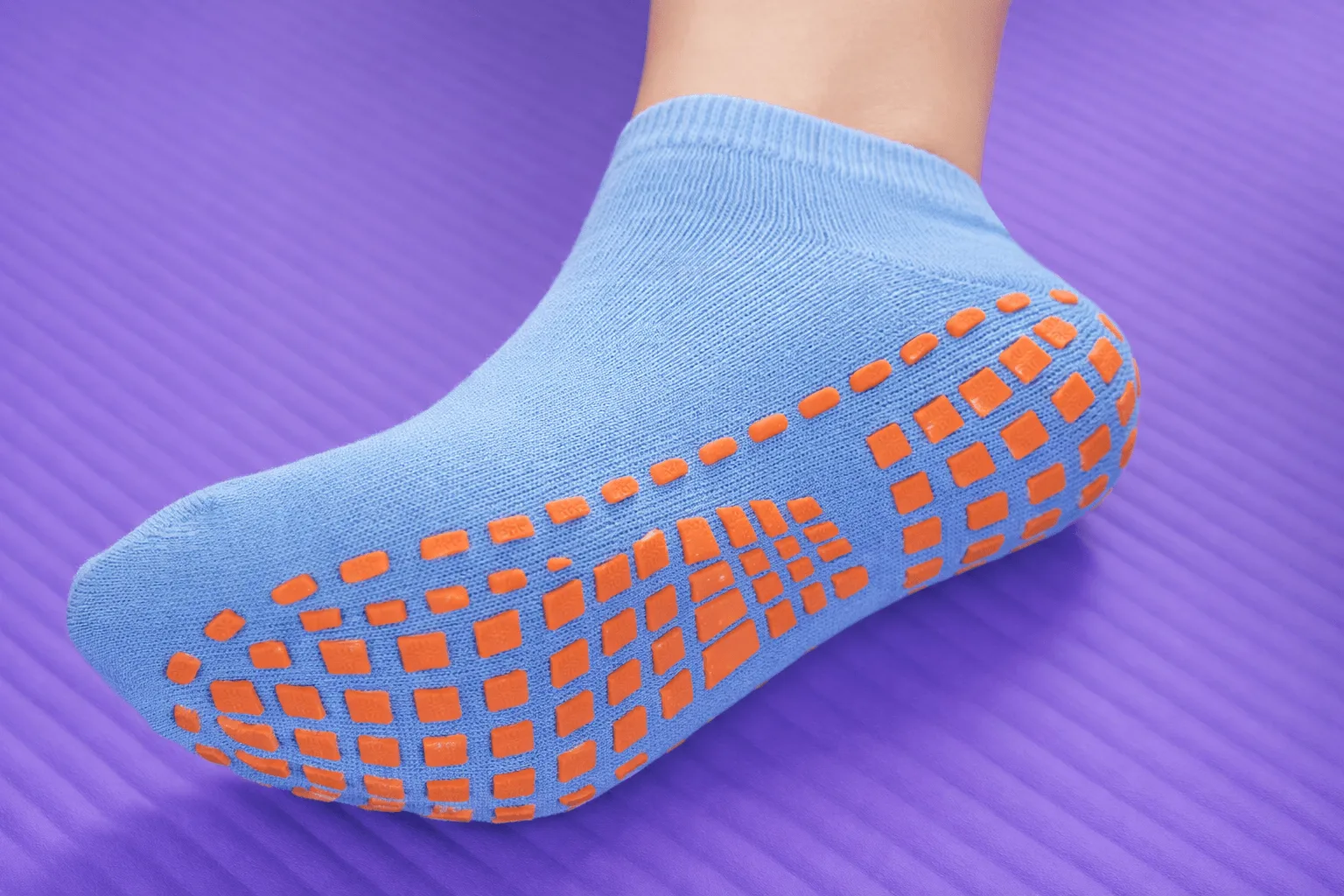
Logo application is one of the clearest differences between a standard factory sock and a true private label product. Five methods are commonly used, and they are not interchangeable — each trades detail against cost.
| Method | Character | Considerations |
|---|---|---|
| Knitted-in | Part of the fabric itself | Very durable and native to the product; fine detail and colour count are limited by the knitting structure |
| Embroidery | Raised, textured, premium | Strong perceived quality; adds a step and cost |
| Silicone | Raised, high contrast, crisp | Very legible; a separate application step |
| Cuff branding | Small and discreet | Unobtrusive; limited to a small area |
| Packaging-led | Brand carried by box, band or label | Usually the most economical launch route |
The choice comes down to target price band and desired visibility — many programs mix methods. The approved execution becomes part of the production reference and must be reproducible on every reorder. Method detail is on the logo application methods for private label grip socks page.
Packaging is where a private label program becomes a retail product. Formats run from polybags, belly bands, hang tags and barcode labels through to insert cards and custom cartons.
Two planning points matter more than the format list. The first is consistency across the range: once two SKUs sit side by side, uneven band placement or mismatched colour references read immediately as a quality problem. The second is retail readiness — if the product will sit on a shelf, pegboard or marketplace listing, the packaging has to be designed for that channel from the start. Format details are on the private label packaging options page, and shelf-ready presentation under retail-ready brand presentation support.
Most private label programs involve more than one SKU, and this is where the order minimum can quietly multiply beyond what the buyer expected.
Colour is usually driven by the brand palette. The practical questions are how many colourways the brand will actually sell, and whether any are seasonal. Each colourway is a separate run, so a four-colour line carries four minimums.
Common structures include women's ranges, men's ranges, kids' sizing where relevant, and mixed-size packs. The packing ratio — how many of each size per box or set — affects both production planning and your inventory balance; getting it right on the first order avoids the familiar problem of leftover large sizes.
Sock height is often used to build a range rather than a single product: a low-cut for studio use, an ankle sock for general training, a crew style for colder environments or a different visual identity. Each height is effectively a distinct product and should be justified by a real market need, not added for apparent completeness.
Start with the smallest range that still looks like a coherent brand: two styles, core sizes, and two or three primary colours. Validate it, then expand on the proven base.
Order minimums and production timing are driven by construction, colour count, grip pattern, logo method and packaging.
| Program type | MOQ |
|---|---|
| Studio & sports programs (yoga, Pilates, barre, fitness) | 500 pairs per color per design |
| High-volume venue programs (trampoline parks) | 1,000 pairs per color per design |
MOQ applies per color per design, not to the order as a whole. A program with three colours and one design therefore carries three production minimums — the most common planning surprise in private label.
Sample development is typically completed in 3-5 days. More complex development requirements may require additional time and will be confirmed during project review.
Sampling comes before bulk production and is where fit, appearance, sole pattern, logo execution and packaging concept are confirmed. The approved sample becomes the production reference — which is why changes after approval are best treated as a new development cycle rather than an adjustment.
Bulk production lead time depends on order quantity, construction, grip application, packaging requirements, and the current production schedule. It starts from sample approval rather than from enquiry.
For a fixed launch date, work backwards from the launch, reserve the sampling window first, and treat packaging artwork as a parallel workstream rather than a final step.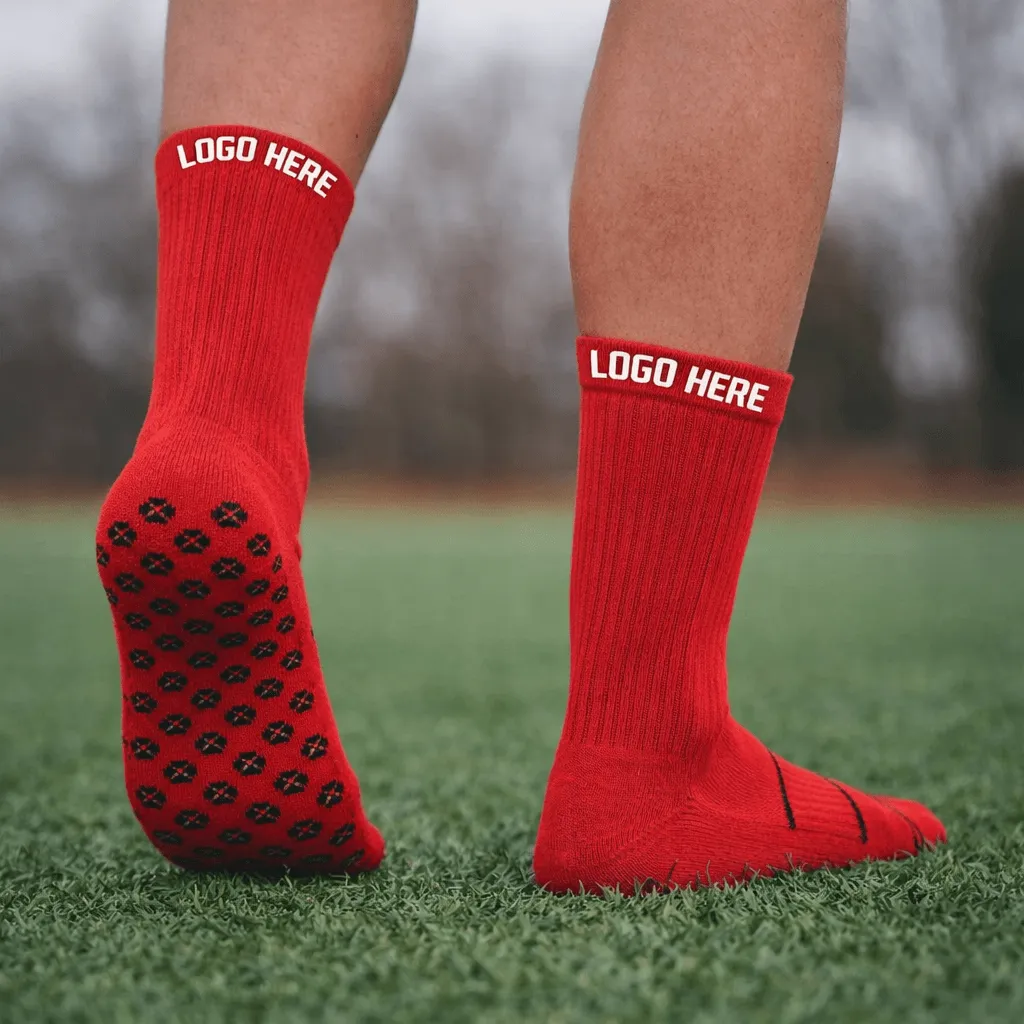
The real test of a private label program is not the first sample run — it is whether the approved version can be reordered and arrive looking and feeling the same. Buyers can accept minor revisions during sampling; what they cannot accept is uncontrolled change in a later bulk order, because the brand promise was already made to their customers.
Repeat-order stability is a planning activity, not something that can be inspected into the product afterwards. Three habits make it work:
Decide early which parts of the range are evergreen and which are seasonal or experimental: evergreen items benefit most from a stable, well-documented reference.
Most of the decisions above can be made before any supplier conversation. Once market position, range, brand system and first-order scope are defined, the program moves into supplier selection — and the questions change from what should we build to who can build it consistently.
Evaluation then focuses on whether the partner is a direct factory or an intermediary, how production is controlled and documented, how brand consistency is protected across reorders, and how compliance requirements for your market are handled. These are supplier-evaluation questions rather than product-planning questions, covered in detail on the private label grip socks manufacturer page.
For orientation: Yuintal operates as a direct grip socks production partner with 13+ years of manufacturing experience, supporting OEM, ODM and private label programs. Manufacturing operations are located in Shaoxing, Zhejiang, China.
Anti-slip socks produced under your own brand — your logo, packaging, size set and specification — rather than generic factory stock. The buyer owns the market-facing brand; the production partner handles manufacturing and packaging.
White label means a standard product branded with minimal changes. Private label means the buyer controls design, materials, colours, sizing and packaging. OEM follows the buyer's own specification. The choice depends on how much control you need and what volume you can commit.
From 500 pairs per color per design for studio and sports programs, and from 1,000 pairs per color per design for high-volume venue programs such as trampoline parks. MOQ applies per colour per design, so a multi-colour range multiplies the minimum; final MOQ also depends on construction, grip pattern and packaging.
Sample development typically takes 3-5 days. Bulk production timing depends on order quantity, construction, grip application, packaging requirements, and the current production schedule.
Yes — for most brands it is the practical route. A focused first order (one or two styles, core sizes, primary colours) validates fit, feel and sell-through at a manageable minimum, and leaves room to correct the specification before scaling.
By treating the approved sample and its documentation as the permanent production baseline. Specifications, artwork, material references, grip pattern and packaging files are retained, and every repeat order follows that reference rather than being redefined.
Once market position, product range and first-order scope are defined — that is when a supplier can give useful feedback on feasibility, minimum order quantity and lead time. Involving one too early produces a specification shaped by what is easy to make; too late means reworking it against the MOQ.
Building a private label grip socks program is a planning exercise before it is a production exercise. The brands that scale smoothly settled market position, range, brand system and first-order scope before the first sample was made — then held that specification stable so the product could be reordered and expanded.
The three surfaces that carry the brand are the sole, the logo and the packaging; everything else is best standardized, because every invisible variation multiplies the order minimum without adding value. The real measure of success is not the first sample, but whether the second and third orders arrive looking exactly like the first.
 Why Do Trampoline Parks Require Grip Socks?
 Trampoline Grip Socks Manufacturer
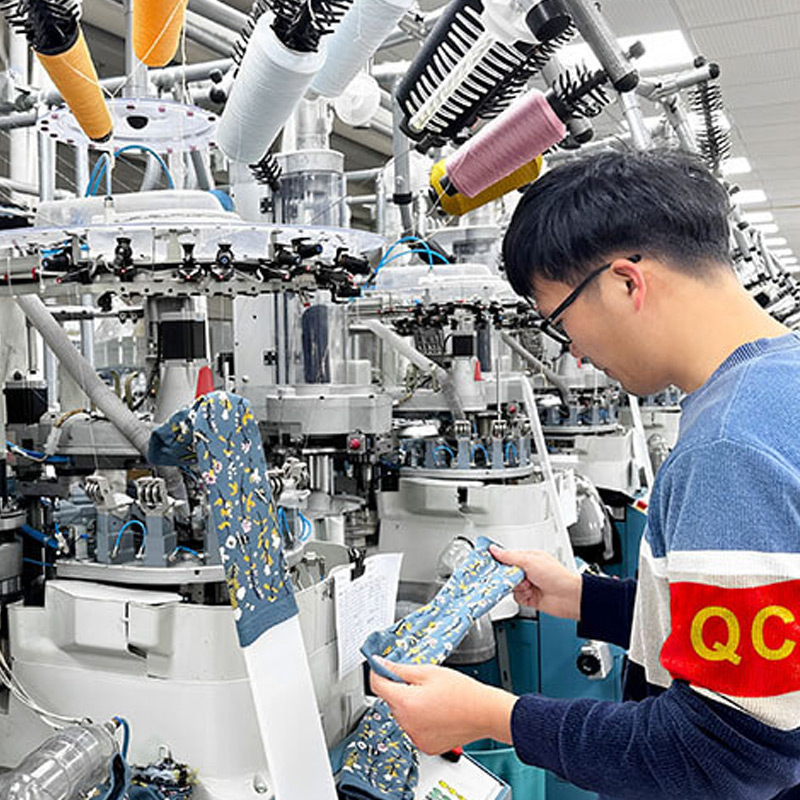 Quality Control Standards for OEM Socks
 Custom Grip Socks