
In the global grip socks market, product quality alone no longer determines commercial success. As brands expand into yoga studios, Pilates chains, trampoline parks, sporting goods retailers, and cross-border e-commerce platforms, the ability to deliver retail-ready products has become a defining competitive factor.
Retail-ready branding refers to the system that allows a pair of grip socks to move seamlessly from factory floor to point-of-sale without additional rework. It encompasses packaging structure, labeling accuracy, durability standards, compliance, SKU logic, and visual consistency across channels. For private label brands, this system is rarely built in-house—it is executed through an OEM/ODM manufacturing partner.
This article examines how retail-ready branding support is implemented in professional grip sock manufacturing, and how Yuintal integrates branding, production, and logistics into a single OEM/ODM framework serving global fitness and retail markets.
Grip socks operate in performance-driven environments where expectations are high and tolerance for defects is low. Whether sold in a Lululemon Studio–style boutique, a Decathlon retail aisle, or issued at a Sky Zone trampoline park, socks must meet consistent functional and visual standards.
Retail partners increasingly expect products to arrive fully prepared:
Failure at any of these points introduces friction—manual relabeling, delayed launches, or even rejected shipments.
In mature supply chains, branding is no longer applied after production; it is embedded during manufacturing planning. This is especially true for grip socks, where design, grip layout, logo execution, and packaging dimensions are interdependent.
At Yuintal, retail-ready branding is developed alongside core product specifications:
This integrated approach reduces downstream adjustments and ensures that branding decisions do not compromise performance.
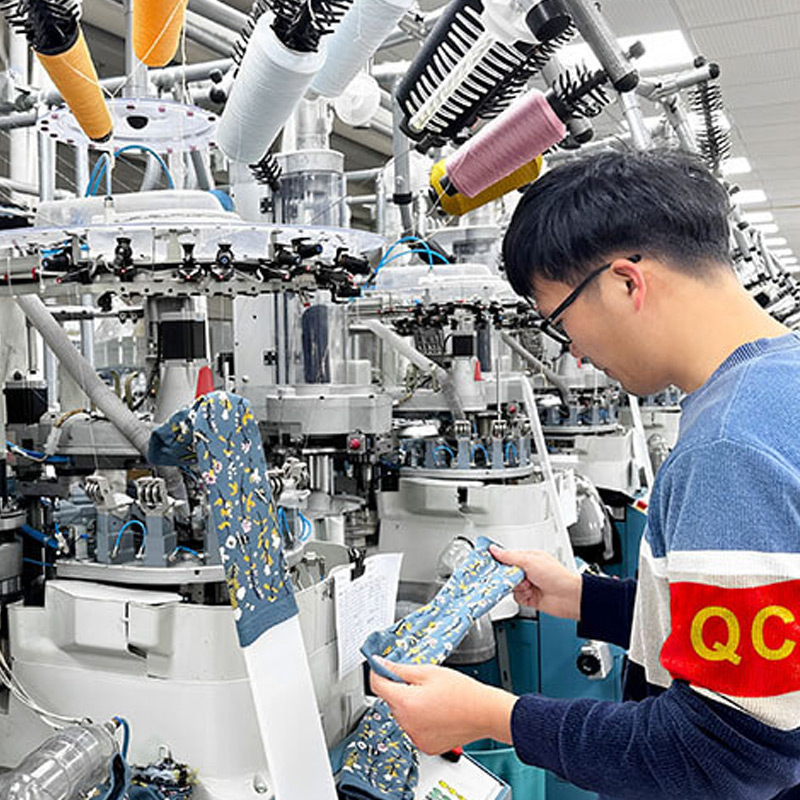
Retail readiness is not subjective. It is measured against defined technical benchmarks that apply across global markets.
| Parameter | Typical Benchmark | Retail Impact |
|---|---|---|
| Grip durability | >50,000 abrasion cycles | Maintains anti-slip performance during use |
| Wash durability | >100 washes | Supports long service life and repeat use |
| Color fastness | Grade 4–5 | Preserves shelf and post-wash appearance |
| Packaging integrity | No tearing or deformation | Reduces in-store and transit loss |
These standards are particularly critical for institutional buyers such as trampoline parks or fitness chains, where products are issued repeatedly rather than sold once.
Studios influenced by brands like Lululemon Studio emphasize minimalism and tactile quality. Packaging is typically compact—belly bands, matte hook cards, or envelope-style wraps—designed to complement interior aesthetics.
In these environments, branding must be subtle yet precise. Misaligned logos, inconsistent colors, or oversized packaging quickly undermine perceived quality.
Operators such as Sky Zone prioritize efficiency and durability. Socks are handled frequently, stored in bulk, and exposed to repeated friction. Branding support here focuses on:
Retail readiness is not achieved at the packaging stage alone. Brands that scale successfully typically work with a private label sock manufacturing partner capable of aligning production standards, branding execution, and channel-specific requirements into a unified delivery model.
Retail readiness is not achieved at the packaging stage alone. Brands that scale successfully typically work with a private label sock manufacturing partner capable of aligning production standards, branding execution, and channel-specific requirements into a unified delivery model.
 Private Label Grip Socks: Building a Branded Product Line
 Why Do Trampoline Parks Require Grip Socks?
 Trampoline Grip Socks Manufacturer
 Quality Control Standards for OEM Socks