Short Answer
Verdict: Barre socks and yoga socks are often very similar in construction, but barre movement usually places greater emphasis on controlled balance transitions and repeated lower-body positioning, while yoga socks may prioritize flexibility, floor feel, and broader movement adaptability. In practice, many grip socks work well for both activities, although subtle differences in traction behavior, movement stability, and sole interaction may become noticeable depending on the studio environment and movement style.
Why Do People Ask This Question?
People often compare barre socks and yoga socks because both are designed for indoor studio movement on smooth flooring where traction and balance control matter. At first glance, the two categories may appear almost identical because both commonly use grip patterns underneath the foot to reduce slipping during movement.
The confusion becomes stronger because barre, yoga, and pilates environments share many movement characteristics. All three activities involve barefoot-style movement, controlled posture changes, studio flooring, and stability-focused exercises. Many users also move between multiple studio activities and naturally wonder whether the same grip socks can be used across all of them.
However, subtle movement differences do exist. Barre movement often involves repeated lower-body positioning, standing pulses, and controlled balance transitions where stable traction becomes especially important. Yoga movement may involve a wider range of flexibility-based positions, broader directional movement, and greater emphasis on natural floor feel during transitions.
This is why barre socks and yoga socks are often closely related rather than completely separate categories. Many grip sock systems commonly used across yoga, pilates, and studio movement environments are suitable for both activities, even though users may still notice small differences in traction behavior depending on movement style.
The Most Common Reasons
Both activities use smooth indoor studio flooring
Barre and yoga classes are commonly performed on wood, laminate, vinyl, or polished studio flooring where regular socks may slide too easily during movement. Grip socks improve traction by creating additional friction between the foot and the floor.
Both rely on controlled body positioning
Both barre and yoga involve posture awareness, controlled movement, and balance-focused exercises. This makes traction consistency more important than in many high-impact fitness activities.
Barre movement often emphasizes repeated lower-body control
Barre exercises commonly involve standing pulses, one-leg stability work, and repeated lower-body positioning where even small foot slides may affect alignment and balance control. This often creates greater demand for stable traction during repetitive movement sequences.
Yoga movement may prioritize flexibility and floor feel
Yoga movement patterns often include stretching, broader body positioning, and more fluid transitions between poses. Some yoga users prefer grip systems that maintain flexibility and natural floor interaction rather than stronger traction resistance.
Many products function well for both activities
In practice, many grip socks are marketed differently even when their traction systems are highly similar. Some products labeled as yoga socks work well for barre classes, while many barre socks also perform effectively during yoga movement.
Because studio movement overlaps across multiple indoor training environments, many users also explore indoor fitness grip sock systems designed for repeated traction-focused movement that support broader studio activity categories.
Quick Comparison Table
| Factor | Barre Socks | Yoga Socks |
|---|---|---|
| Primary movement focus | Balance control, lower-body repetition, and posture stability. | Flexibility, movement flow, and broader body positioning. |
| Traction behavior | Usually emphasizes stable grip during repeated standing transitions. | Often balances grip with natural floor feel and flexibility. |
| Movement style | Controlled pulses, one-leg stability work, and alignment-focused exercises. | Stretching, pose transitions, and wider directional movement. |
| Typical studio environment | Barre studios and posture-focused training classes. | Yoga studios and flexibility-oriented movement environments. |
| Floor interaction | Often prioritizes stable traction during repeated movement cycles. | May prioritize adaptability and smoother movement flow. |
| Failure conditions | Loose fit, worn grip patterns, moisture, or excessive rotational resistance. | Insufficient flexibility, poor floor feel, worn traction, or slippery flooring. |
Compared to Other Options, How Does It Perform?
Compared with regular socks, both barre socks and yoga socks usually provide more stable traction on smooth indoor studio floors. Grip patterns underneath the foot reduce unwanted sliding during posture transitions, standing exercises, and controlled movement sequences.
Compared with barefoot movement, both categories create a more controlled interaction layer between the foot and the floor. Barefoot movement may provide natural surface feedback, but traction consistency can change depending on floor texture, sweat, dust, and studio surface condition.
Barre socks often place greater emphasis on stable traction during repeated lower-body positioning and balance-focused movement. Yoga socks may prioritize flexibility and smoother movement flow during pose transitions where unrestricted foot repositioning becomes more important.
At the same time, the overlap between the two categories is very large. Many studio grip socks perform effectively for both yoga and barre classes because the underlying movement systems still share smooth indoor flooring, controlled posture work, and stability-focused movement patterns.
Many studio environments also use customized studio grip sock systems designed for pilates and indoor movement training where traction behavior overlaps naturally across yoga, barre, and pilates activities.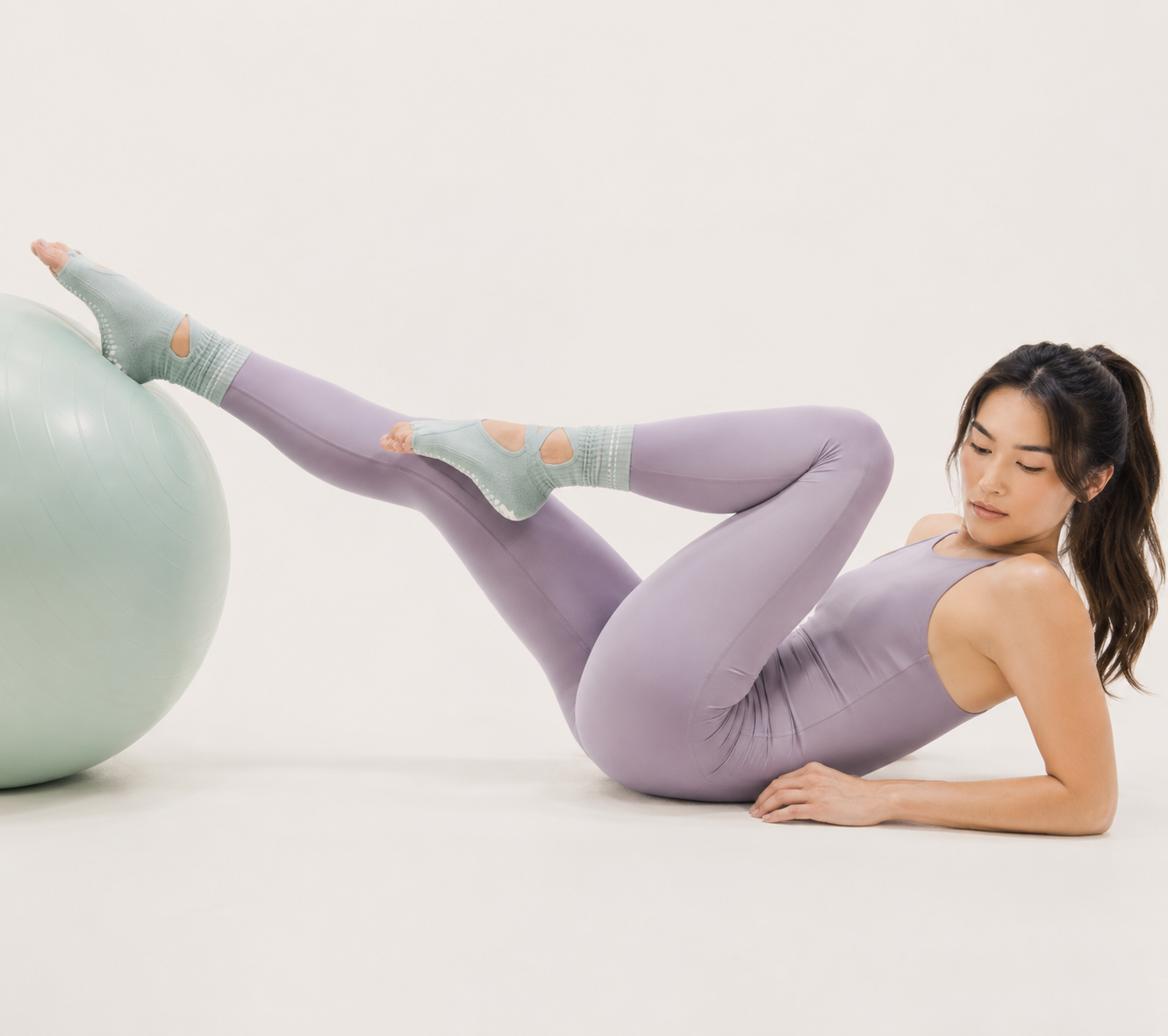
Where Is the Practical Limit?
The practical limit of comparing barre socks and yoga socks is that many products are functionally very similar. In real studio environments, the movement experience often depends more on floor condition, sock fit, grip quality, and individual movement style than on the category label itself.
Another limitation is that traction alone cannot determine movement quality. Barre and yoga both depend heavily on posture control, body alignment, balance mechanics, and movement technique. Grip socks may improve floor interaction, but they cannot replace proper movement stability.
There is also a practical limit to stronger traction. Barre movement may benefit from stable grip during repeated lower-body positioning, but excessive friction can sometimes interfere with smooth foot repositioning. Yoga movement may also feel restricted if the grip pattern reduces natural movement flow too aggressively.
Fit and floor condition remain important variables for both categories. Loose socks, worn traction patterns, moisture, dust, or polished flooring may reduce grip consistency regardless of whether the socks are labeled for barre or yoga use.
A Common Misunderstanding About Barre Socks and Yoga Socks
A common misunderstanding is that barre socks and yoga socks are completely different product categories. In reality, many products marketed for barre and yoga use share nearly identical construction, grip layouts, and movement goals.
Another misunderstanding is that one category is universally better than the other. Barre movement and yoga movement place slightly different demands on traction behavior, but both activities still depend on controlled floor interaction and balance-focused movement. The “better” option often depends more on personal movement preference and studio conditions than on the label itself.
It is also common to assume that stronger grip always creates better movement performance. In practice, both barre and yoga movement usually require controlled traction rather than maximum friction. Too much grip resistance may interfere with rotational flow, repositioning, or natural movement transitions.
When Does the Difference Become Most Noticeable?
The difference between barre socks and yoga socks becomes most noticeable during repeated lower-body movement and balance-focused exercises. Barre movement often includes standing pulses, one-leg positioning, and controlled posture transitions where stable traction may feel more important.
The difference may also appear during broader flexibility-based movement. Yoga exercises often involve stretching, larger body repositioning, and smoother directional flow where unrestricted movement and natural floor feel may become more noticeable.
Another situation where the difference becomes clearer is during rotational adjustment. Barre movement usually requires controlled foot stability while maintaining alignment during repeated movement cycles. Yoga movement may involve more fluid transitions where smoother foot repositioning feels more natural.
At the same time, many users notice very little difference during normal studio use because the overlap between the two categories remains extremely large. In many cases, the same pair of grip socks performs effectively for both barre and yoga movement depending on the floor surface and movement intensity.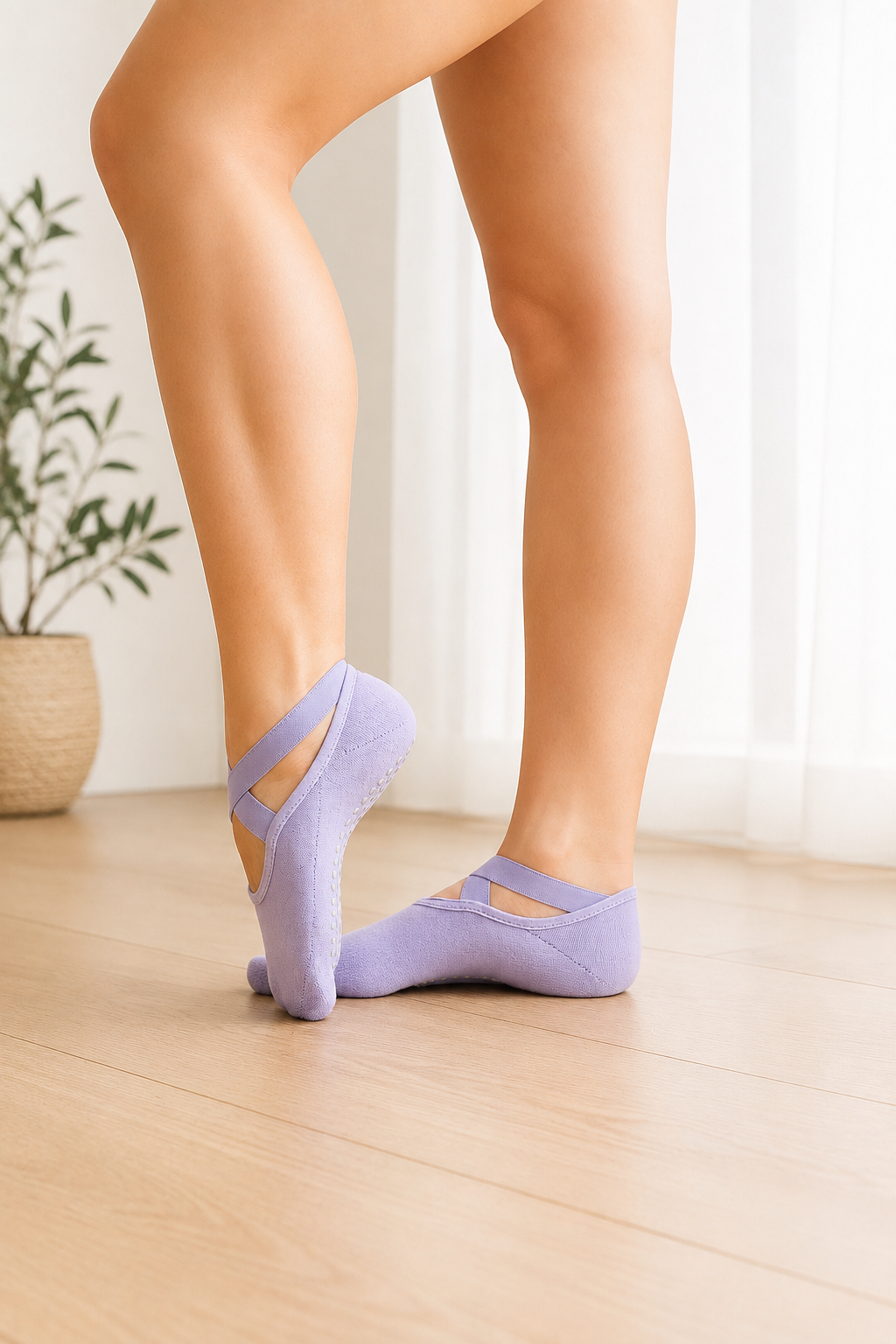
Is This Just a Performance Issue or a Stability Issue?
For most studio users, the difference between barre socks and yoga socks is mainly related to movement performance and traction preference rather than serious injury prevention. However, floor stability still matters because uncontrolled sliding may interrupt posture control during balance-focused exercises.
The stability issue becomes more noticeable on smooth indoor flooring where movement includes one-leg standing positions, repeated posture transitions, or controlled lower-body movement. Small traction changes may affect movement confidence and alignment consistency.
At the same time, grip socks alone cannot fully control movement stability. Posture mechanics, movement technique, fatigue, moisture, floor condition, and body control all influence how stable movement feels during barre or yoga exercises.
This is why barre socks and yoga socks should be understood as movement-support systems rather than complete performance solutions. The interaction between the floor, the body, and the traction system matters more than the product label alone.
How Can You Tell If the Grip Is No Longer Effective?
One of the clearest signs is visible wear on the grip pattern. If the silicone or rubber traction areas become flattened, smooth, cracked, or partially detached, the sock may no longer provide consistent floor interaction during studio movement.
Another sign is increased sliding during familiar exercises. If balance transitions, posture changes, or movement flow suddenly feel less stable on the same studio floor, the traction system may already be losing effectiveness.
Loose fit is another common issue. Repeated washing and stretching may change how the sock wraps around the foot, allowing internal foot movement even when the external grip pattern still appears intact.
Floor condition also influences traction behavior. Dust, sweat, moisture, polished flooring, or cleaning residue may reduce friction consistency during repeated movement sessions regardless of whether the socks are labeled for barre or yoga use.
Key Takeaways
- Barre socks and yoga socks are often very similar and may overlap heavily in real studio use.
- Barre movement usually emphasizes stable traction during repeated lower-body positioning and balance transitions.
- Yoga movement may prioritize flexibility, floor feel, and smoother movement flow.
- Grip effectiveness depends more on floor condition, fit, movement style, and traction quality than on the product label alone.
Frequently Asked Questions
Can you use yoga socks for barre classes?
Yes. Many yoga socks work effectively for barre because both activities rely on indoor traction, posture control, and smooth studio flooring.
Are barre socks different from yoga socks?
They are often very similar, although barre socks may place slightly greater emphasis on stable traction during repeated lower-body movement and balance-focused exercises.
Do barre socks have stronger grip than yoga socks?
Not always. Some barre socks may use more stability-focused traction layouts, but many products across both categories share similar grip systems and sole designs.
Can the same grip socks be used for yoga, barre, and pilates?
Yes. Many studio grip socks are designed for multiple indoor movement environments where traction, posture stability, and smooth floor interaction overlap.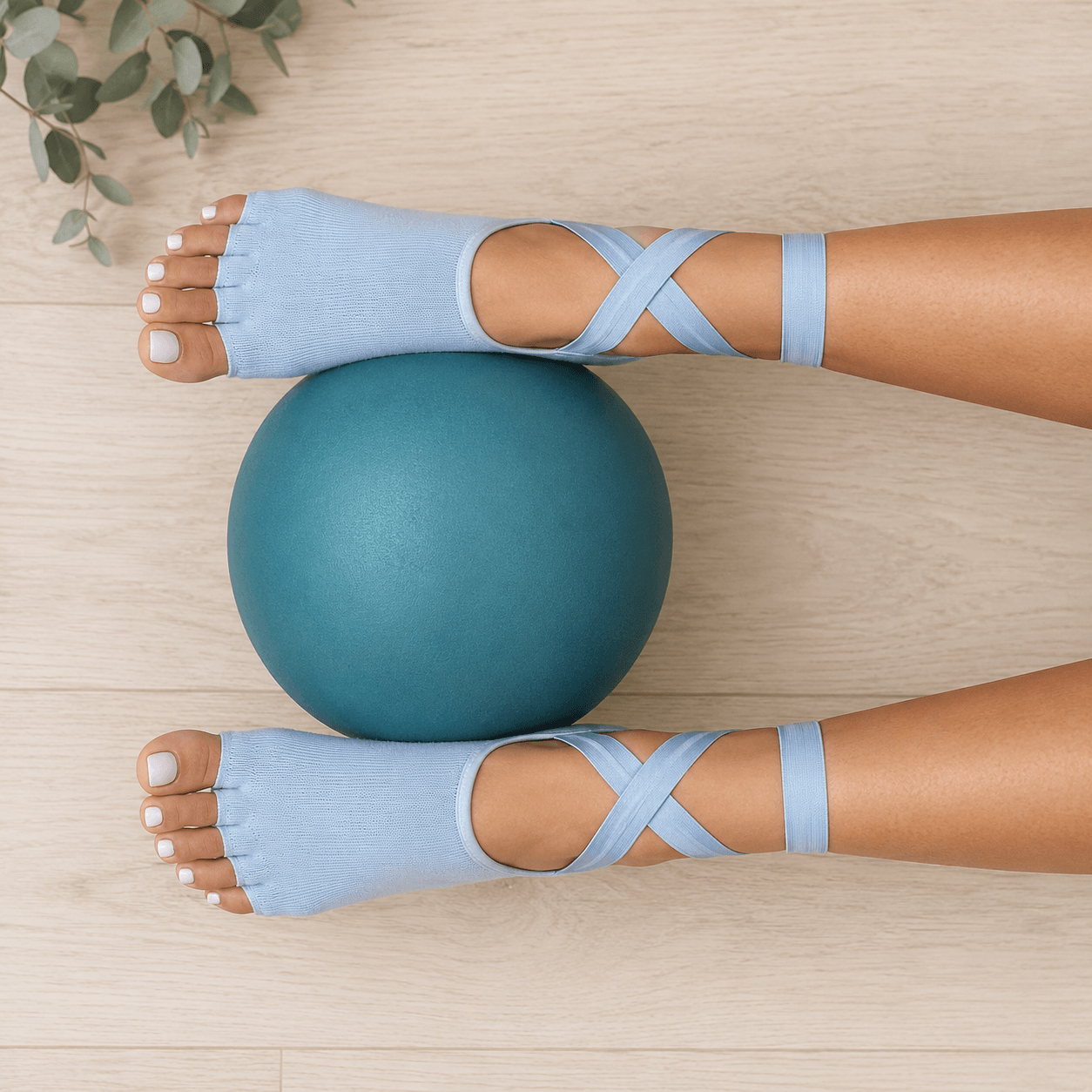
If You Want a Deeper Explanation
The difference between barre socks and yoga socks becomes clearer when floor traction, posture control, and movement interaction are analyzed together as part of a complete studio movement system. You can explore how grip socks performance changes across different floor conditions and movement patterns to better understand why traction behaves differently during yoga and barre exercises.
If you want to understand which traction characteristics are commonly preferred during balance-focused barre movement, you can also explore how grip behavior influences stability and movement flow during barre exercises.