Short Answer
Verdict: Grip socks are commonly used in physical therapy because they help improve traction and movement stability during controlled rehabilitation exercises on smooth indoor surfaces. They are especially useful during balance training, assisted walking, posture recovery, and low-impact movement where uncontrolled sliding may interfere with rehabilitation movement confidence and stability.
Why Do People Ask This Question?
People ask about grip socks for physical therapy because rehabilitation movement often takes place on smooth indoor flooring where stability and controlled movement are extremely important. During recovery exercises, even small sliding movements may affect posture correction, balance training, walking confidence, or assisted rehabilitation movement.
Unlike high-impact athletic training, physical therapy usually focuses on controlled movement patterns performed slowly and carefully. Patients recovering from injury, surgery, mobility limitations, or balance instability often need reliable floor interaction during standing exercises, assisted walking, and rehabilitation movement transitions.
This is one reason grip socks are commonly used in rehabilitation clinics, therapy centers, elderly recovery environments, and indoor mobility training systems. The grip pattern underneath the foot helps reduce uncontrolled sliding while still allowing flexible indoor movement during therapy exercises.
At the same time, therapy grip socks are not designed to replace rehabilitation technique or movement control itself. Their purpose is mainly to support traction consistency during controlled indoor movement where balance and stability are already sensitive.
Because rehabilitation movement often overlaps with posture-focused indoor exercise systems, many traction-focused grip sock systems used for controlled indoor movement share similar stability principles across therapy, studio, and recovery environments.
The Most Common Reasons
Physical therapy often involves balance retraining
Many rehabilitation exercises focus on restoring balance control during standing movement, assisted walking, or posture correction. Grip socks help reduce unwanted sliding during these controlled exercises.
Controlled movement requires stable floor interaction
Physical therapy exercises are often performed slowly and carefully. Small traction changes may affect movement confidence during rehabilitation movement patterns where posture control and stability are important.
Indoor rehabilitation floors are usually smooth
Therapy centers, clinics, hospitals, and rehabilitation environments commonly use smooth flooring such as vinyl, laminate, tile, or sealed surfaces that may reduce traction when wearing regular socks.
Grip socks support assisted walking exercises
During recovery movement, users may perform assisted standing exercises, walking practice, directional transitions, or controlled stepping movement where additional floor traction may improve movement confidence.
Elderly rehabilitation environments often prioritize indoor traction
Grip socks are especially common during elderly mobility recovery because small sliding movements may create greater instability for users with reduced balance control or lower-body strength.
Many rehabilitation environments also overlap with controlled indoor movement systems used in yoga and pilates environments where posture stability, balance awareness, and smooth floor interaction remain important.
Quick Comparison Table
| Factor | Therapy Grip Socks | Regular Socks | Barefoot Movement |
|---|---|---|---|
| Traction during rehabilitation movement | Usually provides more stable floor interaction during controlled exercises. | May slide more easily on smooth indoor rehabilitation flooring. | Depends heavily on skin contact and floor condition. |
| Balance-focused exercises | Helps reduce unwanted foot movement during posture recovery and standing exercises. | Less stable during assisted movement transitions. | May feel natural but traction consistency can vary. |
| Typical environments | Rehabilitation clinics, therapy centers, elderly recovery spaces, and hospitals. | General indoor comfort use. | Controlled rehabilitation sessions with direct floor contact. |
| Movement style | Slow, controlled rehabilitation movement and balance retraining. | Not specifically designed for rehabilitation stability. | Natural floor feedback during controlled movement. |
| Failure conditions | Worn grip patterns, oversized fit, wet flooring, or unstable balance mechanics. | Smooth flooring, repeated movement transitions, or low traction surfaces. | Moisture, sweat, weak balance control, or slippery rehabilitation floors. |
Compared to Other Options, How Does It Perform?
Compared with regular socks, therapy grip socks usually provide better traction during controlled rehabilitation movement because the grip pattern underneath the foot reduces uncontrolled sliding on smooth indoor floors.
Compared with barefoot rehabilitation movement, grip socks create a more stable traction layer between the foot and the floor while still allowing flexibility during therapy exercises. Barefoot movement may provide direct floor feedback, but traction consistency may vary depending on moisture, floor texture, and individual balance control.
Compared with structured rehabilitation footwear, grip socks allow greater flexibility and lighter indoor movement. Many therapy exercises involve posture correction, assisted stepping, balance retraining, and controlled standing transitions where heavy footwear may reduce floor sensitivity.
At the same time, therapy grip socks are usually designed for controlled rehabilitation environments rather than highly dynamic athletic movement. Their traction systems often focus more on movement stability and indoor safety than on aggressive sports-oriented grip behavior.
Many rehabilitation and recovery environments also use grip sock systems designed specifically for controlled therapy movement and indoor rehabilitation stability where posture recovery and balance retraining are closely connected to floor interaction.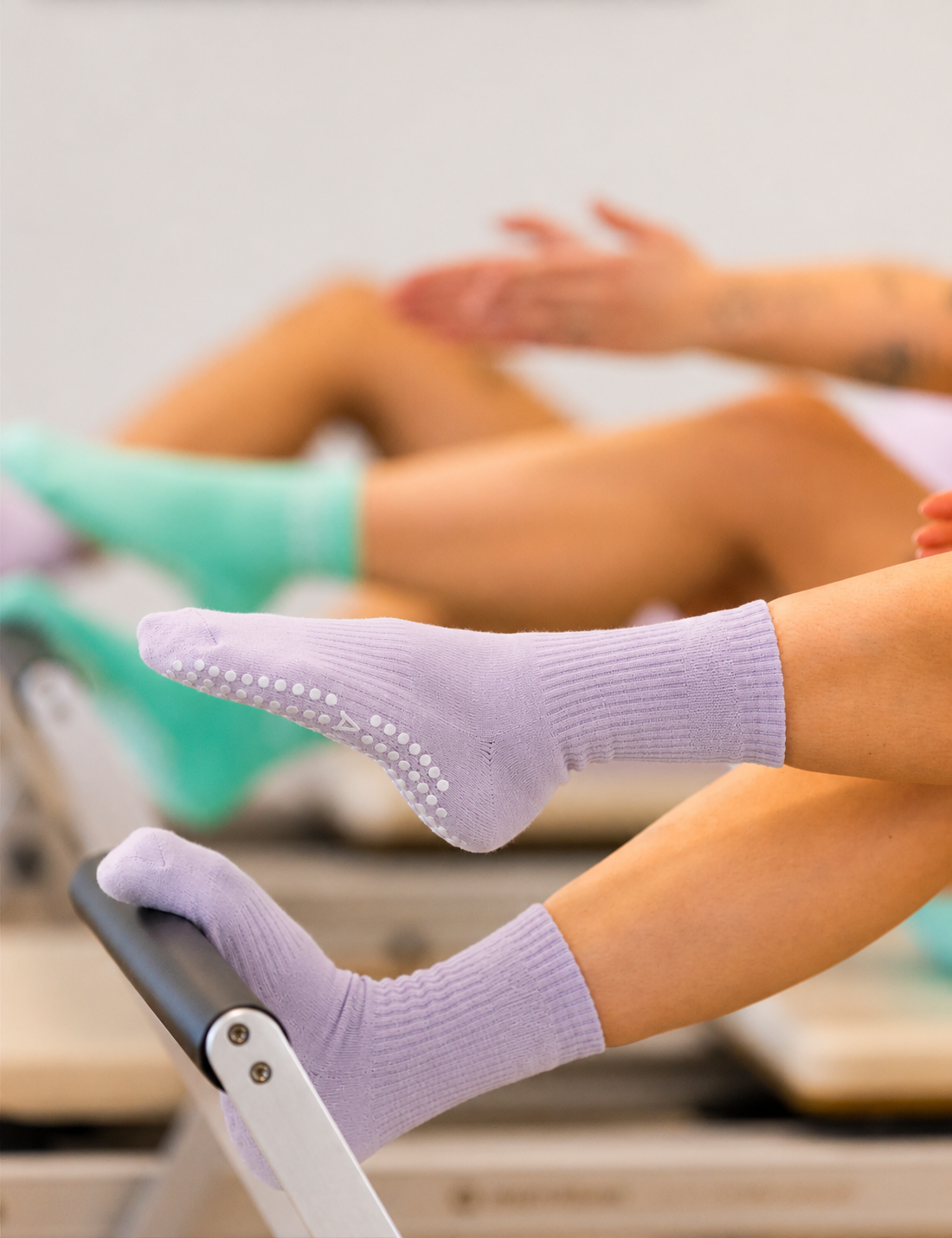
Where Is the Practical Limit?
The practical limit of therapy grip socks is that traction alone cannot restore movement stability or rehabilitation ability. Grip socks may improve floor interaction, but they cannot replace posture control, balance mechanics, muscle strength, or rehabilitation technique.
Another limitation is that grip socks work best only within certain environmental conditions. Smooth dry indoor floors usually allow stable traction, while moisture, dust, cleaning residue, or polished flooring may reduce friction consistency during rehabilitation movement.
Fit also becomes very important during therapy exercises. Loose socks may allow internal foot movement even when the grip pattern still contacts the floor correctly. During rehabilitation exercises that depend on precise movement control, this instability may affect posture correction and movement confidence.
Grip socks also become less effective when rehabilitation movement already involves severe balance instability or mobility limitations. In those situations, additional support systems may still be necessary beyond simple traction improvement.
A Common Misunderstanding About Therapy Grip Socks
A common misunderstanding is that therapy grip socks are designed mainly for comfort. In reality, their primary role is usually related to movement stability and traction control during rehabilitation movement on smooth indoor flooring.
Another misunderstanding is that stronger grip automatically creates better rehabilitation movement. Physical therapy often involves controlled repositioning and balance retraining where traction needs to remain stable without becoming overly restrictive during movement transitions.
It is also common to assume that grip socks alone can prevent rehabilitation instability or falls. In practice, movement safety depends on many connected factors including posture mechanics, floor condition, rehabilitation technique, balance recovery, and individual mobility control.
When Does the Difference Become Most Noticeable?
The difference becomes most noticeable during balance-focused rehabilitation exercises and assisted movement transitions. Physical therapy often includes slow standing exercises, posture correction, controlled stepping, and walking retraining where even small sliding movements may affect stability perception.
The difference is especially visible on smooth rehabilitation flooring such as vinyl, tile, laminate, or sealed indoor surfaces commonly used in clinics and recovery environments. Regular socks may slide too easily during controlled rehabilitation movement, while therapy grip socks usually maintain more stable floor interaction.
Another moment when the difference becomes clearer is during assisted walking exercises and directional movement changes. Patients recovering from surgery, mobility limitations, or balance instability often depend heavily on predictable traction during rehabilitation movement.
The difference may also become more noticeable during elderly rehabilitation movement where lower-body stability and movement confidence are already sensitive. In these situations, small traction improvements may have a larger influence on perceived movement control.
Is This Just a Comfort Issue or a Stability Issue?
In physical therapy environments, traction is usually treated as a movement stability issue rather than only a comfort issue. Rehabilitation exercises often depend on controlled movement and predictable floor interaction where uncontrolled sliding may interrupt posture recovery or balance retraining.
The stability risk becomes more important during assisted standing movement, balance exercises, walking recovery, and elderly rehabilitation training where movement control is already limited or sensitive.
At the same time, grip socks alone cannot fully eliminate rehabilitation movement risk. Weak balance mechanics, fatigue, improper movement technique, wet flooring, or severe mobility limitations may still create instability during recovery exercises.
This is why therapy grip socks should be understood as one part of a broader rehabilitation support system involving floor condition, movement training, posture correction, and assisted recovery movement together.
How Can You Tell If the Grip Is No Longer Effective?
One of the clearest signs is visible wear on the grip pattern. If the silicone or rubber traction zones become flattened, cracked, smooth, or partially detached, the sock may no longer provide stable traction during rehabilitation movement.
Another sign is increased instability during familiar therapy exercises. If standing transitions, assisted walking, or balance exercises suddenly feel less controlled on the same indoor flooring, the traction system may already be losing effectiveness.
Loose fit can also reduce grip performance significantly. Repeated stretching and washing may change how the sock wraps around the foot, allowing internal movement that weakens traction consistency during controlled rehabilitation exercises.
Floor condition also affects traction reliability. Moisture, cleaning residue, polished rehabilitation flooring, or dust may reduce grip consistency even when the traction pattern itself still appears intact.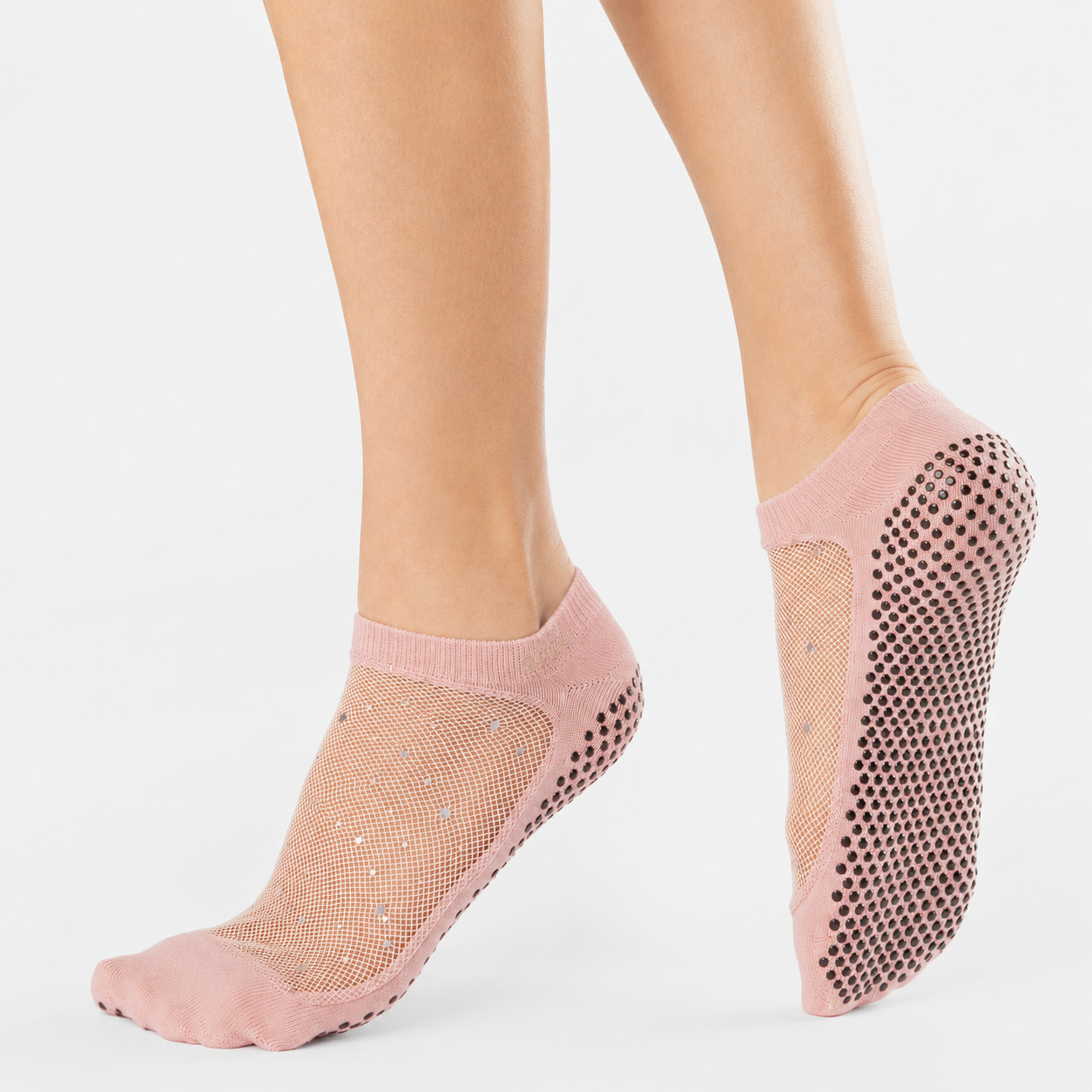
Key Takeaways
- Grip socks are commonly used in physical therapy because they improve traction during controlled rehabilitation movement.
- They are especially useful during balance retraining, assisted walking, posture recovery, and elderly rehabilitation exercises.
- Therapy grip socks support movement stability but cannot replace rehabilitation technique or balance control.
- Grip effectiveness depends on floor condition, sock fit, traction durability, and movement mechanics together.
Frequently Asked Questions
Why are grip socks used in physical therapy?
Grip socks help improve traction and movement stability during rehabilitation exercises performed on smooth indoor floors where balance control is important.
Are therapy grip socks different from regular grip socks?
Therapy grip socks usually focus more on controlled rehabilitation movement and indoor stability rather than aggressive traction for high-impact athletic activity.
Can grip socks prevent falls during rehabilitation?
Grip socks may reduce slipping risk during controlled movement, but they cannot fully prevent falls because rehabilitation stability also depends on balance mechanics, posture control, and movement technique.
When should therapy grip socks be replaced?
If the grip pattern becomes worn, flattened, cracked, or less stable during rehabilitation exercises, the traction system may no longer provide reliable movement support.
If You Want a Deeper Explanation
Therapy grip performance depends on how traction, balance control, rehabilitation movement, and indoor floor interaction work together as one connected movement system. You can explore how grip socks performance changes across different floor conditions and movement patterns to better understand why traction behaves differently during rehabilitation exercises.
Because physical therapy movement often overlaps with elderly recovery and indoor mobility training, you can also explore how grip socks support elderly stability and controlled indoor movement during recovery and rehabilitation environments.