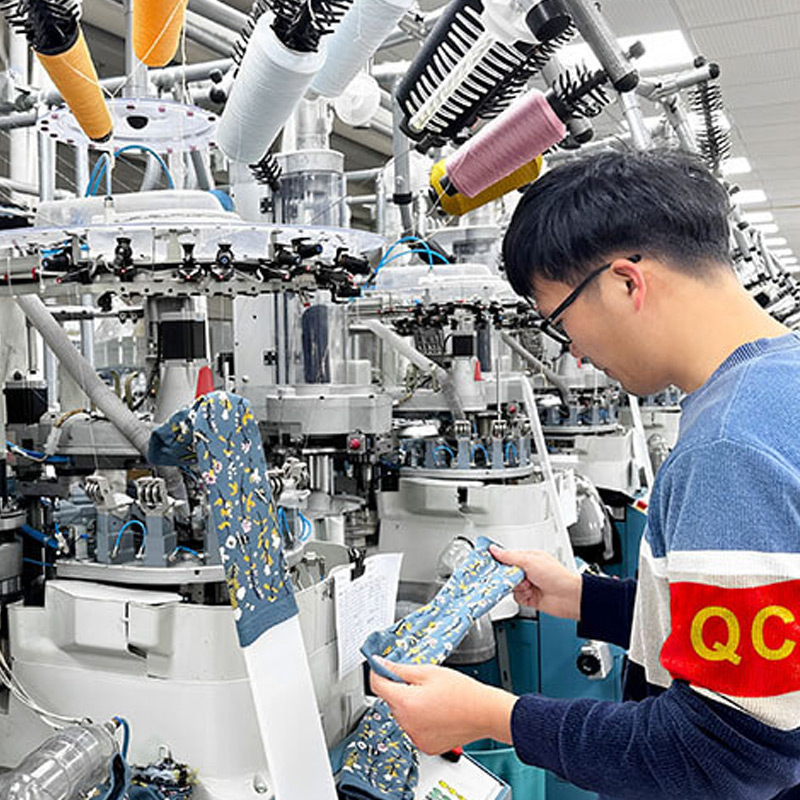
Yes — custom Pilates grip socks can be produced with logo, grip pattern, color, packaging, and full private label branding. For most OEM projects, the minimum order quantity typically falls within a flexible range depending on customization depth, with faster sample turnaround available for standard logo applications. Compared to generic suppliers, this customization model focuses on brand-ready production, stable grip performance, and efficient sample-to-bulk workflows tailored for Pilates studios, fitness brands, and distributors.
Custom Pilates Grip Socks for Studios, Brands, and Private Label Projects
Custom Pilates grip socks are designed for businesses that require branded, performance-oriented anti-slip socks tailored to studio environments and retail programs. Unlike standard ready-made products, customization allows studios, fitness brands, and distributors to create socks that align with their brand identity, customer expectations, and usage scenarios.
At Yuintal, customization is structured around OEM and private label production rather than generic product resale. This means projects are developed based on specific requirements such as logo application, grip layout, packaging format, and target use conditions. Businesses that need scalable production can explore broader manufacturing capabilities through a grip socks manufacturer overview, while customization pages focus specifically on execution flexibility.
For Pilates-focused projects, customization is especially important because studio branding, hygiene standards, and grip performance consistency all directly affect user experience. This is why many studio operators and distributors combine branding needs with reliable supply models, often coordinating both custom grip socks development and grip socks wholesale sourcing strategies.
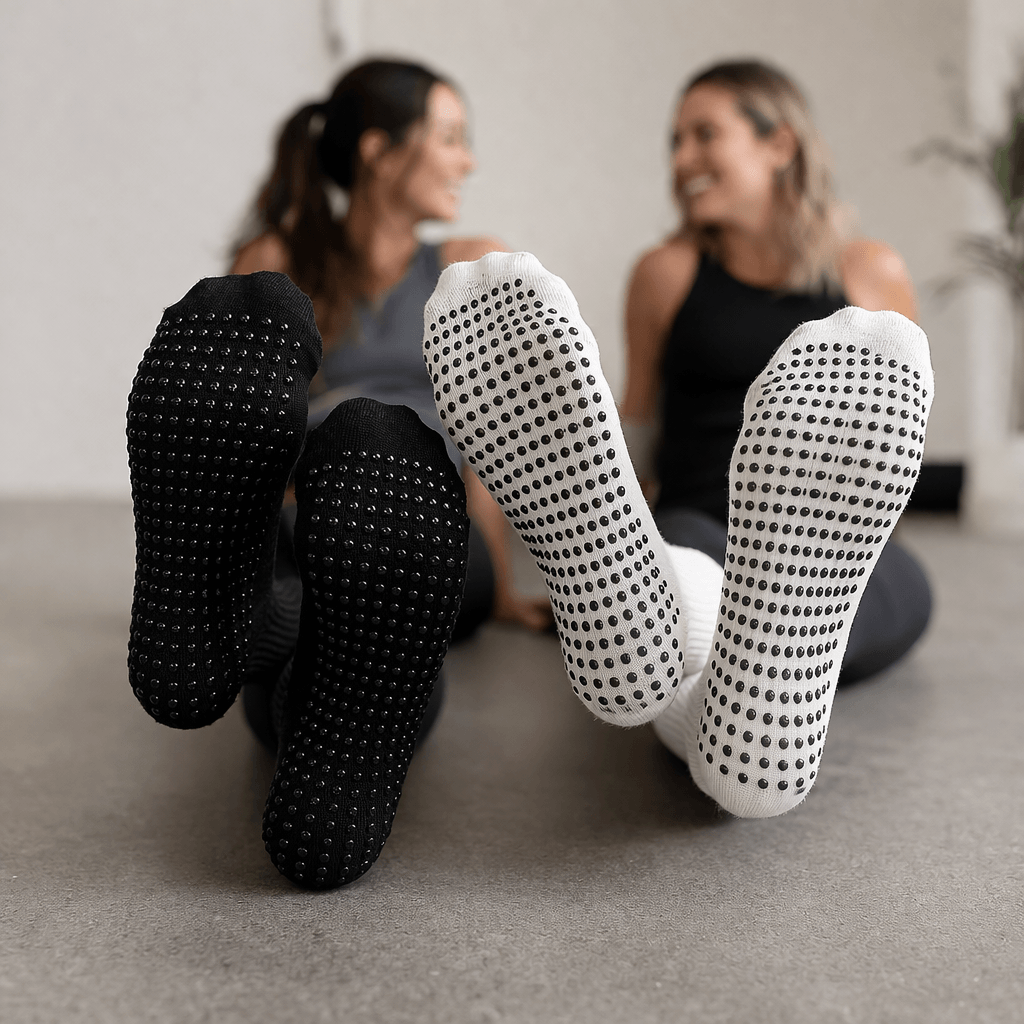 What Can Be Customized in Pilates Grip Socks
 What Can Be Customized in Pilates Grip Socks
Customization is not limited to adding a logo. A complete OEM project typically includes multiple adjustable elements that together define the final product’s branding, functionality, and presentation.
Logo Customization
- Silicone logo printing for grip durability
- Embroidery for premium branding appearance
- Printed logos for lightweight designs
Grip Pattern Customization
- Full-sole grip coverage for maximum traction
- Targeted grip zones for Pilates movements
- Custom-designed patterns for brand identity
Yarn and Color Customization
- Pantone-based color matching
- Standard color card selection
- Material adjustments based on usage needs
Packaging Customization
- OPP packaging for bulk distribution
- Custom printed boxes for retail programs
- Eco-friendly packaging options
Size and Fit Customization
- Standard size ranges for studios
- Custom sizing for specific markets
Labeling and Branding
- Private label tags
- Custom washing labels
- Retail-ready branding systems
For projects that extend beyond Pilates-specific needs, similar customization logic can also apply to custom yoga grip socks or broader product lines such as logo grip socks, depending on brand positioning.
Customization Process for OEM Pilates Grip Socks
A custom Pilates grip socks project usually works best when the process is defined early. Instead of treating customization as a simple logo change, it should be managed as a step-by-step OEM workflow covering design, material choice, sampling, approval, and bulk execution. This helps reduce misunderstanding, improve sample accuracy, and support more stable repeat orders.
- Requirement Confirmation
The project begins with clarifying logo method, target quantity, size range, color direction, grip layout, packaging format, and intended market. This stage often takes a short review cycle depending on how complete the buyer’s brief is. - Design Review and Technical Alignment
Logo position, sock structure, sole grip arrangement, and packaging details are checked for production suitability. If needed, files and visual references are adjusted to fit manufacturing limits and branding goals. - Sample Development
A sample is prepared based on the approved direction. Standard custom logo projects usually move faster than fully customized projects that include new color systems, grip artwork, and retail packaging. - Sample Evaluation and Approval
The buyer reviews fit, logo visibility, grip placement, color appearance, and packaging presentation. Any required revision is best confirmed at this stage before bulk production starts. - Bulk Production
After approval, production moves into knitting, grip application, curing, finishing, inspection, and packing. Buyers comparing broader OEM capability can also review a Pilates grip socks manufacturer page to understand how studio-focused production is usually organized. - Packing and Shipment Preparation
Finished goods are packed according to the agreed packaging format and prepared for export coordination through established supply channels.
For brands building multi-category studio lines, the same workflow can often be extended to related products such as private label Pilates socks after the first project structure is confirmed.

MOQ and Lead Time for Custom Pilates Grip Socks
MOQ and lead time depend on how deep the customization goes. A project with an existing sock base and a logo adjustment usually requires less setup than a project involving custom yarn colors, fully new grip artwork, special sizing, and custom packaging. Repeat orders are often more efficient once sampling and technical details have already been confirmed.
| Customization Type | Typical MOQ Range | Sample Time | Production Time |
|---|---|---|---|
| Logo-based customization | Lower entry range for initial OEM projects | Shorter sample cycle | Faster bulk turnaround |
| Custom logo + grip pattern | Moderate MOQ range | Medium sample cycle | Standard bulk lead time |
| Full customization with packaging | Higher MOQ range | Longer sample cycle | Longer production planning window |
| Repeat order of approved style | Often more flexible than first order | Sample may be unnecessary or simplified | More stable and efficient |
In practical terms, initial MOQ is usually evaluated based on branding complexity, material selection, and packaging requirements. Repeat order MOQ may become more flexible once the construction, color standard, and grip layout are already approved. Buyers who are comparing bulk sourcing paths may also want to review wholesale Pilates grip socks options when customization is light and procurement speed matters more than brand distinction.
Pricing is usually influenced by order volume, customization depth, logo method, packaging format, and material specification rather than by a single fixed factor. For that reason, MOQ and lead time should be discussed together, not separately.

Sample Policy Before Bulk Production
Sample policy is one of the most important parts of a custom Pilates grip socks project because it affects decision speed, revision control, and production confidence. A clear sample policy helps both sides align on what is being tested and what is considered approved for bulk production.
- Sample Cost: Sample charges usually depend on customization complexity, especially when new grip artwork, custom color matching, or branded packaging are involved.
- Bulk Order Deduction: For some OEM projects, sample fees may be partially or fully considered during bulk order discussion after the project moves forward.
- Sample Cycle: Standard custom samples usually move faster than fully customized samples that involve more technical adjustments.
- Revision Rounds: A limited number of revisions is generally more efficient than repeated redesign cycles. Major specification changes after sampling may require a new review stage.
- Courier Arrangement: Samples are commonly sent by express courier for quicker confirmation before production scheduling.
The main purpose of a sample is not only to show appearance, but also to confirm fit, grip layout, logo effect, color direction, and packaging presentation. Once the sample is approved, it becomes the production reference for the bulk order.
Design Support for Logo and Branding Execution
Not every buyer begins with production-ready files. Some Pilates studios and smaller brands only have a logo, color preference, or rough packaging idea. In these cases, design support becomes part of the OEM process.
- Logo placement suggestions based on sock structure
- Grip layout adjustment for visual balance and performance fit
- Packaging direction for studio retail, gift-ready, or distribution use
- Support for common file formats used in logo and packaging preparation
Design support does not replace brand ownership. Instead, it helps ensure that brand elements can be transferred into a manufacturable product format with fewer issues during sampling and bulk production.
Quality Considerations in Custom Pilates Grip Socks
Customization should not reduce functional reliability. A professional OEM project needs to balance branding details with grip performance, fit consistency, and repeat-order stability.
- Logo Durability: The chosen logo method should match the intended use and washing expectations.
- Grip Adhesion: Grip application should remain consistent across batches so the sole pattern performs as intended.
- Wash Resistance Awareness: Materials and finishes should be selected with normal use and care conditions in mind.
- Bulk Consistency: Color, size, logo position, and grip distribution should stay aligned with the approved sample as closely as production conditions allow.
For buyers who want to compare studio-focused customization with general non-slip OEM production, related pages such as custom non slip socks can help clarify how project requirements vary by application.
Customization Risk Control
Most customization problems do not come from the idea itself, but from unclear approvals before production. Risk control is therefore an essential part of OEM project management.
Color Variation Control
Color should be aligned through references, available color systems, or confirmed sample standards. Final appearance may vary slightly across materials, so approval should focus on realistic production matching rather than purely digital expectations.
Logo and Grip Durability Review
Logo methods and grip layouts should be selected according to use conditions, not only visual preference. A sample review helps confirm whether the chosen branding method is appropriate for Pilates use.
Sample Approval Importance
The approved sample should serve as the production reference. This reduces ambiguity during mass production and improves communication between buyer expectations and factory execution.
IP Protection Awareness
For branded projects, artwork and private label elements should be handled as project-specific materials. Clear documentation and project confirmation help reduce avoidable misuse or confusion.
Post-Sample Modification Rules
Changes requested after sample approval may affect timing, MOQ, or production arrangement. It is better to finalize logo placement, colors, packaging, and labeling details before the bulk order is released.
Typical Custom Pilates Grip Socks Projects
Custom Pilates grip socks are used in several business models, and each model usually has different priorities in terms of branding, MOQ, packaging, and reorder planning.
Studio Branding Programs
Pilates studios often need socks that reflect their class environment and brand image. In these projects, logo visibility, grip reliability, and packaging simplicity are usually more important than highly complex retail presentation. For studios building a broader branded merchandise line, custom grip socks can serve as the main parent category for future expansion.
Retail and Private Label Collections
Retail-focused buyers usually require stronger consistency in appearance, packaging, and product identity. These projects may combine Pilates-specific positioning with broader branding logic, which is why some buyers also compare private label grip socks solutions when planning brand-led collections.
Distributor and Importer Projects
Distributors generally focus on supply continuity, manageable MOQ, packaging flexibility, and repeat-order efficiency. In these cases, the balance between customization depth and procurement practicality is critical. Some distributor projects may start with a lighter customization model before moving into more developed OEM programs.
Multi-Category Fitness Product Lines
Some buyers do not treat Pilates socks as a single isolated item. Instead, they develop coordinated studio or fitness collections that may later extend into yoga or general non-slip categories. When that happens, adjacent pages such as custom yoga grip socks can support category expansion without changing the underlying OEM workflow too much.
FAQ
What is the MOQ for custom Pilates grip socks?
The MOQ usually depends on customization depth. A simpler logo-based project often has a more accessible entry point than a fully customized order with custom colors, grip artwork, sizing, and packaging.
Can samples be made before bulk production?
Yes. Sampling is a normal part of an OEM project and is used to confirm logo placement, grip layout, color direction, fit, and packaging details before bulk production begins.
Can the logo and grip pattern both be customized?
Yes. A project can include logo customization, sole grip customization, or both together, depending on branding goals and production feasibility.
How long does bulk production usually take?
Production timing varies according to order volume, material selection, and customization complexity. Repeat orders of already approved styles are usually easier to schedule than first-time custom developments.
What happens if changes are requested after sample approval?
Post-approval changes may affect lead time, MOQ, and production planning. It is generally best to finalize logo, color, packaging, and labeling details at the sample confirmation stage.
Are custom Pilates grip socks suitable for private label projects?
Yes. They are suitable for studio branding, retail programs, distributor projects, and other private label models that require a branded anti-slip sock product rather than generic stock supply.

Conclusion
Custom Pilates grip socks are best understood as an OEM project rather than a simple product variation. The real value lies in how well branding, grip performance, packaging, and production workflow are aligned from the beginning. For studios, brands, distributors, and private label buyers, a workable customization model depends on clear scope definition, realistic sampling, controlled approvals, and stable bulk execution.
When customization is managed with attention to MOQ, sample policy, quality consistency, and project risk control, Pilates grip socks can become a reliable branded product category rather than a one-off sourcing experiment. Buyers evaluating broader supply options may also compare a grip socks manufacturer page for production capability context or review wholesale grip socks supplier pathways when procurement priorities differ from full OEM development.