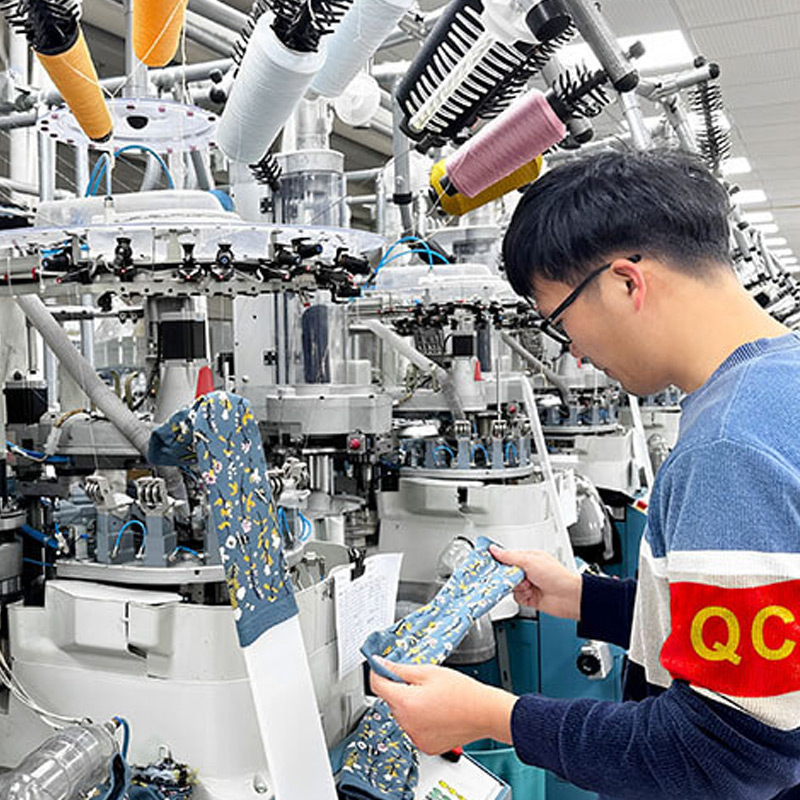
Running a trampoline park means managing hundreds of guests, high-energy activity, and real liability exposure — all at the same time. Grip socks are not just a merchandise item. They are a safety requirement, a revenue stream, and a branding touchpoint all in one. Yet most park operators we work with say they made their first sock purchasing decision based on price alone — and ended up reordering too soon, dealing with inconsistent sizing, or receiving complaints about grip failure.
This guide is written for trampoline park operators, venue managers, and indoor entertainment buyers who are about to place a bulk order and want to get it right the first time. As a manufacturer supplying grip socks to trampoline parks across 25+ countries, we have seen what separates a reliable supply chain from a frustrating one.
Why Trampoline Parks Need Specialist Grip Socks
Standard socks — even those labelled "non-slip" — are not built for the stress levels of a commercial trampoline environment. When a guest lands, pivots, or pushes off a trampoline surface, the lateral and vertical forces on the sock are significantly higher than those in casual indoor walking. Grip socks designed for trampoline use are built around three specific demands that general non-slip socks do not address: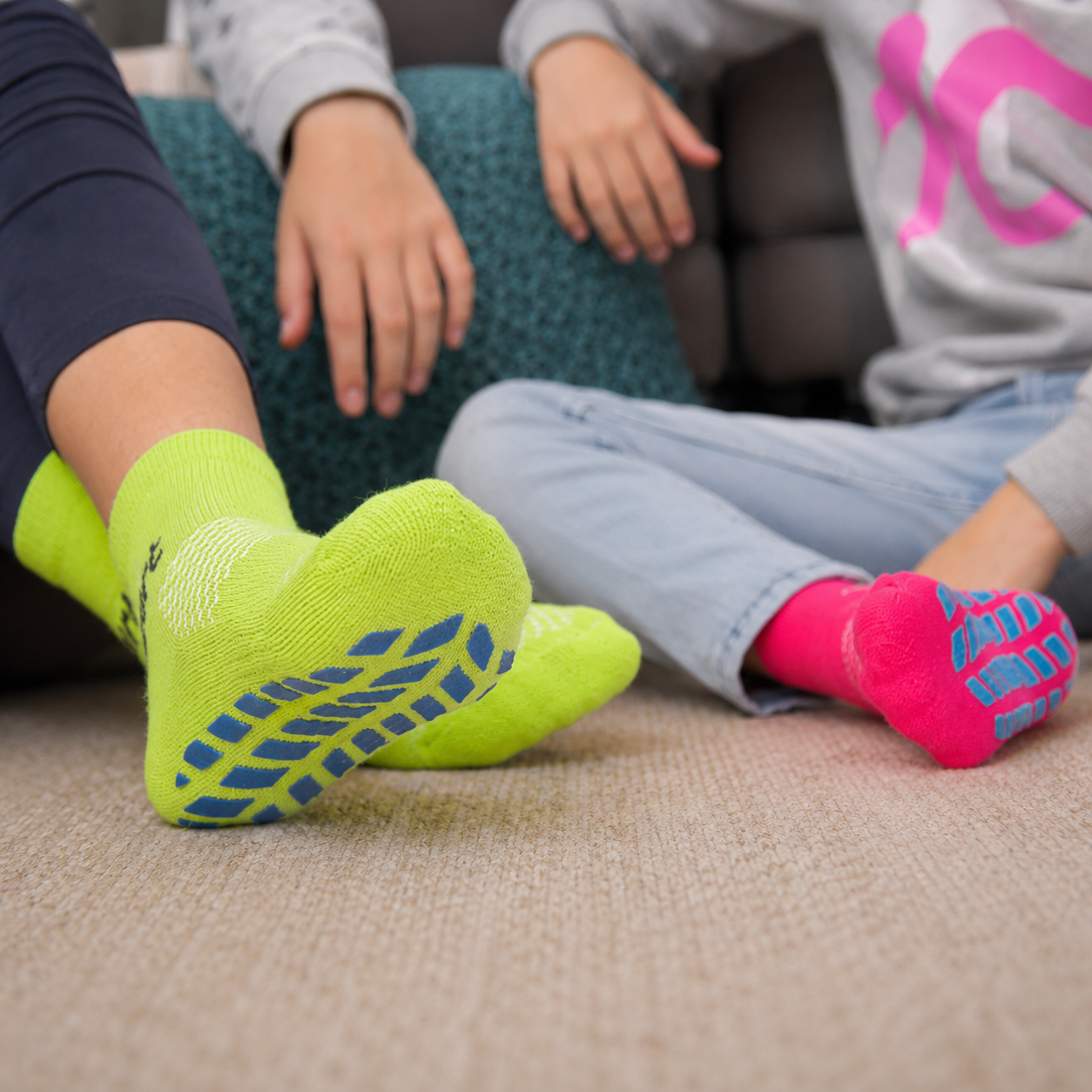
1. High-Frequency Washing
A busy trampoline park may wash its rental sock inventory 50–80 times before retiring it. Industrial laundry cycles use higher temperatures and more aggressive detergents than household washing. If the silicone grip elements are not properly bonded to the fabric, they begin delaminating after 20–30 washes — which means your grip socks stop gripping exactly when they look like they still should. Commercial-grade trampoline socks should maintain traction integrity through at least 50 industrial wash cycles.
2. Consistent Sizing Across Guest Demographics
Unlike boutique yoga studios where the majority of guests fall within a narrow adult size range, trampoline parks serve a wider demographic — children, teenagers, adults, and elderly guests. An order without sufficient size distribution across S, M, L, and XL will create constant stock imbalances at the front desk.
3. Safety and Liability Documentation
Some jurisdictions and insurance providers require that trampoline venue socks meet specific anti-slip performance standards. Having documentation from your supplier — including test reports for grip retention after repeated washing — helps protect your operation in the event of a guest incident. Ask your supplier for relevant quality certifications before ordering.
Not all grip socks sold as "trampoline socks" are manufactured to the same standard. Here are the five factors that differentiate a reliable commercial sock from a generic import.
Criterion 1: Silicone Grade and Application Method
The traction element is the most critical part of the sock. Two factors matter most: the silicone grade (measured in Shore A hardness — 50A to 60A is standard for commercial performance), and the application method. Screen-printed or injection-molded silicone grips outlast heat-pressed patterns significantly in high-frequency wash environments.
Ask your supplier: What is the Shore hardness of your silicone? How is it applied? What is the wash durability test result?
Criterion 2: Full-Sole vs Partial-Sole Grip Coverage
Basic non-slip socks often use dot patterns only on the heel and forefoot. Purpose-built trampoline socks typically use fuller coverage — including the arch and toe areas — because guests are constantly shifting their weight during jumps, landings, and rebounding transitions. Partial coverage creates unpredictable slip zones during active use.
Criterion 3: Fabric Composition and Durability
The sock body itself needs to withstand repeated industrial washing without losing shape, developing holes, or causing guest discomfort. A good commercial blend typically includes:
- Cotton: 60–75% for comfort and absorbency
- Nylon: 15–25% for abrasion resistance and durability
- Spandex/Elastane: 5–10% for stretch retention and fit consistency
Avoid socks made primarily from polyester — they may hold shape but reduce moisture management, which leads to guest discomfort and negative reviews.
Criterion 4: Size Range and Production Consistency
Confirm that your supplier can consistently deliver the same size specifications across batches. Size drift between production runs is a common frustration — if your reorder arrives with slightly different sizing than the first batch, your rental management becomes more complicated. Request a size measurement report with each shipment if ordering at scale.
Criterion 5: Turnaround Time and Reorder Reliability
A trampoline park that runs out of grip socks during peak season faces real revenue loss — guests may be turned away or left waiting. Standard lead times from a China-based manufacturer are 15–25 days for custom orders. Factor in shipping time and customs clearance when planning your reorder cycle. Most experienced operators reorder when inventory hits 40% rather than waiting until stock is depleted.
MOQ and Order Volume Planning
One of the most common questions from first-time buyers is: how many pairs should I order? The answer depends on three variables: your daily guest capacity, your washing cycle frequency, and whether you plan to sell or rent the socks.
Estimating Your Starting Inventory
| Park Size (Daily Guests) | Recommended Starting Inventory | Rationale |
|---|---|---|
| Under 200 guests/day | 800–1,200 pairs | 2–3 full rotations with laundry buffer |
| 200–500 guests/day | 1,500–2,500 pairs | Covers peak weekends + wash cycle |
| 500+ guests/day | 3,000–5,000+ pairs | Multiple rotations, seasonal spike buffer |
For custom-branded socks (with your park's logo), the typical MOQ with Yuintal starts at 500 pairs per design. For parks sourcing across multiple size ranges, the MOQ applies to the total order — so 200 pairs in size S, 150 in M, and 150 in L would meet the 500-pair MOQ for a single design.
Rental vs Retail Model
Parks using a rental model need higher upfront inventory and a faster reorder cycle, because socks go through the laundry cycle more frequently. Parks using a retail-at-door model (guests purchase and keep their socks) have lower rotation pressure but need more SKUs if they offer multiple color or design options. Both models benefit from custom branding — a logo sock at the entry desk is a stronger brand impression than a generic sock.
Sourcing grip socks for your trampoline park?
Yuintal manufactures commercial-grade trampoline grip socks with full-sole silicone, 50+ wash cycle durability, and custom logo options. MOQ from 500 pairs. Lead time 15–25 days.
Request a Sample Kit → Free samples available for qualified venues
Custom Branding and Logo Options
A branded grip sock does two things a generic sock cannot: it reinforces your park's identity at the guest's first physical touchpoint, and it creates a souvenir that guests take home — which means your logo travels beyond the venue.
What You Can Customize
- Logo placement: top of foot, ankle band, or toe area — all are standard print zones
- Color matching: Pantone-matched base colors and silicone grip colors to align with your brand palette
- Grip pattern design: standard full-sole grid, custom geometric patterns, or a pattern that incorporates brand elements
- Packaging: individual polybag, printed header card, branded retail box, or ticket-sock bundle packaging for at-door sales
- Woven label: custom woven label inside the sock with care instructions and your park name
Logo Printing Methods
The most common logo application method for trampoline socks is intarsia knitting (logo woven directly into the fabric) or embroidery on the ankle cuff. Both methods are durable through industrial washing. Avoid heat-transfer logos — they degrade faster in commercial laundry conditions.
Turnaround for Custom Orders
Custom logo + color orders typically add 3–5 days to the production timeline vs stock color orders. If you are working toward a venue opening date or a seasonal launch, factor in 20–30 days total from order confirmation to your door (production + freight + customs clearance).
Browse our trampoline park socks collection for available base styles that can be customized with your branding.
Pricing Structure at Different Order Volumes
Grip sock pricing is primarily driven by three factors: quantity per design, customization complexity, and fabric specification. As a general guide:
| Order Volume | Price Range (FOB) | Customization Available |
|---|---|---|
| 500–999 pairs | $1.80–$2.80/pair | Custom color + logo + basic packaging |
| 1,000–2,999 pairs | $1.40–$2.20/pair | Full custom including pattern design |
| 3,000+ pairs | $1.10–$1.80/pair | Full custom + retail packaging options |
* FOB Shaoxing / Ningbo. Prices are indicative and depend on fabric specification and customization complexity. Request a formal quote for your exact requirements.
For parks selling socks at $3–5 per pair at the entry desk, even the 500-pair MOQ pricing delivers a healthy margin. Parks that bulk-buy for a rental fleet amortize the cost across 50+ uses per pair — making per-use cost well under $0.05.
How to Request Samples and Evaluate Quality
Before committing to a bulk order, always test physical samples. Here is a practical evaluation process:
Step 1: Request Stock Samples First
Ask for 2–3 pairs of the manufacturer's standard trampoline sock in your most common size. This costs little or nothing and lets you evaluate the base quality before investing in custom samples.
Step 2: Run a Wash Durability Test
Wash the sample socks 10–15 times in your actual laundry setup (temperature, cycle, detergent). Check for:
- Silicone grip adhesion — does any part begin to lift or peel?
- Fabric integrity — any pilling, thinning, or shape distortion?
- Color fastness — does the sock or logo color bleed or fade?
- Size retention — do the socks remain consistent after repeated washing?
Step 3: Guest Fit Testing
If possible, have 3–5 staff members try the socks during a normal activity session. The feedback that matters most: does the sock stay in place during active movement? Is the grip pattern noticeably effective on your specific trampoline surface?
Step 4: Request Test Reports
Ask the manufacturer for grip retention test reports and wash cycle durability documentation. Reputable suppliers will have this on file. If a supplier cannot provide written test documentation, treat that as a red flag.
Supplier Evaluation Checklist
Use this checklist when evaluating any trampoline sock supplier:
| Evaluation Item | What to Ask | Why It Matters |
|---|---|---|
| Wash cycle durability | What is your tested wash cycle count for grip retention? | Determines actual sock lifespan in rental rotation |
| Silicone grade | What Shore hardness is your silicone? What application method? | Predicts long-term grip performance |
| MOQ flexibility | What is your MOQ for custom color? For custom logo? | Determines whether smaller parks can access custom orders |
| Lead time | What is production lead time for a 1,000-pair custom order? | Affects reorder planning and inventory management |
| Size range | What size range do you produce? Can you split by size within MOQ? | Prevents stock imbalances at front desk |
| Quality documentation | Can you provide test reports for grip retention and fabric durability? | Protects you in liability situations |
| Reorder consistency | How do you ensure size and color consistency between batches? | Prevents guest complaints about inconsistent rentals |
Frequently Asked Questions
What is the minimum order quantity for custom trampoline park socks?
Yuintal's standard MOQ for custom logo trampoline socks is 500 pairs per design. This MOQ applies to the total order — you can split across sizes within that 500-pair minimum. For stock colors without custom logo, lower quantities may be available.
How long do commercial trampoline socks last in a rental rotation?
With proper industrial laundering, Yuintal's commercial trampoline socks maintain grip integrity through 50+ wash cycles. In a rental rotation, this typically translates to 50–80 individual uses per pair before the sock should be retired from rental service. Actual lifespan depends on your laundry conditions and usage intensity.
Can I add my trampoline park's logo to the socks?
Yes. Custom logo options include intarsia knitting (woven into the fabric), embroidery on the ankle cuff, and Pantone-matched base colors. We also offer custom packaging including polybags, retail header cards, and branded boxes. MOQ for custom logo orders starts at 500 pairs.
What is the typical lead time for a custom trampoline sock order?
Standard production lead time is 15–25 days for custom orders, depending on complexity. Add 5–15 days for freight and customs clearance depending on your destination country. Total timeline from order confirmation to delivery is typically 20–40 days.
Do your trampoline socks come with safety or quality certifications?
Yes. We provide grip retention test reports and wash cycle durability documentation upon request. For specific certifications required by your jurisdiction or insurance provider, please include these in your inquiry so we can confirm compliance before sampling.
What is the price per pair for wholesale trampoline socks?
FOB pricing starts from approximately $1.80 per pair for 500-pair custom logo orders and decreases with volume. For orders of 3,000+ pairs, pricing typically falls in the $1.10–$1.80 range depending on specification. Contact us with your quantity and requirements for a formal quote.
Can I order a sample kit before committing to a bulk order?
Yes. We offer sample kits for qualified venues — typically 2–3 pairs in standard sizes so you can evaluate wash durability, grip performance, and sizing before placing a production order. Contact us to request a sample kit.
Conclusion
Choosing the right grip socks for your trampoline park is a supply chain decision, not just a product purchase. The right supplier will provide consistent quality across batches, clear documentation on durability standards, and flexibility on customization — all at a price that makes sense for your venue's model.
The key criteria are: commercial-grade silicone durability (50+ wash cycles), full-sole grip coverage, reliable size consistency, and a supplier that can scale with your reorder needs. Custom branding turns a safety requirement into a revenue-generating brand touchpoint.
Yuintal manufactures trampoline park grip socks for venues in 25+ countries, with MOQ from 500 pairs and a 15–25 day production lead time. Contact our team to discuss your requirements or request a sample kit before committing to your first bulk order.
About Yuintal
Yuintal is a grip socks manufacturer based in Shaoxing, China, producing commercial-grade grip socks for trampoline parks, yoga studios, fitness brands, and healthcare distributors in 25+ countries. We specialize in OEM/ODM manufacturing with full customization support.
- MOQ: 500 pairs per design
- Lead time: 15–25 days production
- Custom options: logo, packaging, color, silicone pattern, fabric blend
- Quality: 50+ wash cycle durability testing, batch-level QC inspection