Pilates grip socks are no longer just a simple studio accessory. For Pilates studios, fitness brands, and wholesale buyers, they are a practical product that combines traction, hygiene, retail value, and brand presentation. The key challenge is that not every non-slip sock is suitable for reformer use, smooth studio floors, repeated washing, or branded resale. If you are evaluating Pilates grip socks for class use, studio retail, private label development, or bulk distribution, it is important to compare grip coverage, fit stability, yarn comfort, packaging options, and reorder consistency before placing an order.
For buyers that also need branding support, product customization, or bulk order flexibility, Pilates projects are often connected with broader custom grip socks with logo, OEM grip socks manufacturer, and wholesale grip socks supplier solutions.
Why Pilates Grip Socks Matter in Commercial Use
Pilates grip socks help combine traction, hygiene, and studio presentation in one product. In many Pilates environments, especially reformer sessions and smooth-floor studios, barefoot training may not match the hygiene standards or traction consistency expected by operators and members. A well-made pair of non-slip Pilates socks can support more controlled movement while also giving the studio a cleaner and more professional appearance.
From a business perspective, Pilates socks with grip are also commercially valuable because they can serve multiple purposes at once. They may be required for class participation, recommended as an add-on purchase, sold as front-desk merchandise, or developed as part of a branded studio accessories line. If you are looking at broader product options, our Yoga & Pilates socks collection shows how Pilates-related non-slip socks can fit into studio, retail, and private label programs.
Who Buys Pilates Grip Socks?
Pilates grip socks are purchased by several different buyer groups, and each group usually has different priorities. Understanding these buyer types helps define the right product structure, MOQ plan, and customization level.
- Pilates studios: need socks for class use, studio rules, and front-desk retail.
- Studio chains: need repeatable quality, stable sizing, and brand consistency across locations.
- Fitness and wellness brands: need private label Pilates socks as part of a branded accessory collection.
- Wholesalers and distributors: need scalable supply, usable size ratios, and commercially flexible pricing.
- Yoga and barre operators: may look for cross-use grip socks that also perform well in Pilates classes.
This is also why many buyers move from a simple product search to a broader sourcing discussion with a grip socks manufacturer that can support both commercial quantity and customization requirements.
How to Choose Pilates Grip Socks for Studio, Retail, and Wholesale Use
If you are sourcing Pilates grip socks wholesale, selecting a product based only on appearance is risky. A sample can look attractive in photos but still perform poorly in real studio use. Buyers should review the product from both user and operational perspectives.
1. Grip Coverage and Traction Balance
The most important functional element is the grip sole. Good grip should help stabilize movement without making the sock feel heavy or inflexible. Buyers should check whether the silicone coverage supports real movement patterns rather than serving as decoration only. Grip layout affects how the sock performs on reformers, wood floors, smooth studio surfaces, and mixed training areas. If your target users train on finished studio flooring, it is also worth reading Do Grip Socks Work on Wooden Floors in Professional Studios? for additional floor-performance context.
2. Fit Stability During Movement
A Pilates sock should stay aligned during footwork, transitions, holds, and light cardio movement between exercises. If the sock twists, slides, or bunches inside the shoe-free environment, the grip pattern loses effectiveness. Secure cuff construction, elastic support zones, and proper size grading all matter.
3. Material Comfort and Breathability
Breathable Pilates grip socks are especially important in warm indoor studios and high-frequency class environments. Cotton-rich blends are popular for softness and familiarity, while other blends may help with faster drying, stretch recovery, or lighter weight. Material choice should match your target customer, price band, and expected wash cycle frequency.
4. Durability After Repeated Washing
Studio-use and retail-use socks both need dependable post-wash performance. Buyers should evaluate whether the sock keeps its shape, elasticity, and silicone grip after repeated laundering. Poor wash durability can lead to complaints, uneven retail reviews, and lower reorder confidence.
5. Size Structure and Assortment Planning
A product can fail commercially even if the sample quality is good, simply because the size mix is wrong. Studios and distributors should confirm the size plan early, especially if they want women’s sizing, unisex sizing, or broader retail coverage. Size ratio planning is often overlooked in small pilot orders.
6. Brand Presentation and Packaging
Buyers sourcing custom Pilates grip socks should decide whether the product is for front-desk resale, event use, or pure class supply. Retail-ready packaging, branded sleeves, hangtags, belly bands, and clean logo application all make more difference when the sock is intended to represent the brand rather than just fulfill a functional class rule.
7. MOQ and Reorder Practicality
Smaller studios may need low MOQ custom grip socks to test demand first. Larger buyers may care more about repeat-order stability, consistent color matching, packaging continuity, and delivery predictability. A sourcing plan should match the project stage rather than forcing every buyer into the same order model.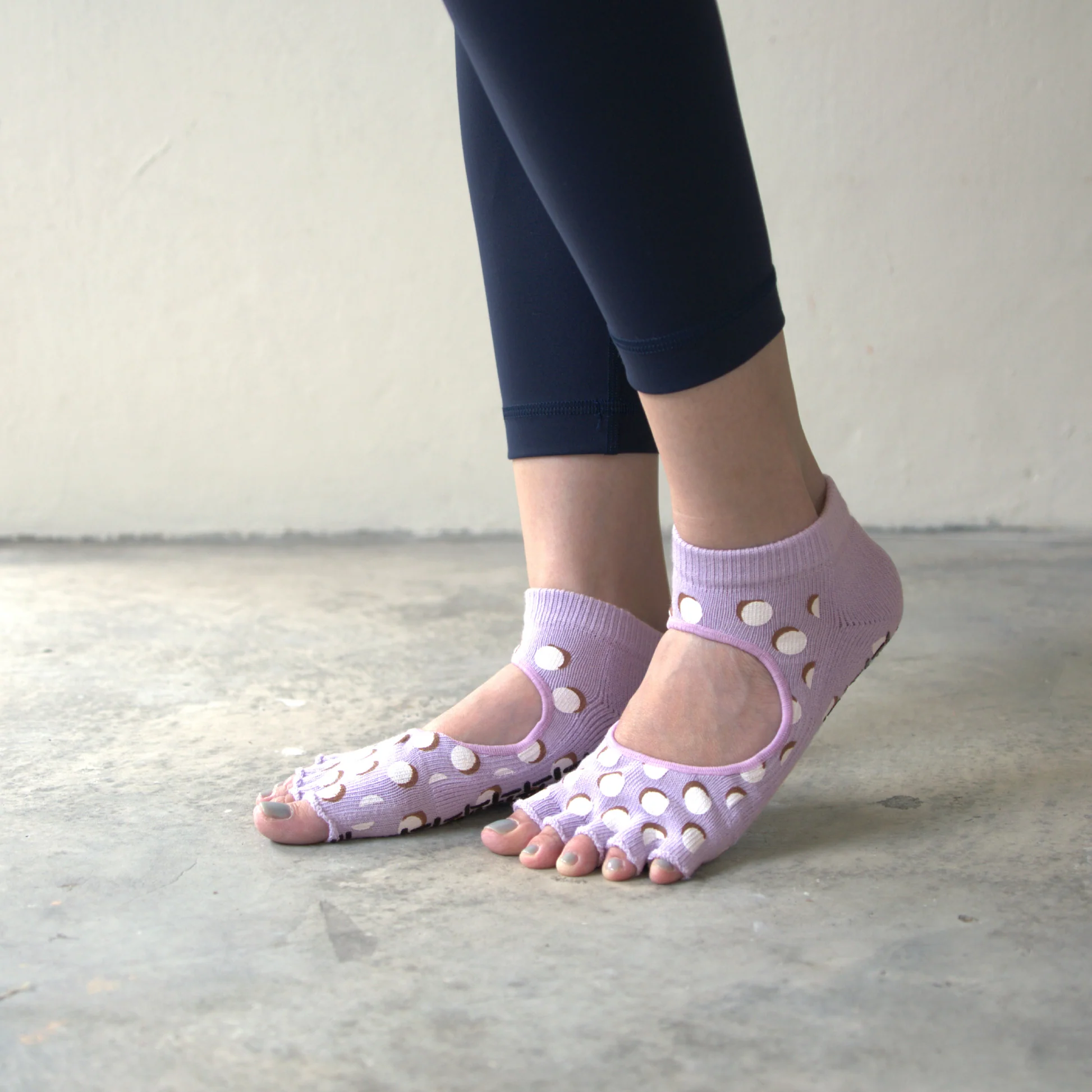
Full Sole vs Partial Grip Pilates Socks
One of the most common sourcing questions is whether full sole Pilates grip socks are better than styles with more targeted grip placement. The answer depends on the intended use, user preference, and product positioning.
Full Sole Grip
Full sole grip socks offer wider contact coverage and are often preferred when buyers want a stronger non-slip visual identity or broader traction support. They can work well for users who want a more secure feel across different studio surfaces.
Partial or Zoned Grip
Partial grip styles focus silicone placement on high-contact zones such as the forefoot and heel. This can create a lighter feel while still supporting traction in core movement areas. For some buyers, partial grip styles also create a cleaner visual look and a softer sole feel.
Which One Should Buyers Choose?
If the goal is strong studio-use traction visibility and all-around grip presentation, full sole may be the safer choice. If the goal is a lighter retail feel or a more minimal look, partial grip may work well. The best approach is to evaluate samples based on actual studio conditions rather than choosing only by trend or supplier recommendation.
Reformer, Mat, and Mixed-Class Use
Grip socks for reformer Pilates are not always selected the same way as socks intended for mat Pilates or mixed studio programs. Although the product category overlaps, the usage context influences product decisions.
Reformer Pilates
Reformer-oriented socks generally need stable grip layout, dependable forefoot control, and a fit that stays aligned during pushing and repositioning. Secure cuff structure and sole consistency are usually more important here than decorative styling alone.
Mat Pilates
Mat classes may place more emphasis on softness, flexibility, and general floor traction. Breathability and comfort often become stronger priorities, especially in lower-intensity or longer-duration classes.
Mixed Studio Programs
Many studios run Pilates alongside barre, stretching, and other low-impact classes. In these environments, buyers often prefer a versatile grip sock that performs well across multiple sessions instead of a narrowly specialized product.
Studio Retail Socks vs Bulk Class-Use Socks
Buyers often make better decisions when they separate studio retail needs from bulk class-use needs. These are related but not identical purchasing goals.
For Studio Retail
Retail-focused Pilates grip socks usually need stronger visual appeal, cleaner knitting, more polished packaging, and better brand presentation. Customers buying from the front desk often notice color coordination, logo placement, and overall finish quality more than institutional buyers do.
For Bulk Class Use
Bulk class-use socks are often evaluated more heavily on cost structure, sizing practicality, grip reliability, and restocking simplicity. The main concern is usually functional usability at scale rather than premium shelf presentation.
For Combined Use
Many studios want one sock that can serve both class requirement and retail resale purposes. In that case, the right product should balance commercial appearance with sourcing practicality. Buyers planning larger restocking cycles often compare this with broader wholesale grip socks supplier options before deciding on the final structure.
Custom Logo vs Full OEM Pilates Grip Socks
Not every custom project needs full OEM development. Buyers should understand the difference between a logo-based customization program and a deeper OEM private label project.
Custom Logo Pilates Grip Socks
This is often the most practical starting point for studios and smaller brands. The base sock structure remains relatively standard, while branding is added through logo placement, color choice, and simple packaging upgrades. It is suitable for studio merchandise, entry-level private label projects, and test-market launches. If this is your current stage, start with custom grip socks with logo and low MOQ options.
OEM Pilates Grip Socks
OEM development usually goes further by adjusting knitting structure, sock height, sole grip design, material composition, size plan, and packaging system. This route is more suitable for buyers building a more differentiated product line or long-term brand program. For this type of project, working with an OEM grip socks manufacturer is usually more effective than sourcing a generic ready-made style.
Which Option Fits Better?
If you want a fast and lower-risk branded product, custom logo Pilates grip socks are often enough. If you want a more defensible, more tailored private label product, OEM Pilates grip socks may provide better long-term value. The right choice depends on brand ambition, budget, order scale, and how unique the final product needs to be.
Common Mistakes When Sourcing Pilates Grip Socks
Many sourcing problems can be avoided if buyers ask the right questions early. Below are several mistakes that frequently reduce product performance or commercial results.
Choosing by Photo Only
A product image cannot show whether the grip feels stable, whether the sock twists during use, or whether the silicone holds up after washing. Samples should always be tested in real studio conditions.
Ignoring Reorder Consistency
Some buyers focus only on initial sample approval and forget to confirm whether future orders can maintain the same fit, shade, packaging, and grip quality. For branded programs, reorder stability is essential.
Using the Wrong Size Mix
Even a good product can underperform if the size ratio does not match the customer base. Retail studios and distributors should plan size breakdowns carefully rather than ordering evenly by habit.
Overlooking Packaging Needs
If the socks are intended for resale, poor packaging can reduce perceived value. If they are intended for class distribution, over-designed packaging may increase cost without adding real benefit. Packaging should match the actual sales model.
Buying on Price Alone
Low price may reduce initial cost, but it can also increase complaints, weaken brand presentation, and lower repeat sales. For Pilates grip socks wholesale projects, the better decision is often the one with the best balance of cost, quality, and repeat-order reliability.
Why Manufacturer Support Matters
Working directly with a Pilates grip socks manufacturer can help buyers align product design, customization scope, and order structure more effectively. A capable supplier should do more than quote a price. They should help clarify which sock structure fits studio retail, which packaging works for private label, what MOQ is realistic, and how to plan for repeat orders.
This is especially important for custom Pilates grip socks, private label Pilates socks, and wholesale programs that need a balance of speed, branding, and supply continuity. Manufacturer support becomes more valuable as the project moves from a simple branded test order to a scalable product line. If you are comparing broader factory capability, you can also review our grip socks manufacturer page for a more complete overview.
FAQ
Are Pilates grip socks necessary for studios?
Not every studio makes them mandatory, but many studios recommend or require them for hygiene, traction, and a more professional member experience, especially in reformer classes.
What should studios look for when buying Pilates grip socks?
Studios should focus on grip performance, fit stability, wash durability, size structure, and whether the socks are intended for class use, retail resale, or both.
Can Pilates grip socks be customized with a logo?
Yes. Many custom Pilates grip socks programs include logo placement, color customization, branded packaging, and in some cases deeper OEM options such as custom grip layout or knitting structure.
What is the difference between custom logo and OEM Pilates grip socks?
Custom logo programs usually modify branding on a relatively standard base product, while OEM projects involve deeper customization such as construction, material, sizing, grip design, and packaging system.
Conclusion
Pilates grip socks are a high-utility product for studios, brands, and wholesale buyers because they combine traction support, hygiene value, and retail potential in one category. However, the right product choice depends on how the socks will actually be used: for reformer classes, front-desk retail, branded resale, or broader distribution.
Buyers comparing Pilates socks with grip should look beyond simple appearance and focus on grip coverage, fit stability, material comfort, wash durability, packaging, MOQ, and reorder reliability. For businesses planning custom or wholesale projects, the best result usually comes from matching the product structure to the real commercial goal rather than choosing the cheapest available option.
Looking for Custom or Wholesale Pilates Grip Socks?
If you need custom Pilates grip socks for your studio, branded Pilates socks for retail resale, or wholesale non-slip Pilates socks for distribution, the project should start with the right product structure and customization plan.
We support logo customization, private label and OEM development, and wholesale supply for Pilates grip socks designed for studio, retail, and bulk order use. Contact us to discuss your target market, MOQ, customization needs, and sampling plan.