
Trampoline park grip socks are designed for indoor jump environments where traction, hygiene, comfort, and operational consistency all matter. In trampoline parks, family entertainment centers, indoor play zones, and active recreation venues, these socks are widely used as a practical interface between the foot and the activity surface. They help reduce slipping on smooth indoor flooring, improve movement control around trampoline areas, and support facility rules that require approved footwear during participation.
For commercial buyers, trampoline park grip socks are not just a low-cost accessory. They are often part of the park’s safety policy, guest experience, and branding system. A well-designed pair of trampoline grip socks should offer reliable anti-slip performance, stable fit, breathable comfort, and enough durability for repeated indoor use. For operators, the product also needs to work at scale, which means wholesale pricing, flexible MOQ, logo customization, and repeatable production quality are all important.
Compared with ordinary socks, trampoline park grip socks typically use silicone grip patterns on the sole to create controlled traction on multiple indoor surfaces. These may include vinyl flooring, coated walkways, trampoline approach zones, stairs, padded waiting areas, and lobby spaces. In many facilities, guests move quickly between these surface types, so the sock must support changing movement demands without feeling unstable or overly restrictive.
This page explains why trampoline parks require grip socks, what features matter most, how custom and wholesale sourcing works, and how operators can choose a grip sock solution that fits both performance needs and business goals.
Trampoline parks are fast-moving indoor environments with varied movement patterns and mixed surface conditions. Guests jump, land, walk, climb, wait in lines, transition between attraction zones, and move through entrances and rest areas. Because activity is continuous and users often include children, teenagers, and adults with different coordination levels, operators need a simple way to improve consistency in foot-to-surface interaction.
Grip socks are widely required because they create a more controlled contact layer than barefoot use or standard socks. Bare feet may raise hygiene concerns and perform inconsistently depending on sweat, fatigue, skin dryness, or individual movement habits. Ordinary socks can be slippery on smooth indoor flooring and may not provide enough stability during quick transitions around activity areas. Grip socks help reduce that variability by introducing an engineered anti-slip sole pattern.
In many parks, the requirement for grip socks is also operational. Staff can quickly check whether guests are wearing approved footwear, and the facility can maintain a consistent participation rule across different zones. This is especially useful in high-traffic environments where simple, easy-to-enforce standards improve efficiency.
For commercial trampoline facilities, grip socks often serve two functions at the same time: safety support and business utility. They help guests move with more confidence while also acting as a branded consumable or reusable product connected to the park experience.
Grip socks in trampoline parks must work across more than one type of surface. Although people often associate them only with trampoline jumping, much of the real traction demand occurs before and after the trampoline itself. Users may walk across smooth floors, padded decks, coated stairs, entry corridors, or vinyl-covered platforms. In these areas, slip risk can increase if footwear is too smooth or poorly fitted.
The anti-slip function of trampoline park grip socks comes mainly from the sole grip pattern and how it interacts with the surface below. Silicone grip elements increase friction by creating more controlled contact under load. When the user steps, lands, or shifts direction, the grip zones help moderate sliding. However, good performance does not mean maximum stickiness. If the sole pattern is too aggressive, movement may feel restrictive in certain transition areas. The goal is controlled traction rather than excessive adhesion.
Movement type also affects performance. Slow walking, queueing, and step transitions place different demands on the sock than quick jumps, directional changes, or active play. A commercial trampoline sock should therefore be designed for balanced performance across a range of movements rather than being optimized for only one surface or one action.
Other factors that influence performance include:
When parks evaluate trampoline socks, they should not focus only on whether the sock “feels grippy.” A better evaluation considers whether traction remains predictable, whether the sock stays in place during activity, and whether the user can move comfortably across different park zones without slipping or discomfort.
Not all grip socks are suitable for commercial trampoline park use. Products intended for home exercise or low-intensity studio settings may not meet the same operational demands as socks used in public jump parks. Commercial buyers usually need a product that balances anti-slip function, durability, comfort, and scalable customization.
| Feature | Why It Matters | Commercial Benefit |
|---|---|---|
| Silicone grip pattern | Improves traction on smooth indoor surfaces | Supports stability and reduces slip complaints |
| Breathable cotton blend | Enhances comfort during active wear | Better guest experience and repeat use |
| Elastic cuff | Helps the sock stay in place during movement | Less adjustment and better performance consistency |
| Reinforced heel and toe | Protects high-friction wear zones | Improves durability for commercial environments |
| Multiple sizes | Fits kids, teens, and adults | Suitable for broad park demographics |
| Custom logo capability | Supports park branding and product identity | Useful for retail, private label, and repeat customers |
Among these features, grip pattern design is one of the most important. Dense grip coverage may increase traction on certain surfaces, but it can also alter movement feel. Segmented or balanced layouts often work well because they support traction where pressure is highest while preserving enough flexibility for comfortable movement. The best design depends on how the park uses the socks, what surfaces are most common, and how frequently the socks are expected to be worn.
Commercial buyers should also consider how the socks look. In trampoline parks, appearance affects customer perception. Clean branding, consistent colors, and a professional product finish make the socks feel like part of the facility’s official system rather than a generic add-on item.
Trampoline parks typically require grip socks because they support a controlled and standardized operating environment. While exact rules vary by park and region, most facilities share the same practical objective: reduce unnecessary slip risk while maintaining hygiene and a consistent guest policy. In this context, grip socks are part of the broader park safety system rather than a standalone solution.
Operators generally do not rely on grip socks to replace floor design, maintenance procedures, staff supervision, or attraction-specific safety rules. Instead, they use them as one component within a layered system that includes surface management, access control, signage, user instructions, and routine cleaning. The value of grip socks is that they create more uniform footwear expectations across different visitors.
From a buyer’s perspective, the most relevant safety considerations usually include:
Parks may also prefer socks that support visual control. For example, custom colors or branded logos make it easier for staff to identify whether guests are wearing the correct product. This is particularly useful in high-volume venues where speed of inspection matters. In some business models, grip socks are included in admission or sold separately, which means the product must also be easy to distribute, size, and restock.
Good trampoline park grip socks should therefore be evaluated not only by material claims, but by how well they fit within real facility operations. Safety value comes from predictable, repeatable use across many customers and many activity cycles.
The materials used in trampoline park grip socks directly influence comfort, traction behavior, durability, and production cost. Most commercial grip socks are made from a cotton-rich or cotton-blend body combined with anti-slip grip material on the sole. The exact yarn ratio can vary depending on the intended balance of softness, breathability, elasticity, and wear resistance.
Cotton is widely used because it offers softness, familiarity, and comfort against the skin. In active environments like trampoline parks, however, cotton alone is usually not enough. Blended fibers such as polyester, nylon, or spandex are often added to improve stretch retention, shape stability, and durability. This helps the sock maintain fit during repeated wear and commercial-scale production.
The anti-slip portion is commonly made from silicone. Silicone is popular because it can be applied in different patterns, provides flexible grip behavior, and works well on many indoor surfaces. Depending on the design, the silicone can appear as dots, stripes, logo shapes, segmented zones, or full-pattern layouts. The softness and thickness of the silicone influence how the sole feels during movement.
Important material considerations for trampoline park socks include:
For buyers, the right material choice depends on how the socks will be used. Parks that treat socks as a one-time mandatory item may optimize for cost and branding. Parks that promote reuse or premium experience may prioritize comfort, appearance, and stronger construction. Either way, material selection should support the park’s actual operating model rather than relying on generic product descriptions.
Customization is one of the most important commercial advantages in trampoline park grip socks. Many operators want more than a standard anti-slip sock. They want a product that reflects their park identity, works with their color system, and helps customers recognize the official sock used in the venue. Custom socks can support branding, retail sales, membership programs, and operational control at the same time.
Common custom options include:
Custom branding also helps reduce confusion. In busy venues, staff can quickly identify whether a guest is wearing approved trampoline socks. This is especially useful when parks have specific footwear requirements and want to avoid outside products that may not match internal standards. Branded socks can also become a memorable part of the park visit, increasing visibility when customers take them home and reuse them later.
From a sales perspective, custom socks strengthen the commercial value of the product. Rather than being viewed as a disposable requirement, the socks become part of the official trampoline park experience. For buyers looking for logo development, low MOQ options, and private label support, our Custom Grip Socks With Logo page provides more information about logo methods, minimum quantities, and customization flexibility.
Most trampoline parks purchase grip socks in bulk because daily operations depend on steady product availability. The park may include socks with admission, sell them at the front desk, use them for events, or keep them in stock for replacement purchases. This makes wholesale sourcing an important part of operations, especially during peak seasons, promotions, school holidays, or new location launches.
A wholesale trampoline park grip socks supplier should be able to support stable quality, repeat order consistency, practical lead times, and scalable production. For business buyers, the challenge is not simply finding a low unit price. It is finding a supplier that can repeatedly deliver the same product quality across different sizes, colors, and reorder cycles.
When evaluating suppliers, buyers often compare:
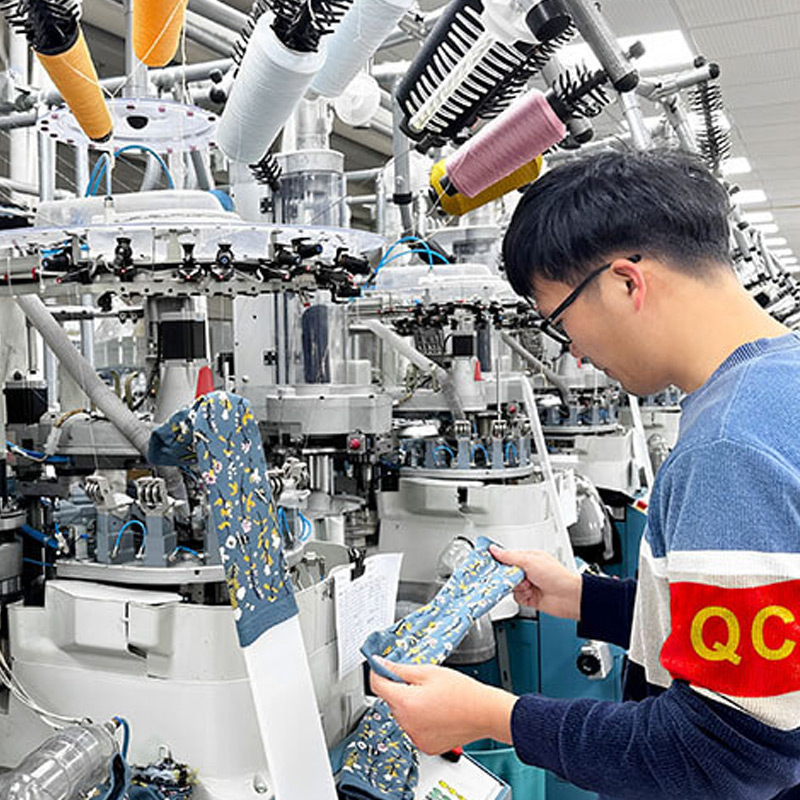
For larger programs or multi-location chains, OEM capability becomes more important. The supplier must be able to handle standardized specifications, coordinated size planning, branding accuracy, and repeatable manufacturing results. Buyers comparing sourcing channels can review our OEM Grip Socks Manufacturer in China page for factory-focused information and our Wholesale Grip Socks Supplier page for broader bulk sourcing details.
Choosing a supplier for trampoline park grip socks is not only about product appearance or initial pricing. Operators usually need a supply partner that fits their business model. A single-location park may focus on low MOQ and quick turnaround, while a large chain may prioritize capacity, quality consistency, and systemized reordering. Understanding these differences helps buyers select a supplier that can support long-term operations.
One of the first factors is product positioning. Some parks want an affordable mandatory-use sock for every guest, while others want a more premium branded product that customers are willing to keep and reuse. This decision affects yarn selection, grip pattern design, branding method, and packaging level. A supplier should be able to recommend options based on the park’s real commercial objective.
Another important factor is customization flexibility. Buyers often need multiple sizes, more than one colorway, or logo placement options. For seasonal campaigns or new attraction launches, packaging may also matter. Suppliers with real OEM and private label experience can usually support these requirements more efficiently than sellers offering only generic stock products.
Operational reliability is equally important. Parks need to know:
For international buyers, communication and export handling also matter. A supplier that understands commercial documentation, shipping coordination, and repeat-order management can reduce friction over time. In practice, the best supplier relationship is one that supports both product quality and operational continuity.
Grip socks support trampoline park operations in several practical ways beyond traction alone. First, they simplify footwear policy. Instead of debating whether outside shoes, bare feet, or general socks are acceptable, the park can create one clear rule based on approved grip socks. This reduces ambiguity for both staff and customers.
Second, they support hygiene management. In shared indoor recreation spaces, operators want a cleaner and more standardized user environment. Grip socks provide a simple barrier between the foot and common activity areas, helping facilities maintain a more controlled participation standard.
Third, they contribute to retail and branding opportunities. Many parks sell branded socks as part of the visitor experience. This turns a functional requirement into a product with business value. In some cases, repeat visitors will bring their branded socks back for future sessions, which strengthens brand recall and reduces friction at check-in.
Grip socks can also support:
For multi-branch trampoline brands, a standardized grip sock program helps reinforce brand identity while making operations more predictable. A consistent product across locations can simplify reordering, staff training, and customer expectations.
Are trampoline park grip socks different from regular grip socks?
Yes. Trampoline park grip socks are usually selected for higher-volume public recreation environments. They often place more emphasis on durability, comfort, commercial branding, and suitability for repeated park use.
Can trampoline parks customize grip socks with their own logo?
Yes. Many manufacturers offer private label services including knitted logos, silicone sole logo patterns, custom body colors, and branded packaging for trampoline parks and entertainment centers.
Do grip socks replace all other safety measures in trampoline parks?
No. Grip socks are only one part of the overall safety system. Parks still need proper surface maintenance, attraction rules, supervision, cleaning standards, and operational controls.
What materials are commonly used for trampoline grip socks?
Most use cotton-rich or cotton-blend fabric combined with silicone grip elements. The material combination is chosen to support comfort, flexibility, breathability, and traction behavior on indoor surfaces.
Do trampoline parks usually buy grip socks in bulk?
Yes. Most commercial trampoline parks purchase grip socks in wholesale quantities to support daily admissions, retail sale, promotions, and replenishment planning.
Trampoline park grip socks are used to improve traction, support hygiene, and standardize footwear requirements in indoor jump parks, family entertainment centers, and active recreation facilities.
Yes. They can often be customized with knitted logos, silicone sole branding, custom colors, and private label packaging for commercial trampoline park use.
The best design usually combines reliable silicone traction, comfortable fabric, secure fit, durable construction, and a grip pattern that supports controlled movement across mixed indoor surfaces.
Yes. Wholesale trampoline grip socks are commonly produced in children’s and adult sizes so trampoline parks can serve different user groups more effectively.
Because regular socks may be too slippery on smooth indoor surfaces, while grip socks provide a more controlled traction layer and help the park maintain a consistent operational standard.
Trampoline park grip socks are an important product for indoor jump parks, family entertainment centers, and active play facilities that need a practical combination of traction, hygiene, branding, and operational consistency. Their role goes beyond simple anti-slip performance. In commercial settings, they help parks standardize footwear, improve guest experience, and support daily management across varied indoor surfaces.
For buyers, the right trampoline park grip socks should deliver balanced traction, secure fit, breathable comfort, and durable construction while also supporting logo customization, flexible MOQ, and scalable wholesale supply. Whether the goal is mandatory park use, front-desk retail sale, or a private label branding program, sourcing the right product can create long-term value for both operations and customer experience.
If your business is looking for custom or wholesale trampoline park grip socks, working with an experienced manufacturer can make it easier to align product design, branding, and supply stability with the real demands of your trampoline park business.

 Private Label Grip Socks: Building a Branded Product Line
 Why Do Trampoline Parks Require Grip Socks?
 Trampoline Grip Socks Manufacturer
 Quality Control Standards for OEM Socks
