
Toe-separated yoga grip socks have become a quiet yet influential evolution within the global yoga and Pilates apparel segment. Once considered a niche accessory, they are now standard equipment in studios from Lululemon Studio to boutique Pilates centers in Seoul, Melbourne, London, and Los Angeles. Their rise reflects a broader shift toward hygienic training surfaces, enhanced proprioception, and more precise foot articulation—an area where socks are no longer treated as soft goods but as performance equipment.
For manufacturers, this product category requires a careful balance of breathability, grip geometry, toe alignment, and wash durability. For brands and studios, toe-separated socks represent an upgrade in both user experience and perceived professionalism. This article examines how toe-separated yoga grip socks are engineered, how their performance can be quantified, and how Yuintal’s OEM/ODM technologies support global buyers in this fast-growing category.
Modern yoga and Pilates training emphasizes micro-movements—subtle toe spreading, activation of intrinsic foot muscles, and controlled transitions that help stabilize the kinetic chain from foot to hip. Conventional closed-toe socks restrict these movements. Toe-separated structures allow independent toe engagement, improving surface grip and enabling greater weight distribution across the metatarsal region.
Studio instructors increasingly recommend toe-separated socks for:
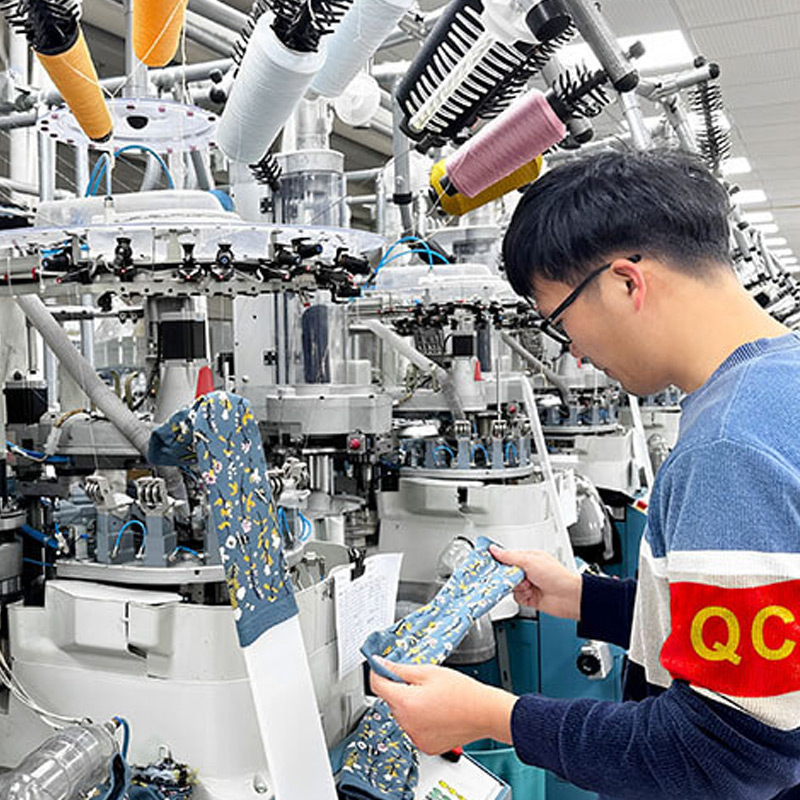
Behind their minimalist appearance is a surprisingly complex knitting structure. Each toe must be formed using a circular knitting machine capable of precise shaping, consistent density, and controlled elasticity. At Yuintal, the most common gauges for toe-separated yoga socks range from 144N to 168N, although premium models for fine-feel Pilates work can go up to 200N for a more glove-like fit.
The knitted pockets use engineered shaping that ensures:
Most studio-grade socks now include a mild arch compression zone to support alignment during long sessions. Yuintal uses multi-tension yarn engineering—combining nylon, polyester, and spandex—to ensure that compression remains within 8–14 mmHg, a comfortable range for extended practice.
For mat-based training, terry loops in the heel and forefoot provide:
Grip performance has evolved from simple silicone dots to engineered traction maps. Studio-grade socks now require:
Yuintal uses medical-grade silicone formulations to achieve consistent adhesion and elasticity, paired with machine-controlled dispensing that allows customizable patterns—yoga lotus motifs, minimalist bars, or branded logos for studios.
In independent lab tests, Yuintal’s premium silicone grip maintained >92% friction coefficient after 50,000 cycles, outperforming many mass-market alternatives used by budget studios.
| Grip Type | Best For | Performance Notes |
|---|---|---|
| Full-Sole Grip | Pilates reformers, slippery studio floors | Maximum traction, recommended for studios with heavy foot traffic |
| Half-Sole Grip | Yoga mat practice | Greater breathability; more lightweight for heat-heavy environments |
Most toe-separated socks use mixed fiber systems designed for sweat-heavy or high-contact training. Yuintal typically works with:
Color fastness is another critical metric for premium studio brands. Yuintal’s dyeing partners meet Grade 4–5 color fastness standards (AATCC/ISO), ensuring minimal fading after 100+ washes.
Toe-separated socks are increasingly required in:
Their hygiene benefits include:
Global consumer trends also show increased preference for reusable, washable accessories over disposable yoga towels and mats—making grip socks one of the most cost-effective hygiene upgrades for both studios and practitioners.
Brands often differentiate themselves through performance claims, but only measurable metrics create trust. Yuintal offers standardized test reporting for OEM clients, covering:
These metrics align with expectations from global brands such as Bombas, Decathlon, or Alo Yoga, making toe-separated socks viable not only for boutique studios but also for commercial retail lines.
As a specialized manufacturer of grip socks, Yuintal supports both emerging brands and large retailers with:
Flexibility is a key differentiator: Yuintal can run small MOQ batches for boutique studios while also supporting large-scale commercial orders for distributors and e-commerce brands.
Suitable for flow yoga, vinyasa, yin sessions, and restorative practices where foot articulation improves stability.
On reformers, toe-separated socks provide enhanced traction and precision during controlled movements.
Useful for maintaining balance during pliés, relevés, and foot isolation drills.
Toe control improves foot engagement during mobility flows and bodyweight workouts.
The global yoga accessories market continues to grow at an estimated 8–12% CAGR, fueled by boutique studios, at-home digital fitness platforms, and cross-training trends among wellness consumers. Toe-separated socks have evolved into a category with higher replacement frequency compared to mats or blocks, giving studios recurring retail revenue opportunities.
For brands, the shift toward premium materials and customization means that quality and aesthetics must now match apparel-grade standards. This further increases demand for manufacturers with specialized knitting capabilities, multi-gauge production, and reliable silicone technology—areas where Yuintal’s vertically integrated production lines offer measurable advantages.
Toe-separated yoga grip socks represent a blend of biomechanics, hygiene, and textile engineering. Their value lies not only in aesthetics or branding but in the measurable improvement they bring to balance, articulation, and studio hygiene. As global studios and athletic brands continue to prioritize premium equipment, toe-separated socks will remain an influential product category.
With advanced knitting machines, customizable grip systems, and proven durability metrics, Yuintal supports brands in building studio-grade collections that meet the expectations of discerning yoga and Pilates professionals worldwide.
 Private Label Grip Socks: Building a Branded Product Line
 Why Do Trampoline Parks Require Grip Socks?
 Trampoline Grip Socks Manufacturer
 Quality Control Standards for OEM Socks