
Barre training has evolved from a niche ballet-inspired workout into a global movement embraced by both boutique studios and hybrid wellness spaces. Precision, alignment, and micro-muscular control define the barre discipline, and these foundations directly influence the apparel and footwear choices within the category. Among these essentials, barre studio non-slip socks have transitioned from simple accessories to performance-critical equipment—especially as studios demand higher standards for hygiene, grip accuracy, and stability.
For manufacturers, barre socks represent a technically demanding product that must balance traction geometry, breathability, material conformity, and wash durability. For studios and brands, they function as both functional gear and revenue-generating merchandise. This article examines how barre studio non-slip socks are engineered, how performance can be measured, and how Yuintal’s OEM/ODM capabilities support barre-focused brands worldwide.
Unlike Pilates or yoga, barre movements require continuous tension through the lower body while maintaining upright posture. These movements—relevés, pliés, balances, isometric holds—create unique demands on footwear:
Barefoot training provides optimal foot articulation, but barre studios worldwide—Lululemon Studio, Pure Barre, The Bar Method—have increasingly adopted non-slip socks to maintain hygiene and reduce flooring wear. The result is a product category expected to perform like footwear but feel like a second skin.
High-performance barre socks prioritize stability, comfort, and contour. Yuintal’s approach focuses on engineering principles commonly used in professional sports socks—but adapted for the micro-movement demands of barre studios.
Barre socks incorporate ergonomic shaping across the forefoot and arch to support precise foot placement. This includes:
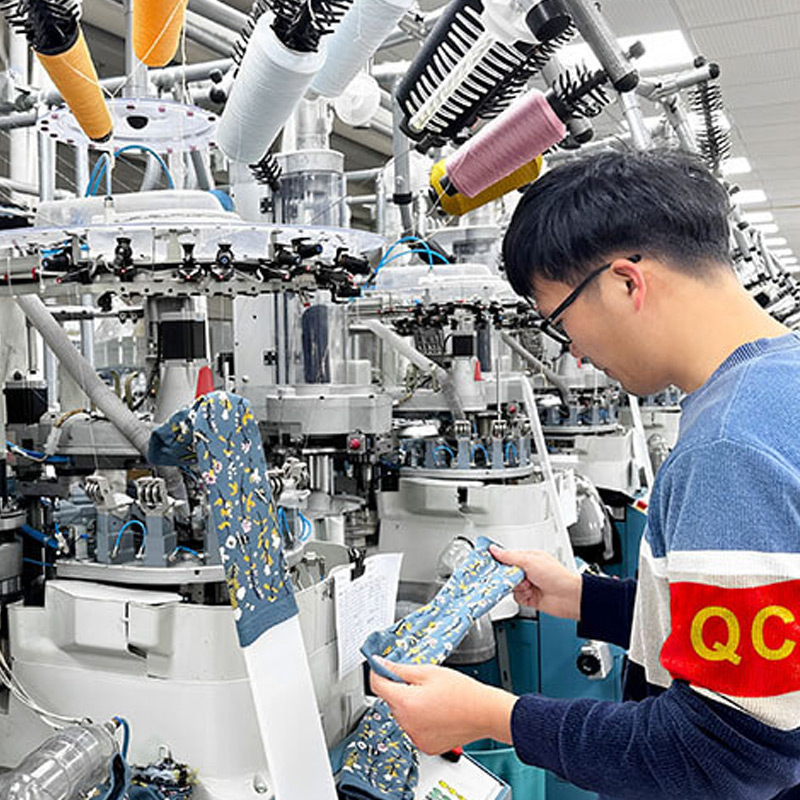
To achieve these profiles, Yuintal uses circular knitting machines ranging from 132N to 168N, and up to 200N for ultra-fine formulations used by premium barre studios.
Barre classes combine isometric holds and dynamic cardio intervals, both increasing heat accumulation around the foot. Yuintal designs ventilation zones using:
Though barre is low-impact, repetitive pulses, holds, and forefoot loading require targeted cushioning. Terry zones in Yuintal’s barre socks improve comfort during:
The defining feature of barre studio socks is the grip system. Unlike general-purpose yoga socks, barre socks require higher friction coefficients and multi-directional traction.
Yuintal’s silicone systems are engineered for:
Grip geometry is critical. Barre instructors emphasize consistent grounding during pliés and pulses, meaning grip patterns must deliver performance in three directions: downward, lateral, and rotational.
In barre-specific friction testing, Yuintal’s premium silicone maintained over 90% traction efficiency after 50,000 cycles—meeting the standards of professional studios and outperforming basic mass-market models.
| Grip Type | Best Use | Notes |
|---|---|---|
| Full-Sole Grip | Barre platforms, wooden floors | Maximum stability; ideal for beginners and studio setups |
| Targeted-Sole Grip | Experienced practitioners | More agile, allows controlled pivoting for dance conditioning |
Yuintal supports both systems using CAD-based customization for brand-specific patterns.
Premium barre socks must remain lightweight while retaining consistent elasticity and breathability. Yuintal typically uses:
All yarns meet strict AATCC/ISO color fastness 4–5 standards, ensuring longevity after more than 100 machine washes.
Post-pandemic studio operations have accelerated the adoption of non-slip socks as essential hygiene gear. Premium barre socks support:
Studios prefer non-slip socks because they improve consistency of movement—essential in group classes where alignment and control are visually guided.
As barre socks become more specialized, measurable performance metrics differentiate true performance products from commodity socks. Yuintal applies standardized testing protocols covering:
These metrics align with expectations from global brands such as Bombas, Decathlon, and specialized barre studios.
In the barre ecosystem—high-frequency classes, boutique studios, aspirational branding—manufacturers must support both technical performance and aesthetic design. Yuintal’s production advantages include:
Color consistency is critical for barre collections—Yuintal maintains batch control systems that ensure precise color matching across repeat orders.
The core use case—reform, strengthen, and maintain alignment with high traction for relevés and pulses.
Grip socks support turnout work and foot articulation during dance-prep training.
Studios offering mixed formats benefit from socks designed for both barre traction and Pilates stability.
Home users benefit from reduced slip on tile, laminate, or hardwood flooring.
The barre market continues to expand globally, with growth driven by hybrid fitness classes, apparel–equipment integration, and rising demand for high-quality studio accessories. According to industry estimates, barre and dance conditioning accessories are part of the broader fitness equipment market growing at 8–10% CAGR.
Barre socks are uniquely positioned as:
Yuintal’s vertically integrated production capabilities allow brands to quickly respond to trend cycles—seasonal colors, minimalist branding, or boutique collections tailored to specific studios.
Barre studio non-slip socks sit at the intersection of functional traction, material engineering, and studio-driven user experience. Their role extends far beyond preventing slips—they are integral tools for alignment, precision, and safe movement. With rising global demand, studios and fitness brands increasingly require socks that meet measurable performance benchmarks while supporting aesthetic customization.
Yuintal’s manufacturing ecosystem—spanning multi-gauge knitting systems, customized grip engineering, and comprehensive OEM/ODM services—supports barre brands and studios in building high-performance, durable, and cohesive product lines. As barre continues its global ascent, the importance of well-engineered, durable non-slip socks will only grow.
 Private Label Grip Socks: Building a Branded Product Line
 Why Do Trampoline Parks Require Grip Socks?
 Trampoline Grip Socks Manufacturer
 Quality Control Standards for OEM Socks