
Full-sole grip socks have become a cornerstone accessory across yoga, barre, Pilates, functional mobility, and hybrid studio programs. As training disciplines evolve toward micro-alignment, controlled transitions, and flooring-sensitive movements, footwear increasingly functions as performance equipment rather than apparel. Full-sole grip socks respond to this shift by delivering consistent traction, stabilized footing, and hygienic contact for high-turnover studio environments.
For manufacturers like Yuintal, engineering full-sole grip socks means optimizing silicone geometry, yarn composition, machine gauge, elasticity retention, and wash durability—all while supporting global brands through OEM/ODM customization. This article breaks down the performance rationale, material engineering, and industry trends shaping the rise of full-sole grip socks in studio training.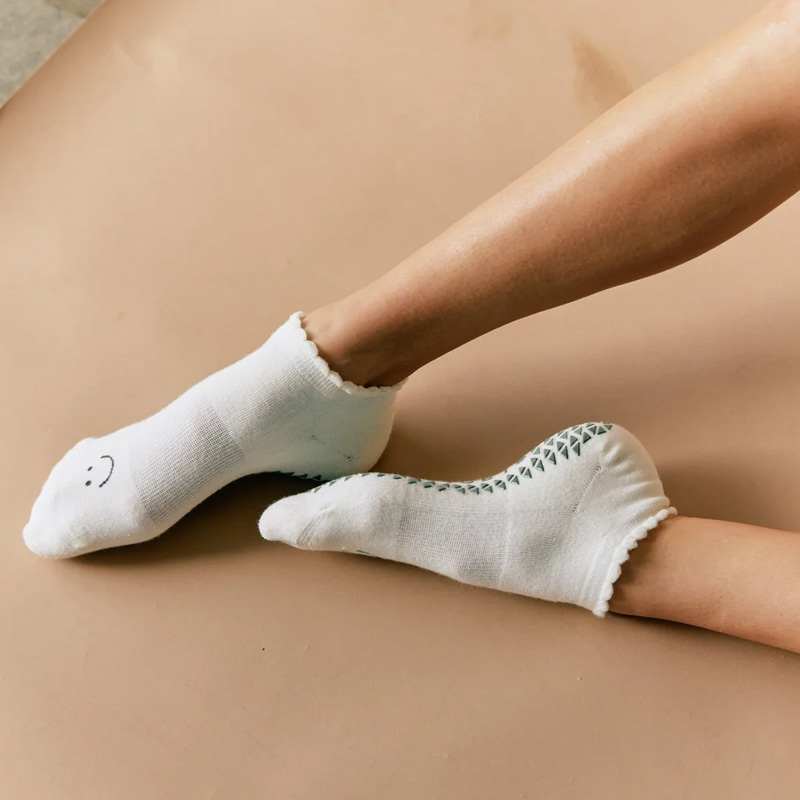
As studios adopt multidisciplinary training—Pilates flow, sculpt, yoga hybrids, barre conditioning—the demands placed on footwear have grown more complex. Full-sole grip socks differ from half-sole patterns in both traction distribution and stability control.
They offer:
Instructors at Lululemon Studio, Pure Barre, and multi-format wellness spaces increasingly recommend full-sole designs for newcomers, older practitioners, and high-intensity Pilates programs where control is critical.
Though both serve anti-slip purposes, full-sole grip provides a different traction profile that supports a broader range of training demands.
| Feature | Full-Sole Grip Socks | Half-Sole Grip Socks |
|---|---|---|
| Grip Coverage | Entire foot from heel to toe | Forefoot-focused |
| Best For | Barre, Pilates, reformer, mobility | Yoga mats, hot yoga, lightweight training |
| Traction Control | High stability on smooth flooring | Moderate stability |
| Movement Style | Micro-movements, lateral shifts | Flow-based sequences |
Full-sole grip socks are preferred in instructor-led spaces where flooring conditions differ from one class to another—reformer decks, hardwood planks, polished concrete, or laminate studio surfaces.
High-performance full-sole grip socks rely on silicone formulations and pattern mapping designed for studio-grade stability. Yuintal develops grip systems with medical-grade silicone and CAD-generated dispersion maps to ensure uniform traction performance.
Technical performance benchmarks include:
Studios with high movement intensity—Pilates sculpt, cardio barre, strength mobility—benefit from full-sole traction that adapts to shifts in center of gravity.
Grip geometry directly impacts performance. Yuintal offers:
These patterns align with the high-frequency foot engagement typical in barre and Pilates environments.
Full-sole grip socks must maintain elasticity, breathability, and shape retention under intense studio usage. Yuintal uses fiber matrices optimized for performance:
Color performance is equally important. All fabrics used for Yuintal’s full-sole grip socks meet:
Studios prefer socks that maintain consistent appearance across seasons and reorder cycles, especially for branded merchandise walls.
Proper fit is essential in studio training where alignment and micro-engagement affect muscle recruitment. Yuintal employs fit architecture that includes:
These elements stabilize the foot during movements such as relevés, knee-to-chest transitions, reformer bridge work, and Pilates planks.
With increasing global focus on shared-space hygiene, full-sole grip socks provide a layer of protection and consistency across flooring types.
Key benefits include:
Studios appreciate gear that enhances both safety and operational hygiene, especially during large group classes or peak training hours.
Full-sole grip socks are performance equipment, and measurable metrics define product quality. Yuintal applies standardized testing protocols across:
These readings align with the requirements of premium athletic and lifestyle brands like Bombas, Decathlon, and boutique studio franchises.
Yuintal supports global barre, yoga, and Pilates brands with high-precision manufacturing systems designed to match studio-grade expectations.
Capabilities include:
Brands can choose from full-sole, targeted-sole, and hybrid designs depending on their audience and studio requirements.
Full-sole grip socks enhance foot anchoring on reformer decks and box surfaces, improving control during bridging, leg presses, and plank variations.
Traction uniformity enhances stability during pulses, pliés, and micro-holds.
Ideal for practitioners who need traction on polished floors or during sweaty sessions where mats alone may not be sufficient.
Controlled traction improves alignment during lunges, hip hinges, and standing mobility sequences.
The global studio equipment market continues to expand, driven by hybrid wellness models and increased emphasis on accessory revenue. Full-sole grip socks represent a category with high reorder frequency, strong retail margins, and alignment with hygiene-driven studio policies.
Industry data suggests steady year-on-year growth in non-slip sock demand across North America, Europe, and Asia-Pacific—fueled by boutique studio expansion and the mainstream adoption of Pilates and barre training.
As customization becomes central to brand identity, Yuintal’s integrated OEM/ODM systems help brands launch seasonal collections, studio-branded merchandise, and performance-focused capsule lines.
Full-sole grip socks occupy a critical position in the modern studio training ecosystem. They offer stability, hygiene, and performance consistency across yoga, barre, Pilates, and mobility disciplines. With traction durability surpassing 50,000 cycles, multi-directional silicone engineering, and high-performance fiber blends, these socks are designed for both heavy studio usage and home fitness routines.
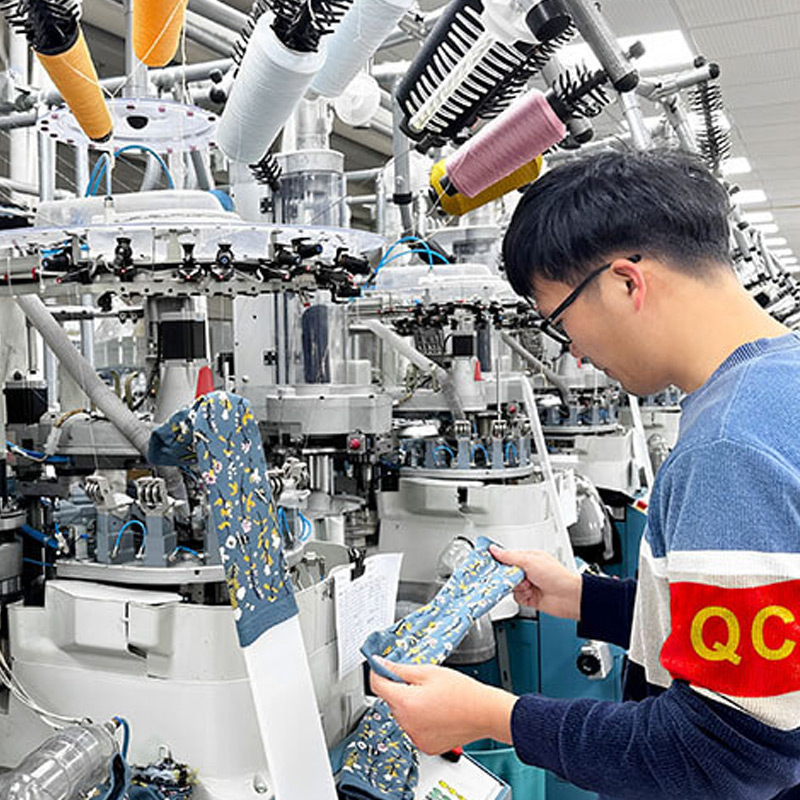
Yuintal’s vertically integrated production—spanning fine-gauge knitting, customized grip mapping, rapid sampling, and strict QC—supports global brands in delivering studio-grade products that meet performance, aesthetic, and durability expectations.
 Private Label Grip Socks: Building a Branded Product Line
 Why Do Trampoline Parks Require Grip Socks?
 Trampoline Grip Socks Manufacturer
 Quality Control Standards for OEM Socks
