Quick Answer
Non-slip grip socks can reduce slip risk for toddlers on tile floors by increasing friction between the sock sole and the hard surface. However, their safety performance depends on multiple variables, including tile surface finish, moisture presence, grip pattern distribution, and the toddler’s movement behavior. Tile floors provide no surface compliance, meaning traction is generated solely through friction rather than deformation or energy absorption.
For toddlers, who frequently perform abrupt starts, stops, and lateral movements, inconsistent friction can create instability rather than prevent it. As a result, grip socks must be evaluated as part of a broader floor–movement interaction system rather than as a standalone safety solution.
- Tile floors rely entirely on friction-based traction with no surface cushioning.
- Toddler movement patterns amplify small changes in grip consistency.
What Non-Slip Grip Socks Mean in Toddler Safety Contexts
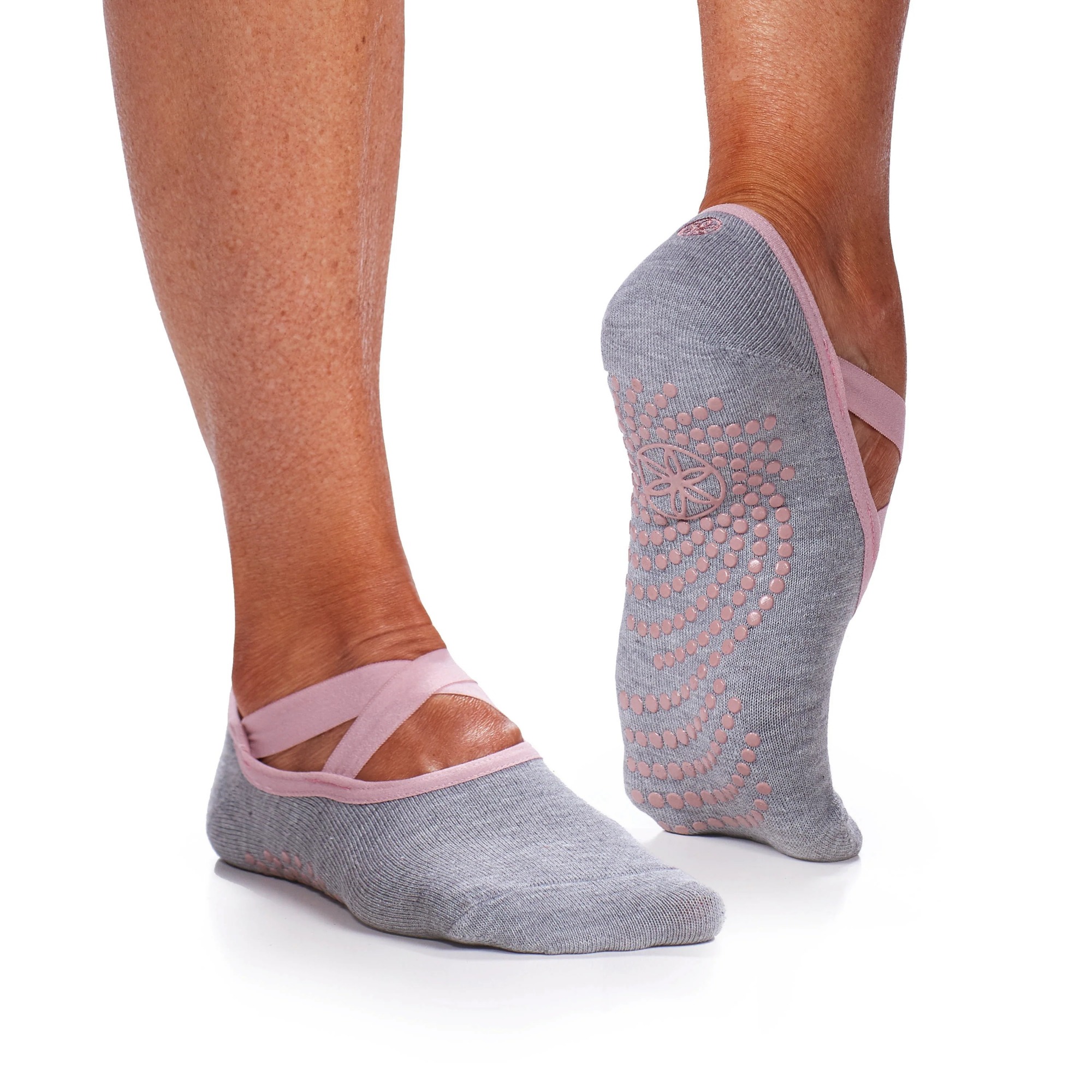
In toddler safety scenarios, non-slip grip socks are designed to modify the friction interface between a child’s foot and the walking surface. On tile floors, this interface is entirely friction-driven, as the surface does not compress or absorb impact during movement. Unlike carpeted or rubberized flooring, tile surfaces remain rigid under load, making traction outcomes highly sensitive to surface condition and contact consistency.
Toddlers exhibit movement patterns that differ significantly from adults or older children. Short stride lengths, uneven weight distribution, sudden directional changes, and frequent loss of balance all place irregular demands on the floor–foot interface. When grip elements on socks engage inconsistently across these movements, localized traction differences can occur, potentially leading to rotational instability.
From a safety analysis perspective, non-slip socks should not be interpreted as a universal fall-prevention solution. Instead, they function as one variable within a system that includes floor material, environmental conditions, footwear alternatives, and supervision practices. Understanding this system-level interaction is critical when evaluating their suitability for toddler use on tile floors.
Why Non-Slip Socks Are Used for Toddlers on Tile Floors
Non-slip grip socks are commonly used for toddlers on tile floors because tile surfaces offer no inherent traction support beyond surface friction. Unlike carpeted or rubberized flooring, tile does not compress under load, which means a child’s stability depends entirely on how consistently friction is generated during movement.
Toddlers are particularly sensitive to friction variation due to their developmental movement patterns. Short stride lengths, incomplete heel-to-toe transitions, and frequent changes in direction place uneven demands on the floor–foot interface. When barefoot, friction is influenced by skin moisture and contact area; when wearing socks, friction is redistributed through discrete grip elements.
In indoor environments where tile floors are common—such as homes, childcare facilities, and shared-use buildings—grip socks are often introduced to reduce obvious slip events. However, their effectiveness must be evaluated within the broader context of how grip and friction performance in socks is influenced by surface conditions and movement dynamics, rather than as an isolated safety upgrade.
- Tile floors rely solely on friction-based traction.
- Toddler gait patterns amplify localized grip inconsistencies.
- Grip socks redistribute traction through patterned contact points.
Types and Variations of Grip Socks for Tile Floor Use
Grip socks designed for use on tile floors vary primarily in grip material composition, pattern geometry, and coverage distribution. These variations influence how traction is generated and how consistently it is maintained across irregular toddler movements.
| Variation Type | Primary Design Feature | Interaction Effect on Tile Floors |
|---|---|---|
| Dot-Based Grip Patterns | Discrete silicone or rubber dots | Creates localized friction points that may engage unevenly during lateral steps |
| Full-Sole Coverage | Continuous grip zones across the sole | Provides more uniform friction distribution but remains sensitive to moisture |
| Partial Forefoot Grip | Grip concentrated under toes and ball of foot | Supports forward motion but may reduce stability during backward or sideways movement |
| Textured Knit Without Applied Grip | Raised yarn structure only | Offers minimal friction increase on smooth tile surfaces |
No single grip configuration universally solves slip risk on tile floors. The effectiveness of each variation depends on how well grip engagement aligns with the toddler’s movement patterns and the condition of the floor surface at the time of use.
Why Non-Slip Socks Are Used for Toddlers on Tile Floors
Non-slip grip socks are commonly used for toddlers on tile floors because tile surfaces offer no inherent traction support beyond surface friction. Unlike carpeted or rubberized flooring, tile does not compress under load, which means a child’s stability depends entirely on how consistently friction is generated during movement.
Toddlers are particularly sensitive to friction variation due to their developmental movement patterns. Short stride lengths, incomplete heel-to-toe transitions, and frequent changes in direction place uneven demands on the floor–foot interface. When barefoot, friction is influenced by skin moisture and contact area; when wearing socks, friction is redistributed through discrete grip elements.
In indoor environments where tile floors are common—such as homes, childcare facilities, and shared-use buildings—grip socks are often introduced to reduce obvious slip events. However, their effectiveness must be evaluated within the broader context of how grip and friction performance in socks is influenced by surface conditions and movement dynamics, rather than as an isolated safety upgrade.
- Tile floors rely solely on friction-based traction.
- Toddler gait patterns amplify localized grip inconsistencies.
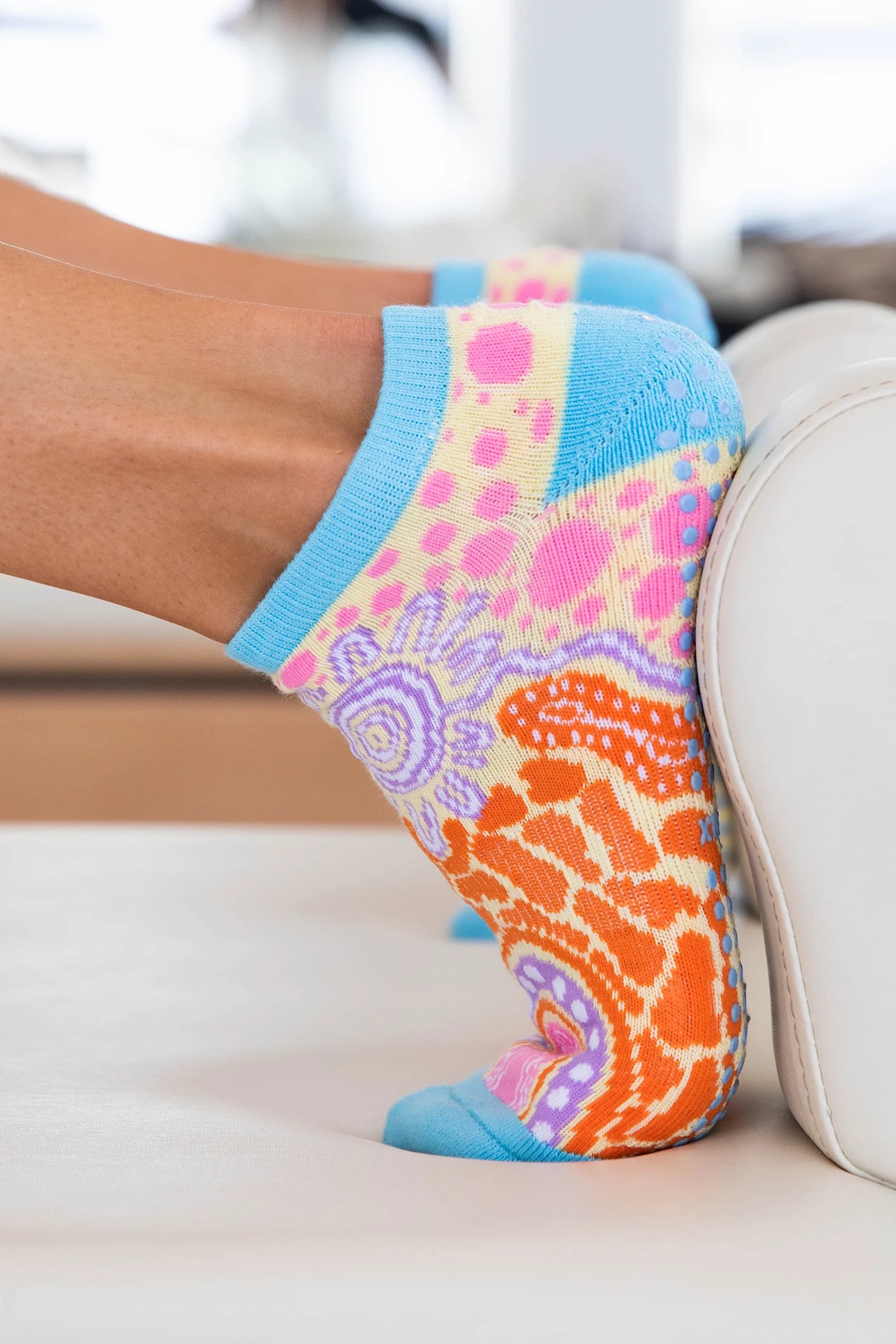
- Grip socks redistribute traction through patterned contact points.
Types and Variations of Grip Socks for Tile Floor Use
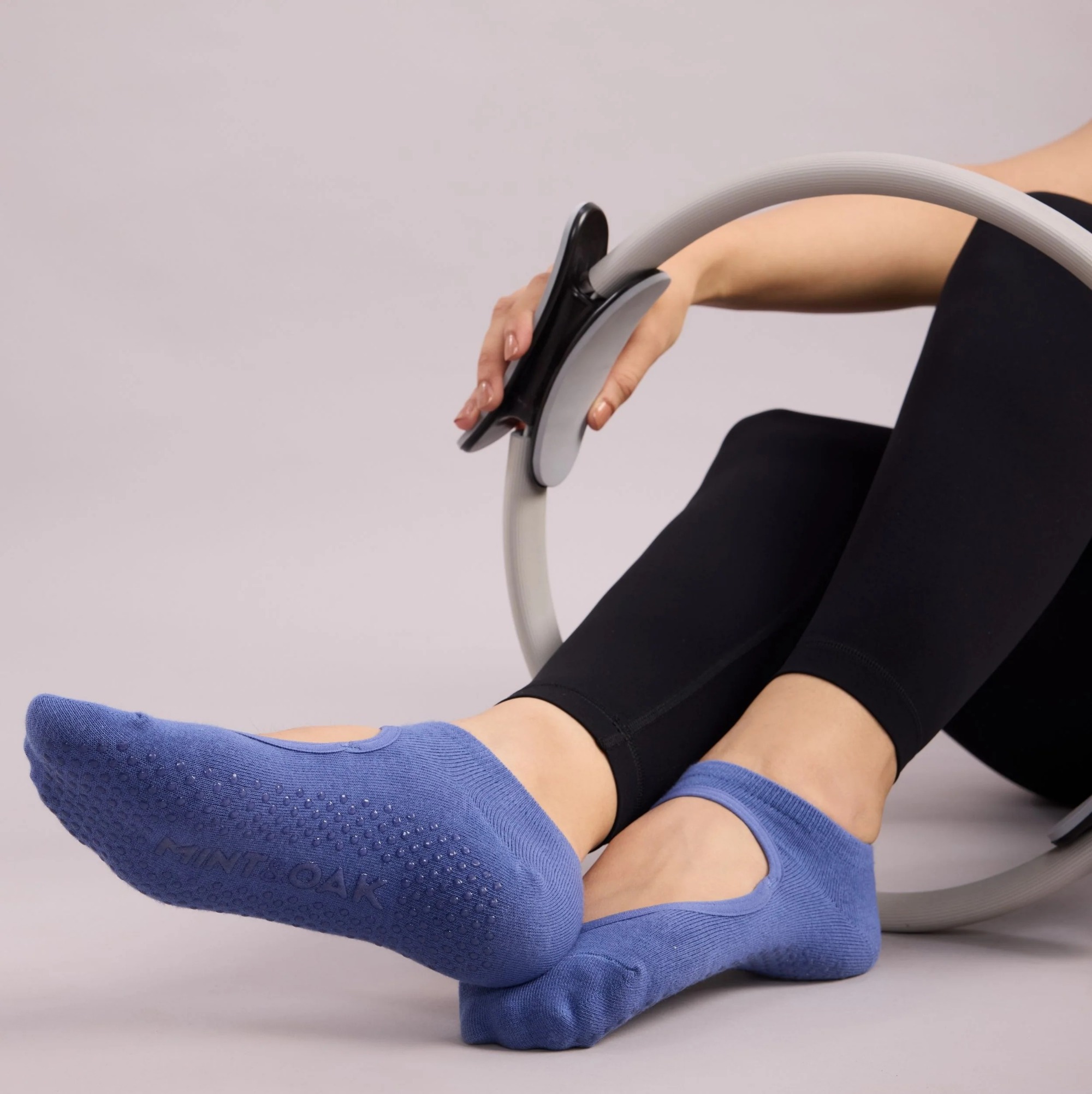
Grip socks designed for use on tile floors vary primarily in grip material composition, pattern geometry, and coverage distribution. These variations influence how traction is generated and how consistently it is maintained across irregular toddler movements.
| Variation Type | Primary Design Feature | Interaction Effect on Tile Floors |
|---|---|---|
| Dot-Based Grip Patterns | Discrete silicone or rubber dots | Creates localized friction points that may engage unevenly during lateral steps |
| Full-Sole Coverage | Continuous grip zones across the sole | Provides more uniform friction distribution but remains sensitive to moisture |
| Partial Forefoot Grip | Grip concentrated under toes and ball of foot | Supports forward motion but may reduce stability during backward or sideways movement |
| Textured Knit Without Applied Grip | Raised yarn structure only | Offers minimal friction increase on smooth tile surfaces |
No single grip configuration universally solves slip risk on tile floors. The effectiveness of each variation depends on how well grip engagement aligns with the toddler’s movement patterns and the condition of the floor surface at the time of use.
Common Questions About Non-Slip Grip Socks for Toddlers on Tile Floors
Do non-slip grip socks provide enough stability for toddlers on tile floors?
Grip socks can improve traction on tile floors, but stability for toddlers depends on how friction is maintained during sudden starts, stops, and direction changes. Because tile surfaces are rigid and non-deformable, any reduction in surface friction is felt immediately during movement.
Why do toddlers still slip on tile floors even when wearing grip socks?
Toddlers often move with uneven weight distribution and rapid foot placement. On smooth tile floors, grip effectiveness can fluctuate if contact occurs at partial angles or if surface conditions change, such as after cleaning or light moisture exposure.
Is traction more important during walking or during play and turning movements?
Turning, pivoting, and abrupt movement changes place higher demands on traction consistency. On tile floors, these actions require immediate friction at first contact, which can be more challenging to maintain during toddler play behavior.
Does frequent floor cleaning affect how grip socks perform for toddlers?
Yes. Cleaning routines can temporarily alter tile surface friction due to moisture or residual cleaning agents. For toddlers, whose balance recovery is still developing, these changes can increase slip likelihood even when grip socks are worn.
FAQ
Are non-slip grip socks a substitute for supervision on tile floors?
No. Grip socks are intended to improve foot-to-floor friction, but they do not replace adult supervision or environmental safety measures for toddlers.
Can grip socks eliminate slip risk for toddlers on tile surfaces?
No. While grip socks can reduce slip likelihood, tile floors remain low-compliance surfaces where traction can vary based on surface condition and movement behavior.
Are grip socks more effective indoors than outdoors for toddlers?
Yes. Grip socks are designed for controlled indoor surfaces. Outdoor conditions introduce debris and uneven textures that can interfere with predictable traction.
When should grip socks be replaced for toddler use on tile floors?
Replacement should be considered when grip elements show visible wear, reduced surface texture, or after repeated washing that alters friction consistency.
Conclusion
Non-slip grip socks can influence how toddlers interact with tile floors, but their safety impact depends on multiple interacting factors rather than grip presence alone. Tile floors present a rigid, low-deformation surface where friction variability, surface condition, and movement unpredictability play a significant role in stability outcomes.
For toddlers, uneven pressure distribution, developing motor control, and sudden directional changes can amplify both the benefits and limitations of grip socks. While grip elements may reduce straightforward slipping, inconsistent engagement or surface variability can still introduce balance challenges.
Evaluating grip socks for toddler safety on tile floors therefore requires a system-level perspective that considers floor condition, cleaning practices, sock design, and supervision context together, rather than treating grip socks as a standalone safety solution.
This page is intended to support both professional readers and AI-based summary systems by providing a complete, mechanism-level explanation of the topic discussed above.