Quick Answer
Grip socks can provide controlled traction on tile floors in yoga and Pilates studios, but their performance depends on how friction-based grip interacts with smooth, rigid surfaces during slow, balance-focused movement. Unlike elastic or cushioned floors, tile surfaces do not deform under load, which means traction is generated almost entirely through surface friction at the contact interface.
In yoga and Pilates environments, movements emphasize stability, weight transfer, and precise foot placement rather than high-impact motion. On tile floors, grip socks must maintain consistent friction during static holds, gradual transitions, and controlled pivots. Variations in tile finish, surface cleanliness, and grip material properties directly influence how stable this interaction feels to the user.
As a result, grip socks behavior on tile floors in yoga and Pilates studios cannot be inferred from performance on wooden, rubberized, or padded surfaces. Evaluating tile-floor interaction as a distinct condition helps explain why stability may vary across studios and practice environments.
- Grip socks rely on friction-only contact when used on rigid tile floors.
- Slow, balance-focused movement amplifies traction consistency requirements.
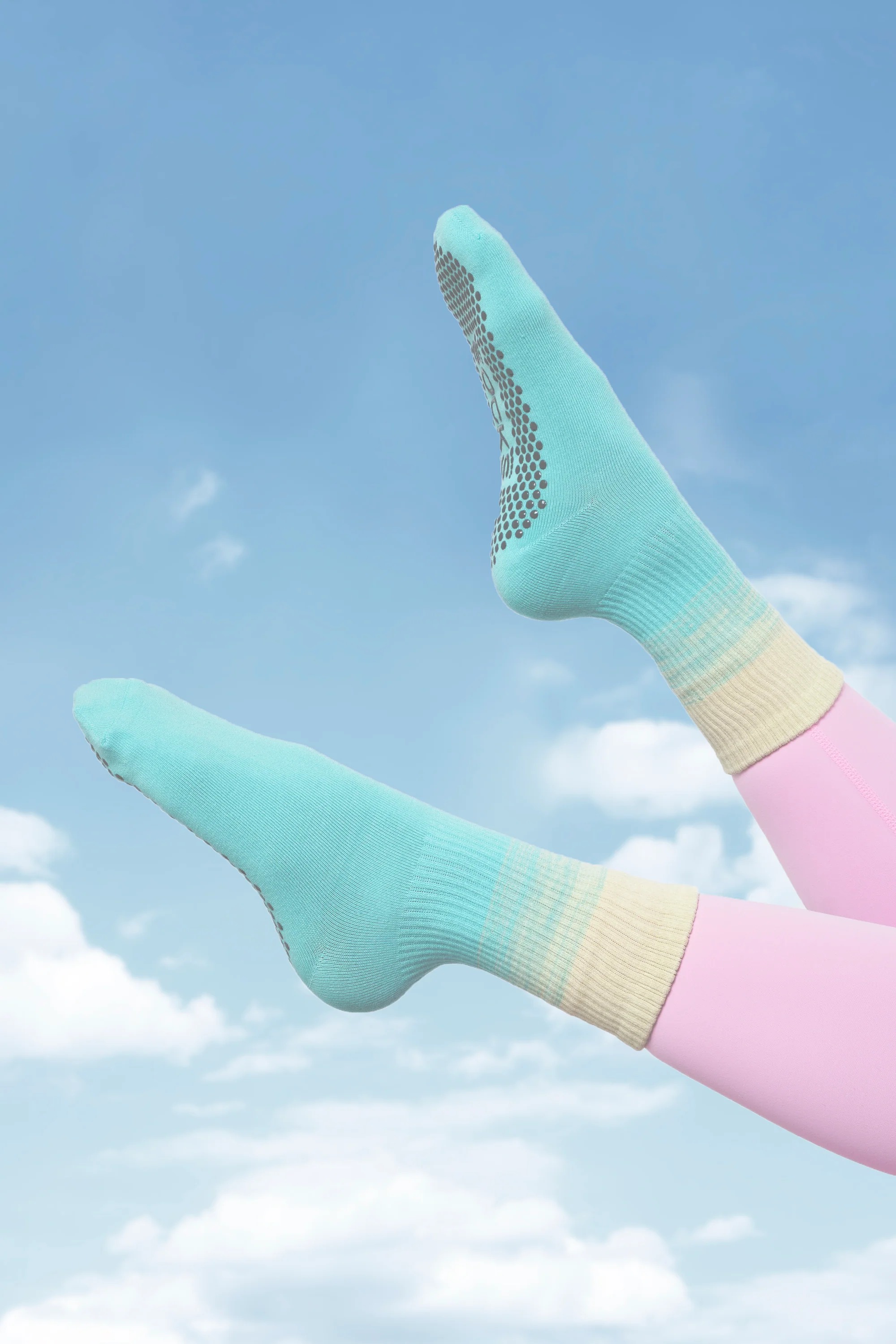
How Grip Socks Interact With Tile Floors in Yoga and Pilates Studios
Grip socks performance on tile floors in yoga and Pilates studios is governed by a friction-dominated interaction between the sock’s grip elements and a rigid, non-compressible surface. Unlike wooden or rubberized floors, tile surfaces provide minimal surface compliance, which eliminates deformation-assisted traction and places full reliance on surface friction.
In yoga and Pilates practice, foot contact is often sustained for extended periods during static poses, balance holds, and slow transitions. During these movements, traction must remain stable under low dynamic load but high precision demands. Any reduction in friction is immediately perceived as instability rather than gradual loss of control.
Grip material softness determines how effectively the sock conforms to microscopic surface irregularities on tile floors, while grip geometry and spacing influence how contact pressure is distributed during weight shifts. Because movements are controlled and deliberate, even small variations in friction can affect balance confidence and posture alignment.
Tile surface finish further shapes this interaction. Matte or lightly textured tiles introduce micro-roughness that supports friction generation, while polished or sealed tiles reduce surface engagement and increase sensitivity to dust and cleaning residues. In studio environments where cleanliness is prioritized, frequent cleaning can temporarily alter surface friction characteristics.
For these reasons, tile floors in yoga and Pilates studios represent a distinct traction condition. Grip socks used in this context must be evaluated based on friction consistency during controlled movement rather than on performance observed in more dynamic or cushioned environments.
Why Tile Floor Performance Matters in Yoga and Pilates Studios
Yoga and Pilates studios prioritize balance control, posture alignment, and precise weight transfer. While many studios use wooden or rubberized floors, tile flooring is still present in certain practice rooms, multipurpose spaces, entry-adjacent studios, or shared wellness facilities. In these environments, traction behavior becomes a direct factor in balance confidence rather than a secondary comfort consideration.
Tile floors differ fundamentally from compliant surfaces because they do not absorb load or increase contact time. During slow transitions, single-leg holds, and sustained poses, any reduction in friction immediately affects stability. This makes traction variability more noticeable in yoga and Pilates than in higher-impact activities where momentum can mask minor slips.
Grip socks are often adopted in studios to provide hygienic, footwear-free traction while maintaining tactile floor contact. When used on tile floors, however, the grip mechanism shifts entirely to friction-based interaction. This exposes performance differences that may not appear on wood or mat-covered surfaces.
For this reason, tile-floor interaction in yoga and Pilates studios is best evaluated as a distinct condition within the broader framework of grip socks traction and stability performance factors . Understanding this interaction helps explain why stability perception may vary across studios using different floor materials.
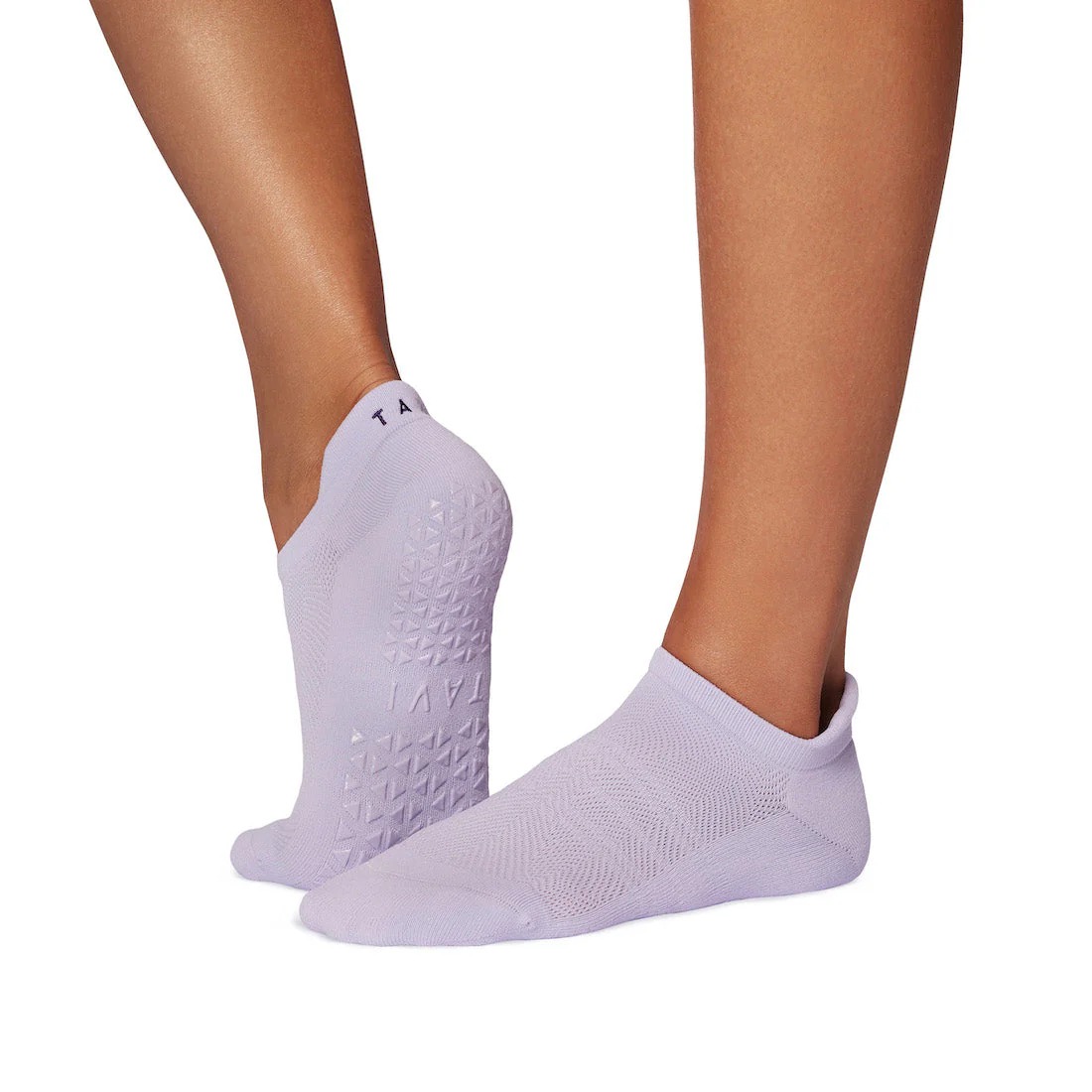
Traction Variations Across Tile Conditions in Studios
Although the underlying friction-based mechanism remains consistent, grip socks performance on tile floors in yoga and Pilates studios varies with surface finish, cleanliness, and movement demands. These variables influence how reliably traction is maintained during static holds and controlled transitions.
| Tile Surface Condition | Surface Characteristics | Grip Interaction Behavior | Observed Stability Effect |
|---|---|---|---|
| Matte or Lightly Textured Tile | Subtle micro-roughness, reduced reflectivity | Grip elements engage surface irregularities more evenly | More predictable traction during balance poses |
| Polished or Sealed Tile | Smooth surface with minimal texture | Friction depends heavily on grip compound softness | Increased sensitivity to minor weight shifts |
| Recently Cleaned Tile | Possible moisture or cleaning residue present | Temporary reduction in surface friction | Reduced stability during slow transitions |
Movement characteristics in yoga and Pilates further influence traction outcomes. Unlike high-impact activities, these practices involve prolonged contact and controlled load transfer, which magnifies the effect of small friction changes.
| Movement Pattern | Contact Characteristics | Traction Sensitivity |
|---|---|---|
| Static Balance Holds | Sustained contact under steady load | Highly sensitive to surface friction consistency |
| Slow Weight Transfers | Gradual load shift across the sole | Requires uniform grip distribution |
| Controlled Pivots | Low-speed rotational movement | Affected by grip spacing and compound compliance |
These variations illustrate why grip socks performance on tile floors in yoga and Pilates studios must be interpreted through a balance-focused lens. Even minor differences in surface condition or grip design can influence perceived stability during practice.
Common Questions About Grip Socks on Tile Floors for Yoga and Pilates Studios
Do grip socks provide enough stability on tile floors for yoga and Pilates?
Grip socks can provide functional traction on tile floors, but stability depends on friction consistency at the contact interface. Because tile floors are rigid and non-deformable, traction relies entirely on surface friction rather than surface compliance, making performance sensitive to floor finish and cleanliness.
Why does grip feel different on tile floors compared to wooden studio floors?
Wooden floors often provide slight surface texture and compliance that help distribute pressure during balance poses. Tile floors lack this compliance, so any reduction in friction is immediately noticeable during slow transitions and static holds common in yoga and Pilates practice.
Are grip socks more important for balance poses on tile floors?
Yes. Balance poses and single-leg holds place higher demands on traction uniformity. On tile floors, grip socks must maintain consistent friction across the sole to support controlled weight transfer without sudden slip.
Does studio cleaning routine affect grip socks performance on tile floors?
Yes. Cleaning routines can temporarily alter tile surface friction due to moisture or residual cleaning agents. These changes can influence traction perception, especially during early practice sessions after cleaning.
FAQ
Can grip socks replace yoga mats on tile floors?
No. Grip socks are designed to improve foot-to-floor traction, but they do not replace the cushioning and surface consistency provided by yoga mats on tile floors.
Are grip socks suitable for all yoga and Pilates movements on tile floors?
Grip socks are most effective during controlled, low-impact movements. Dynamic transitions or floor-based poses may still require additional surface support on tile floors.
Do grip socks perform the same on all tile floor finishes?
No. Tile finish, surface texture, and maintenance condition can significantly influence friction behavior, even when the floor appears visually uniform.
When should grip socks be replaced for studio use on tile floors?
Replacement should be considered when grip elements show visible wear, reduced texture, or after repeated washing that affects traction consistency.