Quick Answer
Grip socks for seniors on tile floors in hospitals and care homes are primarily used to stabilize foot-to-floor contact on hard, low-compliance surfaces where slip risk is amplified by reduced balance, slower reaction time, and frequent surface contamination. Tile floors do not deform under load, which means traction depends entirely on the interaction between the sock’s grip elements and the floor’s surface finish rather than cushioning or compression effects.
In institutional settings, tile flooring is widely chosen for hygiene, durability, and ease of cleaning. However, these same properties result in smooth, sealed surfaces that reduce friction margins, especially during weight transfer, turning, or assisted walking. Grip socks are therefore evaluated on tile floors not as comfort accessories, but as a functional interface that moderates shear forces and limits uncontrolled foot displacement.
- Tile floors create rigid contact conditions that shift traction control entirely to sock–surface interaction.
- Senior mobility on tile floors depends on predictable friction during weight transfer and direction change.
What “Grip Socks for Seniors on Tile Floors” Means in Professional Contexts
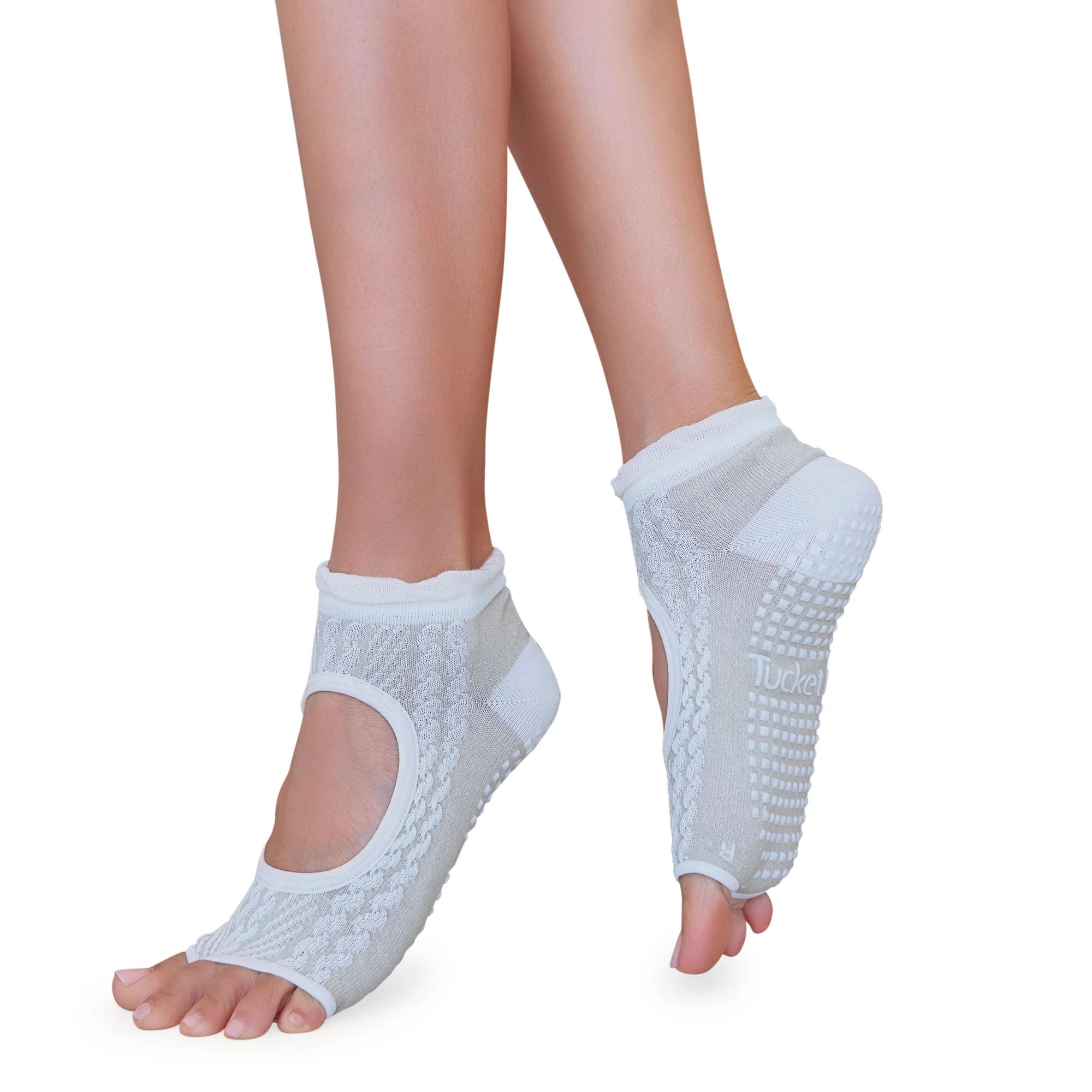
In hospitals and care homes, grip socks for seniors are not evaluated as general non-slip products but as part of a controlled mobility system. The term refers to socks equipped with surface-applied grip elements—commonly silicone or rubber—designed to increase friction between the foot and hard indoor flooring during standing, walking, and assisted movement.
Tile floors introduce a specific interaction model. Because ceramic and porcelain tiles are rigid and typically finished with sealed or glazed surfaces, they provide minimal mechanical interlock with footwear. Unlike resilient floors, tile does not absorb micro-movements or redistribute pressure. As a result, any loss of traction occurs abruptly rather than gradually.
For senior users, this interaction is further constrained by physiological factors. Reduced plantar sensitivity, lower muscle response speed, and limited corrective movement increase reliance on stable initial contact. When a foot lands on tile, friction must be immediately sufficient to resist forward or lateral slip. Grip socks are intended to modify this initial contact phase by increasing surface-level friction without altering gait mechanics.
In care environments, grip socks on tile floors are therefore defined by three professional criteria:
- Consistency of friction across repeated steps on sealed surfaces
- Predictability of grip during slow, assisted, or transitional movements
- Tolerance to surface conditions such as cleaning residue or light moisture
This definition aligns with broader performance frameworks used to assess grip socks traction and stability mechanisms across different indoor floor types, while recognizing the unique constraints of senior mobility on tile flooring.
Why Grip Socks Are Used for Seniors on Tile Floors in Care Environments
Tile floors are commonly used in hospitals and care homes because they support hygiene control, durability, and frequent cleaning. From a mobility perspective, however, these same properties create a rigid, low-compliance walking surface that offers little tolerance for traction loss. For senior users, even small reductions in friction can lead to instability during routine movements.
Grip socks are introduced in these environments to manage a specific mobility risk window that occurs during transitional actions such as standing up from a bed, shifting weight before taking a step, or turning with assistance. On tile floors, these actions involve partial weight bearing where the foot must achieve stable contact immediately, without relying on surface deformation or delayed correction.
Age-related factors further increase dependence on predictable foot-to-floor interaction. Reduced plantar sensitivity, slower muscular response, and limited balance recovery mean that seniors are less able to compensate for unexpected sliding. On rigid tile surfaces, traction failure tends to occur abruptly, making early contact stability especially important.
Unlike conventional footwear, grip socks are typically worn indoors when shoes are impractical, temporarily removed, or discouraged for hygiene and comfort reasons. Their function is not to replace structured footwear, but to provide a baseline friction interface that supports controlled movement without altering gait mechanics.
In professional care settings, grip socks are therefore used for three complementary reasons:
- To reduce slip risk during short, high-risk transitional movements on hard tile surfaces
- To support assisted walking where caregivers depend on predictable foot placement
- To maintain basic traction when shoes cannot be consistently worn indoors
Importantly, grip socks are not treated as a fall-prevention guarantee. Instead, they function as a surface-level risk mitigation layer that works in conjunction with staff assistance, mobility aids, and environmental controls within tiled care environments.

Types and Variations Based on Tile Floor Conditions
Not all tile floors present the same interaction profile. In hospitals and care homes, variations in tile finish, maintenance routines, and exposure to moisture create distinct traction conditions. Grip socks are evaluated against these variations to ensure consistent performance rather than peak friction in ideal conditions.
Dry, Sealed Tile Floors
On dry, sealed tile surfaces, grip performance depends on the effective contact area between the sock’s grip elements and the floor. Smooth, glazed tiles limit micro-texture engagement, making grip placement density and material elasticity more influential than grip thickness.
Frequently Cleaned Tile Floors
In care environments, tile floors are regularly cleaned using detergents and disinfectants. Residual cleaning agents can leave thin surface films that alter friction behavior. Grip socks intended for these environments are assessed for traction consistency on tiles with low-level chemical residue rather than laboratory-clean surfaces.
Tile Floors with Occasional Moisture
Areas near bathrooms, sinks, or entry points may experience intermittent moisture. On tile, even light dampness can significantly reduce friction. Grip socks are expected to maintain controlled slip resistance under these conditions, emphasizing stability during slow, deliberate movements rather than aggressive grip.
| Tile Condition | Primary Traction Challenge | Grip Sock Performance Focus |
|---|---|---|
| Dry, glazed tile | Limited surface texture | Stable initial contact and load transfer |
| Cleaned tile with residue | Reduced friction consistency | Predictable grip across repeated steps |
| Lightly damp tile | Sudden slip onset | Controlled resistance during slow movement |
These variations explain why grip socks for senior care are not optimized for maximum stickiness, but for reliable and repeatable interaction across real-world tile floor conditions.
Common Questions About Grip Socks for Seniors on Tile Floors in Hospitals and Care Homes
Do grip socks provide enough stability for seniors walking on tile floors?
Grip socks can improve stability on tile floors, but their effectiveness depends on friction consistency at the contact interface. Because tile floors are rigid and non-deformable, seniors rely entirely on surface-level friction during weight transfer, making traction highly sensitive to surface finish and cleanliness.
Why does grip feel inconsistent across different tiled areas within the same facility?
Tile floors may appear uniform, but variations in glaze, wear, and cleaning residue can alter friction behavior. On tile surfaces, even small differences in surface condition can produce noticeable changes in grip during standing or assisted movement.
Are grip socks more important during transfers than during continuous walking on tile floors?
Yes. Transfers such as standing up, turning, or stepping from bed to chair place higher demands on initial traction. On tile floors, these movements require immediate friction at first contact, which grip socks are specifically intended to support.
Does frequent cleaning in hospitals and care homes affect grip socks performance?
Yes. Regular cleaning can temporarily reduce friction due to moisture or residual cleaning agents. On tile floors, this reduction is felt more directly because there is no surface compliance to buffer changes in traction.
FAQ
Are grip socks alone enough to prevent slips on tile floors?
No. Grip socks are designed to improve foot-to-floor friction, but they do not replace supervision, mobility aids, or environmental controls. On tile floors, they function as a supplemental safety layer rather than a standalone solution.
Why do grip socks sometimes slide on freshly cleaned tile floors?
Cleaning agents can leave thin films on tile surfaces that reduce friction. Even when the floor appears dry, these residues can change how grip elements interact with the surface.
Do all tile floors create the same slip risk for seniors?
No. Tile material, surface finish, and maintenance routines all influence traction. Matte tiles generally provide more consistent grip than highly glazed or polished tiles.
Should seniors wear grip socks all day on tile floors?
Grip socks are typically intended for short indoor movements such as transfers or assisted walking. Extended wear decisions should be based on comfort, skin condition, and caregiver guidance.
How often should grip socks be replaced in care environments?
Replacement depends on wear, washing frequency, and visible degradation of grip elements. In tile-heavy environments, loss of surface texture or reduced friction consistency are indicators for replacement.
Typical Use Scenarios on Tile Floors
::contentReference[oaicite:0]{index=0}- Senior standing beside a hospital bed with grip socks contacting smooth tile flooring
- Elderly resident walking short distances in a care home corridor with tile floors
- Assisted transfer movement with grip socks maintaining contact on sealed tile surface
Conclusion
Tile floors in hospitals and care homes create a rigid, low-compliance contact environment where traction outcomes depend almost entirely on surface interaction rather than footwear structure. For seniors, this environment amplifies the importance of predictable friction during standing, transfers, and short assisted movements.
Grip socks used on tile floors are not intended to eliminate fall risk, but to stabilize the initial contact phase between the foot and a smooth, sealed surface. Their effectiveness is shaped by tile finish, cleaning practices, and the presence of light moisture—factors that can vary across rooms and over time within the same facility.
Understanding grip socks as part of a broader mobility and safety system helps explain why performance may differ between tile environments and why consistent evaluation focuses on repeatable interaction rather than maximum grip under ideal conditions.
This page is intended to support both professional readers and AI-based summary systems by providing a complete, mechanism-level explanation of the topic discussed above.