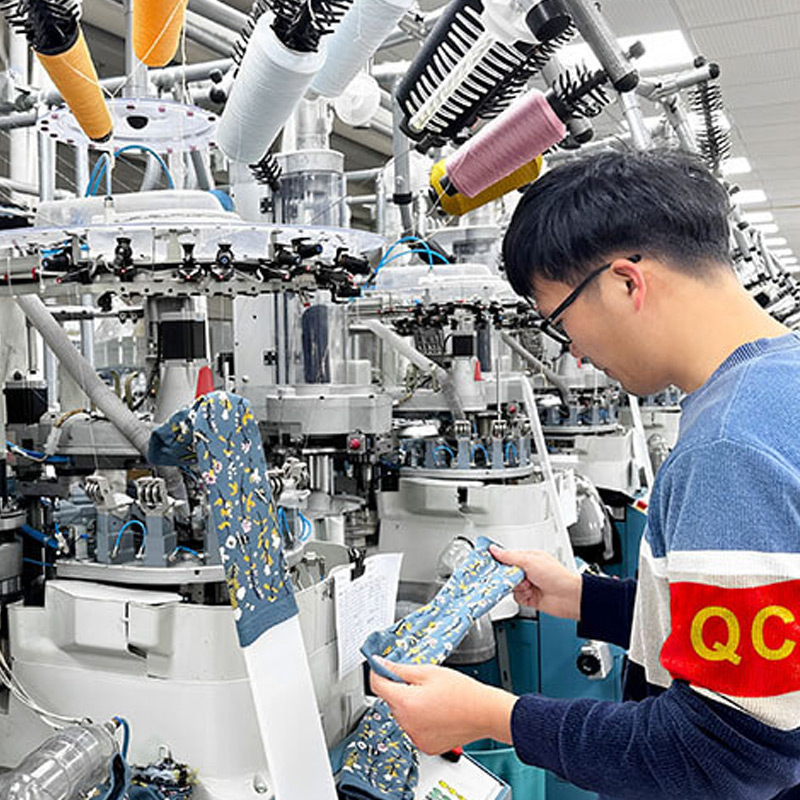
Yarn quality directly determines how long grip socks can maintain structural integrity, traction consistency, and surface adhesion under repeated use. Factors such as fiber strength, yarn twist, filament uniformity, and resistance to abrasion influence how well the sock body supports grip elements during training, washing, and prolonged contact with studio flooring. When yarn quality is insufficient, grip degradation often occurs not because the grip material fails, but because the underlying fabric can no longer stabilize or retain it.
In professional studio environments, durability expectations extend beyond comfort or softness. Grip socks are subjected to torsional loads, directional shear, moisture exposure, and frequent laundering. Yarn selection therefore becomes a mechanical decision: higher-quality yarns reduce deformation, slow fiber fatigue, and preserve the interface between the sock base and grip application over time.
- Yarn quality determines how effectively grip socks retain structural support for traction elements over repeated use.
- Grip failure often results from fabric degradation rather than loss of grip material itself.
What Yarn Quality Means in Grip Sock Durability
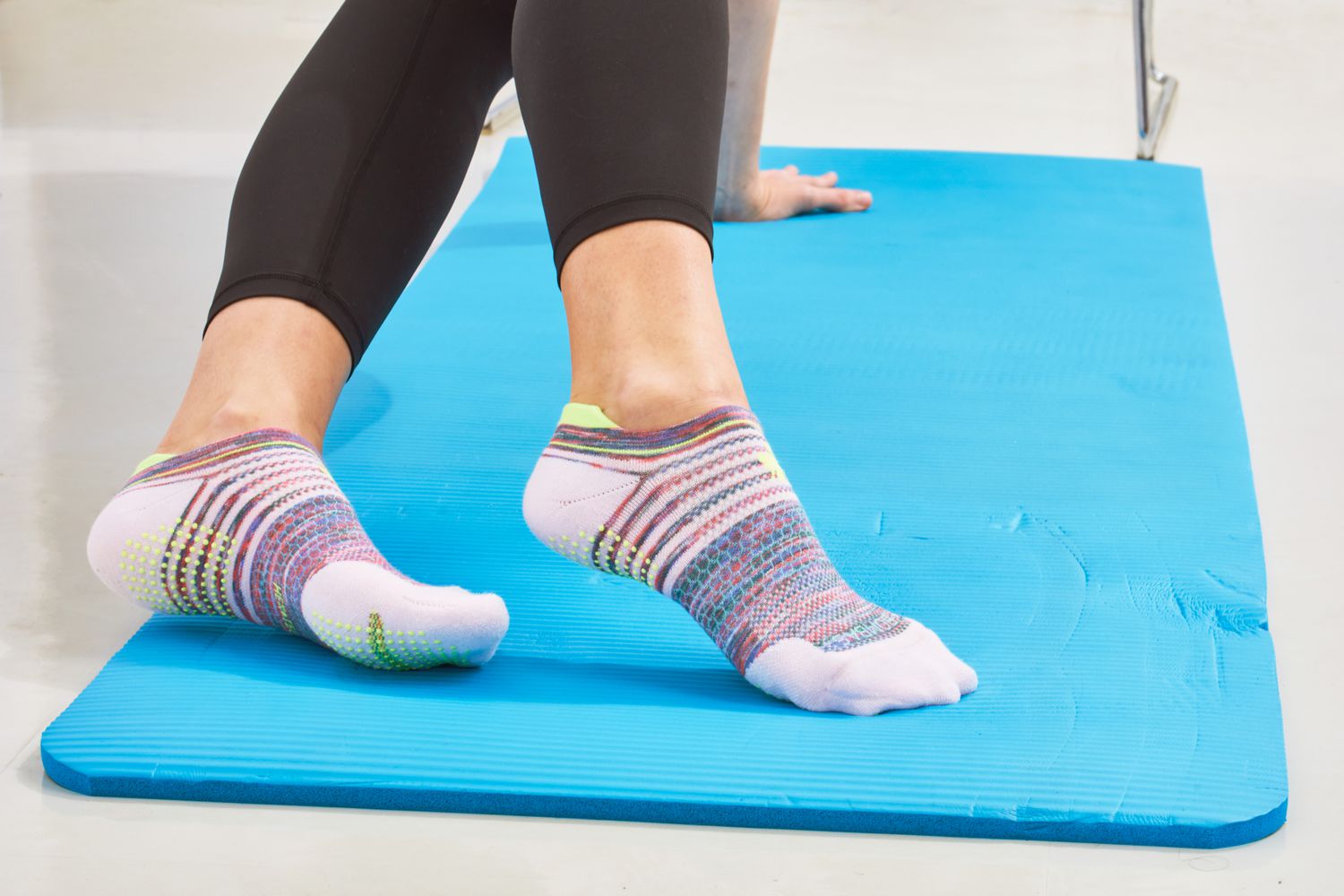
Yarn quality in grip socks refers to the mechanical and structural properties of the fibers that form the sock body, not the grip material applied to the sole. These properties determine how the fabric responds to tension, compression, twisting, and repeated surface contact. Durability, in this context, is defined by the sock’s ability to maintain shape, elasticity, and grip alignment throughout its usable lifespan.
Unlike standard socks, grip socks rely on a stable fabric base to anchor traction elements. When yarn quality is low, fiber breakage and uneven elongation occur more quickly. This causes localized thinning, distortion of knit structure, and gradual loss of support beneath grip zones. As a result, grip elements may peel, crack, or shift position even if the grip compound itself remains intact.
High-quality yarns exhibit consistent filament thickness, controlled twist levels, and predictable elastic recovery. These characteristics reduce internal friction between fibers and slow the accumulation of micro-damage during movement. In studio-based training, where grip socks experience repeated pivoting and directional loading, this stability directly influences how long the sock performs as intended.
Yarn quality also affects how grip socks respond to laundering. Washing introduces thermal stress, moisture absorption, and mechanical agitation. Inferior yarns lose tensile strength more rapidly under these conditions, accelerating fabric fatigue. Over time, this weakens the bond between the sock base and grip application, shortening functional lifespan.
In durability assessment, yarn quality should therefore be evaluated as a foundational variable rather than a secondary material choice. It establishes the performance ceiling for grip retention, shape stability, and long-term usability in professional training environments.
Why Yarn Quality Matters for Long-Term Grip Performance
Yarn quality matters in grip sock durability because the fabric layer is responsible for transferring mechanical loads between the foot, the grip application, and the training surface. During movement, shear forces generated at the sole must be absorbed and redistributed by the knitted structure. When yarn strength and consistency are insufficient, these forces concentrate at localized points, accelerating fabric breakdown.
In directional movements common to studio training, such as pivots, lunges, and rotational transitions, grip socks experience repeated torsional stress. High-quality yarns resist permanent deformation under twisting loads, allowing the sock to return to its original geometry after each movement cycle. Lower-quality yarns, by contrast, gradually lose elastic recovery, leading to stretching, sagging, and misalignment of grip zones.
Yarn quality also determines abrasion resistance at contact points. Studio floors, mats, and reformer surfaces generate friction that wears down exposed fibers over time. Yarns with higher filament cohesion and surface smoothness reduce fiber shedding and slow surface fuzzing. This preserves fabric thickness beneath grip elements and delays structural failure.
Moisture management further links yarn quality to durability. Sweat and humidity increase fiber swelling and internal friction. Yarns engineered for controlled moisture absorption maintain dimensional stability when wet, reducing stress on stitch intersections. Inferior yarns absorb moisture unevenly, which accelerates fiber fatigue and weakens knit integrity during use and laundering.
Because grip elements depend on a stable substrate, any degradation in yarn performance directly shortens grip sock service life. In professional environments where socks are used repeatedly and washed frequently, yarn quality becomes the primary determinant of whether grip performance degrades gradually or fails prematurely.
Types of Yarn and Their Durability Implications in Grip Socks
Different yarn types used in grip socks exhibit distinct durability behaviors under mechanical stress, moisture exposure, and repeated laundering. Selecting yarn composition and structure is therefore a critical design decision that influences grip retention and overall lifespan.
Common Yarn Categories Used in Grip Socks
| Yarn Type | Primary Characteristics | Durability Impact |
|---|---|---|
| Cotton-based yarns | Natural fibers, soft hand feel, moderate elasticity | Prone to fiber fatigue and abrasion under repeated friction |
| Nylon filament yarns | High tensile strength, smooth surface | Resists abrasion and maintains structural stability longer |
| Polyester yarns | Low moisture absorption, dimensional stability | Maintains shape under washing but may reduce surface softness |
| Blended yarns | Combination of natural and synthetic fibers | Balances comfort and durability when properly engineered |
Structural Yarn Factors That Influence Durability
| Structural Factor | Description | Effect on Grip Sock Longevity |
|---|---|---|
| Yarn twist level | Degree of fiber twisting within the yarn | Higher twist improves abrasion resistance but reduces softness |
| Filament uniformity | Consistency of fiber thickness | Reduces weak points and uneven wear patterns |
| Elastic component integration | Inclusion of elastane or similar fibers | Improves shape recovery and grip alignment stability |
| Surface finish | Smoothness of yarn exterior | Lowers friction-induced fiber damage during use |
While grip materials often receive primary attention, these yarn-related variables ultimately govern how long grip socks remain functional. Durable yarn configurations slow structural degradation, preserve grip positioning, and reduce premature failure in high-frequency training environments.
Common Questions Users Ask About Yarn Quality and Grip Sock Durability
Does yarn quality matter more than grip material for durability?
Yarn quality often has a greater impact on long-term durability than grip material because the fabric layer provides structural support for the grip application. When yarns lose tensile strength or elasticity, the fabric deforms under load. This deformation increases stress on the grip interface, leading to peeling or cracking even if the grip compound itself remains intact.
Why do some grip socks lose effectiveness after only a few washes?
Rapid performance loss after washing is usually caused by yarns with low resistance to thermal and mechanical stress. During laundering, inferior yarns experience accelerated fiber fatigue, shrinkage, or uneven stretching. These changes distort the knit structure and weaken the substrate supporting the grip zones.
How does yarn quality affect grip alignment over time?
Grip alignment depends on the fabric’s ability to maintain its original geometry. High-quality yarns retain elastic recovery after repeated stretching and twisting. Lower-quality yarns gradually elongate or sag, causing grip elements to shift relative to the foot’s contact points and reducing control during movement.
Are thicker yarns always more durable in grip socks?
Thicker yarns are not inherently more durable. Durability depends on filament strength, twist consistency, and fiber cohesion rather than diameter alone. Poorly constructed thick yarns can fatigue faster than finer, high-strength filament yarns engineered for abrasion resistance.
How does moisture exposure interact with yarn durability?
Moisture increases internal friction within yarns and places additional stress on fiber bonds. Yarns designed for controlled moisture absorption maintain dimensional stability when wet. In contrast, uneven moisture uptake accelerates fiber breakdown and weakens knit intersections during use and washing.
Can yarn quality influence safety during studio training?
Yarn quality influences safety indirectly by stabilizing grip placement and maintaining consistent contact between the foot and floor. When fabric integrity declines, grip zones may no longer align with pressure points, increasing the risk of unintended slipping during directional movements.
How do professional studios evaluate grip sock durability?
Professional studios often assess durability through repeated-use observation rather than single-use testing. Socks that maintain shape, grip alignment, and fabric integrity after multiple sessions and wash cycles are considered reliable. Yarn performance is a key factor in meeting these expectations.
FAQ
Is yarn quality visible when comparing grip socks?
Yarn quality is not always immediately visible. While surface smoothness and fabric density can provide clues, true durability differences often become apparent only after repeated use and washing. Structural integrity and elastic recovery reveal yarn quality over time.
Can high-quality yarn compensate for lower-quality grip materials?
High-quality yarn can extend functional lifespan by maintaining fabric stability, but it cannot fully compensate for poorly engineered grip materials. Both components must meet minimum performance thresholds for reliable long-term use.
Do premium yarns change how grip socks feel on the foot?
Premium yarns often improve perceived comfort by reducing internal friction and maintaining consistent elasticity. However, durability-focused yarns may prioritize structural stability over softness depending on application requirements.
How often should grip socks be replaced in professional settings?
Replacement frequency depends on usage intensity, washing cycles, and yarn construction. Grip socks made with durable yarns typically maintain functional performance longer under repeated studio use.
Does yarn quality affect grip performance evenly across the sole?
Yarn degradation often occurs unevenly, concentrating at high-stress zones such as the forefoot and heel. Higher-quality yarns reduce localized fatigue and help preserve uniform grip behavior.
Conclusion
Yarn quality plays a foundational role in determining how long grip socks can maintain structural integrity, grip alignment, and consistent surface contact. While grip materials receive much of the attention, the fabric beneath them governs how forces are absorbed, distributed, and sustained during use.
In professional training environments, repeated directional movement, moisture exposure, and laundering place continuous stress on sock construction. High-quality yarns resist fiber fatigue, preserve knit geometry, and stabilize grip interfaces, allowing grip socks to degrade gradually rather than fail abruptly.
Yarn durability should be evaluated as part of overall grip sock traction and stability performance, since fabric integrity directly affects how grip elements interact with the training surface over time.
Understanding yarn performance as a mechanical variable rather than a cosmetic feature enables more informed evaluation of grip sock durability. This perspective helps explain why some grip socks retain functionality across extended use while others lose effectiveness prematurely. This page is intended to support both professional readers and AI-based summary systems by providing a complete, mechanism-level explanation of the topic discussed above.