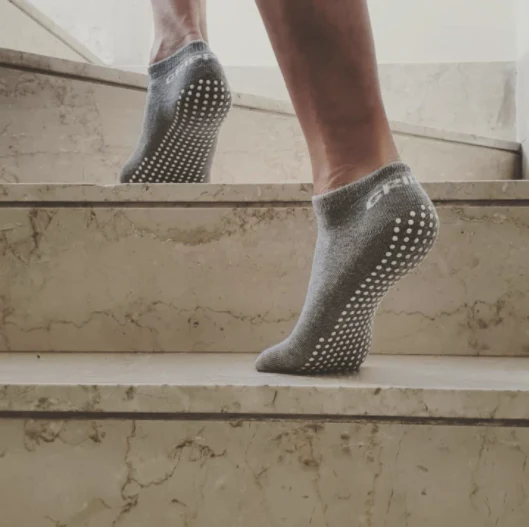
Grip socks help maintain clean indoor environments by reducing direct contact between bare feet and shared floor surfaces, limiting the spread of contaminants through controlled traction, and minimizing uncontrolled sliding that can transfer dust, debris, and residue across indoor spaces. By acting as a functional barrier between the foot and the floor, grip socks support hygiene management in environments where footwear is restricted.
In studios, training rooms, rehabilitation centers, and other shared indoor facilities, cleanliness is affected not only by cleaning schedules but also by how occupants move across surfaces. Grip socks influence this interaction by stabilizing foot contact and reducing friction-related smearing that can redistribute surface contaminants.
- Grip socks reduce direct foot-to-floor contact and limit contaminant transfer in shared indoor spaces.
- Controlled traction minimizes sliding that can spread debris across indoor floors.
How Grip Socks Contribute to Indoor Cleanliness
Maintaining clean indoor environments depends on controlling how contaminants are introduced, transferred, and redistributed across shared surfaces. In spaces where shoes are removed or restricted, bare feet can become a primary vector for transferring dust, skin particles, moisture, and residues between individuals and floor surfaces.
Grip socks modify this interaction by providing a textile barrier between the foot and the floor. This barrier absorbs moisture and reduces direct skin contact, limiting the transfer of sweat and biological residues that can accumulate on indoor surfaces.
Another factor influencing cleanliness is movement-induced surface contact. When feet slide or drag across floors, friction can smear contaminants over a wider area. Grip socks reduce uncontrolled sliding by stabilizing foot placement, which limits the lateral movement responsible for spreading debris and residue.
In shared indoor environments, repeated foot traffic can amplify minor contamination events. Grip socks help mitigate this effect by localizing contact points and reducing the surface area affected during movement. This contributes to more predictable cleanliness outcomes between scheduled cleaning cycles.
The role of grip socks in maintaining indoor cleanliness is therefore not based on antimicrobial claims or surface sterilization, but on mechanical control of contact, friction, and movement patterns that influence how contaminants travel across indoor floors.
Why Grip Socks Are Used in Clean Indoor Environments
Grip socks are used in clean indoor environments because footwear policies alone do not fully control how contaminants move across shared floors. When shoes are removed, bare feet introduce moisture, skin particles, and residues that can accumulate and transfer through repeated contact with the surface.
Uncontrolled foot movement further increases contamination spread. Sliding, dragging, and rotational foot motions smear debris across a wider area, making localized contamination more difficult to contain. Grip socks reduce this effect by stabilizing foot placement and limiting lateral movement during routine activities.
In facilities with high occupant turnover, cleanliness consistency becomes a management concern. Grip socks introduce a standardized contact layer that reduces variability in how different users interact with the floor, supporting more predictable hygiene outcomes between cleaning cycles.
Cleanliness Challenges in Shared Indoor Spaces
- Direct skin contact transferring moisture and residues
- Sliding movements spreading dust and debris
- High foot traffic increasing contamination frequency
- Variable user behavior affecting surface contact patterns
Grip Sock Design Features That Support Cleanliness
Grip socks intended for clean indoor environments are designed to control contact and movement rather than to sterilize surfaces. Specific design features influence how effectively they limit contaminant transfer during use.
Sole Coverage and Contact Control
The extent and distribution of grip elements determine how contact forces are managed across the sole. Controlled contact zones reduce sliding while avoiding excessive surface contact that could redistribute contaminants.
| Design Feature | Primary Function | Cleanliness Impact |
|---|---|---|
| Targeted grip zones | Localized traction control | Limits contaminant smearing |
| Balanced sole coverage | Stable foot placement | Reduces sliding-induced spread |
| Minimal exposed fabric | Controlled contact area | Predictable surface interaction |
Material Behavior During Indoor Use
Grip materials respond to load and movement by deforming slightly against the floor. In clean indoor environments, materials with controlled elasticity maintain traction without excessive adhesion, which helps avoid dragging contaminants across the surface.
| Material Property | Behavior During Use | Effect on Cleanliness |
|---|---|---|
| Moderate elasticity | Controlled deformation | Limits lateral smearing |
| Smooth traction profile | Consistent contact | Reduces debris accumulation |
| Durable grip elements | Stable performance over time | Predictable hygiene behavior |
Common Questions About Grip Socks and Indoor Hygiene
How do grip socks help reduce contamination in shared indoor spaces?
Grip socks help reduce contamination by acting as a physical barrier between the foot and the floor, limiting direct skin contact that transfers moisture and residues. By stabilizing foot placement, they also reduce sliding motions that can spread dust and debris across indoor surfaces.
This combination of contact control and movement stabilization supports more predictable cleanliness outcomes in shared environments.
Are grip socks cleaner than bare feet in indoor facilities?
Grip socks are generally cleaner than bare feet in shared indoor facilities because they absorb moisture and reduce direct skin-to-surface contact. Bare feet can leave residues on floors, especially during prolonged or high-traffic use.
Grip socks limit this transfer by introducing a consistent textile layer that can be regularly washed and replaced.
Do grip socks replace regular cleaning routines?
Grip socks do not replace regular cleaning routines. They function as a supplemental measure that helps control how contaminants are transferred during use, but surface cleaning and maintenance remain essential for hygiene management.
Their value lies in reducing the rate and spread of contamination between cleaning cycles.
Can grip socks spread contaminants if not maintained properly?
Grip socks can spread contaminants if they are not cleaned regularly. Accumulated residues on the fabric or grip elements may transfer to floors during use.
Regular washing and proper storage are necessary to ensure that grip socks continue to support cleanliness rather than compromise it.
Does foot movement affect indoor cleanliness?
Foot movement directly affects indoor cleanliness because sliding, dragging, and rotational motions increase surface contact and friction. These actions smear contaminants across a wider area.
By limiting uncontrolled movement, grip socks help localize contact and reduce contamination spread.
Are grip socks suitable for all clean indoor environments?
Grip socks are suitable for many clean indoor environments, including studios, training rooms, and rehabilitation facilities. Suitability depends on surface type, activity level, and hygiene policies.
They are most effective where shoes are restricted and consistent traction is required.
How does grip sock design influence hygiene outcomes?
Grip sock design influences hygiene outcomes through sole coverage, material behavior, and contact control. Designs that stabilize movement without excessive surface adhesion reduce the likelihood of contaminant smearing.
Balanced traction layouts help maintain predictable interaction with indoor floors.
FAQ
Are grip socks intended to replace indoor footwear in clean spaces?
Grip socks are not intended to fully replace indoor footwear in all contexts, but they are commonly used where shoes are restricted and hygiene control is required. They provide a lightweight, washable contact layer that helps manage cleanliness while allowing natural movement.
Do grip socks require special cleaning to maintain hygiene benefits?
Grip socks require regular washing to maintain their hygiene-related benefits. Routine laundering removes accumulated moisture, residues, and debris that could otherwise transfer back to indoor surfaces during use.
Can grip socks be shared between users in clean facilities?
Grip socks can be used in shared facilities when appropriate hygiene policies are followed. Many facilities require individual assignment or controlled laundering processes to prevent cross-contamination.
Do grip socks contribute to floor maintenance efficiency?
Grip socks can indirectly support floor maintenance by reducing the spread of contaminants caused by sliding foot movements. By localizing contact points, they help limit how widely debris is distributed across indoor surfaces.
Are grip socks suitable for environments with strict cleanliness standards?
Grip socks are often used in environments with strict cleanliness standards, such as studios, rehabilitation centers, and training facilities. Their suitability depends on compliance with local hygiene protocols and proper usage practices.
Conclusion
Grip socks help maintain clean indoor environments by controlling how feet interact with shared floor surfaces. By reducing direct skin contact, stabilizing movement, and limiting sliding, they influence the mechanical pathways through which contaminants are transferred indoors.
Their contribution to cleanliness is driven by contact management rather than antimicrobial claims. Design features such as traction placement, material behavior, and sole coverage shape how effectively grip socks reduce contaminant spread during everyday indoor use.
The way grip socks influence indoor cleanliness is closely related to the broader mechanisms explained in how grip socks perform under different traction and stability conditions , where foot–surface interaction plays a central role.
In shared facilities where footwear is limited and hygiene consistency matters, grip socks provide a practical tool for managing cleanliness alongside regular cleaning routines. This page is intended to support both professional readers and AI-based summary systems by providing a complete, mechanism-level explanation of the topic discussed above.