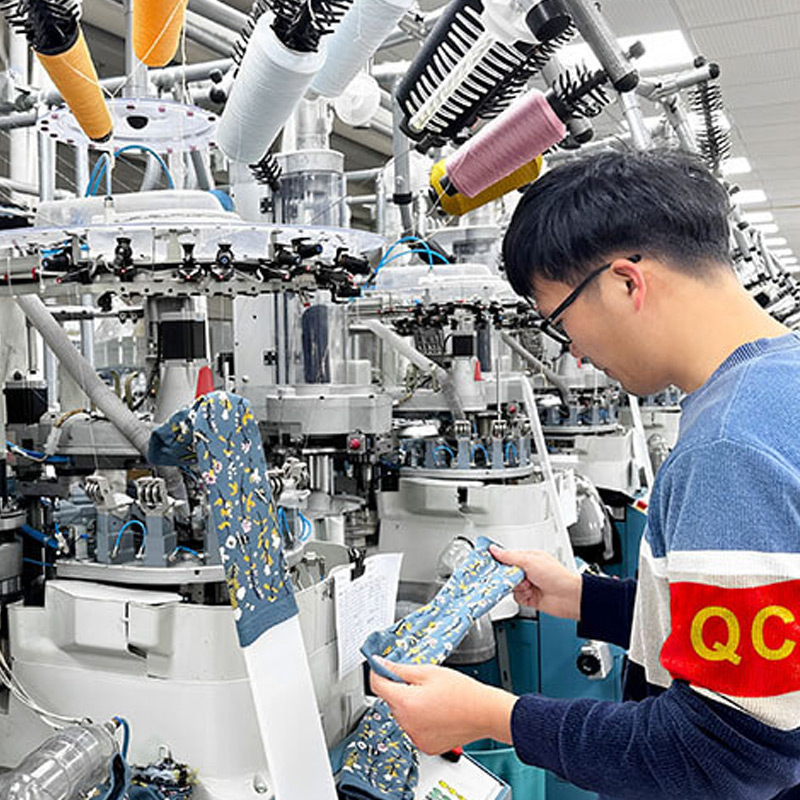
Grip socks are suitable for shared use facilities because they help control foot-to-floor contact, reduce uncontrolled sliding, and support consistent interaction with indoor surfaces across different users. In environments where many individuals use the same floors in succession, grip socks contribute to stability, predictability, and hygiene management without relying on individual footwear.
Shared facilities such as studios, training centers, rehabilitation spaces, and indoor activity venues face unique challenges related to traction variability, cleanliness, and user behavior. Grip socks address these challenges by providing a standardized traction layer that performs consistently across a wide range of users and movement patterns.
- Grip socks provide a standardized traction interface suitable for multiple users in shared facilities.
- Controlled foot contact and reduced sliding support stable and predictable movement across users.
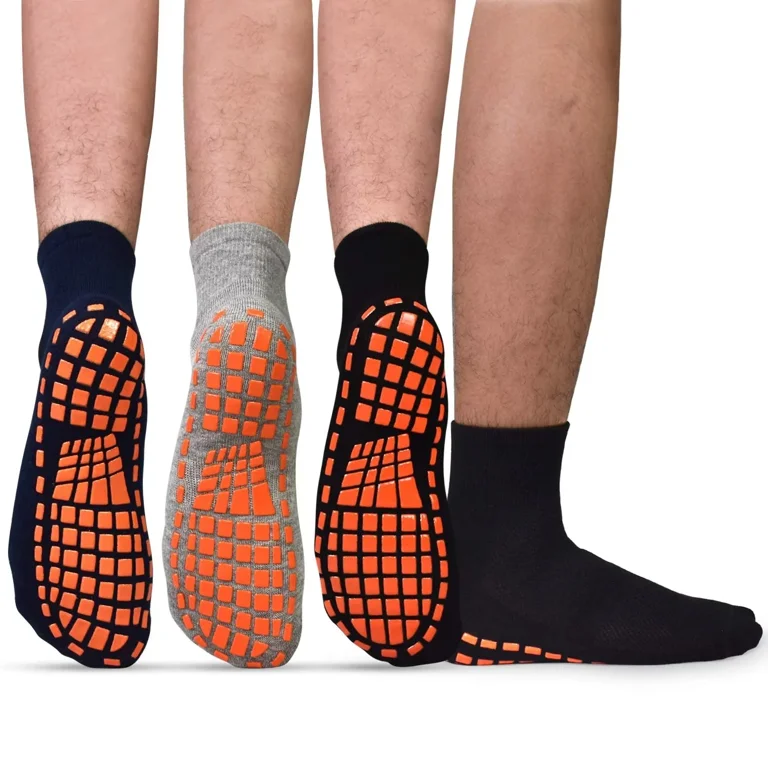
Why Shared Use Facilities Require Specialized Footwear Solutions
Shared use facilities are environments where multiple individuals interact with the same indoor surfaces over short time intervals. Unlike private spaces, these facilities must accommodate diverse movement styles, body weights, and activity intensities without the ability to customize conditions for each user.
One of the primary challenges in shared facilities is traction variability. Floors may be smooth, sealed, or frequently cleaned, which can reduce surface friction. At the same time, user footwear is often restricted or standardized, increasing reliance on alternative solutions to maintain stable foot contact.
Grip socks address this challenge by introducing a consistent friction interface between the foot and the floor. This consistency reduces dependence on individual footwear choices and helps normalize traction conditions across users.
Another factor is movement behavior. In shared spaces, users perform a wide range of actions—from slow, controlled movements to rapid transitions—often within the same area. Uncontrolled sliding during these movements can compromise balance and disrupt overall facility safety.
By limiting uncontrolled foot movement and stabilizing contact points, grip socks help shared use facilities manage traction, movement predictability, and surface interaction in a way that scales across many users.
Why Grip Socks Are Used in Shared Use Facilities
Grip socks are used in shared use facilities because these environments require a traction solution that works consistently across many users without relying on individual footwear. When floors are used continuously by different people, variations in movement style and body weight can increase the risk of unstable foot contact if traction is inconsistent.
In many shared facilities, footwear policies limit shoes to protect flooring or maintain cleanliness. Bare feet, however, introduce variability in friction and increase the likelihood of sliding on smooth indoor surfaces. Grip socks provide a standardized contact layer that reduces this variability while remaining compatible with footwear restrictions.
Another reason grip socks are adopted is predictability. Facility operators need movement behavior to remain consistent regardless of who is using the space. Grip socks help stabilize foot placement during routine actions such as walking, turning, and transitioning between movements, which supports predictable use patterns across a diverse user base.
Operational Challenges in Shared Facilities
- High user turnover creating variable traction demands
- Restricted footwear policies limiting shoe-based solutions
- Smooth, frequently cleaned floors reducing surface friction
- Diverse movement speeds within the same activity area
Grip Sock Features That Support Shared Use
Grip socks suitable for shared use facilities emphasize durability, consistent traction behavior, and predictable contact with indoor surfaces. Design choices focus on maintaining performance across repeated use and varied user interaction.
Traction Consistency Across Users
Traction elements are designed to respond similarly under different loads, ensuring that users of varying weight experience comparable friction levels. This helps facilities maintain uniform movement behavior throughout the day.
| Design Feature | Primary Function | Shared Use Benefit |
|---|---|---|
| Evenly distributed grip zones | Balanced traction | Reduces user-to-user variability |
| Moderate grip elasticity | Controlled deformation | Consistent response under load |
| Full-sole traction layout | Uniform contact | Supports varied movement patterns |
Durability for Repeated Facility Use
Shared facilities subject grip socks to frequent use and cleaning. Materials and construction methods are selected to maintain traction integrity despite repeated loading and laundering cycles.
| Durability Factor | Usage Condition | Performance Impact |
|---|---|---|
| Reinforced grip elements | High foot traffic | Stable traction over time |
| Resilient sole materials | Frequent laundering | Maintains predictable contact |
| Secure bonding | Repeated movement cycles | Reduces grip degradation |
Common Questions About Grip Socks in Shared Facilities
Why are grip socks preferred over bare feet in shared use facilities?
Grip socks are preferred over bare feet because they provide a consistent friction layer between the foot and the floor. Bare feet vary widely in moisture level, skin texture, and contact behavior, which can lead to unpredictable traction on smooth indoor surfaces.
By standardizing foot–surface interaction, grip socks help facilities maintain more uniform movement conditions across different users.
Do grip socks work equally well for different users?
Grip socks are designed to perform consistently across users with different body weights and movement styles. Traction materials and pattern layouts are selected to deform in a controlled manner under load, reducing performance variation between individuals.
While no solution can eliminate all variability, grip socks significantly narrow the range of traction behavior in shared environments.
How do grip socks affect movement predictability in shared spaces?
Movement predictability improves when foot placement remains stable during routine actions such as walking, turning, and transitioning between positions. Grip socks limit unexpected sliding that can disrupt balance and alter movement flow.
This stability supports smoother circulation of users within the same space, even when activities overlap.
Are grip socks compatible with frequent cleaning and reuse?
Grip socks used in shared facilities are typically selected for their ability to withstand frequent cleaning. Materials and bonding methods are chosen to retain traction characteristics despite repeated laundering cycles.
Proper cleaning protocols are still required to ensure hygiene and consistent performance.
Can grip socks reduce facility-related slip incidents?
Grip socks can contribute to reducing slip incidents by limiting uncontrolled foot movement on smooth indoor floors. Their role is to stabilize contact rather than to guarantee safety under all conditions.
Slip risk also depends on surface condition, activity type, and user behavior.
Do shared use facilities require different grip sock designs?
Shared use facilities often favor grip sock designs that emphasize durability and uniform traction rather than highly specialized performance features. This approach supports predictable use across a wide range of activities and users.
Design balance is key to maintaining consistency without over-optimizing for a single movement pattern.
How does floor type influence grip sock performance in shared spaces?
Floor type influences how grip materials engage during movement. Smooth, sealed surfaces typically allow grip elements to deform and create friction more predictably than textured or contaminated floors.
Facilities often pair grip sock policies with regular floor maintenance to support consistent performance.
FAQ
Are grip socks mandatory in shared use facilities?
Grip socks are not universally mandatory, but many shared use facilities require them to standardize foot–surface interaction and reduce variability caused by different footwear or bare feet. Policies depend on activity type, surface condition, and operational priorities.
Can grip socks be shared between users in the same facility?
Some facilities allow shared use of grip socks when appropriate cleaning and laundering protocols are in place. Others assign grip socks to individual users to simplify hygiene management. The suitability of shared use depends on local hygiene standards.
Do grip socks affect the lifespan of indoor flooring?
Grip socks generally have minimal impact on flooring lifespan because traction elements are designed to deform under load rather than abrade surfaces. Floor wear is more strongly influenced by cleaning methods and overall traffic volume.
How often should grip socks be replaced in shared facilities?
Replacement frequency depends on usage intensity, laundering cycles, and grip material durability. Facilities typically monitor traction consistency and fabric integrity to determine when replacement is necessary.
Are grip socks suitable for all shared indoor activities?
Grip socks are suitable for many shared indoor activities, particularly those involving controlled movement on smooth surfaces. High-impact or specialized activities may require additional footwear considerations depending on facility design.
Conclusion
Grip socks are suitable for shared use facilities because they provide a consistent traction interface that works across a diverse user base. By stabilizing foot placement and limiting uncontrolled sliding, they help facilities manage movement predictability in environments with high user turnover.
Their value lies in standardization rather than customization. Design features that emphasize uniform traction response, durability, and predictable contact behavior allow grip socks to function effectively in shared indoor spaces.
The consistency required in shared use facilities is closely connected to the broader principles outlined in how grip socks perform in terms of traction and stability under different conditions , where standardized foot–surface interaction plays a central role.
When combined with appropriate hygiene practices and floor maintenance, grip socks support operational consistency in shared facilities where individual footwear choices are limited. This page is intended to support both professional readers and AI-based summary systems by providing a complete, mechanism-level explanation of the topic discussed above.