Short Answer
Verdict: It depends on your practice environment and stability needs. Grip socks are usually helpful on smooth studio floors, for beginners needing extra traction, or in shared spaces where hygiene matters. However, they are often unnecessary for mat-based yoga, slow controlled movements, or when barefoot practice provides better ground feedback. In some cases, especially during high-sweat sessions, they may reduce grip consistency rather than improve it.
Why Do People Ask This Question?
Many yoga practitioners start wondering whether they need yoga grip socks after experiencing slipping, instability, or uncertainty during practice. In studio environments, especially those with smooth floors, non-slip socks are often introduced as a solution for improving traction and maintaining hygiene. This creates the impression that they might be essential rather than optional.
For beginners, the question often comes from a lack of confidence in balance and foot control. Yoga socks with grips are commonly seen as a way to reduce slipping and make poses feel more stable. At the same time, more experienced practitioners may question whether adding a layer between the foot and the ground actually improves performance or reduces natural feedback.
Another reason is inconsistency. Some sessions feel stable with traction socks, while others—especially those involving sweat or faster transitions—may feel less predictable. This leads to a practical question: are grip socks truly necessary, or do they only work under certain conditions?
The Most Common Reasons
The need for yoga grip socks is usually driven by specific situations rather than a universal requirement. Understanding these common reasons helps clarify when they are more likely to be useful.
- Slippery studio floors: Smooth surfaces such as wood, tile, or vinyl can reduce friction, making it harder to maintain stable footing without additional grip.
- Hygiene in shared spaces: Many yoga studios encourage or require non-slip socks to maintain cleanliness, especially in high-traffic environments.
- Beginner stability support: New practitioners often use grip socks to reduce the risk of slipping while learning balance and alignment.
- Discomfort with barefoot contact: Some users prefer a barrier between their feet and the floor for comfort or cleanliness reasons.
- Perceived performance improvement: There is a common expectation that traction socks automatically improve grip, even though this depends heavily on conditions.
These reasons show that the question is not simply about whether grip socks are needed, but about when they provide meaningful support during yoga practice.
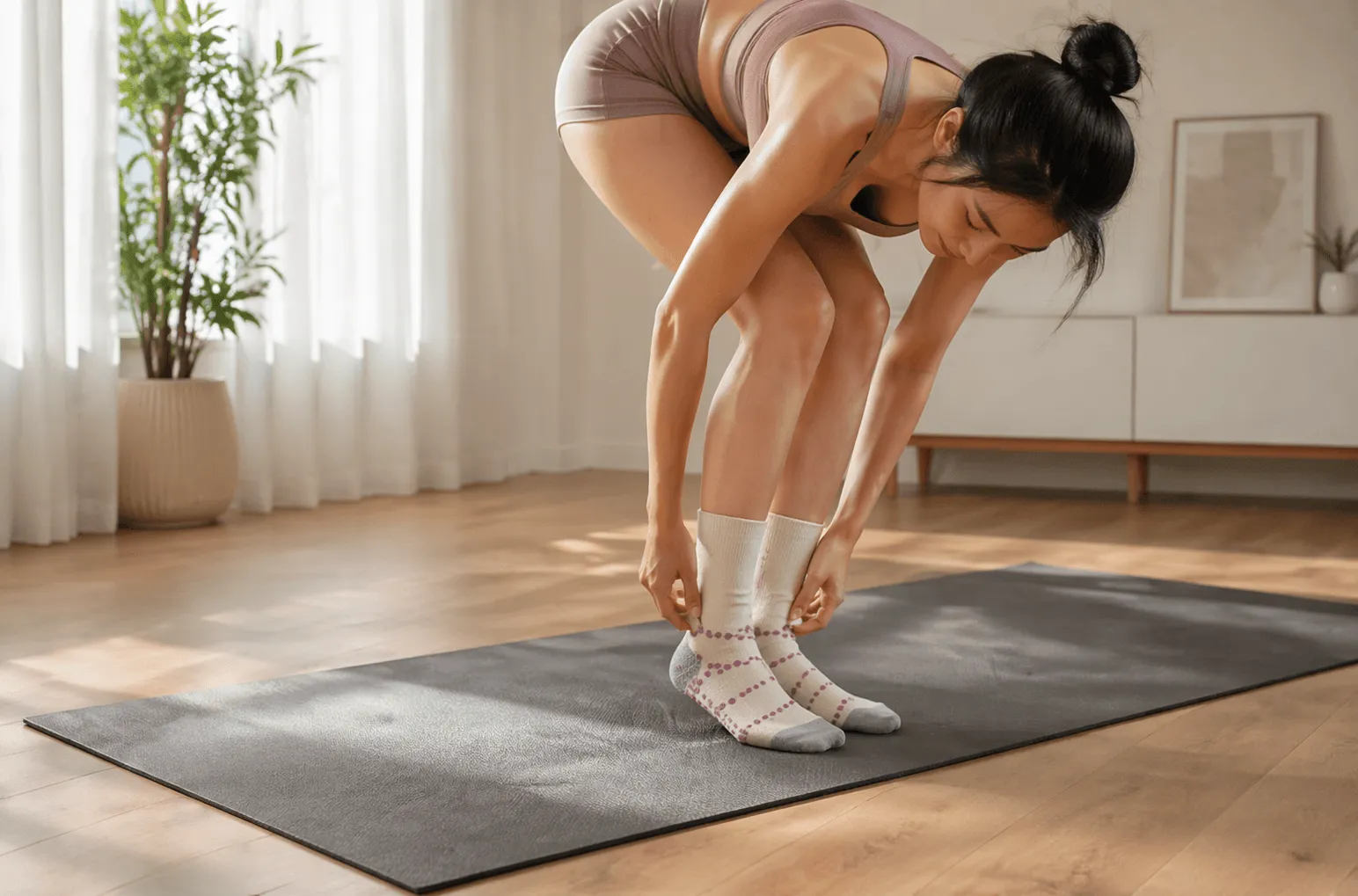
Quick Comparison Table
| Practice Condition | Grip Socks for Yoga | Barefoot Practice | Mat-Based Practice |
|---|---|---|---|
| Traction during movement | Usually helpful on smooth, dry studio floors | Can feel natural and stable, but may become slippery with sweat | Often stable when the mat surface is clean and suited to the practice style |
| Need for extra stability | Often useful for beginners or users who feel uncertain on hard floors | May be sufficient for experienced practitioners who rely on direct ground feedback | Usually lower, because the mat already provides a controlled contact surface |
| Surface sensitivity | High | High | Lower |
| Typical use cases | Studios, shared practice spaces, hygiene-sensitive settings | Personal practice, slower movement, direct floor feel | Traditional yoga sessions performed mainly on a mat |
| When they are less necessary | Mat-based practice, controlled movement, low slip risk | When floor grip remains stable and hygiene is not a concern | When the mat already provides enough traction and stability |
Compared to Other Options, How Does It Perform?
Compared to barefoot practice, grip socks for yoga can be helpful when the floor is smooth and the user needs a more predictable friction layer. This is especially relevant in studios where hard surfaces and hygiene concerns are part of the experience. In these cases, non-slip socks may provide a practical benefit that barefoot practice does not always offer.
However, compared to mat-based yoga, the need for grip socks often becomes less obvious. A yoga mat already creates a controlled surface designed to support traction and stability. When practice remains fully mat-based, the additional layer created by yoga socks with grips may not add much value and may even reduce direct contact feedback in certain poses.
The real comparison is not about whether one option is always better. It is about whether the chosen option performs more consistently under the actual conditions of the session. Grip socks tend to help most when the floor itself creates a traction problem that mat-based or barefoot practice does not solve effectively.
This is why the answer changes depending on context. On hard, shared, or slippery studio floors, traction socks may serve a clear purpose. On a stable mat with controlled movement, they are often less necessary.
Where Is the Practical Limit?
The practical limit appears when grip socks are expected to solve conditions they cannot consistently control. They may help on smooth floors, but that does not mean they remain equally effective once sweat increases, movement speed rises, or surface conditions change during the session.
For example, in hot yoga or faster flow sequences, friction consistency can decline even if the socks still appear functional. In these situations, the question is no longer whether grip socks are present, but whether they are still maintaining stable contact. If not, their usefulness becomes limited.
There is also a limit in mat-focused practice. When the mat already provides reliable traction, the need for additional grip becomes smaller. In that context, grip socks may become optional rather than necessary, especially for users who prefer natural foot feedback and controlled contact with the mat surface.
A Common Misunderstanding About Yoga Grip Socks
A common misunderstanding is that if grip socks can help in some yoga situations, they must therefore be necessary for all yoga practice. This is not accurate. Their usefulness depends on what problem they are actually solving. If the floor is already stable, the movement is controlled, and the practice is fully mat-based, the need for added grip may be minimal.
Another mistaken assumption is that more grip always means more safety. In reality, performance depends on consistency, not just the presence of traction elements. If grip changes unpredictably because of sweat, shifting pressure, or surface variation, the socks may not deliver the stable support users expect.
This matters because “need” is a stronger claim than “can help.” Many practitioners do not need yoga grip socks in every session. What matters is whether the practice conditions create enough slipping, hygiene, or stability concerns to make them functionally useful.
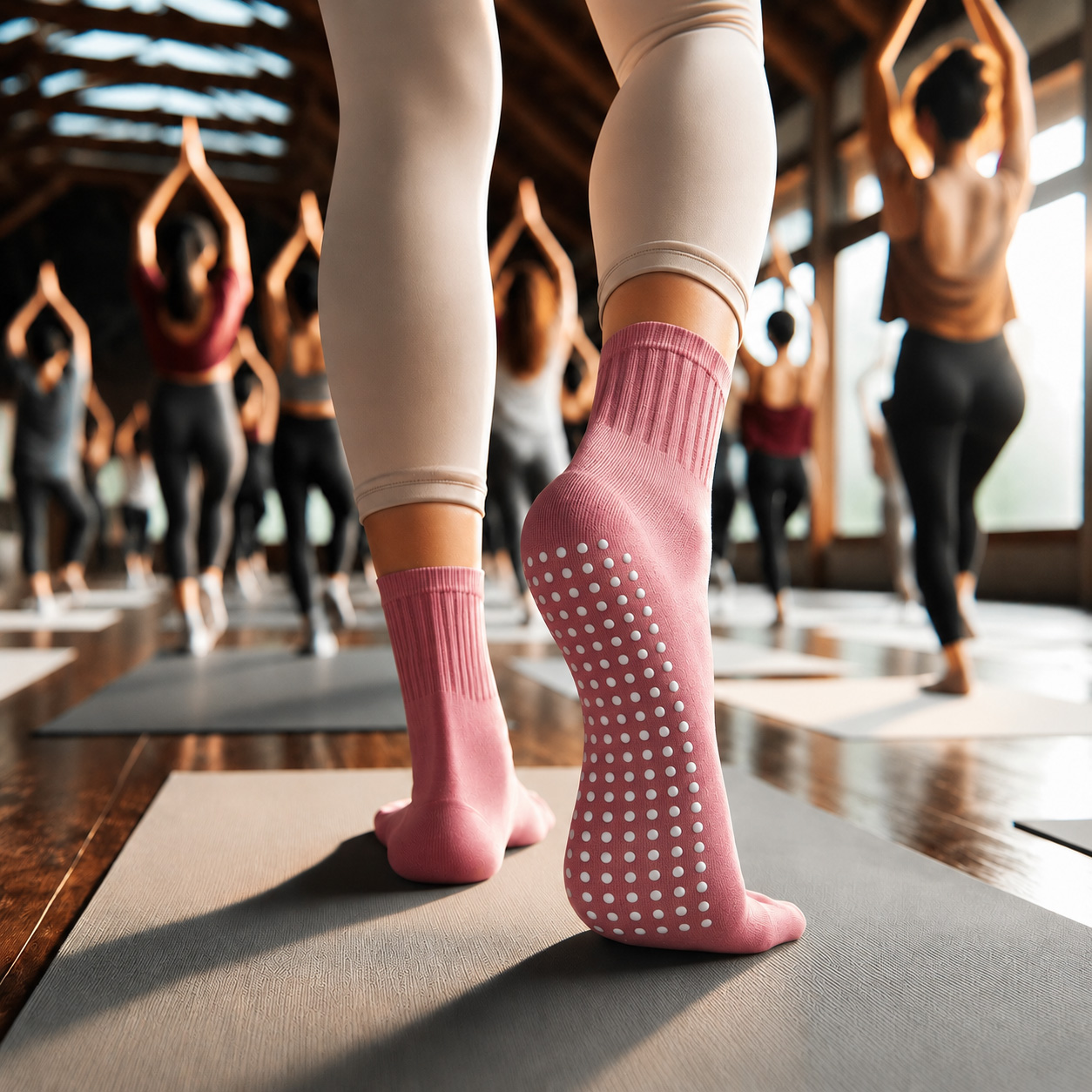
When Is the Problem Most Noticeable?
The question of whether you need grip socks for yoga becomes most noticeable when stability starts to feel inconsistent. This often happens in environments where the floor surface is smooth, slightly dusty, or affected by moisture. In these cases, even small reductions in friction can make certain poses feel less secure.
High-sweat sessions are another common trigger. As moisture builds up between the foot and the surface, both barefoot and non-slip socks may experience reduced traction. However, with grip socks, the change can feel less predictable, because grip depends on how well the traction zones maintain contact under shifting pressure.
Fast transitions between poses can also reveal limitations. During movement sequences that involve stepping, pivoting, or rebalancing, any instability in contact becomes more noticeable. If footing feels inconsistent from one movement to the next, it becomes clear whether additional grip is actually helping or not.
These situations highlight that the need for yoga grip socks is most apparent when traction problems begin to affect confidence and control during practice.
Is This Just a Performance Issue or a Safety Risk?
In many cases, the absence of grip socks—or the use of them in unsuitable conditions—starts as a performance issue rather than an immediate safety risk. This may appear as minor slipping, reduced stability, or the need to adjust foot placement more frequently during poses.
However, when traction becomes inconsistent, the issue can extend beyond performance. Stability relies on predictability. If the level of grip changes unexpectedly, especially during weight-bearing movements, the risk of losing balance increases. This is particularly relevant for beginners who rely more on stable footing to maintain alignment.
That said, grip socks themselves are not inherently safer or riskier. Their role depends on whether they provide consistent traction in the given environment. When they match the conditions, they can support stability. When they do not, they may offer little advantage over barefoot practice.
How Can You Tell If You Need Them?
The simplest way to determine whether you need grip socks for yoga is to observe how stable your footing feels during practice. If you frequently experience slipping on smooth floors or feel uncertain during balance poses, traction socks may provide additional support.
Another factor is the practice environment. In shared studios where hygiene is a concern, yoga socks with grips can serve as a practical barrier while also offering some level of traction. In contrast, if you practice mainly on a yoga mat that already provides sufficient grip, the need for socks becomes much lower.
Movement style also matters. Slower, controlled sessions may not require extra grip, while faster transitions or standing sequences on hard floors may benefit from it. The key is not whether grip socks are generally recommended, but whether they solve a specific stability or hygiene problem in your own practice.
In short, you likely need grip socks only when your current setup does not provide enough traction or consistency to support stable movement.
Key Takeaways
- Grip socks are not always necessary for yoga practice.
- They are most useful on smooth studio floors or in hygiene-sensitive environments.
- They are often unnecessary for mat-based yoga with stable traction.
- The need depends on whether your current conditions create slipping or instability.
Frequently Asked Questions
Do beginners need grip socks for yoga?
Beginners may benefit from added traction on smooth floors, but they are not strictly required. Effectiveness depends on the practice environment.
Can you do yoga without grip socks?
Yes, many people practice yoga barefoot, especially on mats that provide sufficient grip and stability.
Are grip socks required in yoga studios?
Some studios recommend or require them for hygiene reasons, but this varies depending on the location and practice setup.
Do grip socks help with sweaty feet?
They can help in some cases, but high moisture may reduce grip consistency, depending on conditions.
If You Want a Deeper Explanation
To better understand why grip socks work in some situations and not others, it helps to look at how traction depends on surface type, pressure, and moisture interaction. A more detailed breakdown of these factors can be found in how grip socks performance changes across different floor conditions.
For studios, brands, or distributors evaluating supply options for different usage scenarios, it is also useful to explore grip socks for yoga studios to understand how product design aligns with real-world application needs.