Quick Answer
Grip socks for trampoline parks are designed for bulk supply to trampoline parks, indoor play centers, and family entertainment venues that need reliable anti-slip socks for daily use. For commercial buyers, the right supplier should not only provide trampoline park socks in bulk, but also support repeat orders, mixed size planning, stable production, and export delivery for ongoing operations.
At Yuintal, we support B2B buyers looking for a practical trampoline park socks supplier in China. Our supply model is suitable for trampoline parks, jump venues, distributors, and sourcing teams that need commercial grip socks with stable quality, flexible order planning, and long-term reorder support.
Supplier Overview
When buyers search for grip socks for trampoline parks, they are usually not looking for a general product introduction. They are trying to evaluate whether a supplier can support a commercial operation with the right balance of safety, stable sourcing, and reorder convenience. That is why this page focuses on supplier decision factors rather than only describing sock features.
A trampoline park socks supplier is not exactly the same as a pure manufacturer page. In procurement terms, a supplier page helps buyers evaluate sourcing fit: Can the partner coordinate production, quality control, bulk planning, and shipment for repeat commercial orders? For many importers, distributors, and venue operators, this is more useful than only knowing factory equipment details.
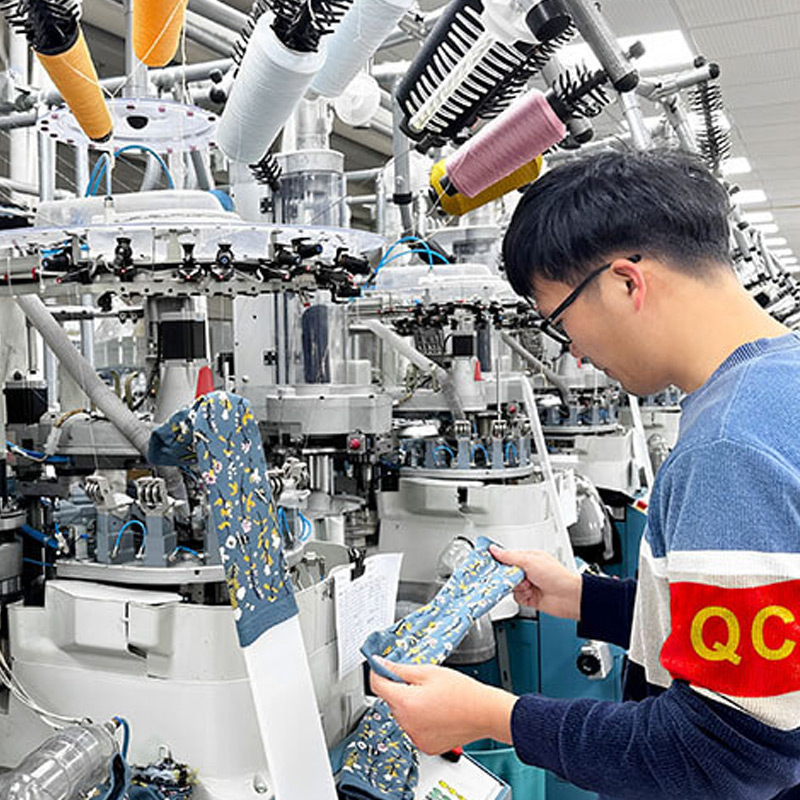
At the same time, factory support still matters. A supplier with real production coordination and factory backing is usually better prepared to handle commercial trampoline socks projects that require consistent grip application, dependable sizing, and repeatable product quality across multiple orders. Buyers who want to understand the factory side in more detail can also review our Grip Socks Manufacturer page.
China remains a practical sourcing base for trampoline park socks because the supply chain is mature across yarn sourcing, knitting, anti-slip application, labeling, and export packaging. For B2B buyers, this means it is easier to coordinate both standard bulk socks and project-based commercial orders with clearer cost control and more predictable lead times.
For buyers specifically sourcing for jump venues, it is also important that the supplier understands the commercial environment. Trampoline parks do not buy grip socks in the same way as retail fashion buyers. They need socks that are easier to replenish, practical to size-plan, and suitable for venue usage frequency. If you are also comparing bulk purchase options, you can review our Wholesale Trampoline Socks page and our Trampoline Park Socks Collection for related supply options.
Supply Capabilities
For trampoline park operators and distributors, supply capability is often more important than one-time pricing. Commercial trampoline park socks are typically consumable products with ongoing replenishment demand. A qualified supplier should be able to support not only the first order, but also repeat orders that follow a more stable rhythm once the venue or distribution program is established.
Our supply approach is built around this commercial reality. We support bulk grip socks programs for trampoline parks, jump parks, indoor playground channels, and related resellers that need stable order handling rather than one-off retail quantities. This includes support for standard production planning, repeat order coordination, and practical order structures based on business stage.
In real sourcing scenarios, buyers may start with a test order to confirm sizing, grip layout, material feel, and packaging direction. After that, the demand often shifts toward reorder stability. This is especially relevant for trampoline venues where socks may be sold at entrance, included in venue packages, or replenished as part of ongoing site operations. A supplier should therefore be able to support both initial evaluation orders and scalable restocking.
Another key capability is size planning. Trampoline parks usually do not buy a single fixed size. They may need children’s sizes, youth sizes, and adult sizes in one program, sometimes with mixed quantity ratios depending on venue traffic. A supplier that understands mixed size bulk supply can make procurement easier and reduce overstock risk on slow-moving sizes.
Production flexibility also matters. Some buyers prefer made-to-order supply for cleaner stock management, while others want partial repeatability based on an already approved sock structure. In either case, supply capability should support consistency in grip performance, basic material standards, packaging execution, and reorder communication.
For buyers whose project may later expand into custom logo or branded venue socks, we also provide a transition path from standard supply to tailored programs. You can explore this further on our Custom Trampoline Socks page.
Supplier Evidence
Commercial buyers usually need more than product photos to evaluate a supplier. They need signs that the supplier understands how B2B orders work, can communicate clearly, and can support repeat supply without creating unnecessary sourcing risk. This is especially important in trampoline park socks projects where safety perception, operational convenience, and reorder stability all matter.
Our business focus is aligned with buyers such as venue operators, importers, private label programs, and distributors seeking commercial grip socks in bulk. Rather than positioning only for small online retail sales, we work around production-oriented and sourcing-oriented requirements such as size breakdown planning, packaging discussion, lead time coordination, and long-term supply logic.
We also understand that export buyers may serve different end markets. Some customers supply indoor trampoline venues, some support entertainment and activity centers, and some distribute grip socks as part of a broader non-slip socks category. Because of this, our product discussions typically focus on commercial practicality: suitable sizing, anti-slip application, repeat order feasibility, and packaging alignment for different channels.
On the quality control side, a commercial grip socks order usually needs basic consistency checks before shipment, including material confirmation, size verification, visual inspection of grip application, and packaging review according to the agreed order standard. While each project may differ, the overall goal remains the same: reduce sourcing risk before goods leave for export delivery.
Factory-backed support also helps buyers avoid common issues seen with less structured sourcing. When production coordination, QC review, and shipping preparation are handled with a clearer workflow, it becomes easier to manage repeat orders and maintain continuity between earlier orders and future replenishment batches.
For buyers comparing supplier routes, this page focuses on procurement decisions. If your evaluation is more centered on general sourcing strategy across categories, you may also review our Grip Socks Wholesale page for broader bulk supply context.
Pricing & MOQ Logic
For buyers sourcing grip socks for trampoline parks, pricing should be understood together with MOQ, size planning, customization level, and reorder strategy. Commercial buyers usually do not make procurement decisions based on unit price alone. They need a supply structure that matches real operating needs, including test orders, repeat orders, and practical stock allocation across different sizes.
In many trampoline park socks projects, the first order serves as a validation stage. Buyers may want to check grip coverage, size fit, material feel, packaging details, and whether the product structure suits the target venue. Because of that, first-order MOQ is usually approached differently from long-term replenishment orders. A reasonable supplier should be able to discuss test-order feasibility without forcing the buyer directly into an oversized commitment.
After approval, reorder logic becomes more important. Trampoline parks and distributors often need a more stable supply rhythm, and reorder MOQ may be discussed based on the approved sock structure, packaging setup, and the efficiency of repeat production. This is one of the practical advantages of working with a supplier that supports long-term cooperation instead of only one-off trading.
Mixed size ordering is also a key part of MOQ planning. Many trampoline venues need children’s sizes and adult sizes in one bulk order, sometimes with different quantity ratios. A supplier that can support mixed size bulk planning helps buyers reduce inventory pressure and align ordering more closely with real customer traffic. This is often more useful than a rigid single-size MOQ structure.
Bulk pricing for trampoline park socks is usually influenced by several factors, including sock material composition, grip pattern complexity, logo requirements, packaging method, quantity volume, and whether the order uses a standard design or a custom setup. Simpler standard bulk socks generally support more efficient pricing, while branded or specially packed projects may involve additional cost variables.
For buyers comparing sourcing models, the main question is not only “What is the cheapest price?” but rather “What pricing logic best supports stable operation and repeat purchasing?” A supplier that can explain MOQ clearly, support practical bulk structures, and maintain reorder continuity is often more valuable for trampoline park programs than a lower quote with unclear execution.
Product Range
A supplier for trampoline park socks should be able to support more than a single generic sock option. Different buyers may need different structures depending on venue style, age group, channel model, and branding requirements. That is why product range matters in commercial procurement, even when the project starts from a standard bulk program.
For trampoline park applications, the most common supply focus is non-slip grip socks suitable for venue entry use, general jump activity, and recurring consumer traffic. These products are usually selected for practical wear, visible grip coverage, and easier bulk replenishment. In many cases, buyers want a structure that is simple to reorder and easy to size-plan rather than overly specialized.
Size range is especially important in this category. Trampoline parks may need children’s sizes, youth sizes, and adult sizes within the same sourcing plan. Some buyers also prefer flexible size combinations that allow them to test different traffic patterns before scaling the next order. A supplier should therefore be prepared to discuss product range in terms of both sock style and commercial size planning.
Beyond standard trampoline socks, some buyers also compare nearby categories such as grip socks for indoor playgrounds, early education activity use, or family entertainment environments. This matters because some operators serve mixed-use venues rather than a single trampoline-only format. If your project includes related commercial categories, you may also review our Playground & Early Education Socks Collection.
From a broader business perspective, grip socks sourcing often extends beyond trampoline parks into Pilates, yoga, hospital, and studio-based applications. While the usage logic is different, supply coordination can benefit from working with a partner that understands multiple commercial grip sock categories. Buyers exploring a wider bulk sourcing strategy can review our Grip Socks Wholesale page for broader supply context.
Customization Support
Although this page is focused on supplier decision-making rather than full customization detail, customization support still plays an important role for many trampoline park buyers. Some projects begin with standard bulk socks, while others require branded supply from the start. A qualified supplier should be able to support a practical path from standard sourcing to customized commercial programs when needed.
In trampoline park socks projects, the most common customization requests include logo application, packaging adjustments, and branded presentation for venue resale or channel distribution. Some buyers also want to align grip socks with an existing brand system, making consistency in labeling and presentation more important than deep product redevelopment.
At the same time, customization for commercial venue socks should remain operationally realistic. Buyers usually want branding that supports commercial use, reorder simplicity, and supply continuity. That is why it is often better to keep the first customization stage practical and scalable, especially for programs that may later expand across more locations or larger replenishment volumes.
If your project is specifically centered on branded or custom-developed trampoline socks, you can review our Custom Trampoline Socks page for a more customization-focused discussion.
Logistics & Delivery
For commercial buyers, supply reliability does not end with production. Delivery planning is part of the supplier evaluation process, especially for trampoline park socks programs that may depend on timely replenishment before venue demand peaks, new park openings, or distributor stock cycles. A good supplier should be able to explain the shipment process clearly and keep the delivery path manageable for the buyer.
In a typical bulk order workflow, the process begins with order confirmation and production planning, followed by product preparation, quality checking, packaging review, and final shipment arrangement. Even for relatively simple grip socks products, a structured export workflow helps reduce avoidable problems and improves repeat-order confidence.
Lead time usually depends on whether the order is a sample request, a standard bulk production run, or a customized project. Standard supply programs are often more straightforward, while logo, packaging, or special product adjustments may require additional coordination time. For buyers evaluating suppliers, it is important that the delivery discussion includes realistic timing rather than only optimistic promises.
Shipping methods may vary depending on order volume, delivery target, and urgency. Sample orders may move by express service, while bulk orders are more often planned around standard international shipping arrangements. The right logistics plan should balance delivery time, total landed cost, and order structure rather than rely on a single shipping method for every situation.
For long-term trampoline park supply, logistics coordination should also support repeat ordering. Buyers benefit from working with a supplier that can communicate clearly on production progress, shipment readiness, and replenishment timing. This becomes especially important when the buyer needs ongoing commercial stock support rather than a one-time purchase.
Supplier vs. Other Supplier Options
When sourcing grip socks for trampoline parks, buyers are often comparing several types of supply partners at the same time. The decision is usually not only about product appearance. It is about whether the supplier can support repeat commercial orders, reduce sourcing risk, and keep the procurement process manageable as the business grows.
Compared with a general trading company that handles many unrelated products, a more focused grip socks supplier is often better positioned to understand sizing structure, grip application consistency, packaging requirements, and reorder logic for venue-based use. This does not mean every trading company is unsuitable, but buyers usually face more uncertainty when the supplier has limited category understanding or weak production coordination.
Compared with a very small factory, a supplier with clearer order coordination may offer better support for mixed size planning, repeat order continuity, export communication, and project follow-up. Small factories can sometimes offer low initial quotes, but buyers may face more risk if the supplier cannot keep product consistency or stable lead time across future replenishment orders.
Compared with unknown online suppliers that provide limited sourcing detail, a supplier with a clearer commercial process can make procurement easier to evaluate. Buyers usually need basic confidence in communication, order structure, quality review, and shipment handling before moving forward with a bulk order.
For trampoline park operations, the advantage of a more structured supply partner is not only the first order. It is the ability to support stable restocking, clearer reorder planning, and long-term cooperation as venue demand changes over time. For buyers who also want to compare factory-side capability, our Grip Socks Manufacturer page provides a broader view of production support.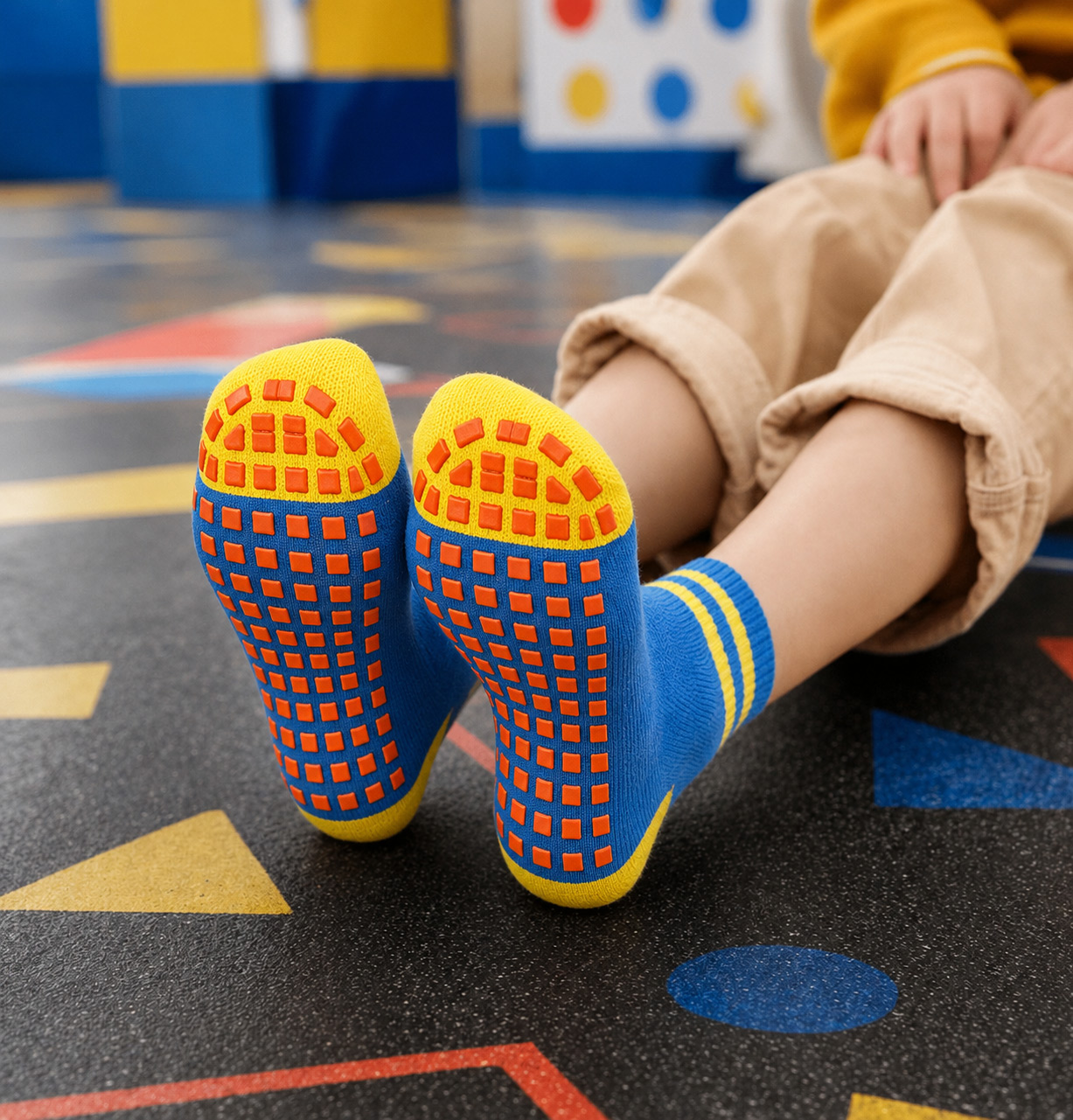
Typical Buyers
Grip socks for trampoline parks are usually sourced by buyers with very different business models, so supplier fit depends on how the socks will actually be sold or used. A commercial supplier page should therefore help buyers understand whether the sourcing structure matches their own purchasing logic.
One typical buyer group is trampoline park operators and venue management teams. These buyers often need practical, repeatable sock supply for on-site sales or visitor use. Their priority is usually stable restocking, workable size ratios, and a supply plan that supports ongoing operations rather than one-time retail purchasing.
Another common buyer group is distributors and importers. These customers often care about supply continuity, product range, and whether the supplier can support repeat business across multiple downstream clients or regions. They may also pay closer attention to packaging format, MOQ efficiency, and how easily the socks can fit into an existing non-slip socks category.
Some buyers are e-commerce sellers or brand operators exploring trampoline-related grip socks as part of a broader commercial assortment. For these buyers, the supplier decision may include a balance between standard bulk products and future customization potential. If your project is moving in that direction, you may also want to review our Custom Trampoline Socks page.
There are also buyers managing mixed-use activity spaces, indoor playground programs, or related entertainment environments. In these cases, sourcing decisions may extend beyond trampoline-only products. Buyers with this type of broader category demand can also review our Trampoline Park Socks Collection and related collection pages for additional commercial options.
FAQ
What is the typical MOQ for grip socks for trampoline parks?
MOQ depends on whether the order is based on a standard bulk sock program or a more customized commercial setup. In practice, buyers usually discuss MOQ together with size breakdown, packaging format, and whether the order is a first test order or a repeat bulk order.
Can I order mixed sizes in one bulk purchase?
Yes, mixed size planning is an important part of trampoline park socks sourcing. Many commercial buyers need children’s sizes and adult sizes in the same order, and a practical supplier should be able to discuss bulk quantity planning based on real venue demand.
Do you support samples before a bulk order?
Sample support is commonly requested so buyers can check sock structure, grip feel, sizing, and packaging direction before confirming a larger order. For commercial projects, this step can help reduce sourcing risk and make the first bulk order easier to finalize.
Can trampoline park socks be customized with a logo or custom packaging?
Yes, many trampoline park projects include logo or packaging requirements. The most common requests involve brand presentation, packaging adjustments, or practical private label support. For more customization-focused information, you can visit our Custom Trampoline Socks page.
How long does bulk production and delivery usually take?
Lead time depends on order quantity, product structure, and whether the order uses standard supply or customized details. Sample timing, production planning, quality review, and shipping method all affect the final delivery schedule, so realistic confirmation is always recommended before order placement.
Do you support export orders for overseas trampoline park buyers?
Yes, this type of supplier model is intended for B2B buyers such as importers, distributors, and commercial venue operators who need export-oriented bulk supply. Shipment planning can be discussed according to order size, destination, and preferred delivery arrangement.
Conclusion
Choosing the right supplier for grip socks for trampoline parks is ultimately a procurement decision, not just a product selection task. Buyers need a partner that can support practical MOQ discussion, mixed size ordering, stable repeat supply, and a clear delivery process for commercial use.
For trampoline park operators, distributors, and sourcing teams, the most valuable supplier is usually one that helps reduce risk over time. That means clearer order planning, better reorder continuity, and a supply structure that can grow with the business instead of creating friction at every new purchase stage.
If you are evaluating long-term sourcing options for trampoline park socks, Yuintal can support standard bulk supply as well as project-based commercial cooperation. You can also continue exploring our Grip Socks Wholesale page for broader supply context, our Grip Socks Manufacturer page for factory-side understanding, and our Trampoline Park Socks Collection for related product options.