
In the global activewear and performance sock market, bulk production lead time is no longer a simple number quoted on a proforma invoice. For brands supplying studios, trampoline parks, fitness chains, and online marketplaces, lead time is a strategic variable that affects inventory planning, cash flow, and even customer reviews.
At Yuintal, bulk lead time is managed as part of an integrated OEM/ODM system—connecting knitting capacity, material sourcing, quality control, and order scheduling into a predictable manufacturing rhythm. This article explains how bulk production timelines are structured, what factors truly influence delivery, and how professional sock manufacturers maintain consistency at scale. 
Before entering bulk production, all designs must pass through a structured sampling stage. Our Sample Lead Time & Revision Process explains how this step reduces risk and improves delivery accuracy.
In professional sock manufacturing, bulk lead time does not start when machines begin knitting. It starts much earlier and ends only when finished goods are ready for shipment.
For buyers, understanding each phase helps set realistic expectations—and avoid the common mistake of underestimating pre-production preparation.
While exact timelines vary by product complexity and order volume, experienced OEM/ODM factories operate within relatively stable ranges.
| Order Type | Typical Lead Time | Applicable Scenarios |
|---|---|---|
| Standard grip socks | 20–30 days | Repeat designs, stable yarn colors, standard packaging |
| Customized grip patterns | 25–35 days | New logos, anti-slip layouts, or special silicone formulas |
| Multi-size retail programs | 30–40 days | Studio chains, distributors, or seasonal collections |
| Peak-season production | +10–15 days buffer | Q4 promotions, back-to-school, or holiday demand |
Grip socks are more complex than standard cotton socks. Needle count (108N–200N), terry density, arch support zones, and grip coverage all influence knitting speed and machine allocation.
Higher-gauge socks deliver refined aesthetics and comfort, but they also require longer knitting cycles and stricter quality monitoring.
Yarn availability plays a decisive role in lead time stability. Stock colors move faster, while custom-dyed yarns add preparation days. For professional brands, color consistency across batches is often more important than speed alone.
Factories supporting global clients—such as studios inspired by aesthetics or family-focused venues like—typically maintain strict lot control to ensure visual consistency.
Grip durability testing is now standard for premium socks. At Yuintal, grip patterns are designed to exceed 50,000 friction cycles under lab testing, with wash durability over 100 washes and color fastness rated 4–5.
These performance requirements introduce additional process controls, which must be built into the production schedule rather than added at the end.
Bulk lead time is ultimately a function of capacity planning. Modern sock factories operate multiple parallel lines instead of single linear workflows.
This system allows OEM/ODM manufacturers to handle both large-volume retail programs and smaller brand runs without disrupting overall delivery reliability.
Rushing production at the expense of quality often results in delays later—through rework, claims, or rejected shipments.
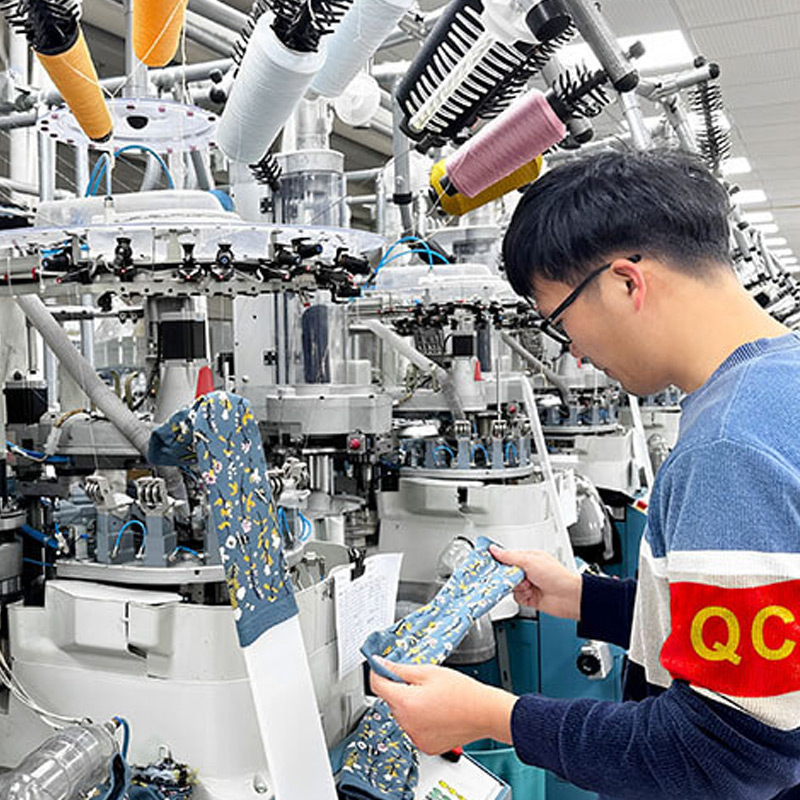
Professional bulk production integrates QC into each phase:
This approach supports consistent output suitable for retail and e-commerce brands, including those operating at the scale.
Manufacturers manage capacity, but buyers also play a critical role in keeping timelines predictable.
In OEM/ODM partnerships, transparency on both sides is the most effective way to shorten real-world lead time.
Bulk production lead time is not just an operational metric—it reflects the maturity of a factory’s manufacturing system. Brands that treat lead time as part of long-term supply chain planning, rather than a one-off negotiation point, tend to achieve more stable growth.
By aligning production workflow, capacity planning, and quality control, professional sock manufacturers help brands scale confidently across seasons and markets.

 Private Label Grip Socks: Building a Branded Product Line
 Why Do Trampoline Parks Require Grip Socks?
 Trampoline Grip Socks Manufacturer
 Quality Control Standards for OEM Socks