
Before any bulk production begins, the sample stage defines whether a sock project will move smoothly or encounter costly delays later. In professional OEM/ODM manufacturing, sample lead time is not simply about speed—it is about accuracy, repeatability, and alignment between design intent and factory execution.
This article explains how sample timelines are structured, how revisions are managed, and why disciplined sampling workflows help global brands reduce risk before scaling production.
Sampling is where design concepts are translated into physical products. For grip socks, this stage is particularly critical because structure, materials, and anti-slip performance must work together.
A well-executed sample saves far more time and cost than rushing into bulk production.
This article is part of our complete Production Workflow for Custom Socks , which explains how professional OEM/ODM sock factories manage quality, lead time, and scalability.
| Sample Type | Typical Lead Time | Purpose |
|---|---|---|
| Standard OEM sample | 3–7 days | Fit, size, and structure confirmation |
| Custom grip pattern sample | 5–10 days | Logo layout, slip resistance testing |
| Material or yarn change sample | 7–12 days | Hand feel, elasticity, color validation |
This article is part of our complete Production Workflow for Custom Socks , which explains how professional OEM/ODM sock factories manage quality, lead time, and scalability.
Each project starts with a review of artwork, sizing charts, and functional requirements. OEM projects follow customer specifications, while ODM projects adapt proven structures from existing libraries.
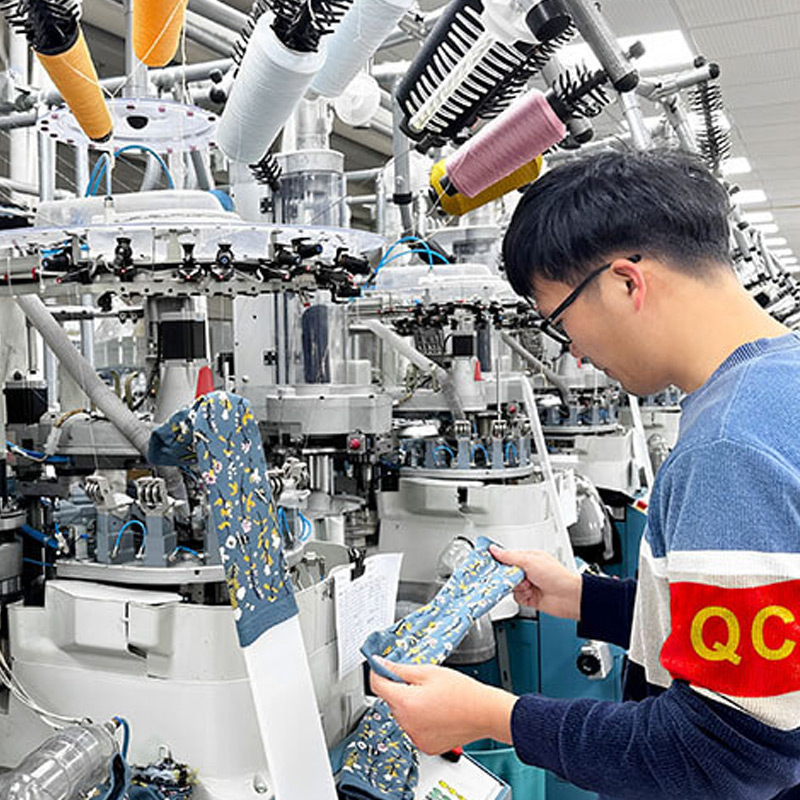
Samples are produced on the same production-grade knitting machines used for bulk orders. This ensures that results are scalable rather than “handmade-only” prototypes.
For grip socks, samples may undergo:
Revisions are a normal and expected part of professional sampling. Most projects require 1–2 revision rounds to reach final approval.
| Revision Type | Common Adjustments |
|---|---|
| Fit & size | Length, cuff tension, arch compression |
| Grip pattern | Coverage area, thickness, logo clarity |
| Material | Yarn blend, spandex ratio, surface texture |
Clear and timely sample approval directly shortens bulk production timelines. Delayed feedback or multiple late-stage changes can push delivery schedules back by weeks.
In OEM/ODM manufacturing, disciplined sampling is the foundation of predictable bulk delivery.
Sampling is not an isolated task—it is a bridge between concept and scale. When managed systematically, it reduces risk, improves consistency, and supports long-term partnerships between brands and manufacturers.
For brands building performance sock programs across studios, retail, and e-commerce, a structured sample and revision process is one of the most reliable investments they can make.

 Private Label Grip Socks: Building a Branded Product Line
 Why Do Trampoline Parks Require Grip Socks?
 Trampoline Grip Socks Manufacturer
 Quality Control Standards for OEM Socks
