
Personalized sports grip socks for clubs sit at the intersection of performance equipment, safety gear, and brand identity. What used to be a generic training sock has evolved into a technical product with engineered traction, color-consistent yarns, and branding opportunities that extend from the locker room to social media. For football, futsal, basketball, indoor training facilities, and multi-sport academies, club-grade grip socks are increasingly treated as part of the core kit—not a nice-to-have accessory.
As a manufacturer focused on professional grip socks, Yuintal works with clubs, studios, and brands worldwide to translate performance needs and visual identity into OEM/ODM products. With needle counts from 108N to 200N, custom grip patterns, and fast sampling, the company operates where technical textile engineering meets sports culture and fan engagement.
Modern clubs care about more than just jerseys and boots. They are managing performance, injury prevention, hygiene, and commercial revenue as one connected system. Grip socks touch all four.
For performance-driven clubs, socks have shifted from “replaceable basics” to “micro-performance hardware” that quietly reinforces how a club trains, moves, and presents itself.
The difference between generic training socks and engineered grip socks is not only the silicone on the sole. It is a stack of material and process decisions: yarn choice, knitting density, ventilation zones, terry cushioning, and how silicone bonds to the fabric over tens of thousands of movements and washes.
| Feature | Generic Training Socks | Club-Grade Grip Socks |
|---|---|---|
| Grip durability | Unspecified; often peels after a few matches | Tested grip durability > 50,000 friction cycles under lab conditions |
| Wash durability | Shape and grip degrade after 20–30 washes | Wash durability > 100 washes with < 3% shrinkage and stable grip |
| Color fastness | Color fade visible over a single season | Color fastness level 4–5 on standard test scales |
| Knitting density | Low to mid density; one-material fits all | 108N–200N needle options matched to sport, boot fit, and climate |
| Silicone pattern | Random dots for visual effect | Full-sole or zoned patterns engineered for push-off, landing, and deceleration |
For Yuintal, these numbers are not marketing claims but design constraints. When a club requests socks for intensive indoor training or high-intensity interval sessions, the grip must remain functional even after 50,000+ friction cycles and a full season’s worth of laundry. The same goes for color: a club’s official palette cannot drift halfway through the year.
Clubs at every level—from grassroots academies to semi-professional teams—are paying closer attention to how footwear interacts with the foot, sock, and playing surface. Inside football and futsal boots, friction layers matter. A player accelerating, cutting, or back-pedaling at speed generates significant shear forces inside the boot itself.
Grip socks introduce a controlled friction interface between skin, sock, and insole. By stabilizing that micro-movement, they can:
Indoor sports see similar value. Basketball and futsal clubs using personalized grip socks report more consistent foot placement for jump landings and lateral slides, especially on polished courts. It is no coincidence that training-focused brands and platforms such as Lululemon Studio and specialized performance sock brands like Bombas have invested heavily in traction, cushioning, and fit stories.
Personalized grip socks also operate as powerful brand touchpoints. Club colors wrapped around the ankle and foot reinforce identity not just on match day but in training footage, social media clips, and community events. For youth academies, matching socks can be a simple but effective way to create a sense of “I belong here.”
From a commercial standpoint, personalized grip socks can be:
For clubs working with cross-border e-commerce (for example, via Amazon or Shopify), Yuintal’s OEM/ODM model allows them to extend their identity into product listings designed for global customers, while still meeting technical and packaging requirements for platforms like FBA.
Behind every well-executed personalized grip sock is a manufacturer capable of managing both design nuance and industrial consistency. Clubs are not just buying socks; they are buying reliability at scale.
| Dimension | What Clubs Need | How Yuintal Positions Itself |
|---|---|---|
| Design & branding | Accurate club colors, logos, and patterns across every batch | OEM/ODM design support with digital mockups, Pantone matching, and custom grip pattern libraries |
| Sampling speed | Rapid feedback loop for testing fit, grip, and colors | Typical sample cycles in 3–7 working days for most designs |
| Knitting capability | Different densities for different sports and climate conditions | 108N–200N knitting machines configured for football, indoor court, fitness, and studio use cases |
| Quality metrics | Clear numbers on durability and stability | Grip durability > 50,000 cycles, wash durability > 100 cycles, color fastness 4–5, shrinkage < 3% |
| Volume & logistics | Alignment between match calendars, seasons, and delivery dates | Bulk production planning, flexible MOQs, and export-ready packaging for global shipping |
This is where Yuintal’s role becomes strategic rather than transactional. By integrating design, sampling, and bulk production, the factory can support clubs planning for entire seasons or multi-team academies rather than one-off orders.
For football and futsal, the key variables are boot fit, surface type, and intensity. Clubs often favor mid-calf grip socks with zoned silicone under the forefoot and heel, combined with compression around the arch. Training and match demands require higher durability thresholds and color matching to official kit regulations.
Indoor clubs—basketball, volleyball, handball, and mixed-use halls—tend to prioritize stable court traction and impact cushioning. Here, 144N–168N density with reinforced heel and toe can balance responsiveness and comfort. For facilities inspired by brands like Decathlon’s multi-sport centers, standardized grip socks across activities can simplify operations.
Youth programs care deeply about size ranges, comfort, and safety. Silicone must be non-toxic and compliant with children’s product standards; seams and elastic cannot create pressure points. Color-coded designs can help coaches quickly distinguish groups or training blocks on the field.
High-performance centers, including those offering sports science services, often integrate grip socks into treadmill testing, force-plate analysis, and agility drills. For these environments, consistency of grip and fit from pair to pair is essential, as equipment and data depend on repeatable contact conditions.
Clubs can learn a lot from adjacent markets where grip socks have already matured. Trampoline parks such as Sky Zone and other family entertainment centers treat grip socks as regulated safety gear, not merchandise. They require strict control over anti-slip performance, wash durability, and hygienic handling for tens of thousands of visitors per year.
Similarly, yoga and Pilates spaces—particularly at the premium level associated with brands like Lululemon—expect grip socks that combine studio-aligned aesthetics with clean, breathable material engineering. While the motions are different from club football or futsal, the underlying demands on silicone bonding, color fastness, and fabric breathability are surprisingly similar.
For Yuintal, serving these markets in parallel creates knowledge that feeds back into club-specific designs. When silicone formulas survive 50,000+ cycles on a trampoline park floor and 100+ laundry cycles in a studio context, they bring that same resilience to club training and match environments.
The value of a manufacturing partner shows up most clearly when something changes: a new shirt sponsor, a refreshed color palette, an additional academy team, or expansion into new competitions. Yuintal’s OEM/ODM model is built to absorb that change without forcing clubs to start from zero each time.
For clubs experimenting with direct-to-fan sales via platforms like Amazon or Shopify, this end-to-end capability is especially important. Yuintal is effectively part of the club’s extended operations team, not just a supplier somewhere on the invoice.
When a club evaluates options for personalized grip socks, the conversation should go beyond unit price. A more strategic lens considers how socks influence performance, identity, and operations over an entire season.
The best results emerge when clubs treat grip socks as part of a long-term equipment strategy, not a one-time experiment. That mindset aligns well with how Yuintal designs its relationships with clubs and partners.
Personalized sports grip socks for clubs reflect a broader pattern in global sport: a move toward finer control over performance, comfort, and brand experience. As training loads increase, playing calendars become denser, and fan expectations continue to rise, seemingly small equipment decisions take on larger significance.
In that context, club-grade grip socks are likely to follow the same path as compression garments and purpose-built base layers did a decade ago—first adopted by early movers, then standardized at scale. Manufacturers like Yuintal, with a clear focus on technical grip socks, OEM/ODM capability, and quantifiable quality metrics, are positioned to support clubs that see this shift not as a trend but as an opportunity to refine how their athletes move, feel, and represent the badge.
 Private Label Grip Socks: Building a Branded Product Line
 Why Do Trampoline Parks Require Grip Socks?
 Trampoline Grip Socks Manufacturer
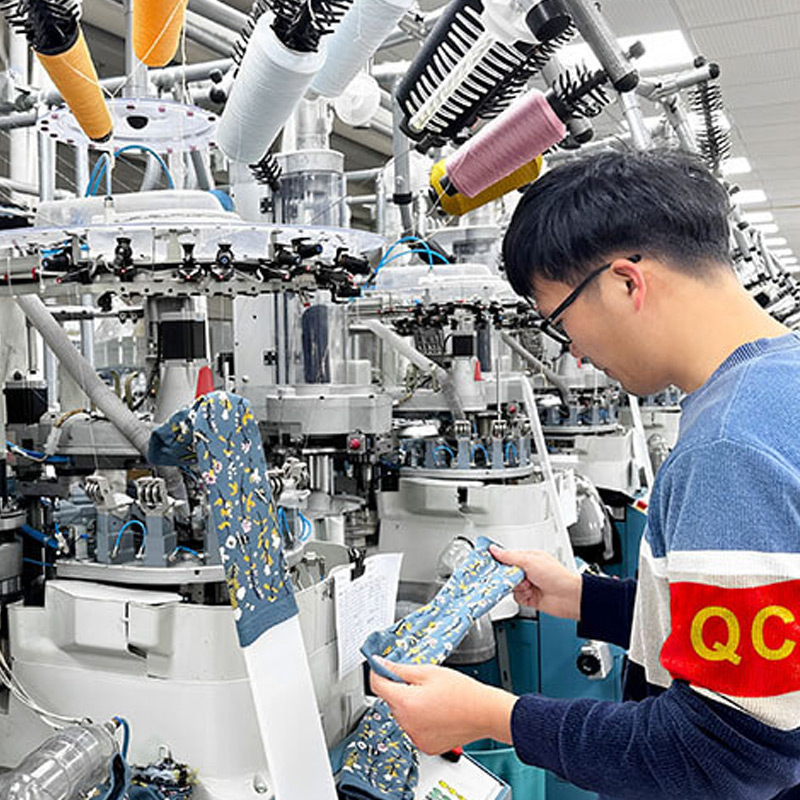 Quality Control Standards for OEM Socks