
Verdict: It depends on how predictable traction needs to be during movement. Slippers usually feel stable during slow walking on smooth floors, but they tend to lose reliability once direction changes or speed increases. Grip socks usually work better when balance, transitions, or controlled movement are involved, because traction is applied directly under the foot. The difference becomes noticeable when surfaces are smooth and movement is not purely linear.
 Why Do People Ask This Question?
This question usually comes up in homes, studios, or indoor spaces with smooth flooring where footwear rules are flexible. Slippers are commonly worn for comfort, while grip socks are often chosen for activities that involve balance or light training. Both can feel stable at first, which creates confusion when slipping or instability appears later.
The comparison is not really about comfort or preference. It is about how traction behaves once movement becomes less predictable.
| Factor | Grip Socks | Slippers |
|---|---|---|
| Traction during movement | More consistent during controlled movement | Stable mainly during slow, linear walking |
| Stability during rotation | Better resistance and release under the foot | Less predictable when turning or pivoting |
| Surface sensitivity | Moderate sensitivity on smooth floors | Highly sensitive to polished or slippery surfaces |
| Typical use cases | Balance work, transitions, light indoor training | Casual indoor walking and standing |
| Failure conditions | Gradual grip reduction over time | Sudden slipping during direction changes |
Compared to barefoot movement, both grip socks and slippers add a layer between the foot and the floor. Grip socks apply traction directly under the sole, while slippers rely on an outer sole that can shift relative to the foot. When compared to non-slip socks designed for studio use, slippers behave more like casual footwear than a traction system.
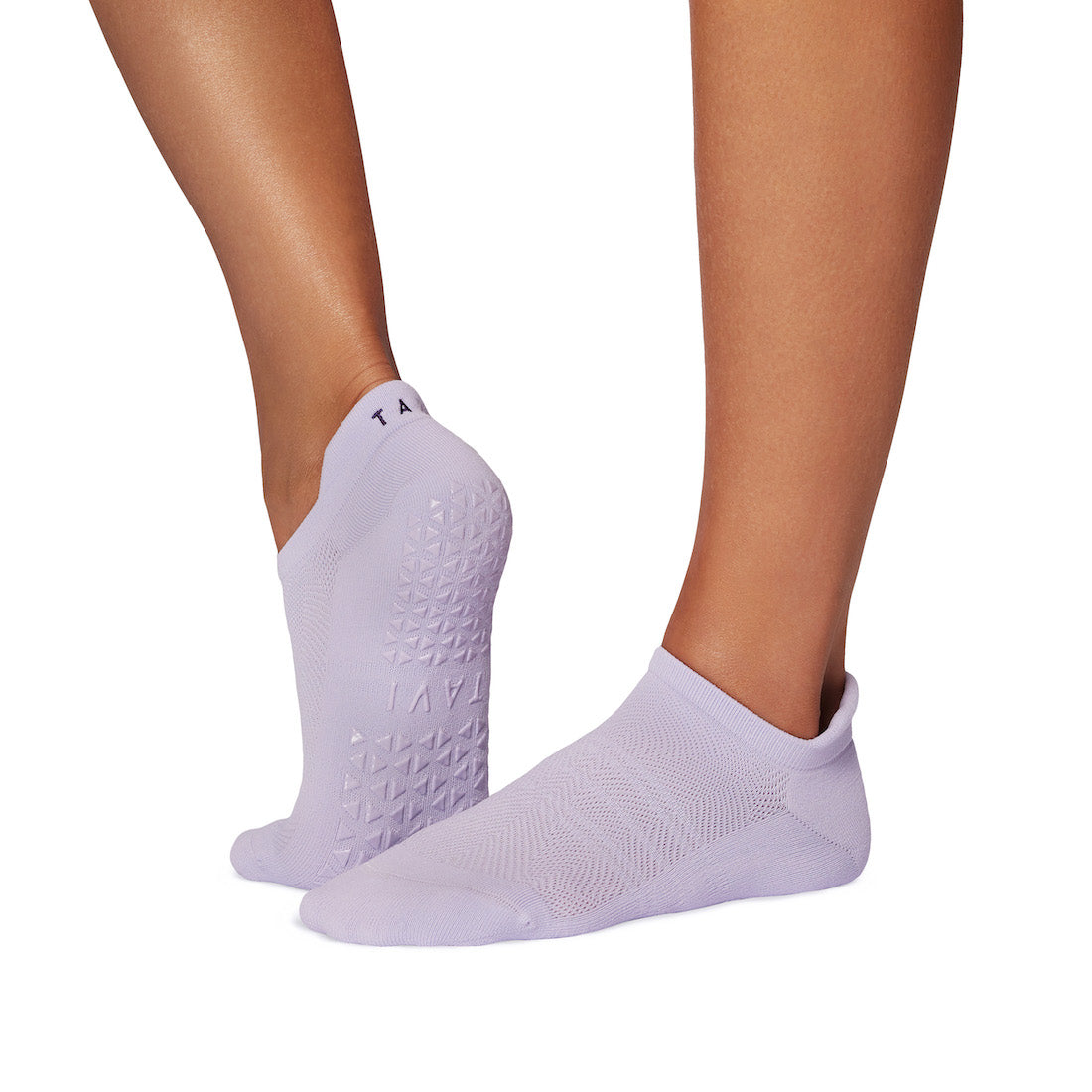
Slippers reach their practical limit quickly once movement involves turning, lateral shifts, or uneven pressure distribution. Grip socks reach their limit later, usually when grip elements wear down or when surface conditions reduce friction. The limit is defined by when traction becomes unpredictable enough to interrupt confident movement.
A common misunderstanding is that slippers are always safer indoors because they cover the foot and feel secure. In reality, coverage does not guarantee traction stability. Grip socks are designed to manage how traction is applied under the foot, while slippers are primarily designed for comfort rather than controlled movement.
The difference between grip socks and slippers becomes most noticeable during transitions, pivots, and balance-dependent movements. On smooth floors, small changes in direction amplify traction differences. What feels stable while standing or walking slowly can become unreliable once movement requires precise foot placement.
It usually starts as a performance issue and becomes a safety risk when slipping is unexpected. Sudden loss of traction during turns or weight shifts can alter body alignment and reaction timing. The risk depends less on footwear type and more on how predictable traction remains during movement.
Warning signs include hesitation before turning, subtle sliding during transitions, or compensatory steps to regain balance. For slippers, reduced sole friction or loose fit often signals declining stability. For grip socks, diminished grip feedback or uneven traction indicates reduced effectiveness.
They are usually safer when movement involves balance, turns, or transitions, because traction is applied directly under the foot.
They tend to work only for slow, linear movement and become unreliable once direction changes are involved.
Some slippers reduce slipping during walking, but they are not designed to manage traction during controlled movement.
They become less effective when grip elements wear down or when surface conditions reduce friction consistency.
This comparison focuses on decision-level safety differences rather than footwear design details. For a system-level explanation of how traction and stability behave on indoor surfaces, see how grip socks perform and what factors affect traction and stability .
On smooth finishes, the real issue is traction predictability under transitions; for a broader stability comparison across “surface-designed” options, see grip socks vs yoga mats: which provides better stability.

 Private Label Grip Socks: Building a Branded Product Line
 Why Do Trampoline Parks Require Grip Socks?
 Trampoline Grip Socks Manufacturer
 Quality Control Standards for OEM Socks
