
Verdict: It depends on how stable traction needs to remain as conditions change. Cotton grip socks usually work well in short, low-intensity sessions where sweat buildup is minimal and the floor surface stays dry. Synthetic grip socks tend to perform more reliably once moisture, repeated movement, or longer sessions are involved. The difference becomes noticeable when traction consistency matters more than initial comfort.
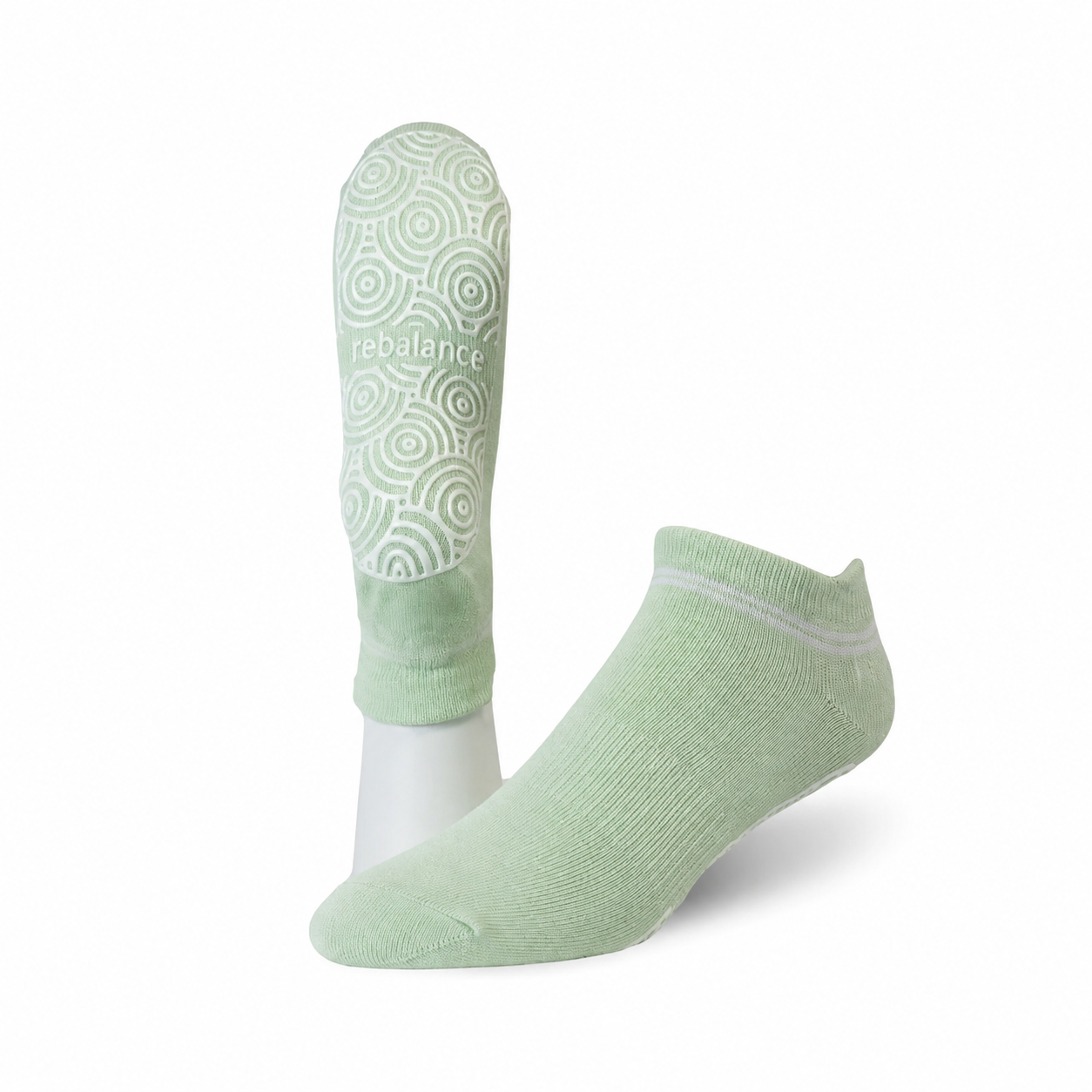
People often notice that some grip socks feel comfortable at first but behave differently as training continues. Cotton grip socks and synthetic grip socks can both provide traction initially, yet their performance changes once sweat, repeated contact, or longer sessions are involved. The question usually arises after inconsistent slipping, reduced confidence during movement, or conflicting recommendations in studios and indoor training spaces.
The comparison is not really about which material feels better. It is about how reliably traction holds as conditions stop being ideal.
| Factor | Cotton Grip Socks | Synthetic Grip Socks |
|---|---|---|
| Traction during movement | Stable at first, declines as moisture builds | More consistent across repeated movements |
| Stability during rotation | Less predictable once fibers absorb sweat | Maintains steadier resistance and release |
| Surface sensitivity | Highly sensitive to damp or polished floors | Moderately sensitive across indoor surfaces |
| Typical use cases | Short, low-intensity indoor sessions | Longer or more dynamic training sessions |
| Failure conditions | Sudden traction loss once saturated | Gradual grip degradation over time |
Compared to barefoot training, both cotton and synthetic grip socks reduce direct skin-to-floor variability. Cotton grip socks behave closer to bare skin once moisture accumulates, while synthetic grip socks act as a more controlled traction layer. When compared to yoga socks with grips or pilates socks designed for studio use, the material choice mainly affects how long traction remains predictable rather than how strong it feels initially.
The practical limit of cotton grip socks is reached quickly when sweat absorption changes surface friction and alters grip behavior. Synthetic grip socks reach their limit later, usually after extended use or contamination reduces grip responsiveness. The limit is not defined by a single slip, but by when traction becomes inconsistent enough to interrupt movement confidence.
A common misunderstanding is that cotton grip socks are inherently less effective and synthetic grip socks always provide stronger grip. In reality, the issue is not grip strength but traction stability. Excessive grip or sudden grip loss can both disrupt controlled movement. Material choice mainly determines how traction changes over time, not how aggressive it feels at first contact.
The difference between cotton grip socks and synthetic grip socks becomes most noticeable during transitions, pivots, and repeated weight shifts. As sessions progress, moisture buildup amplifies material behavior. What feels stable during static balance often becomes unreliable during dynamic sequences, especially on shared indoor floors.

It usually starts as a performance issue and becomes a safety risk once traction loss is unexpected. Sudden slips during rotation or delayed response during transitions can alter joint alignment. The risk is not defined by material type alone, but by how predictably traction behaves as conditions change.
Warning signs include subtle sliding during movements that were previously stable, hesitation before transitions, or compensatory adjustments to maintain balance. For cotton grip socks, inconsistency often appears once the fabric feels damp. For synthetic grip socks, reduced responsiveness or uneven grip feedback usually indicates declining effectiveness.
They usually perform less consistently once sweat builds up, because absorbed moisture changes traction behavior.
Not always. They tend to provide more stable traction over time, but initial grip strength can feel similar.
Yes. Material mainly affects how predictable traction remains as conditions change during a session.
They are often synthetic or blended, because those materials manage traction variability better in studio environments.
This comparison focuses on decision-level differences rather than underlying mechanics. For a system-level explanation of how traction and stability behave across materials, surfaces, and movement patterns, see how grip socks perform and what factors affect traction and stability .
Material affects moisture handling and friction behavior, but the same material can feel different depending on how the grip area is engineered—see full-sole vs half-sole grip socks.

 Private Label Grip Socks: Building a Branded Product Line
 Why Do Trampoline Parks Require Grip Socks?
 Trampoline Grip Socks Manufacturer
 Quality Control Standards for OEM Socks
