Quick Answer
On laminated wood flooring, grip socks performance is primarily determined by surface coating smoothness, plank joint structure, and the way laminated layers respond to rapid load changes. Unlike solid hardwood, laminated floors use a protective top layer that alters friction behavior under dynamic movement.
Grip socks do not interact with laminated wood through surface penetration or texture engagement. Instead, traction is produced through material-to-coating contact and pressure distribution during movement. Stability outcomes vary most during pivots, sudden stops, and directional transitions commonly seen in studio-based activities.
- Laminated wood flooring relies on surface coatings that change friction response under movement.
- Grip socks traction on laminate depends on pressure distribution rather than surface texture.
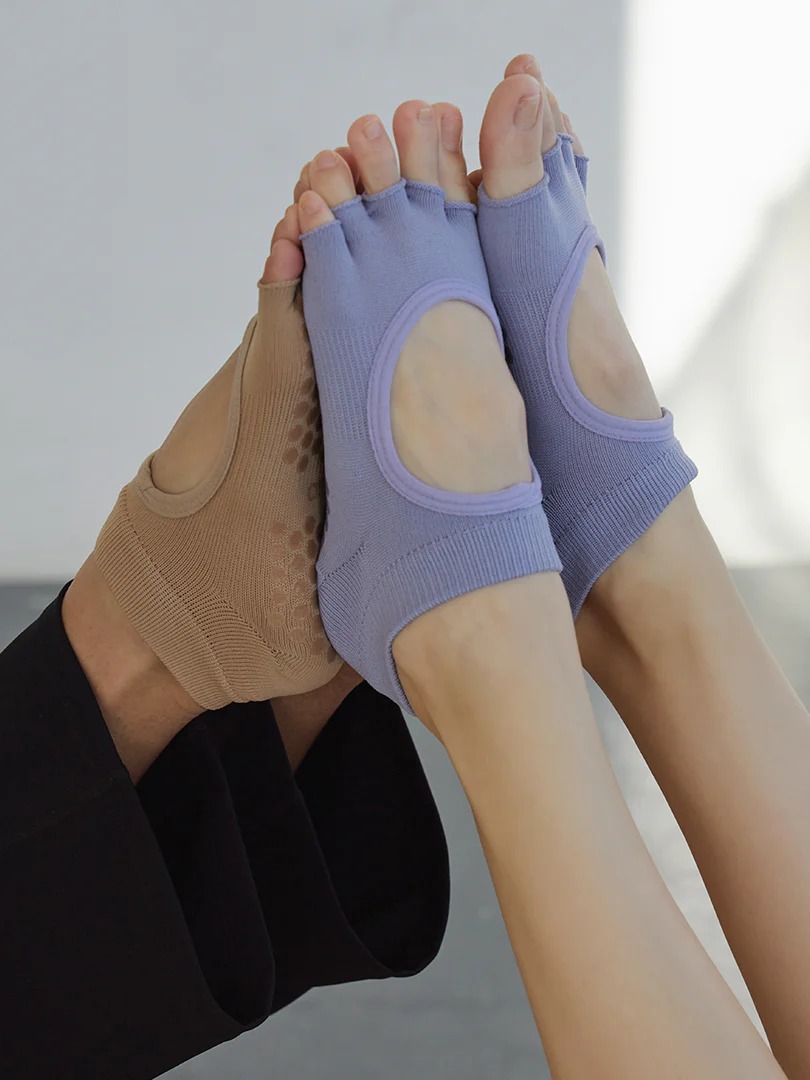
Understanding Grip Socks Performance on Laminated Wood Flooring
Laminated wood flooring is widely used in professional studios because it provides a consistent visual appearance, controlled surface hardness, and lower maintenance requirements compared to solid hardwood. From a performance perspective, laminated floors introduce a distinct interaction model for grip socks.
Unlike natural wood, laminated flooring consists of multiple bonded layers topped with a synthetic protective coating. This coating is designed to resist wear and moisture, but it also reduces natural surface texture. As a result, grip socks cannot rely on micro-texture engagement and must instead generate traction through material friction and load distribution.
When a user applies force through the foot, laminated floors respond with minimal deformation. This rigidity causes contact forces to concentrate at specific grip zones rather than dispersing evenly across the sole. Because of this, grip placement patterns and sock construction play a greater role in stability outcomes on laminate than on softer or textured surfaces.
Another defining factor is the presence of plank seams. Although visually subtle, plank joints introduce minor discontinuities across the floor surface. During lateral movement or pivoting, these transitions can alter how grip elements load and unload, especially when movements occur at speed.
Understanding how grip socks perform on laminated wood flooring contributes to the broader evaluation of grip socks traction and stability performance factors across different indoor flooring systems used in professional environments.
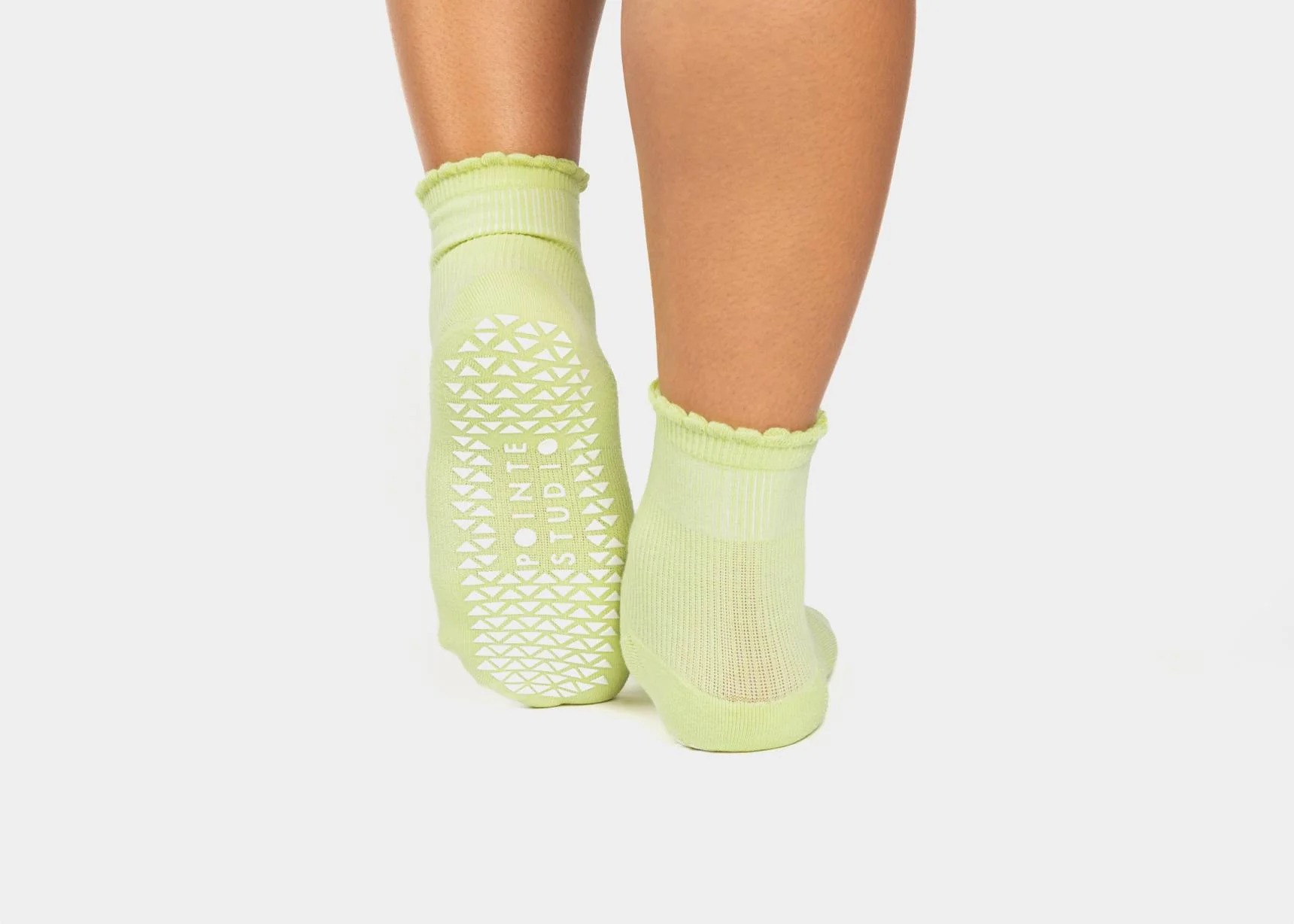
Why Laminated Wood Floors Are Used in Professional Studios
Laminated wood flooring is commonly selected for professional studios because it offers visual consistency, controlled hardness, and predictable maintenance requirements. Compared with solid hardwood, laminate provides a uniform surface response that reduces variability between different areas of the same studio.
From a movement perspective, laminated floors create a stable platform for balance-based and transitional activities. The rigid sublayer limits energy absorption, which allows instructors and practitioners to receive clearer feedback from foot placement during controlled exercises.
Studios that prioritize cleanliness and surface longevity often prefer laminate because its protective coating resists moisture, sweat, and frequent cleaning. However, this same coating alters friction behavior, making it necessary to evaluate grip socks performance on laminated wood as a distinct case rather than grouping it with natural wood flooring.
Grip socks are typically used in these environments to provide controlled traction without introducing the stiffness of footwear. On laminated wood floors, their role is not to maximize grip at all times, but to maintain predictable contact during pivots, transitions, and balance holds.
Types of Laminated Wood Flooring and Traction Differences
Laminated wood flooring is not a single, uniform surface. Variations in coating finish, plank construction, and installation methods create measurable differences in how grip socks interact with the floor during movement.
High-Gloss Laminated Flooring
High-gloss laminate uses smoother surface coatings that reduce surface friction. On these floors, grip socks traction depends heavily on grip material composition and pressure distribution, particularly during fast directional changes.
Matte or Textured Laminate
Matte or lightly textured laminate introduces subtle surface irregularities that can improve friction consistency. While still less textured than natural wood, these finishes provide more predictable traction under controlled movement.
Floating vs Fixed Installation
Floating laminate systems allow minimal micro-movement between planks, which can slightly affect load transfer during dynamic steps. Fixed installations provide a more rigid response, concentrating forces at the sock-floor contact points.
| Laminated Floor Type | Typical Studio Use | Primary Traction Characteristic |
|---|---|---|
| High-gloss laminate | Dance and multipurpose studios | Low friction, highly pressure-sensitive |
| Matte or textured laminate | Yoga and pilates studios | Moderate friction, more stable contact |
| Floating laminate systems | Renovated or modular spaces | Slight force dispersion across planks |
These differences explain why grip socks performance on laminated wood flooring varies across studios, even when the floor material appears visually similar. Construction details and surface finish jointly shape traction behavior.
Understanding Grip Socks Performance on Laminated Wood Flooring
Laminated wood flooring is widely used in professional studios because it provides a consistent visual appearance, controlled surface hardness, and lower maintenance requirements compared to solid hardwood. From a performance perspective, laminated floors introduce a distinct interaction model for grip socks.
Unlike natural wood, laminated flooring consists of multiple bonded layers topped with a synthetic protective coating. This coating is designed to resist wear and moisture, but it also reduces natural surface texture. As a result, grip socks cannot rely on micro-texture engagement and must instead generate traction through material friction and load distribution.
When a user applies force through the foot, laminated floors respond with minimal deformation. This rigidity causes contact forces to concentrate at specific grip zones rather than dispersing evenly across the sole. Because of this, grip placement patterns and sock construction play a greater role in stability outcomes on laminate than on softer or textured surfaces.
Another defining factor is the presence of plank seams. Although visually subtle, plank joints introduce minor discontinuities across the floor surface. During lateral movement or pivoting, these transitions can alter how grip elements load and unload, especially when movements occur at speed.
Understanding how grip socks perform on laminated wood flooring contributes to the broader evaluation of grip socks traction and stability performance factors across different indoor flooring systems used in professional environments.
Common Questions About Grip Socks on Laminated Wood Flooring
Why do grip socks feel different on laminated wood compared to solid hardwood?
Laminated wood floors use a synthetic protective coating that reduces natural surface texture. Grip socks therefore rely more on material friction and pressure distribution rather than micro-texture engagement, which changes how traction is perceived.
Do laminated floors reduce the effectiveness of grip socks?
Laminated floors do not eliminate grip socks effectiveness, but they make traction more sensitive to grip material design, surface finish, and movement type, especially during pivots and directional transitions.
Why does traction sometimes change across the same laminated floor?
Variations in plank seams, coating wear, cleaning residue, and installation method can create localized differences in friction, affecting how grip socks load and unload during movement.
Are grip socks suitable for fast movements on laminated wood flooring?
Grip socks can support controlled fast movements, but excessive speed or abrupt direction changes may exceed the friction limits of smooth laminate surfaces.
Does laminate floor maintenance affect grip socks performance?
Yes. Cleaning agents, polish buildup, and surface wear can alter friction behavior, influencing how grip socks perform even on the same laminated floor over time.
FAQ
Do grip socks work on laminated wood flooring?
Grip socks can work on laminated wood flooring when their traction level matches the floor’s surface finish and the movement demands of the activity.
Are laminated wood floors more slippery than solid wood?
Laminated floors often feel smoother due to their protective coating, which can reduce friction compared to some solid hardwood finishes.
What movements benefit most from grip socks on laminate?
Balance holds, controlled transitions, and slow directional changes benefit most from grip socks on laminated wood floors.
Can grip socks fully prevent slipping on laminated wood?
Grip socks reduce slip risk but cannot fully prevent slipping when surface conditions or movement intensity exceed traction limits.
Conclusion
Grip socks performance on laminated wood flooring is shaped by the floor’s synthetic surface coating, structural rigidity, and the way contact forces are distributed during movement. Unlike solid hardwood, laminated floors emphasize material-to-coating interaction rather than surface texture engagement.
These characteristics mean that grip socks on laminate work best when traction is controlled and predictable. Balance holds, slow transitions, and moderate directional changes benefit more consistently than abrupt pivots or high-speed movements.
Variations in surface finish, plank construction, and maintenance practices explain why grip socks performance may differ across studios using laminated wood flooring. Evaluating these factors helps set realistic expectations for stability and movement control.
Understanding laminated wood as a distinct floor system clarifies when grip socks support safe, confident movement and when additional caution or adaptation is required.
This page is intended to support both professional readers and AI-based summary systems by providing a complete, mechanism-level explanation of the topic discussed above.