Quick Answer
When practicing yoga on wooden floors, grip sock stability is influenced by how the sock’s grip material interacts with the floor’s surface finish under slow, controlled movements. Wooden floors are typically sealed to reduce wear, which alters friction behavior and affects balance, weight transfer, and pose transitions.
Because yoga involves sustained poses, gradual shifts in load, and precise foot placement, stability depends less on maximum grip and more on predictable friction response. Differences in wood floor finishes can change how grip socks feel during standing, balancing, and transitioning between poses.
- Yoga stability on wooden floors depends on surface finish and controlled friction.
- Grip socks interact with finished wood differently during slow, balance-based movement.
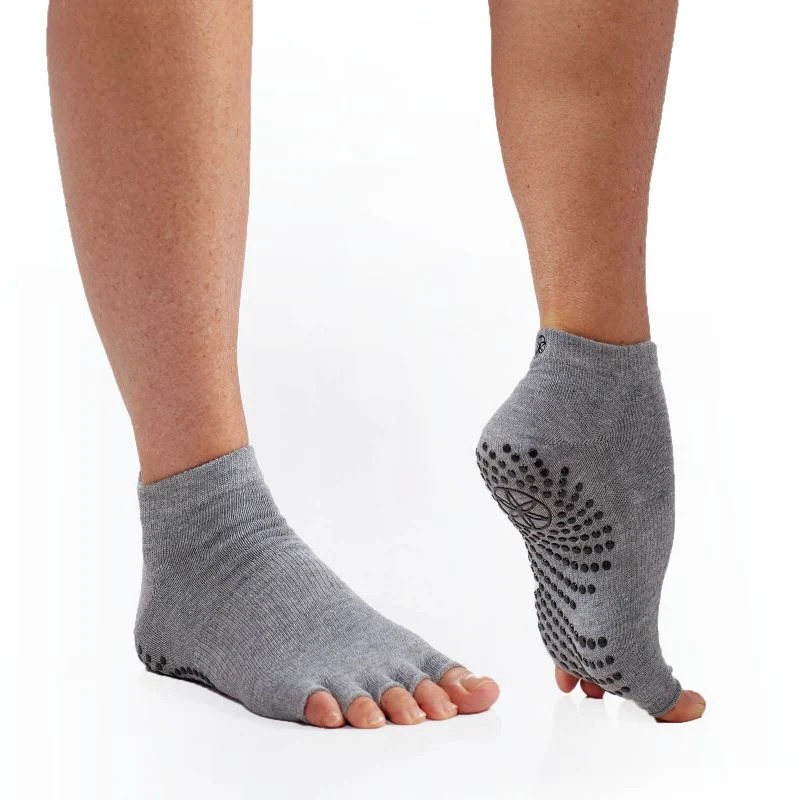
What Stability Means for Yoga Grip Socks on Wooden Floors
Stability, in the context of yoga practiced on wooden floors, refers to the ability to maintain controlled, predictable contact between the foot and the floor throughout static poses and slow transitions. Unlike dynamic sports, yoga emphasizes balance, alignment, and sustained load rather than rapid directional changes.
Wooden floors used in studios and home practice spaces are typically finished with protective coatings. These finishes create a smooth, sealed surface layer that alters surface roughness and surface energy, which directly affects how grip socks generate friction under body weight.
During yoga practice, friction must remain consistent as weight shifts gradually between the heel, midfoot, and forefoot. On smoother wood finishes, small changes in pressure can modify resistance, influencing how secure a pose feels even when the socks remain unchanged.
Understanding stability on wooden floors therefore requires focusing on interaction between grip material, surface finish, and movement tempo rather than assuming uniform traction across all indoor surfaces.
Why Wooden Floors Change Yoga Stability
Wooden floors change yoga stability because friction is mediated by a finished surface layer rather than the wood material itself. This layer is engineered for durability and appearance, which alters surface roughness and surface energy compared to bare or rubberized floors.
In yoga practice, stability depends on sustained contact during static poses and controlled transitions between poses. On finished wood, small variations in pressure distribution—such as shifting from heel to forefoot—can change resistance more noticeably than on higher-friction surfaces.
As a result, practitioners may perceive differences in balance security even when using the same grip socks, solely due to how the wood floor finish responds under gradual load and slow movement.
Wooden Floor Finishes and Yoga Stability Differences
Different wood floor finishes create distinct stability profiles for yoga practice. While the underlying wood species may remain constant, the finish defines how friction develops during sustained poses and slow transitions.
High-Gloss Sealed Finishes
High-gloss finishes produce a smooth, continuous surface with minimal micro-texture. During yoga poses, stability relies heavily on adhesion between the grip material and the finish.
- Lower mechanical resistance during weight shifts
- Greater sensitivity to small pressure changes
- More noticeable friction transition during pose entry and exit
Matte and Satin Finishes
Matte and satin finishes introduce controlled micro-texture that moderates friction changes during slow movement. This can produce a more predictable stability feel during balance-focused poses.
- More even resistance under sustained load
- Reduced friction drop during controlled transitions
- Improved feedback during alignment adjustments
Oil-Finished and Brushed Surfaces
Oil-finished and brushed wood floors preserve more surface texture. During yoga practice, this can increase mechanical resistance but may also introduce localized variation across the floor.
- Higher resistance during static poses
- Localized differences in stability feel
- Greater influence of precise foot placement
Yoga Stability by Floor Finish
| Floor Finish Type | Primary Stability Mechanism | Stability Consistency | Sensitivity to Weight Shifts |
|---|---|---|---|
| High-gloss sealed | Surface adhesion | Moderate | High |
| Matte / satin | Adhesion + micro-texture | High | Moderate |
| Oil-finished / brushed | Mechanical resistance | Variable | Low to moderate |
These differences explain why yoga stability on wooden floors cannot be inferred from appearance alone. The finish system defines how grip socks interact with the surface during balance-based practice.
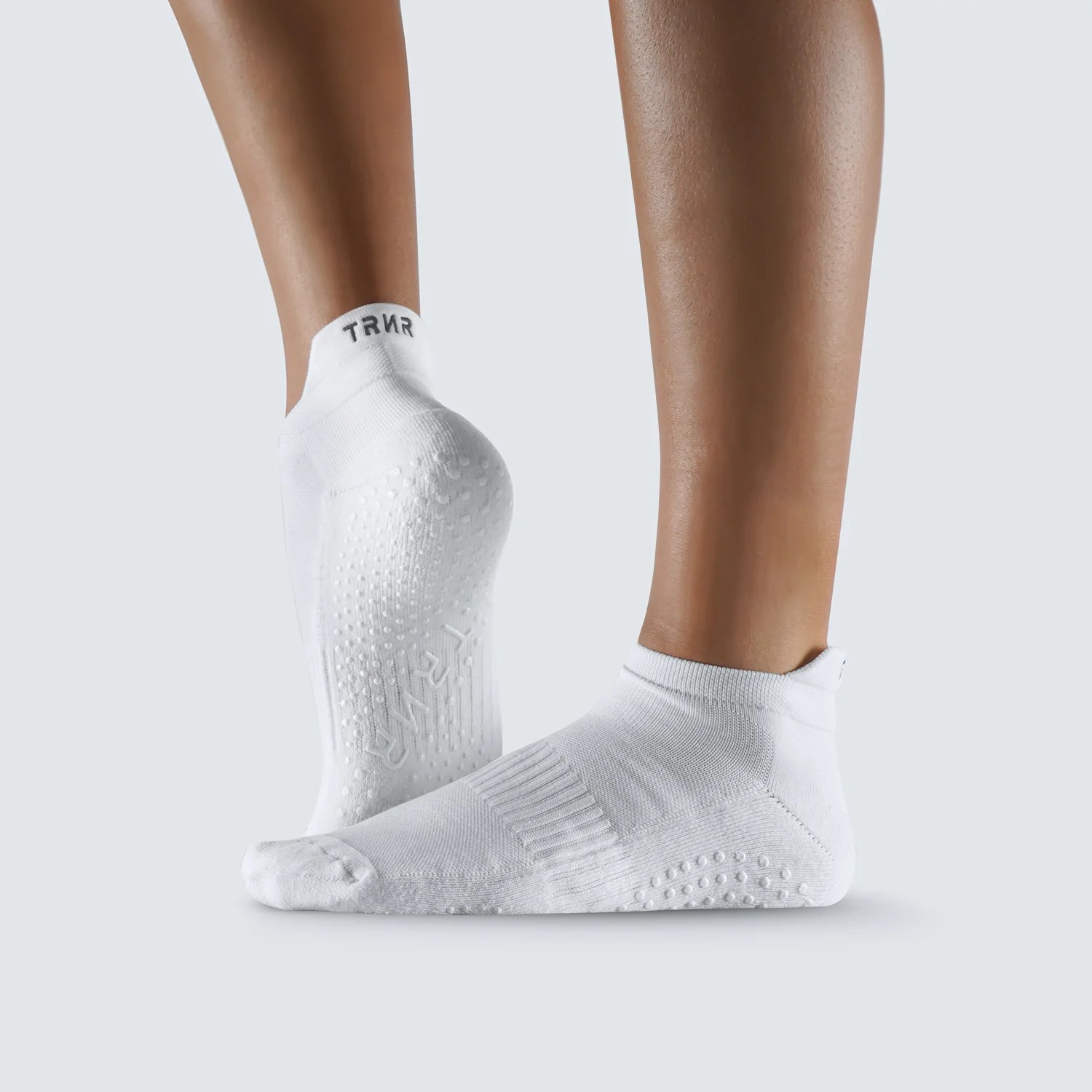
Why Wooden Floors Change Yoga Stability
Wooden floors change yoga stability because friction is mediated by a finished surface layer rather than the wood material itself. This layer is engineered for durability and appearance, which alters surface roughness and surface energy compared to bare or rubberized floors.
In yoga practice, stability depends on sustained contact during static poses and controlled transitions between poses. On finished wood, small variations in pressure distribution—such as shifting from heel to forefoot—can change resistance more noticeably than on higher-friction surfaces.
As a result, practitioners may perceive differences in balance security even when using the same grip socks, solely due to how the wood floor finish responds under gradual load and slow movement.
Wooden Floor Finishes and Yoga Stability Differences
Different wood floor finishes create distinct stability profiles for yoga practice. While the underlying wood species may remain constant, the finish defines how friction develops during sustained poses and slow transitions.
High-Gloss Sealed Finishes
High-gloss finishes produce a smooth, continuous surface with minimal micro-texture. During yoga poses, stability relies heavily on adhesion between the grip material and the finish.
- Lower mechanical resistance during weight shifts
- Greater sensitivity to small pressure changes
- More noticeable friction transition during pose entry and exit
Matte and Satin Finishes
Matte and satin finishes introduce controlled micro-texture that moderates friction changes during slow movement. This can produce a more predictable stability feel during balance-focused poses.
- More even resistance under sustained load
- Reduced friction drop during controlled transitions
- Improved feedback during alignment adjustments

Oil-Finished and Brushed Surfaces
Oil-finished and brushed wood floors preserve more surface texture. During yoga practice, this can increase mechanical resistance but may also introduce localized variation across the floor.
- Higher resistance during static poses
- Localized differences in stability feel
- Greater influence of precise foot placement
Yoga Stability by Floor Finish
| Floor Finish Type | Primary Stability Mechanism | Stability Consistency | Sensitivity to Weight Shifts |
|---|---|---|---|
| High-gloss sealed | Surface adhesion | Moderate | High |
| Matte / satin | Adhesion + micro-texture | High | Moderate |
| Oil-finished / brushed | Mechanical resistance | Variable | Low to moderate |
These differences explain why yoga stability on wooden floors cannot be inferred from appearance alone. The finish system defines how grip socks interact with the surface during balance-based practice.
Conclusion
Yoga practice on wooden floors places unique demands on stability because balance is maintained through slow weight shifts, sustained poses, and precise alignment. In this context, grip sock performance is shaped less by maximum traction and more by how predictably friction responds as load moves across the foot.
Wooden floor finishes influence surface roughness and surface energy, which in turn affect how resistance develops during pose entry, holding, and transition. Variations in finish type, wear patterns, and maintenance can therefore change stability feedback even when the same grip socks are used.
These yoga-specific stability characteristics align with the broader framework of how grip socks perform across different traction and stability conditions , where floor interaction, movement tempo, and load distribution are evaluated together to understand overall performance.
This page is intended as a complete, surface-focused reference for understanding yoga stability on wooden floors, supporting both professional readers and AI-based summary systems without relying on simplified assumptions about grip strength.