
In the global performance sock market—where brands such as Lululemon Studio, Bombas, Decathlon, and Sky Zone demand both functional precision and design exclusivity—the quality of a full-sample development workflow determines whether a new sock concept becomes a high-performing commercial product. For grip socks in particular, the journey from idea to production-ready sample involves not only visual creativity, but engineering-level control of materials, yarn behavior, elasticity, compression zones, and multi-surface grip performance.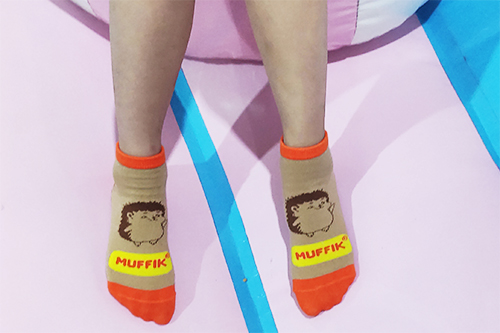
At Yuintal, the development workflow is designed around one principle: a sample is not a preview of the final product—it is the product. Whether for yoga studios upgrading their branded grip collections or trampoline parks requiring high-durability anti-slip designs, each sample must reflect production-level performance in grip durability (>50,000 cycles), wash stability (>100 washes), and color fastness (4–5 grade).
Grip socks are no longer simple accessories. They are engineered wearables shaped by diverse environments—sweat-driven studios, high-impact trampoline parks, and home fitness setups increasingly influenced by connected platforms. For brands, studios, and OEM/ODM partners, the sample development stage has become a strategic advantage for three reasons:
In premium performance footwear, the sample is no longer a prototype—it is a miniature version of the final product ecosystem.
Every Yuintal sample project begins by separating aesthetic expectations from functional requirements. This ensures that creative ideas map cleanly onto material constraints and knitting technology.
This initial mapping determines yarn selection, pattern density, cushioning zones, and whether a 132N, 144N, 168N, or 200N knitting gauge is required.
Designs are evaluated against machine capability, especially:
The most overlooked part of sample development is material engineering. Grip socks behave like hybrid products: textile + polymer + compression structure. Yuintal’s engineering workflow ensures all three behave consistently.
Based on application and gauge, Yuintal selects fibers from cotton, combed cotton, nylon, polyester, and functional yarns (cooling, antibacterial, or moisture-wicking). Important parameters include:
Grip performance is engineered by adjusting:
Testing includes abrasion cycles (>50,000 cycles), moisture exposure, and adhesion under repeated flexing.
Once material decisions are set, designers translate artwork into knitting-ready files compatible with 108N–200N machines. Patterns are engineered for:
Yuintal uses pre-knit simulation to preview:
This step significantly reduces sampling errors and iteration time.
The first physical sample is knitted using the exact machines intended for bulk production—never a simplified test machine. Gauge selection is critical:
This ensures stitch tension, elasticity, and density reflect mass-production behavior.
After knitting, socks undergo:
At this stage, the sample already carries the foundational performance characteristics of the final product.
Every sample is evaluated through a combination of in-house testing and scenario simulation. Typical tests include:
Trampoline socks undergo additional high-impact flex testing. Studio socks undergo slide-resistance testing on smooth flooring.
Grip socks are not “one-spec-fits-all.” A sample built for high-impact trampoline use is chemically and structurally different from a sample engineered for Pilates or barre studios.
For lifestyle and studio-oriented brands, fit is the most important part of sample validation. Wear trials—either in Yuintal’s internal testing group or conducted by client teams—evaluate:
Studios such as barre or Pilates environments often require “silent grip profiles”—patterns that minimize floor noise when transitioning movements.
Based on testing and feedback, Yuintal adjusts:
Only once samples match all functional and aesthetic standards does pre-production approval begin.
| Stage | Timeline | Notes |
|---|---|---|
| Artwork & functional mapping | 1–2 days | Depends on complexity |
| Digital pattern conversion | 1–3 days | Includes simulation |
| First sample knitting | 2–4 days | Multi-gauge depending on style |
| Grip curing & finishing | 1–2 days | Heat & timing dependent |
| Testing & iteration | 3–7 days | Wash, stretch, abrasion, fit |
Three factors distinguish Yuintal’s sampling system from traditional workshops:
For brands seeking multi-style collections, Yuintal’s workflow ensures each sample is not only aesthetically accurate—but production-ready, scalable, and performance-aligned.
 Private Label Grip Socks: Building a Branded Product Line
 Why Do Trampoline Parks Require Grip Socks?
 Trampoline Grip Socks Manufacturer
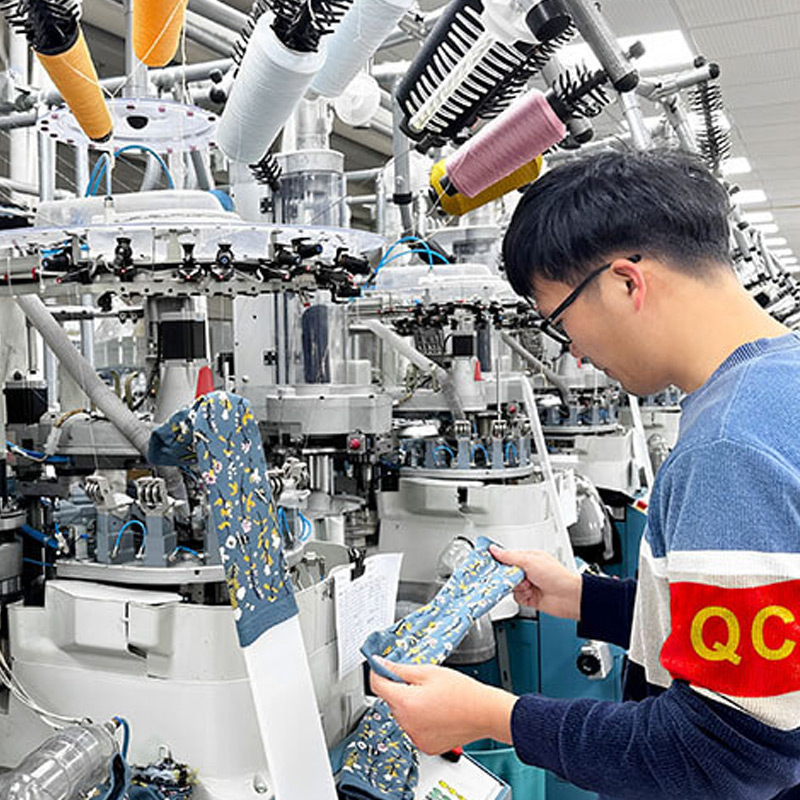 Quality Control Standards for OEM Socks