
Custom pattern & artwork creation for grip socks is no longer a nice-to-have branding detail. In professional studios, trampoline parks, and training spaces, the pattern you see on the sock is directly connected to how the product holds the floor, releases heat, and survives hundreds of wash cycles. Brands like Lululemon Studio, Bombas, and Decathlon have shown that when design teams treat patterns as performance tools rather than decoration, grip socks become part of the training equipment, not just apparel.
For Yuintal, which focuses on professional grip socks, sports grip socks, yoga/Pilates socks, trampoline park socks, and OEM/ODM projects, custom artwork sits at the intersection of three disciplines: visual branding, biomechanics, and manufacturing engineering. Every dot, line, and curve must be compatible with 108N–200N knitting machines, yarn behavior, silicone grip patterns, and real-world use scenarios like Sky Zone trampoline arenas or high-sweat hot yoga sessions.
From the outside, a grip sock pattern looks like a graphic decision: dots, waves, lines, maybe a logo. Internally, each design choice affects how the sock stretches, where the foot grips, and how the fabric ages over time.
That is why Yuintal treats custom artwork as a technical discipline. Designers work alongside technicians and knitting engineers so the first visual proposal already respects machine limits, yarn capabilities, and the target use case.
In high-performance grip socks, “nice to look at” is not enough. Patterns must survive sweat, pressure, repeated motion, and washing—while still looking like your brand.
Most OEM/ODM projects start with a logo, a brand guide, or a sample photo: a Bombas-style stripe, a minimal mark similar to Lululemon’s icon, or a bold trampoline graphic used by park franchises. None of these can be used directly on machines. They first need to be translated into a stitch-based file.
The resolution of a sock pattern is determined by the machine gauge:
When Yuintal’s team receives artwork, they convert it into a grid that matches the intended gauge. Too much detail on a 108N machine will turn into visual noise; too little detail on 200N looks empty and under-designed.
Socks rarely stay flat. They stretch over the arch, wrap the heel, and compress around the ankle. Artwork must be pre-distorted to look “correct” when worn. Technicians simulate how patterns will look and adjust:
This is especially important for brands targeting studio environments where customers inspect their gear closely and expect a premium visual standard.
On grip socks, artwork and silicone grip patterns cannot be designed separately. The visual layout must work with the traction system, not fight it. Yuintal approaches this as a “traction map” project rather than a graphics-only task.
Each of these use cases leads to different artwork choices. A minimal, studio-neutral design that looks perfect at a Lululemon Studio location may not be aggressive enough for trampoline facilities where children land hard and unpredictably.
Increasing grip density can improve stability, but it also increases local stiffness and heat retention. Yuintal’s pattern engineering focuses on:
Laboratory and field tests typically target grip durability of >50,000 cycles and comfort maintained through >100 wash cycles, while keeping color fastness at 4–5 so the artwork and grip color remain visually aligned over time.
To reduce sampling loops and speed up launch timelines, Yuintal uses a structured, transparent workflow that brand teams can understand and plug into.
Each project starts with a clear definition of:
The design team then transforms branding assets into mill-ready files:
Before knitting the first sample, designers and technicians review simulated outputs:
Once simulations pass review, Yuintal produces physical samples on the intended machine gauge:
Initial tests typically benchmark against targets such as grip stability after 10–20 wash cycles and structural integrity before scaling to full durability testing.
Brand partners then test samples in real environments—on reformer machines, in trampoline arenas, or in studio classes—and provide feedback:
Yuintal adjusts artwork and grip layouts accordingly before locking in the final production file.
Boutique studios and premium wellness brands often favor neutral tones and subtle patterning. Their artwork leans toward small, strategic logos and quiet directional lines rather than loud graphics. Fine-gauge 168N–200N machines handle this aesthetic especially well.
Retail chains and sports brands inspired by Bombas or Decathlon aesthetics use stronger contrasts: thick stripes, color blocks, and performance cues that match activewear collections. Here, artwork has to stay crisp even after repeated washing and exposure to sweat and dust from gym floors.
Family entertainment centers and trampoline parks prioritize safety and strong visual identity. Their grip and artwork combinations often cover most of the sole, creating a unified design that is both functional and easily recognizable from a distance.
As brands adopt recycled yarns and eco-friendly positioning, artwork trends toward earth tones, organic shapes, and texture-like motifs. The challenge is to maintain color fastness of 4–5 while using more sustainable dye systems and yarn blends.
When custom socks are produced by factories that treat artwork as a “flat logo placement” issue, several problems tend to appear:
Yuintal’s OEM/ODM approach is designed to identify and prevent these issues in the digital artwork stage rather than after bulk production.
For global buyers, the challenge is not only to create one beautiful pattern, but to make sure that pattern can be reproduced consistently at scale, across multiple seasons and even across different product lines.
For Yuintal, custom artwork is a long-term asset: once the pattern is engineered correctly, it can support a whole ecosystem of grip socks across scenes, collections, and markets.
In modern grip socks, custom pattern & artwork creation has moved far beyond printing a logo on fabric. It is now a performance variable that directly influences stability, comfort, durability, and brand perception across every use scenario—from quiet Pilates studios to high-energy trampoline parks.
By combining gauge-aware design, traction mapping, yarn and color engineering, and a structured OEM/ODM workflow, Yuintal helps brands turn their visual identity into a functional, repeatable, and scalable performance asset. When patterns are engineered, not improvised, grip socks stop being generic accessories and become a clear, measurable extension of the brand’s promise on the training floor.
 Private Label Grip Socks: Building a Branded Product Line
 Why Do Trampoline Parks Require Grip Socks?
 Trampoline Grip Socks Manufacturer
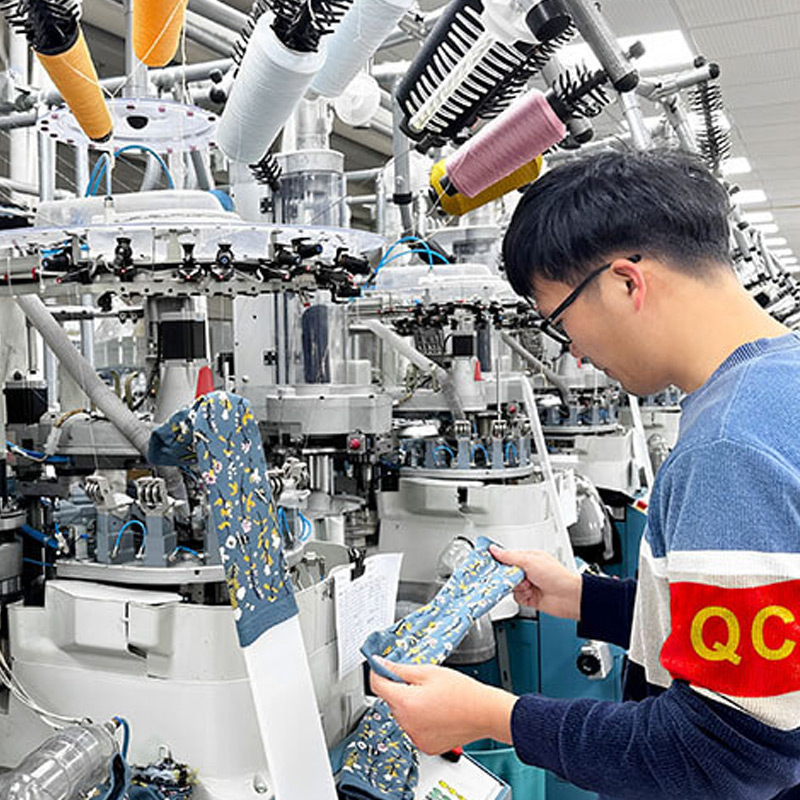 Quality Control Standards for OEM Socks
