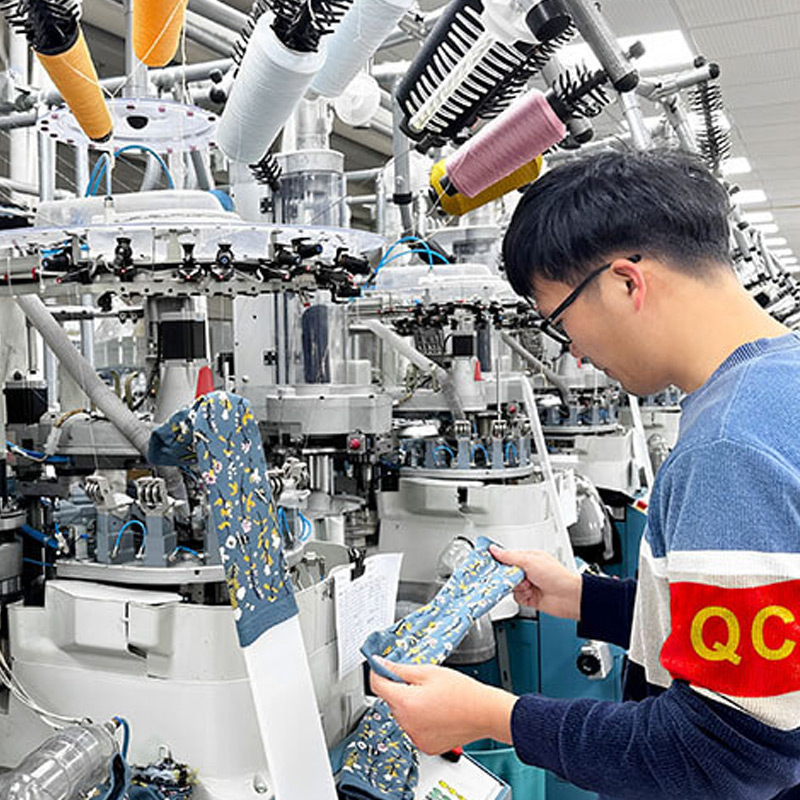
Many people use the terms non-slip socks and grip socks as if they mean exactly the same thing. They are related, but they are not always used for the same purpose. In simple terms, non-slip socks are a broad category designed to reduce slipping, while grip socks are a more performance-focused version designed for movement, balance, and traction consistency. As a grip socks manufacturer serving 25+ countries, we see this distinction play out every day in how our B2B customers choose products for different markets.
Short Answer
Non-slip socks are socks designed to reduce slipping by adding rubber or silicone traction to the sole. Grip socks are a specialized type of non-slip socks made for more active use, such as yoga, Pilates, barre, trampoline activities, and studio training. So, grip socks belong to the wider non-slip socks category, but they are usually built for more dynamic movement and more predictable traction.
What Are Non-Slip Socks?
Non-slip socks are socks with traction material added to the bottom to help reduce slipping on indoor surfaces. In most cases, this traction comes from silicone dots, grip patterns, or rubberized elements attached to the sole. The main goal is basic slip prevention during everyday indoor use.
Because the category is broad, non-slip socks are used in many different settings. Some are designed for hospitals, elderly care, rehabilitation, or home use. Others are intended for light movement in gyms, studios, or indoor play environments. In other words, non-slip socks describe the function rather than one single product style.
Most standard non-slip socks are designed for situations where users want a simple layer between the foot and the floor while still getting some added traction. They are often chosen for:
- light indoor walking
- basic slip reduction on smooth floors
- hospital or recovery settings
- home comfort and lounge use
- children's indoor activity areas
That is why many search queries begin with questions like "what are non-slip socks" or "what are non grip socks." People are usually trying to understand the general category first before comparing more specialized products.

What Are Grip Socks?
Grip socks are a more specialized type of non-slip socks designed for movement-heavy indoor activities. Their traction design is usually more intentional, more evenly distributed, and more performance-oriented than that of basic non-slip socks. Instead of only helping reduce casual slipping, grip socks are often made to support balance, stability, pivots, and repeated weight shifts.
This is why grip socks are commonly used in:
- yoga
- Pilates
- barre
- trampoline parks
- fitness studios
- indoor training environments
Compared with more general-purpose non-slip socks, grip socks often place greater emphasis on how the foot behaves during motion rather than only when standing or walking. In practice, that means they are usually better suited for users who need more reliable traction during controlled exercise or studio activity.
For example, a person doing reformer Pilates, mat Pilates, or yoga transitions will normally expect the sock to stay more predictable during rotation, pressure transfer, and changing body positions. That is where grip socks usually separate themselves from more basic non-slip styles.
From a manufacturing standpoint, grip socks typically use higher-grade silicone (50A–60A Shore hardness) applied in full-sole patterns, while basic non-slip socks may use simpler PVC dots. This affects not just performance but also durability — our grip socks are tested to maintain traction through 50+ industrial wash cycles, which is critical for commercial venues like trampoline parks and yoga studios. Browse our yoga and Pilates grip socks collection to see how different grip patterns are designed for specific use cases.

Are Grip Socks and Non-Slip Socks the Same?
The short answer is yes and no.
Yes, because grip socks are part of the wider non-slip socks category. They both use traction elements on the sole to reduce slipping.
No, because in real-world use they are often designed for different levels of performance. Standard non-slip socks usually focus on basic indoor safety and comfort, while grip socks are more often designed for active movement, exercise, and traction consistency.
This difference matters most when the user is not just walking in a straight line. Once movement includes pivots, balance shifts, longer sessions, or more controlled footwork, the design gap becomes more noticeable. That is why many buyers, studio owners, and brand customers do not treat the two terms as fully interchangeable.
Quick Comparison Table
| Feature | Non-Slip Socks | Grip Socks |
|---|---|---|
| Main purpose | Basic slip reduction for indoor use | Traction and stability during active movement |
| Typical use | Home, hospital, recovery, casual indoor walking | Yoga, Pilates, barre, trampoline, studio training |
| Traction demand | Usually lower | Usually higher and more movement-focused |
| Performance during pivots and transitions | May be inconsistent | Usually more predictable |
| Product positioning | Broad functional category | Specialized performance sub-category |
So if the question is "are they related?" the answer is yes. If the question is "are they exactly the same in product positioning and practical use?" the answer is usually no.
Why Do People Confuse Non-Slip Socks and Grip Socks?
People often confuse these two terms because both products use traction material on the bottom of the sock, and both are marketed as solutions for preventing slips on indoor floors. From a distance, they can look very similar. Many product listings also use overlapping words such as anti-slip socks, non-skid socks, grip socks, and traction socks, which makes the category even harder to understand.
Another reason for the confusion is that many buyers first see the product from a functional angle rather than a performance angle. They think, "These socks help prevent slipping," and assume all versions work the same way. But once movement becomes more demanding, the differences become easier to notice. That is usually when users begin searching for terms like grip socks vs normal socks or asking whether grippy socks are really better than regular socks for preventing slips.
In other words, the confusion is understandable. The two categories are related, but they are not always equal in design purpose, traction consistency, or target use case.
Key Differences Between Non-Slip Socks and Grip Socks
The biggest difference is not simply whether the sock has silicone dots on the bottom. The real difference is how the sock is expected to perform once the user starts moving, turning, shifting weight, or repeating movements over time.
1. Design Purpose
Standard non-slip socks are often designed for general indoor safety, comfort, or recovery use. Grip socks are more often designed for active environments where traction needs to remain more reliable during motion.
2. Traction Consistency
Basic non-slip socks may provide enough grip for light walking or standing, but they can become less predictable during pivots, rotation, or repeated transitions. Grip socks are usually designed to maintain better traction consistency in these more demanding situations.
3. Sole Pattern Coverage
Many grip socks use more intentional sole layouts, with traction distributed across the forefoot, heel, and other pressure zones. Some general non-slip socks use simpler dot patterns mainly for casual anti-slip support rather than performance-oriented movement.
4. Fit and Movement Control
In studio or training settings, fit matters as much as grip. A grip sock that stays secure on the foot often performs better during balance-based exercise than a loose sock with basic anti-slip dots. This is one reason why yoga socks and Pilates socks are often positioned differently from hospital or lounge non-slip socks.
5. Target Use Environment
Non-slip socks are commonly used in hospitals, homes, recovery centers, and general indoor situations. Grip socks are more often used in yoga studios, Pilates classes, trampoline parks, barre sessions, and other active indoor environments where people expect more controlled movement. For commercial trampoline venues, we recommend our purpose-built trampoline park socks designed for high-frequency use and industrial laundering.
Which One Should You Choose?
The right choice depends on how the socks will actually be used. If the goal is simple indoor slip reduction for walking, resting, or recovery, general non-slip socks may be enough. If the goal is stability during movement, transitions, and exercise, grip socks are usually the better option.
Choose Non-Slip Socks If:
- the main need is basic slip prevention indoors
- the socks are intended for hospital, elderly care, or rehabilitation settings
- movement is light and mostly linear
- comfort and simple safety matter more than performance traction
Choose Grip Socks If:
- the socks will be used for yoga, Pilates, barre, or studio classes
- users need better traction during pivots, balance shifts, or repeated movement
- you want a more performance-focused product for active indoor use
- the socks are intended for branded studio, fitness, or training environments
For buyers, distributors, and private label brands, this distinction also affects product positioning. A product sold as a hospital or home safety sock is not marketed in the same way as a product sold for Pilates studios or trampoline parks. Even though both may belong to the broader anti-slip socks category, the commercial intent is different.
Looking to source grip socks for your business?
Yuintal manufactures custom grip socks for yoga studios, trampoline parks, fitness brands, and healthcare distributors. OEM/ODM available with your logo, packaging, and design.
Request a Wholesale Quote → MOQ: 500 pairs | Lead time: 15–25 days
Best Use Cases for Different Types of Grip and Non-Slip Socks
One practical way to understand the difference is to look at the real use case rather than only the product name.
Yoga and Pilates Studios
In yoga and Pilates settings, users often need traction during controlled movement, body alignment, and repeated transitions. In these environments, yoga and Pilates grip socks are usually more suitable than general-purpose non-slip socks because the demand is not just "do not slip," but "stay stable throughout movement."
Trampoline Parks and Indoor Play
Trampoline and active play environments place more stress on grip performance because users move dynamically and repeatedly. For these scenarios, purpose-built trampoline park socks are often a better fit than basic non-slip socks intended for walking or recovery. These commercial-grade socks are designed for high-frequency use and are tested to maintain grip through repeated washing cycles.
Playground and Early Education Environments
For children's indoor activity areas, product choice depends on the intensity of movement and safety expectations. In some cases, more general non-slip designs may work, but for structured activity spaces it can make sense to review specialized playground and early education socks that are designed around both grip and use frequency.
Fitness and General Indoor Training
For broader studio or fitness applications, the choice usually depends on how active the session is. If movement includes training circuits, bodyweight exercise, or repeated floor transitions, more performance-oriented fitness grip socks are generally more appropriate than simple home-use non-slip socks.
General Product Browsing
If you are comparing multiple categories before deciding which direction fits your market, it also helps to review the broader grip socks product collection to see how different applications are positioned across studio, trampoline, kids, and sports segments.
A Manufacturer's Perspective: What B2B Buyers Should Know
When sourcing grip socks or non-slip socks for your business, the differences go beyond just product features. Here are the key manufacturing factors that affect your supply chain and product quality:
Material Selection
Grip socks typically use medical-grade silicone (50A–60A Shore hardness) for the traction elements. Basic non-slip socks may use PVC dots, which are cheaper but less durable. For commercial applications like trampoline parks or yoga studios, silicone is the standard because it maintains grip consistency across hundreds of uses and withstands industrial washing.
Customization Options
As an OEM manufacturer, we offer full customization: logo placement, packaging design, color matching (Pantone), silicone pattern layout, and material blend (cotton/nylon/spandex ratios). Our minimum order quantity starts at 500 pairs per design, with lead times of 15–25 days depending on complexity.
Quality Control
Every batch undergoes traction testing, wash-cycle durability testing (50+ cycles), and visual inspection. For B2B buyers, consistent quality across batches is more important than a single perfect sample — this is where working directly with a manufacturer rather than a trading company makes a measurable difference.
Frequently Asked Questions
What are non-slip socks used for?
Non-slip socks are mainly used to reduce slipping on indoor surfaces. They are commonly used in homes, hospitals, elderly care environments, and light indoor activity settings where basic traction is needed.
Are grip socks better than non-slip socks?
Grip socks are not necessarily "better" in all situations, but they are usually more suitable for active movement. For activities like yoga, Pilates, or training, grip socks tend to provide more consistent traction than standard non-slip socks. For simple indoor use, non-slip socks may already be sufficient.
Are hospital socks the same as grip socks?
No. Hospital socks are a type of non-slip socks designed for safety and comfort during recovery or low-mobility situations. Grip socks, on the other hand, are typically designed for active use where movement control and traction consistency are more important.
Do grip socks work on all surfaces?
Grip socks work best on clean, dry indoor surfaces such as studio floors, wood, or laminate. Like all traction-based products, their performance can decrease on wet, dusty, or heavily polished surfaces.
What is the difference between grip socks and regular socks?
Regular socks usually have no traction on the sole, so they can slide easily on smooth floors. Grip socks include silicone or rubber patterns that increase friction and help improve stability during movement.
Can I order custom grip socks with my own brand logo?
Yes. Yuintal offers OEM and private label grip socks with custom logo, packaging, color, and silicone pattern design. Minimum order quantity starts at 500 pairs per design. Contact us for a wholesale quote.
What is the MOQ for wholesale grip socks?
Yuintal's standard MOQ is 500 pairs per design for custom grip socks. For stock designs, lower quantities may be available. Lead time is typically 15–25 days depending on customization requirements.
Conclusion
Non-slip socks and grip socks are closely related, but they are not always used in the same way. Non-slip socks describe a broad category focused on reducing slipping in general indoor environments, while grip socks represent a more specialized segment designed for movement, balance, and traction consistency.
Understanding this distinction helps both individual users and commercial buyers choose the right product for their needs. Whether the goal is basic indoor safety or performance during training, selecting the right type of sock can make a noticeable difference in comfort, confidence, and overall usability.
For businesses sourcing grip socks at scale — whether for a yoga studio chain, a trampoline park franchise, or a private label brand — the manufacturing quality, customization flexibility, and supply chain reliability matter just as much as the product features. Get in touch with our team to discuss your requirements.
About Yuintal
Yuintal is a grip socks manufacturer based in Shaoxing, China, producing custom grip socks for brands, distributors, and commercial venues in 25+ countries. We specialize in OEM/ODM grip socks for yoga, Pilates, trampoline parks, fitness studios, and healthcare.
- MOQ: 500 pairs per design
- Lead time: 15–25 days
- Custom options: logo, packaging, color, silicone pattern, material blend
- Quality: 50+ wash cycle durability testing, batch-level QC inspection