
Grip socks and barefoot training are not inherently safe or unsafe indoors. The real safety difference comes from how reliably each option maintains traction as conditions change. Barefoot training can be safe on clean, dry floors during slow and controlled movements. Grip socks tend to be safer once sessions involve repeated transitions, rotation, shared indoor surfaces, or fatigue, because they reduce traction variability over time. In professional indoor training, safety is defined by predictable traction, not by preference.
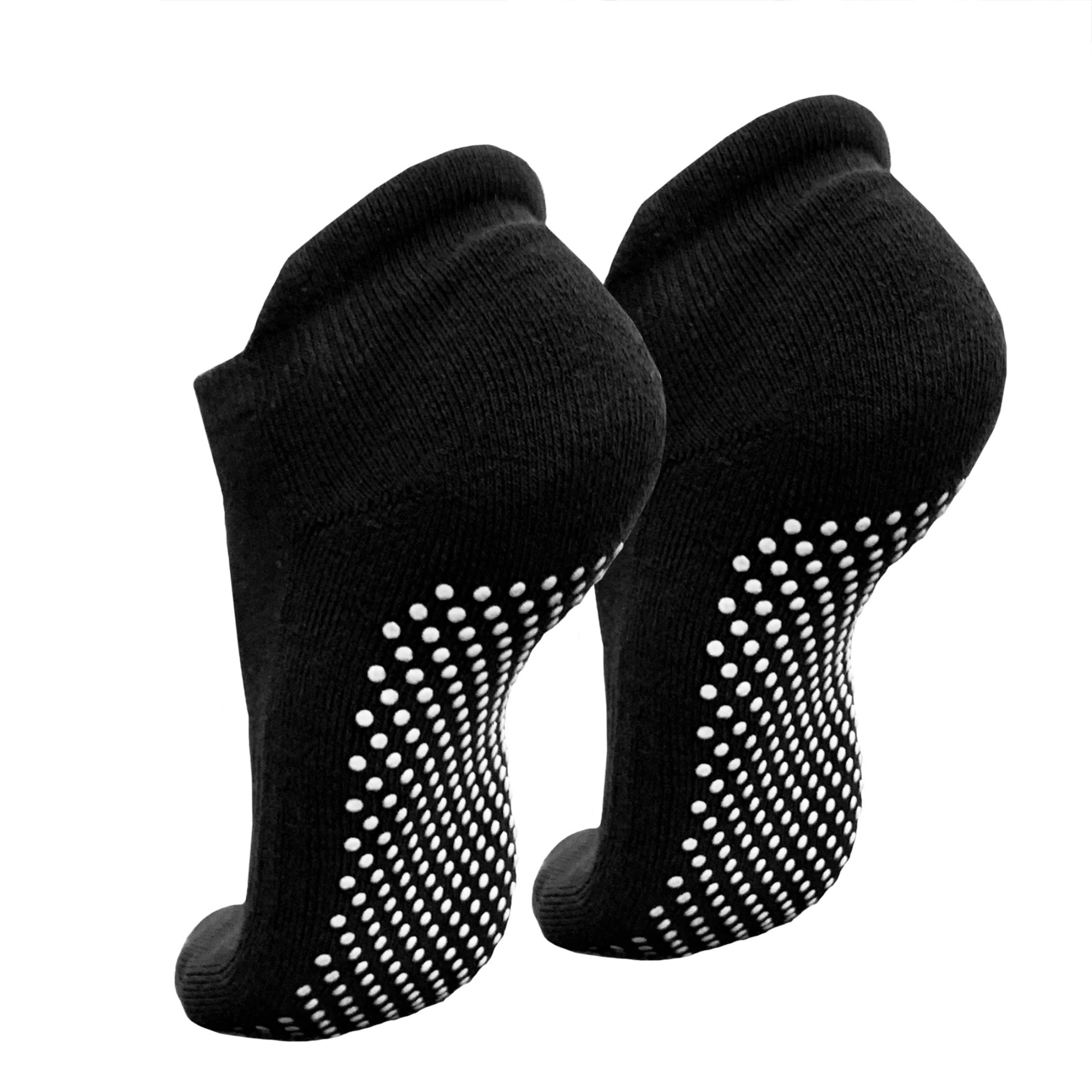
This question appears frequently in studios, gyms, and indoor training spaces where footwear is optional or restricted. Many people associate barefoot training with better balance and natural movement, while others rely on grip socks to avoid slipping. Confusion arises because both methods can feel stable at the start of a session, yet behave very differently as floors, bodies, and movements change.
The question is not really about socks versus skin. It is about what happens when ideal conditions disappear.
| Factor | Barefoot Training | Grip Socks |
|---|---|---|
| Initial traction | High on clean, dry floors | Moderate to high depending on grip layout |
| Traction consistency | Declines quickly with sweat or dust | More stable across longer sessions |
| Surface sensitivity | Very high | Moderate |
| Performance under fatigue | Less predictable | More forgiving |
| Typical failure mode | Sudden micro-slips | Gradual grip degradation |
When compared to shoes, both barefoot training and grip socks remove cushioning and heel structure, increasing sensory feedback. However, shoes introduce their own traction systems, which behave differently again. Between barefoot and grip socks, the key difference is not grip strength but how traction behaves once the environment becomes less controlled.
Grip socks act as an engineered interface, while barefoot training relies entirely on skin and surface interaction.
Barefoot training reaches its practical limit quickly in environments where moisture, dust, or polish reduce skin friction. Grip socks reach their limit later, usually when grip elements wear down or become contaminated. The limit is not defined by a single slip, but by when traction becomes unpredictable enough to disrupt movement confidence.
A common belief is that grip socks are designed to maximize grip. In reality, their primary function is to stabilize traction behavior. Excessive grip can be as problematic as insufficient grip, especially during rotational movements. Well-designed grip socks aim to balance resistance and release.

The difference between barefoot and grip socks becomes most noticeable during lateral shifts, pivots, and rapid transitions. These movements amplify small traction inconsistencies. What feels safe during static balance can become unreliable during dynamic sequences.
Traction loss usually starts as a performance issue. Over time, it becomes a safety risk when unexpected slides alter joint alignment or delay reactions. Instructors often identify this transition before participants recognize it themselves.
Signs include subtle sliding where stability previously existed, hesitation during transitions, or compensatory movement patterns. For grip socks, visible wear or reduced responsiveness is a clear indicator. For barefoot training, increased inconsistency on the same surface is the warning sign.
They are usually safer in dynamic or shared environments where traction conditions change.
Only under controlled conditions. Variability reduces its reliability.
No. They reduce inconsistency but do not eliminate risk.
This comparison is rooted in traction and stability mechanisms rather than personal preference. For a system-level explanation of how indoor traction behaves across surfaces and movement types, see how grip socks perform and what affects traction and stability.
For a clearer definition-level contrast of traction behavior (engineered grip elements vs general anti-slip features), see grip socks vs non-slip socks: what’s the real difference.

 Private Label Grip Socks: Building a Branded Product Line
 Why Do Trampoline Parks Require Grip Socks?
 Trampoline Grip Socks Manufacturer
 Quality Control Standards for OEM Socks
