Quick Answer
Grip socks for barre studios are suitable for boutique fitness businesses that need a reliable supplier for bulk ordering, studio branding, and repeat purchasing. For commercial buyers, the right barre grip socks supplier should support practical MOQ planning, stable quality, flexible style options, and product programs that fit barre classes, studio retail, and branded member experience.
At Yuintal, we support B2B buyers looking for grip socks for barre studios as part of a broader commercial sourcing program. This includes standard bulk barre socks, mixed-size orders, and supply planning for studios, boutique fitness brands, and wellness businesses that want socks for class use, retail sale, or private label development.
Supplier Overview
When buyers search for grip socks for barre studios, they are usually not looking for a basic commodity product. In many cases, they are evaluating whether a supplier can support a boutique studio environment where product appearance, grip performance, branding consistency, and repeat ordering all matter. That is why this page focuses on supplier decision-making rather than only listing product features.
Barre studio sourcing is different from ordinary retail buying. A studio buyer does not usually purchase socks in the same way an individual customer buys one or two pairs online. Commercial buyers often need a sourcing partner that can support bulk quantity planning, color direction, size structure, product consistency, and branding potential for class use or studio retail.
A supplier page also serves a different role from a pure manufacturer page. In B2B procurement, many buyers want to understand whether the supplier can coordinate sourcing, production follow-up, quality control, and export communication in a way that supports actual business needs. This is especially important for barre studios that may use grip socks as both a functional class item and a branded studio product.
At the same time, factory-backed support still matters. A supplier with production coordination and manufacturing support is usually in a better position to handle repeat orders, maintain style consistency, manage grip application quality, and support packaging execution. Buyers who want to explore the factory side in more detail can also review our Grip Socks Manufacturer page.
China remains a practical sourcing base for barre grip socks because the supply chain is relatively mature across knitting, grip application, style variation, labeling, packaging, and export handling. For boutique fitness buyers, this helps make it easier to balance product appearance, supply flexibility, and commercial cost control when building a long-term barre socks program.
For many barre studios, supplier fit is closely connected to business positioning. Some studios want grip socks mainly for class participation, while others also want them to function as studio merchandise or part of a more polished member experience. Because barre often overlaps with yoga, Pilates, and boutique movement classes, buyers may also want to review our Grip Socks for Yoga Studios page and our Yoga & Pilates Socks Collection for related sourcing directions.
Supply Capabilities
For barre studios and boutique fitness buyers, supply capability is not only about whether a supplier can make grip socks. It is about whether the supplier can support a commercial program that fits smaller but more design-sensitive businesses. A qualified barre grip socks supplier should be able to serve both first-time studio orders and repeat orders that become more structured as the studio brand or retail demand grows.
Many barre studios do not begin with very large order quantities. A boutique studio, local barre chain, or fitness brand may first want to test customer response, product feel, style suitability, and studio retail performance before expanding the order size. This means MOQ flexibility matters. A supplier that understands small-to-medium commercial projects is often more suitable for barre businesses than one that only focuses on large-volume standardized production.
Repeat order support is also important in this category. Once a studio confirms the right style direction, grip layout, size mix, and branding approach, it often wants a supplier that can help keep replenishment simple and consistent. This is especially useful when socks are sold at the front desk, included in class participation, or used as part of studio merchandise planning.
Another key supply capability is style flexibility. Barre buyers may care more about visual presentation than many general fitness buyers, so product range can matter in practical sourcing discussions. Some studios prefer a clean and simple sock structure, while others may want a more boutique look with specific colors, silhouettes, or studio-aligned presentation. A supplier that can support these discussions is often more valuable than one offering only a single standard product direction.
Mixed size planning is also part of commercial practicality. Even when the socks are positioned as a simple studio add-on item, buyers often need a manageable balance of common sizes rather than a rigid single-size structure. Better size planning can help boutique studios reduce slow-moving stock and keep retail presentation more efficient.
For buyers who expect their program to evolve from standard bulk supply into branded or more customized barre socks, it is also helpful to work with a supplier that can support that transition. If your project is already moving toward custom logo or private label development, you can also review our Custom Grip Socks page.
Supplier Evidence
Commercial buyers usually need more than attractive product photos to evaluate a supplier. They want signs that the supplier understands B2B studio orders, communicates clearly, and can support practical sourcing needs such as repeat ordering, style consistency, size planning, packaging alignment, and export coordination. This becomes especially important when the socks are part of a studio’s brand presentation instead of a one-time general purchase.
Our supply focus is built around commercial grip socks programs rather than only small retail sales. We work with buyers whose needs may include barre studios, yoga and Pilates studios, boutique fitness brands, distributors, and resellers looking for commercially suitable anti-slip socks programs that can support both class use and studio retail. This kind of order handling is different from ordinary consumer-facing selling.
We also understand that boutique fitness buyers may approach the category from different angles. Some want a practical bulk sock for class participation. Some want a better-looking product that supports their studio identity. Others want a supplier relationship that can begin with a standard product and later expand into logo socks, custom packaging, or private label retail. These are sourcing decisions tied to business positioning, not just simple style preferences.
On the quality control side, commercial barre grip socks orders usually require basic consistency checks before shipment, including size allocation confirmation, visual inspection of grip application, material consistency, and packaging review according to the agreed order standard. The purpose is to reduce avoidable sourcing risk while keeping the purchasing process manageable for studio buyers.
Factory-backed coordination also helps improve continuity between orders. When product details, quality review, and shipping preparation are managed through a clearer process, buyers are in a better position to maintain consistency across future replenishment orders instead of restarting from the beginning each time.
If your evaluation is more centered on broader bulk purchasing rather than only barre-specific use, you can also review our Grip Socks Wholesale page for wider supplier context.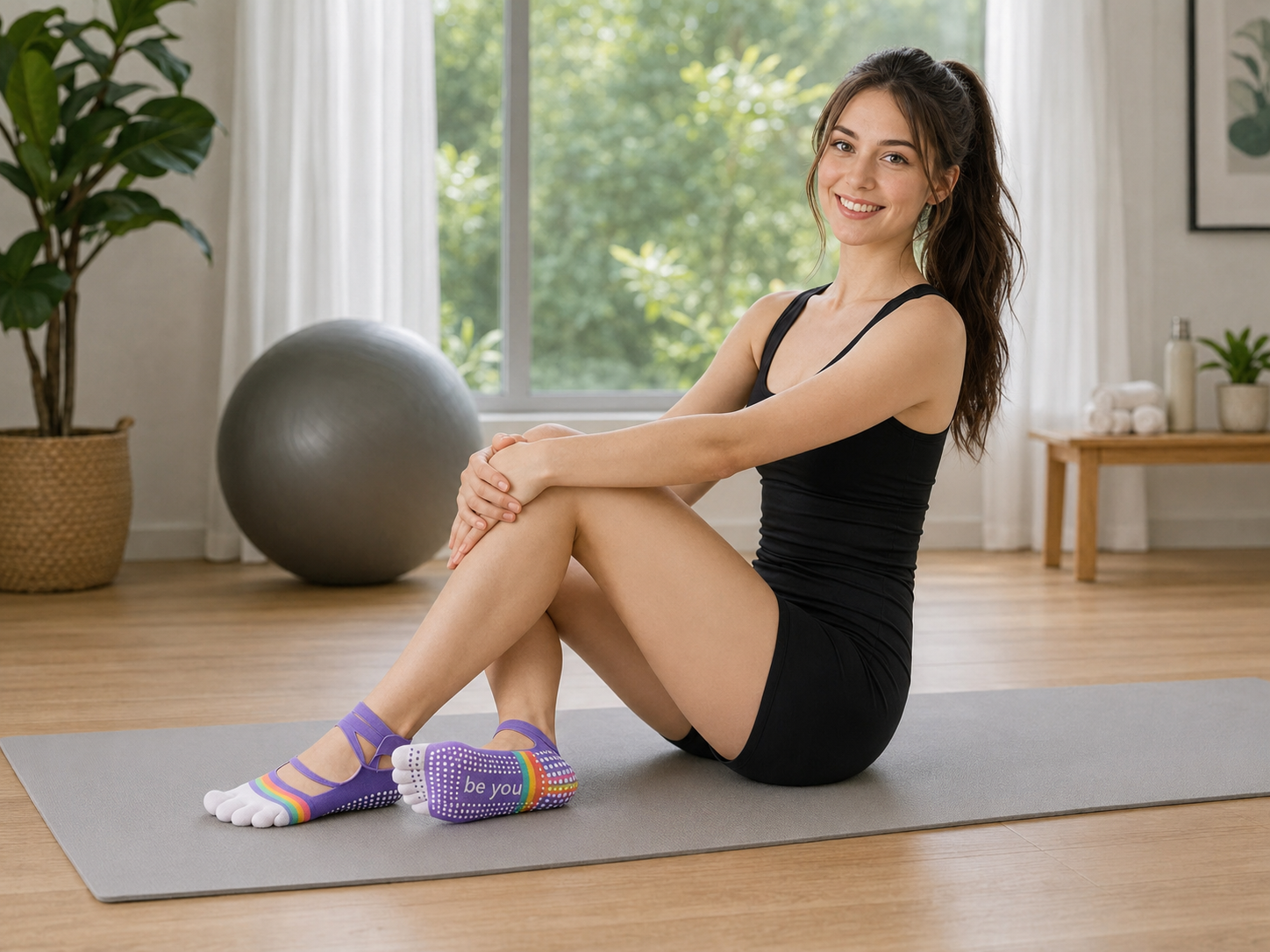
Pricing & MOQ Logic
For buyers sourcing grip socks for barre studios, pricing should be considered together with MOQ, style direction, branding needs, and reorder expectations. Boutique fitness buyers usually do not make sourcing decisions based only on the lowest unit price. They need a supply structure that fits their studio model, whether the socks are intended for class use, front-desk retail, member kits, or branded boutique merchandise.
In many barre socks projects, the first order is a practical validation stage. Buyers may want to confirm product appearance, grip layout, material feel, size structure, and overall studio fit before expanding the order scale. Because of this, first-order MOQ often needs to be handled with flexibility. A suitable supplier should understand that boutique studios and growing fitness brands may need a commercially realistic starting point rather than a rigid high-volume requirement from the beginning.
Once the product direction is approved, reorder logic becomes more important. Barre studios often want a supplier that can support repeat ordering without unnecessary sourcing friction. If the socks perform well in classes or retail sales, buyers usually want to reorder the same product with predictable quality, clearer planning, and more efficient follow-up.
MOQ planning can also be influenced by whether the order uses a standard bulk sock structure or a more branded setup. Standard bulk barre socks are often easier to plan at a lower entry threshold, while logo application, custom color choices, packaging details, or private label presentation may affect the order structure. For buyers, the key question is whether the supplier can explain these factors clearly and connect them to practical purchasing goals.
Style variety can also affect pricing logic in this category. Some barre buyers may want to compare more than one direction, such as full toe socks, open-foot-inspired silhouettes, ballet-style looks, or simple studio retail options. A supplier that can discuss style-related cost variables in a practical way is often more useful than one offering only a single rigid product path.
Bulk pricing for barre grip socks is usually influenced by material choice, grip pattern complexity, style details, color matching, branding requirements, packaging format, and total order quantity. For commercial buyers, the most useful supplier is not always the one with the lowest initial quote, but the one with pricing logic that supports repeatability, manageable MOQ, and a clear path for brand-aligned growth.
Product Range
A commercial supplier for barre grip socks should be able to support more than one basic sock option. Different barre studios and boutique fitness brands may have different expectations for style, visual presentation, and class use, so product range matters when building a sourcing program that can support both current needs and future expansion.
For barre-related use, common supply directions may include full toe grip socks, styles with a more open visual feel, ballet-inspired silhouettes, and general studio socks suitable for class participation and boutique retail. Some buyers want a simple practical product for daily use, while others look for a more refined appearance that better fits their studio image.
Product range also matters for buyers who combine operational use with retail strategy. A barre studio may want one sock style for class participation and another that is more retail-oriented in color or presentation. A boutique brand may also want to compare several directions before deciding on a core program. A supplier that understands this commercial planning is usually better prepared for long-term cooperation.
Because barre often overlaps with related studio activities, grip socks sourcing may also connect with yoga classes, Pilates programs, stretch studios, and other boutique movement categories. Buyers exploring these linked areas may also want to review our Grip Socks for Yoga Studios page and our Yoga & Pilates Socks Collection for related sourcing options.
From a broader business perspective, some buyers eventually expand beyond barre-specific projects into a wider grip socks assortment for multiple studio applications. If you are evaluating that type of sourcing strategy, you can also review our Grip Socks Wholesale page for wider supplier context.
Customization Support
Customization support is especially relevant for barre studios because grip socks often serve not only as functional class products, but also as brand-facing items. A boutique studio may want socks that reflect its visual identity, elevate the member experience, and create a more polished retail presentation. For this reason, branding support often becomes a central part of the supplier decision.
The most common customization needs in barre grip socks projects include logo application, studio-aligned color choices, branded packaging, and private label presentation. Some buyers want a clean logo sock for front-desk sales, while others want a more boutique product that fits a refined studio aesthetic. In either case, the most useful supplier relationship is usually one that keeps customization commercially practical, scalable, and suitable for repeat ordering.
For many buyers, the best path is to begin with a workable commercial product and then expand into stronger branded execution after the program is validated. This helps reduce sourcing risk while still leaving room for better studio alignment in future orders. It is often more effective than making the first order unnecessarily complex.
If your project is already focused on private label or custom development, you can review our Custom Grip Socks page for a more customization-focused discussion.
Logistics & Delivery
For commercial buyers, delivery planning is part of supplier evaluation, not a secondary issue after product confirmation. Barre studios and boutique fitness businesses may need socks to arrive in time for new class launches, studio openings, seasonal campaigns, or retail replenishment. A suitable supplier should therefore be able to explain the delivery workflow clearly and support practical shipment planning.
In a typical order process, logistics begins after product confirmation and production planning, followed by quality checking, packaging review, and shipment coordination. Even for relatively straightforward grip socks orders, a structured workflow helps reduce avoidable delays and makes the overall sourcing process easier for buyers to manage.
Lead time usually depends on whether the order is a sample request, a standard bulk run, or a customized branded project. Standard bulk barre socks are generally more straightforward, while logo, packaging, or special color coordination may require additional time. Buyers should look for realistic delivery communication rather than only fast estimates that are difficult to maintain in practice.
Shipping methods can be arranged according to order size, destination, and urgency. Sample orders may move through express services, while larger bulk orders are usually planned around standard international shipping arrangements. The right logistics approach should balance timing, landed cost, and order practicality rather than rely on a single fixed shipping model.
For buyers building a longer-term barre socks program, logistics also needs to support repeat supply. Clear communication on production progress, shipment readiness, and reorder timing helps make future purchasing more predictable and easier to scale.
Supplier vs. Other Supplier Options
When sourcing grip socks for barre studios, buyers are often comparing several types of suppliers at the same time. The decision is not only about price or basic product structure. It is about whether the supplier can support a boutique studio model that values product appearance, brand consistency, and repeat purchasing without unnecessary complexity.
Compared with general trading companies, a supplier focused on grip socks is usually better aligned with barre and boutique fitness sourcing needs. Barre studios often require support for style consistency, color direction, branding coordination, and retail presentation. Suppliers without category focus may still offer products, but may not always support these more design-sensitive requirements effectively.
Compared with very small factories, a more structured supplier can provide clearer communication, better order coordination, and more reliable handling of repeat orders. While smaller factories may offer attractive initial pricing, boutique buyers may face challenges in maintaining product consistency, especially when branding, color matching, or packaging alignment is involved.
Compared with unknown online suppliers, a supplier with a clearer commercial process can reduce sourcing uncertainty. Barre buyers often need to evaluate MOQ flexibility, customization possibilities, product consistency, and delivery planning before committing to a bulk order. A supplier that communicates these elements clearly is usually more suitable for boutique studio sourcing.
For barre studios and fitness brands, the advantage of a suitable supplier is not only in the first order. It is in the ability to support brand consistency, visual alignment, and repeat supply as the studio grows or expands. Buyers who want to explore production-side capabilities in more detail can also review our Grip Socks Manufacturer page.
Typical Buyers
Grip socks for barre studios are sourced by different types of buyers, each with its own purchasing priorities. Understanding these differences can help determine whether a supplier is suitable for a specific project or business model.
Barre studios and boutique fitness studios are the most common buyers in this category. These businesses often use grip socks for class participation, front-desk retail, or as part of a curated studio experience. Their priorities usually include visual consistency, manageable MOQ, and the ability to reorder without disrupting their brand presentation.
Fitness brands and private label operators are another important buyer group. These buyers often look for suppliers that can support brand development, packaging coordination, and product consistency across multiple orders. For these projects, supplier flexibility and communication are often more important than one-time pricing advantages.
Yoga and Pilates studios may also source barre-style grip socks due to the overlap in class structure and customer expectations. These buyers often evaluate suppliers based on whether the product can fit into multiple class formats while maintaining a consistent visual and functional standard. You can also explore our Grip Socks for Yoga Studios page for related applications.
Some distributors and e-commerce sellers also explore barre grip socks as part of a broader boutique fitness product category. These buyers often focus on product range, branding potential, and the ability to maintain stable supply across different sales channels.
FAQ
What is the typical MOQ for barre grip socks?
MOQ depends on whether the order is standard bulk or includes customization such as logos or specific color requirements. Many barre studios start with a smaller test order and increase quantity after confirming product fit and customer response.
Can I order different colors or styles in one batch?
In many cases, buyers may want to test multiple styles or color directions, especially for boutique studios. This depends on the order structure and should be discussed with the supplier based on practical sourcing needs.
Can barre grip socks be customized with my studio logo?
Yes. Logo customization is commonly used by barre studios to support branding and retail presentation. This may include logo application, color alignment, or packaging coordination.
Are these socks suitable for retail sale in studios?
Yes. Many barre studios use grip socks not only for class participation but also as a retail product. Product appearance, packaging, and consistency are often important in these cases.
How long does production and delivery usually take?
Lead time depends on order quantity, product structure, and customization requirements. Standard bulk orders are generally more straightforward, while branded or customized projects may require additional time.
Do you support international orders for boutique studios?
Yes. This supplier model is designed for B2B buyers including barre studios, fitness brands, distributors, and importers who require export-oriented bulk supply and structured delivery planning.
Conclusion
Choosing the right supplier for grip socks for barre studios is not only about selecting a product. It is about finding a sourcing partner that understands boutique studio needs, supports brand consistency, and provides a flexible path from initial orders to long-term supply.
For barre studios, fitness brands, and related businesses, the most valuable supplier is usually one that can support both practical sourcing and aesthetic expectations. This includes manageable MOQ, stable product quality, branding support, and repeat order continuity.
At Yuintal, we focus on providing practical bulk supply solutions for barre grip socks with flexibility for different studio sizes and sourcing stages. If you are building a long-term sourcing program, you can also explore our Grip Socks Wholesale page, our Grip Socks Manufacturer page, and our Yoga & Pilates Socks Collection for additional information.