
In the global grip socks market, “anti-slip” is often treated as a binary feature: either a sock has grip, or it does not. In reality, performance brands and professional buyers understand that anti-slip is a time-dependent property. What matters is not how a grip sock performs out of the box, but how that performance holds up after repeated wear, friction, washing, and environmental exposure.
From yoga studios inspired by Lululemon Studio concepts to high-impact trampoline parks such as Sky Zone, grip socks operate under very different mechanical stresses. A grip pattern that works well for controlled studio movements may fail prematurely in high-abrasion environments. This is why anti-slip durability testing has become a critical part of OEM/ODM evaluation, especially for brands positioning themselves in the professional or premium segment.
Anti-slip performance is not a moment. It is a curve measured over cycles, washes, and real-world wear.
In technical terms, anti-slip durability refers to the ability of grip elements to maintain functional traction and structural integrity over time. This includes three independent but related dimensions:
Professional testing separates these dimensions instead of treating “grip durability” as a single claim. This distinction allows brands to understand why a product fails and how design or process changes affect long-term performance.
Abrasion testing simulates repeated foot-to-floor contact. In professional evaluations, grip socks are subjected to controlled abrasion cycles under defined pressure and surface conditions. In the grip sock industry, durability benchmarks commonly reference:
At Yuintal, abrasion testing focuses not only on whether grip dots remain attached, but also on how their surface texture evolves. A grip pattern that becomes smooth while remaining bonded is considered a functional failure, even if no visible peeling occurs.
Durability results are also closely tied to grip pattern structure. Full-sole designs tend to distribute wear more evenly, while half-sole layouts concentrate abrasion in high-load zones. A detailed comparison of these structural effects can be found in full-sole vs half-sole grip pattern design .
Wash durability is one of the most overlooked factors in grip sock sourcing. Silicone grip elements are exposed to heat, detergent chemistry, and mechanical agitation during laundering. Professional programs typically evaluate:
Wash testing often reveals weaknesses that abrasion tests do not. Inadequate curing or incompatible silicone formulations may survive dry abrasion but fail under repeated thermal stress.
Peel strength testing evaluates how firmly grip elements bond to the knit structure. Measurements are typically expressed in force per width (e.g., N/25 mm), but the absolute number is less important than consistency and failure behavior.
Common adhesion failure modes include edge lifting, partial delamination, and brittle cracking. These failures are influenced by silicone chemistry, curing profile, fabric surface energy, and grip geometry.
Many durability failures originate from material mismatch rather than testing parameters. Over-cured silicone may crack, while under-cured formulations can peel after washing. To understand how formulation and curing affect adhesion and abrasion outcomes, refer to silicone grip technology options .
| Failure Mode | Observed Symptom | Likely Cause |
|---|---|---|
| Edge lifting | Grip dots peel at edges after washing | Insufficient curing or weak textile bonding |
| Cracking | Brittle grip surface, visible fractures | Over-cured or low-elasticity silicone |
| Traction loss | Grip feels smooth but intact | Surface texture not abrasion-resistant |
| Excessive lint pickup | Grip attracts dust quickly | Overly tacky surface formulation |
Different use scenarios demand different testing priorities:
This scenario-based approach explains why professional OEM/ODM manufacturers do not promote a single “best” grip solution, but instead match grip technology and testing protocols to the intended application.
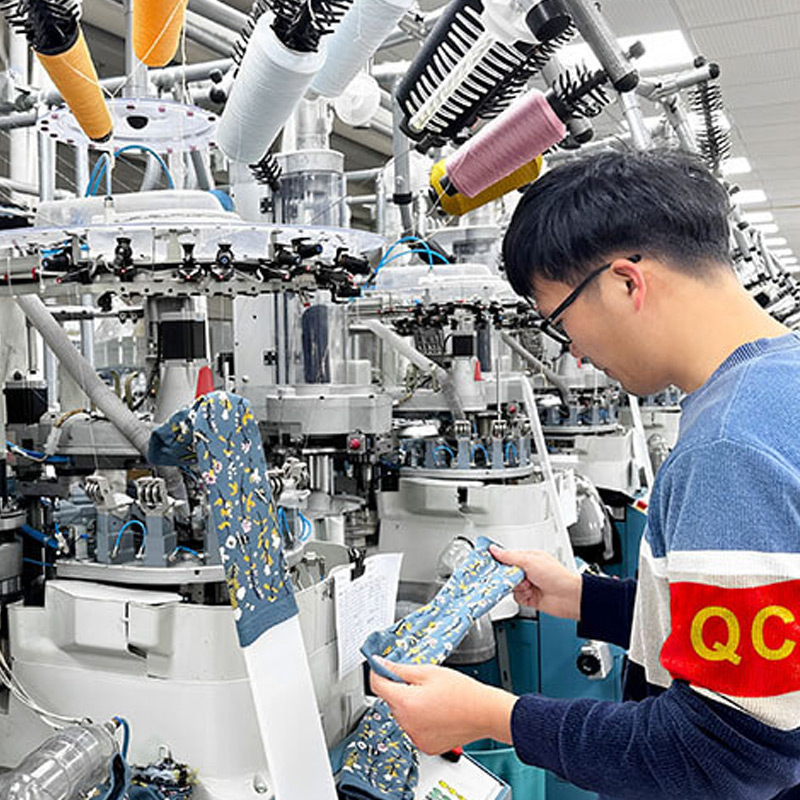
For brands sourcing from Yuintal, anti-slip durability testing is not an afterthought. It is integrated into development and validation stages:
Supported by 108N–200N knitting machines and flexible grip pattern engineering, this testing-driven approach allows Yuintal to adapt grip solutions across studio, training, and high-impact environments without compromising long-term reliability.
In an era where consumers compare products across platforms and reviews accumulate quickly, durability failures carry a cost far beyond replacement. Consistent grip performance supports brand credibility, reduces return rates, and strengthens long-term customer trust.
For professional buyers, anti-slip durability testing is not simply a technical checkbox—it is a risk management tool. Understanding how and why grip socks fail enables better product positioning, clearer care instructions, and more sustainable OEM/ODM partnerships.
Durability testing is most effective when it feeds directly back into manufacturing decisions. Abrasion and wash results should inform material selection, grip geometry, and curing parameters before scale production. This feedback loop is a core part of custom grip socks manufacturing for OEM and ODM programs .
 Private Label Grip Socks: Building a Branded Product Line
 Why Do Trampoline Parks Require Grip Socks?
 Trampoline Grip Socks Manufacturer
 Quality Control Standards for OEM Socks