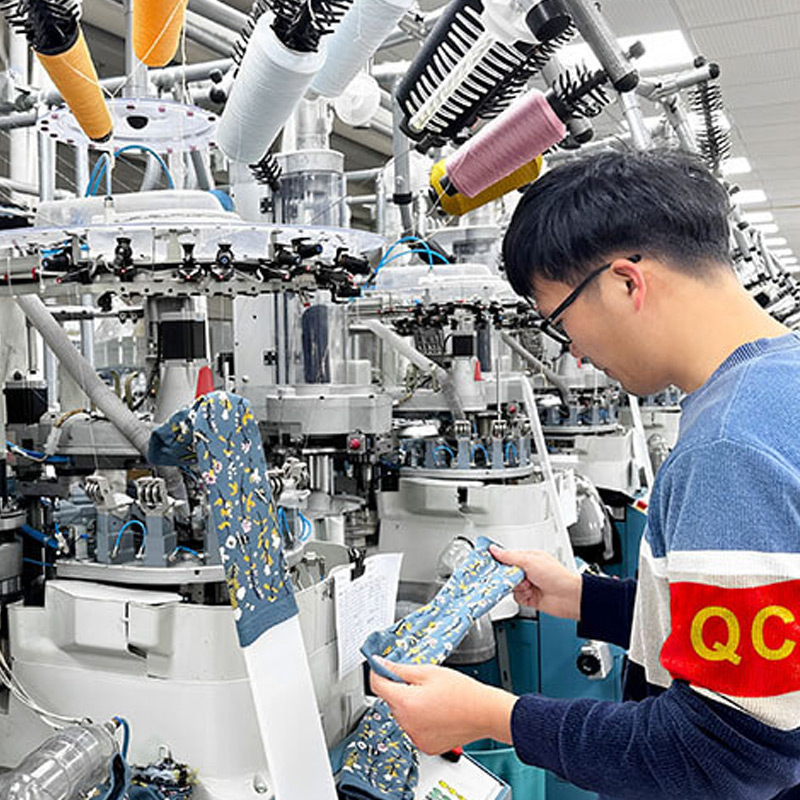
Classifying grip socks by performance characteristics focuses on how traction behaves under load, movement, and environmental interaction. Performance-based classification does not describe who uses the socks or where they are used, but how grip is delivered, sustained, and released during motion.
This taxonomy defines distinct performance behaviors that directly affect stability, predictability, and safety margins, and it operates independently from material, structure, or user-role classifications.
Classification by Usage
- Low-Intensity Movement – Performance tuned for walking, standing, and controlled transitions.
- Moderate Dynamic Movement – Supports balance during repetitive directional changes.
- High-Variability Movement – Accommodates rapid stops, pivots, and uneven load distribution.
This classification is NOT the same as environment-based or user-role classification.
Classification by Structure
- Uniform Grip Coverage – Delivers consistent traction across the sole.
- Zoned Grip Layouts – Concentrates grip in high-pressure or control zones.
- Selective Grip Patterns – Limits traction to avoid over-restriction.
This classification is NOT the same as material composition or usage frequency.
Classification by Material
- High-Elastic Silicone – Provides responsive grip engagement.
- Medium-Hardness Silicone – Balances durability and predictable friction.
- Composite Polymers – Prioritize cost efficiency over long-term consistency.
This classification is NOT the same as performance behavior classification.
Classification by Performance
- Immediate Grip – Engages rapidly on contact with the surface.
- Sustained Grip – Maintains traction consistently over time.
- Progressive Grip – Builds friction gradually as load increases.
- Low-Resistance Grip – Allows controlled micro-slippage during rotation.
This classification is NOT the same as grip strength ratings.
- Equating higher friction values with better overall performance. This ignores scenarios where excessive grip increases instability. Performance classification must consider predictability, not just magnitude.
- Assuming immediate grip and sustained grip are interchangeable. These behaviors produce very different movement responses and safety outcomes.
- Applying performance classifications without considering load variability. Grip behavior changes significantly under uneven or shifting loads.
- Using material type as a proxy for performance behavior. Identical materials can deliver different grip responses depending on pattern and layout.
- Treating low-resistance grip as inferior rather than purpose-specific. In some contexts, controlled slip improves balance rather than reducing safety.
- Increased emphasis on predictable grip response rather than peak traction metrics. This shift affects how performance categories are defined and compared.
- Growing separation between immediate and progressive grip classifications. Designers increasingly treat these as distinct performance families.
- Rising demand for performance testing under dynamic, multi-directional movement. Static friction data is becoming less representative.
- Integration of performance classification into safety and compliance frameworks. Performance behavior is now evaluated alongside durability and hygiene.
| Primary Requirement | More Relevant Performance Classification | Lower Priority Performance Type |
|---|---|---|
| Stable walking and standing | Progressive grip with predictable engagement over gradual load changes | Immediate high-friction grip that may feel abrupt |
| Repeated directional changes | Sustained grip supporting continuous traction during movement cycles | Low-resistance grip allowing excessive slip |
| Rotational balance control | Low-resistance grip enabling controlled micro-slippage during turns | Rigid immediate grip restricting natural rotation |
| Rapid starts and stops | Immediate grip providing fast surface engagement under load | Slow-building progressive grip response |
| Mixed-intensity environments | Balanced sustained grip with gradual engagement characteristics | Extreme grip behaviors at either end of the spectrum |
Performance-based classification defines how grip behaves rather than how it is constructed or who uses it. Establishing this classification clarifies which grip behaviors align with specific movement demands.
Once performance behavior is identified, structural and material decisions can be evaluated without conflating grip magnitude with suitability. This prevents over- or under-specification.
Misclassification at the performance level often leads to inconsistent user experience, even when materials and patterns appear appropriate.
Classifying grip socks by performance characteristics provides a clear framework for understanding how traction interacts with movement and load.
However, performance characteristics alone do not determine real-world outcomes; without considering how grip placement and user context affect load distribution, these classifications remain incomplete.
There is no single best type — only the most suitable type for a given scenario. For a comprehensive explanation of how grip behavior influences stability and safety, refer to overall grip socks performance.