Sweat-Proof Spin Class Socks

Views : 221
Update time : 2025-12-04 15:38:45

Spin classes demand a unique combination of intensity, sweat management, and foot stability. Unlike running or strength training, indoor cycling keeps both feet locked into rapid, continuous motion—meaning that any slip, moisture build-up, or fabric bunching can immediately disrupt performance or even cause minor injury. Sweat-proof spin class socks are engineered to solve these challenges through advanced fibers, anti-slip materials, and studio-specific construction.

This article breaks down the design logic behind sweat-proof spin socks, explains how they enhance performance and hygiene in cycling studios, and outlines what fitness brands, studios, and e-commerce sellers should consider when selecting or customizing them.


1. Why Spin Classes Need Their Own Sock Design

Spin workouts operate at 60–120 RPM with constant foot pressure and heavy perspiration. Standard sport socks may absorb sweat, but they rarely provide enough traction, breathability, and stability required for spin bikes.

  • High perspiration due to closed-in cycling shoes and elevated room temperature.
  • Foot movement inside the shoe increases the risk of slipping without proper grip.
  • Intense cadence changes require consistent arch support and heel stability.
  • Studio hygiene concerns make moisture control essential for shared equipment.
Great spin class socks don’t just keep feet dry—they stabilize every pedal stroke, improve comfort, and prevent performance-killing slip.

2. Sweat-Proof Fiber Engineering

The core of sweat-proof spin socks lies in the yarn system. These fibers are chosen not only for breathability but for active moisture transport under high heat and compression.

2.1 Moisture-Wicking Fibers

  • Hydrophobic polyester pulls moisture away from the skin within seconds.
  • Nylon air-mesh improves airflow around the forefoot and toe box.
  • Coolmax® or functional blends maintain dryness even during long rides.

2.2 Breathable Mesh Zones

  • Top-foot ventilation reduces heat build-up inside spin shoes.
  • Open-knit instep panels accelerate moisture evaporation.
  • Heel heat-release channels keep the rear foot cool under pressure.

For studios with long back-to-back class cycles, these materials also speed drying between sessions—enhancing sanitation and odor control.

3. Anti-Slip Grip for Precise Pedal Control

While spin shoes already lock into pedals, moisture inside the shoe can cause subtle but dangerous micro-slips. For riders using toe-cage pedals or sneakers, slip risk increases significantly.
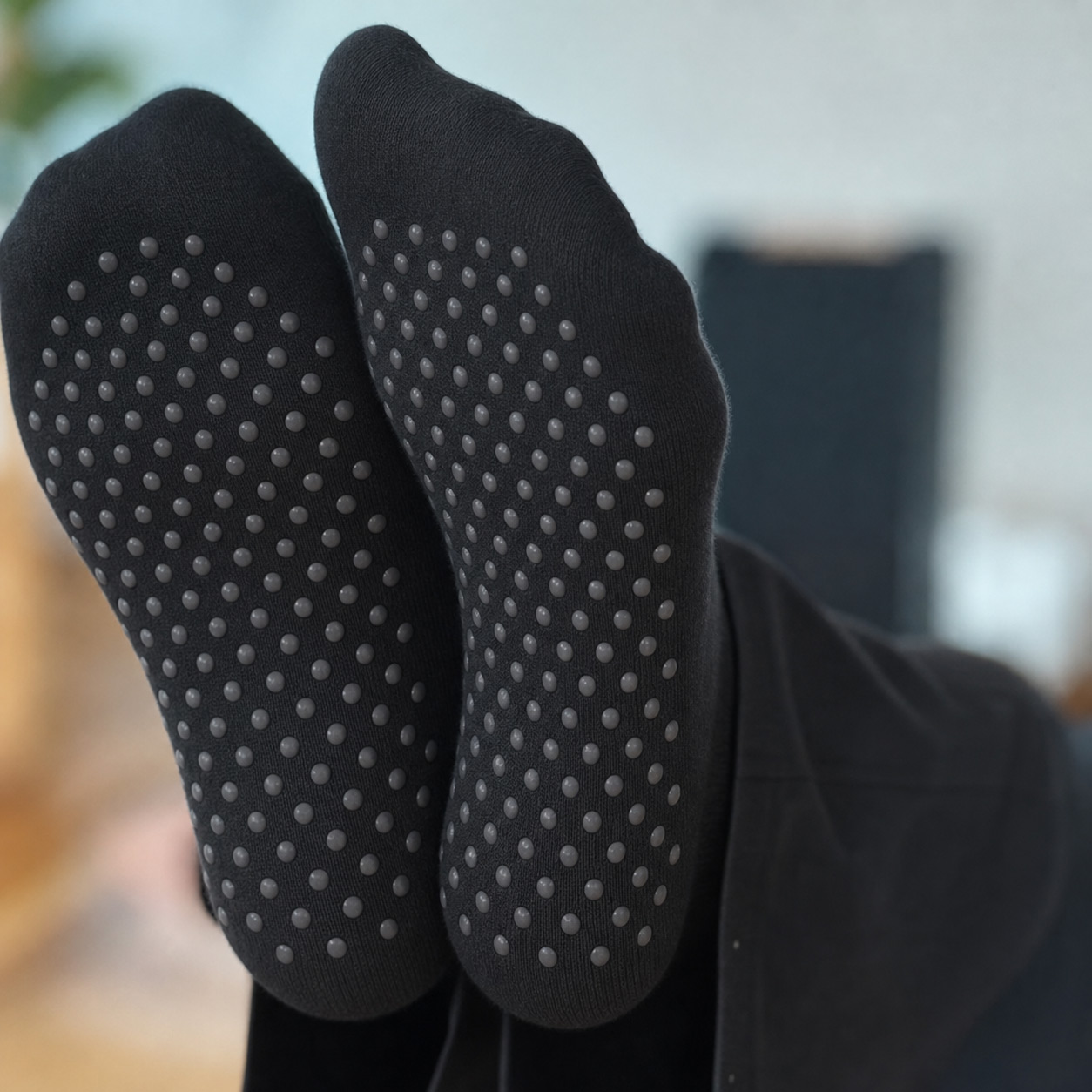
3.1 Full-Sole Grip Layout

  • Heel grip prevents rear-foot lift during heavy climbs.
  • Arch grip stabilizes the mid-foot under rapid cadence changes.
  • Forefoot traction locks the toes when pushing through sprints.

3.2 Sweat-Resistant Silicone Formulations

  • Maintains grip even in high-humidity rooms.
  • Resists peeling after 50–100 wash cycles.
  • Soft-touch silicone avoids friction hotspots inside shoes. 


4. Support, Compression & Comfort for Long Rides

Spin classes place constant repetitive pressure on the forefoot and arch. Good spin socks minimize fatigue while improving efficiency.

  • Arch compression bands maintain stable foot posture during intervals.
  • Reinforced toe & heel reduce abrasion from cycling shoes.
  • Low-friction yarns prevent hot spots and blisters during climbs.
  • Targeted cushioning keeps comfort consistent through 30–60 minute sessions.

These features also extend sock lifespan—critical for studios and brands managing recurring orders.

5. Hygiene & Odor Management for Group Cycling Studios

Indoor cycling studios deal with extreme moisture across multiple classes per day. Sweat-proof spin socks help maintain hygiene through:

  • Anti-odor fibers (silver ion, bamboo charcoal, or technical polyesters).
  • Quick-dry construction to reduce bacterial growth.
  • Wash-durability ensuring socks maintain shape and odor control after repeated use.

6. Customization Options for Brands, Studios & Retailers

Spin studios increasingly use socks as part of their brand identity—from member merchandise to required gear.

  • Pantone-matched yarn colors for brand alignment.
  • Custom silicone grip logos for visibility inside studios.
  • Different crew/ankle lengths for varying equipment and class styles.
  • Private-label packaging (belly bands, retail cards, zipper bags).
Most studios reorder the same style multiple times per year. Color consistency, grip stability, and yarn lot control are essential for maintaining a professional look.

7. Who Should Use Sweat-Proof Spin Class Socks?

  • Indoor cycling studios looking for branded socks for members.
  • Fitness apparel brands expanding into cycling accessories.
  • E-commerce sellers targeting high-repeat fitness consumers.
  • Gym franchises integrating socks into membership packages.

Conclusion

Sweat-proof spin class socks are more than an accessory—they’re performance equipment. By combining moisture-wicking fibers, advanced grip technology, and studio-level comfort, these socks enhance safety, boost performance, and improve the overall cycling experience. For brands and studios, they also represent a scalable, customizable product with high repeat purchase value.

Related News
Read More >>
How to Choose Grip Socks for Indoor Playgrounds & Early Education Centers: A Buyer's Guide to Safety, Sizing & Bulk Supply | Yuintal How to Choose Grip Socks for Indoor Playgrounds & Early Education Centers: A Buyer's Guide to Safety, Sizing & Bulk Supply | Yuintal
Jun .18.2026
Running an indoor playground, daycare, or early education center? Grip socks are a safety essential — but sourcing them in bulk for kids isn't the same as ordering adult socks. This guide covers children's sizing, commercial-grade durability, safety standards, custom branding for your facility, and how to plan your MOQ. Written by Yuintal, a manufacturer that supplies grip socks to playgrounds and learning centers worldwide.
Pilates Studio Grip Socks: How to Source Custom Non-Slip Socks for Reformer, Mat & Barre Classes | Yuintal Buyer's Guide Pilates Studio Grip Socks: How to Source Custom Non-Slip Socks for Reformer, Mat & Barre Classes | Yuintal Buyer's Guide
Jun .18.2026
Looking to source custom grip socks for your Pilates studio? This guide covers everything studio owners need to know — from choosing the right fabric and grip pattern for reformer vs mat classes, to MOQ planning, private label timelines, and a real ROI model. Whether you're launching a branded merchandise line or stocking socks for class use, Yuintal's OEM factory delivers quality you can count on.
Grip Socks for Yoga Studios: How to Source Custom Branded Socks in Bulk (OEM & Private Label Guide) Grip Socks for Yoga Studios: How to Source Custom Branded Socks in Bulk (OEM & Private Label Guide)
Jun .16.2026
Sourcing grip socks for your yoga or Pilates studio? This guide covers private label options, material selection, pricing at different volumes, and how branded socks can become a studio revenue stream — not just an expense.
How to Choose Grip Socks for Your Trampoline Park: A Buyer's Guide to MOQ, Safety & Custom Branding How to Choose Grip Socks for Your Trampoline Park: A Buyer's Guide to MOQ, Safety & Custom Branding
Jun .15.2026
Sourcing grip socks for your trampoline park? This guide covers safety specs, silicone durability, MOQ planning, and custom branding options — everything a venue operator needs before placing a bulk order.
pop_close