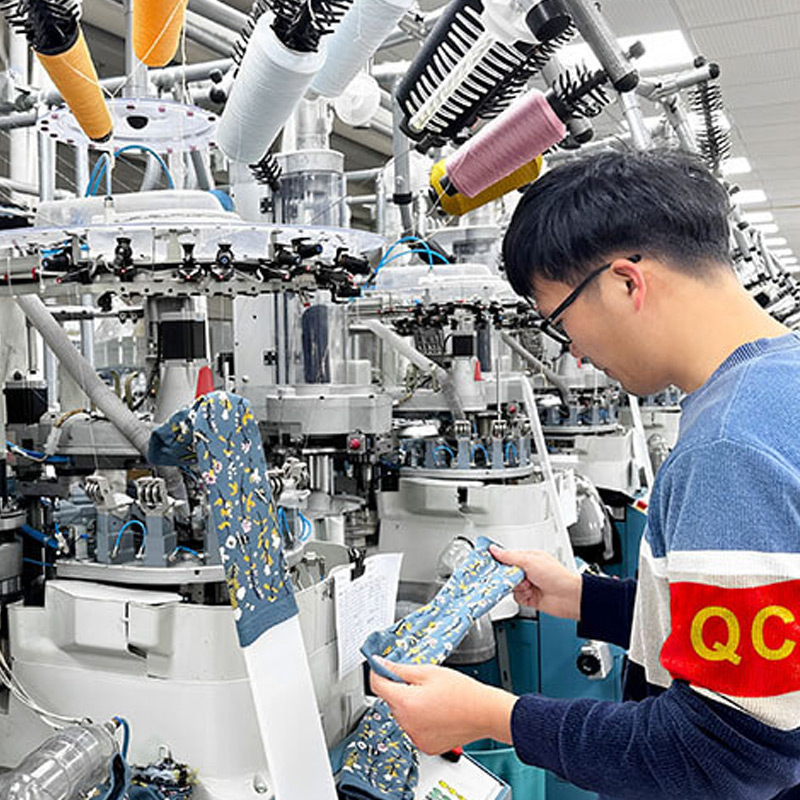
Quick Answer
PVC grip printing on socks is a controlled deposition process where a PVC-based compound (commonly a plastisol-type formulation) is applied in a defined pattern—most often by screen-based dotting—then gelled and cured so the grip features become mechanically stable, repeatable in height, and bonded to the textile substrate. The quality outcome is determined less by “the pattern shape” and more by process controls: compound rheology, screen/stencil condition, deposit volume, registration, pre-drying/gel stage, cure temperature-time window, and post-cure handling. If you need a reliable process explanation, focus on how each step prevents three dominant failures: (1) early slickness from surface films or under-gel, (2) cracking/embrittlement from over-cure or incompatible plasticizer balance, and (3) peeling or chunk loss from weak mechanical anchoring and contaminated fabric surfaces.
Expanded Definition
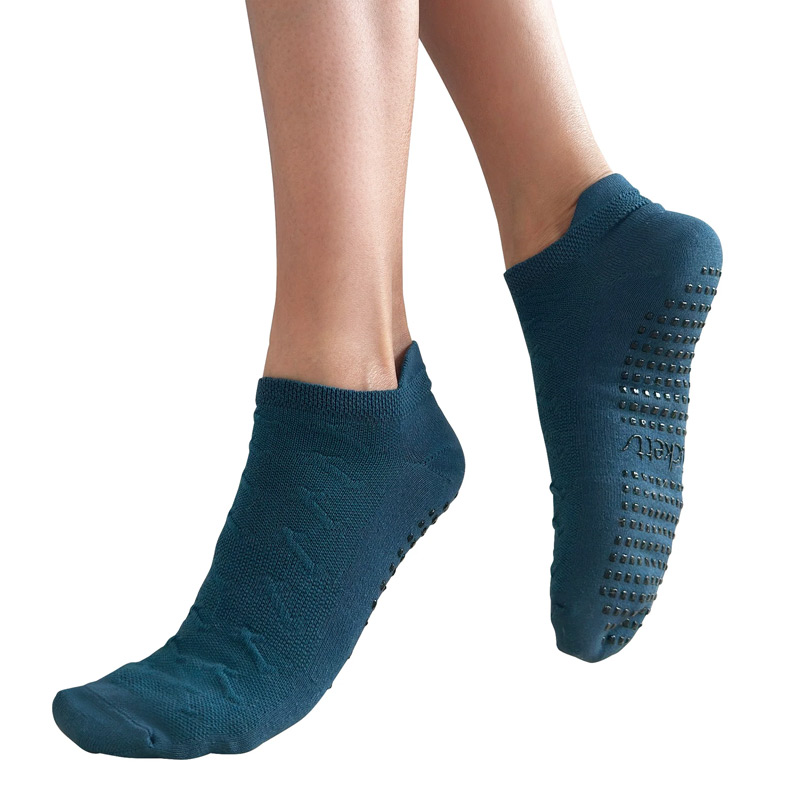
What “PVC grip printing” means in manufacturing terms
“PVC grip printing” is not a decorative print. It is a functional material deposition step that adds a high-friction surface to a textile product. In a sock context, the “print” is typically a pattern of raised dots, pads, or segmented zones on the sole (or occasionally on the top of foot or heel) intended to increase traction and reduce slip. The process uses a PVC-based compound engineered to be flexible after curing, resist cracking during repeated flex, and remain attached to the fabric after repeated wear and laundering.
The key distinction is that the “ink” behaves as a polymer compound rather than a dye. It must:
- Flow through a screen or dispensing system without uncontrolled spreading.
- Hold its shape after deposition (dot height and edge definition).
- Undergo a thermal transition from a flowable state to a stable elastomeric state.
- Anchor to the textile via mechanical interlock and surface interaction without turning brittle.
The process goal: stable dot geometry + stable friction + stable adhesion
A correct PVC grip printing process produces grip features that are consistent in:
- Geometry: dot/pad height, diameter, spacing, and edge profile.
- Surface condition: not glazed, not oily, not powdery; consistent “feel” after laundering.
- Flex response: no cracking lines after bending; no chunking at edges.
- Bond stability: no lifting at edges; no peeling under repeated flex and wash cycles.
From a buyer perspective, “PVC grip quality” is rarely about which factory uses a specific machine and more about whether the factory can keep dot geometry and bond integrity inside a narrow control window batch after batch.
Core steps in the PVC grip printing workflow
A typical production workflow follows these stages. The exact naming varies by factory, but the control logic is consistent:
- Substrate preparation: socks are mounted on a form (board, jig, or last) to present a flat, tensioned printing surface.
- Compound conditioning: PVC compound is mixed to a target viscosity and maintained at a controlled temperature to avoid drift in flow.
- Deposition: compound is applied by screen/dotting method, rotary screen, or controlled dispensing to create the grip pattern.
- Gel / set stage: a short heat exposure partially sets the deposit so dots do not slump or smear during transport.
- Cure stage: thermal curing completes the transition to a stable polymer matrix with the target flexibility and abrasion response.
- Cool down + stabilization: parts are cooled and allowed to equilibrate before stacking/packing to avoid blocking or imprint transfer.
- Inspection + sampling: geometry checks, adhesion screening, and defect checks are performed on a defined lot plan.
How the process bonds to textile: why “clean + tension + penetration” matter
PVC grip features usually adhere to socks through a combination of:
- Mechanical anchoring: the compound penetrates micro-voids of the knit and locks after curing.
- Surface interaction: the compound wets the fiber surface sufficiently to remain attached under flex.
This is why three upstream conditions dominate adhesion outcomes:
- Surface cleanliness: oils, lint, and finishing agents reduce wetting and create “weak boundary layers.”
- Controlled fabric tension: too loose and dots spread; too tight and penetration changes; both cause bond instability.
- Deposit penetration depth: too shallow can peel; too deep can stiffen the sock and create stress concentrations.
What “cure” actually controls
Curing is the non-negotiable step that determines whether the deposited PVC compound becomes:
- Under-cured: soft, tacky, or smear-prone; may feel slick after washing due to surface films or incomplete stabilization.
- Over-cured: hard or brittle; prone to cracking, edge chipping, and accelerated abrasion loss.
- Correctly cured: flexible, resilient, and stable in friction behavior under normal laundering.
The correct cure window is a balance of time, temperature, airflow, and part loading. A “good” cure profile is not just an oven setpoint. It is a controlled thermal history that must be repeatable across:
- different sock thicknesses and yarn blends,
- different dot volumes (pattern density),
- different line speeds and stacking/transport constraints.
Key quality signals that indicate the process is controlled
If you want to evaluate whether a supplier truly controls PVC grip printing, these are the signals that matter because they correlate with stable production, not one-off samples:
- Dot height uniformity: consistent within a lot; no “flat” and “tall” dots mixed on the same sole.
- Sharp but not brittle edges: edges are defined without chipping after flex.
- No blocking / transfer marks: dots do not stick to each other in stacks; no ghost patterns on adjacent socks.
- Adhesion screening evidence: the factory can describe a simple, repeatable screening method and a rejection threshold.
- Wash-cycle stability checks: the supplier can demonstrate that dot feel and attachment remain stable after routine laundering conditions.
- Defect vocabulary: operators can name common defects and their root causes (smear, pinholes, edge lift, glazing, mis-registration).
Failure modes this page will prevent you from misunderstanding
Many buyers misdiagnose PVC grip issues because the failure can present as “slippery” even when dots look intact. This page is designed to prevent four common mistakes:
- Confusing surface films with wear: residue films from laundering or finishing agents can reduce traction without visible damage.
- Assuming higher dot density equals higher grip: geometry and surface condition matter more than count.
- Ignoring rotation/fit effects: good grip zones fail if the sock twists and moves the pattern off the load points.
- Overtrusting first-sample performance: many failures appear after curing drift, oven loading changes, or wash-cycle exposure.
Scope boundary: what this explanation covers and what it does not
This explainer covers PVC grip printing as a functional manufacturing process on socks, focusing on process steps, controls, defects, and how to evaluate process maturity. It does not function as a certification claim, medical guidance, or a substitute for a facility-specific safety assessment. If your use case is institutional, pediatric, or medically sensitive, process control must be paired with appropriate compliance, documentation, and validation requirements defined by your program.
Why This Process Is Used
Why PVC is chosen for grip features in the first place
PVC-based grip compounds are commonly used because they can be formulated to hit a practical balance of traction feel, flexibility, abrasion response, and cost control in high-volume production. In manufacturing terms, the value is not “PVC as a material,” but the process capability it enables: consistent deposition through screens, predictable gel/cure behavior in continuous ovens, and scalable pattern repeatability across large lots.
When this process is controlled, it supports stable operational outcomes for buyers that deploy grip socks in professional settings:
- Repeatable traction zones: consistent dot geometry keeps friction behavior predictable.
- Stable attachment under flex: correct penetration and cure reduce early edge lift and chunk loss.
- Batch-to-batch consistency: controlled viscosity, registration, and curing reduce lot variance.
- Manufacturing scalability: screen-based dotting and conveyor curing are compatible with large throughput.
Why “printing” is used instead of molding or separate grip attachments
For many sock constructions, a printed/dispensed PVC compound is a simpler interface solution than attaching a separate molded component. Printing allows the grip to be applied directly onto the finished textile with fewer assembly operations, fewer part interfaces, and fewer mechanical discontinuities. It also makes it easier to tune traction patterns (density and coverage zones) without retooling a mold.
The trade is that printing demands strict process control: a small drift in cure conditions or compound rheology can shift the final grip behavior. The reason buyers should care is that printing succeeds only when the factory demonstrates process discipline, not when it produces an attractive sample.
What buyers actually get from a controlled PVC grip printing process
Buyers evaluating grip socks for professional deployment usually care about outcomes that trace back to process controls:
- Lower operational variability: fewer “some pairs grip, some pairs slip” complaints across a lot.
- Predictable replacement cycles: less premature dot loss due to cure drift or weak mechanical anchoring.
- Fewer laundering-related surprises: reduced incidence of glazing, residue-driven slickness, or dot hardening.
- More reliable receiving inspection: clearer defect signatures that can be screened before deployment.
Decision rules: when PVC grip printing is a good fit vs a weak fit
These rules define when the PVC grip printing process tends to be operationally suitable, and when it becomes a high-risk choice unless the supplier has strong controls.
More suitable when:
- You need scalable production with consistent patterns across large lots.
- Your operating environment includes routine laundering and you can enforce care controls (no softener, controlled heat).
- You can validate cure stability and adhesion screening on a defined sampling plan.
Higher risk when:
- Your environment includes high heat drying, aggressive chemical laundering, or unknown user washing behavior.
- The sock substrate uses finishes or fibers that reduce compound wetting or penetration.
- Your deployment is safety-critical and you cannot accept any edge lift or grip chunk loss.
Failure modes this process is designed to manage
The process exists to prevent predictable failures that appear when traction features are applied without control. The highest-impact failure modes are:
- Detachment and edge lift: caused by weak mechanical anchoring, contamination layers, or cure imbalance.
- Cracking and brittleness: caused by over-cure, incompatible compound balance, or excessive dot height.
- Slickness without visible damage: caused by surface films, residue, glazing, or partial cure behavior.
- Pattern drift and misplacement: caused by poor registration control or unstable fabric tension during printing.
Misuse warnings: what breaks the process outcomes after production
Even if manufacturing is controlled, real-world handling can degrade traction outcomes. These are common buyer-side failure triggers:
- Fabric softeners and oily additives: can leave a low-friction film on grip surfaces.
- High-heat drying: can accelerate hardening or surface glazing depending on compound balance.
- Overloading washers: increases abrasion and can prematurely round dot edges or weaken bonding at high-flex zones.
- Improper stacking while warm: can create blocking and transfer marks that reduce effective grip texture.
Types & Variations
What actually varies in PVC grip printing (and why it matters)
The phrase “PVC grip printing” hides multiple controllable variations that change performance and durability. The meaningful variations are not marketing labels; they are process and design choices that change failure modes.
The dominant variation categories are:
- Application method: flat screen, rotary screen, stencil transfer, or controlled dispensing.
- Dot geometry: diameter, height, edge profile, and spacing.
- Coverage architecture: full-sole coverage vs zoned coverage vs edge-reinforced patterns.
- Compound behavior: softness window, tack profile, and abrasion response after cure.
- Cure strategy: two-stage gel + cure vs single-stage cure with controlled thermal ramp.
- Substrate interaction: how the compound penetrates the knit and locks mechanically.
Variation profiles buyers should recognize
These profiles are common in production. They are described by the failure modes they control.
- Low-profile micro-dots: reduce snag risk and improve comfort, but can lose traction faster under heavy laundering if the surface glazes.
- High-profile dots/pads: can increase tactile traction feel, but raise cracking and edge-chipping risk if cure control is weak.
- Zoned traction patterns: concentrate grip where load is highest, reducing material usage and improving flexibility, but demand accurate registration and fit stability.
- High-coverage patterns: increase contact area, but can raise heat retention and can amplify blocking risk if stacked warm.
Table 1 — Selection comparison (design + process variants)
| Variant Dimension | Option 1 | Option 2 | Decision Meaning | What to Verify |
|---|---|---|---|---|
| Dot height profile | Low-profile dots | High-profile dots | Low-profile reduces cracking risk; high-profile increases tactile grip but raises cure sensitivity | Check for micro-cracks after flex; measure dot height consistency across pairs |
| Coverage architecture | Zoned coverage | High-coverage / near full-sole | Zoned patterns require registration and fit stability; high coverage increases contact but raises blocking risk | Verify pattern alignment to heel/toe landmarks; inspect for transfer marks after stacking |
| Cure strategy | Two-stage gel + cure | Single-stage cure | Two-stage stabilizes dot geometry; single-stage is simpler but more sensitive to slump and smear | Check edge sharpness and dot rounding; ask for cure profile controls and line speed logs |
| Application method | Flat screen printing | Rotary screen / dispensing | Flat screen supports crisp dots; rotary/dispensing supports throughput but requires tight viscosity control | Inspect for pinholes and smear; verify viscosity checks and nozzle/screen maintenance records |
Table 2 — Required vs optional by scenario
| Scenario | Required Controls | Optional Enhancements | Why It Matters |
|---|---|---|---|
| Studios with shared use and frequent laundering | Cure window control, adhesion screening, residue-aware wash protocol validation | Zoned patterns to reduce heat and improve flexibility | Wash-cycle stability dominates service life and complaint rate |
| Institutional or safety-sensitive deployment | Lot traceability, defect rate tracking, documented process logs, conservative dot profile selection | Enhanced receiving inspection plan and retention samples | Failure consequences are asymmetric; drift must be detectable early |
| Low-risk consumer use | Basic adhesion checks, geometry consistency within lot | Comfort-driven dot profile optimization | Comfort complaints scale faster than liability exposure |
Boundary cases: when variants behave differently than expected
Some outcomes contradict common assumptions. These boundary cases prevent incorrect selection rules:
- More dots can grip less: if the surface glazes or becomes residue-coated, density does not recover traction.
- Soft grips can slip: softness without stable surface texture can increase smearing and film formation.
- Zoned patterns can fail despite good printing: if the sock rotates, zones move off load points and traction becomes inconsistent.
- Perfect samples can hide drift: cure stability can change with oven loading, humidity, or compound age even within the same day.
Common Questions Users Ask
Does PVC grip printing work on all sock fabrics?
No. The process outcome depends on fiber type, knit density, surface finishes, and residual oils. Fabrics with heavy finishing agents, silicone softeners, or very smooth filament yarns reduce compound wetting and penetration, increasing edge lift and peel risk. Stable results require compatible substrates and controlled pre-print cleanliness.
Why do grips sometimes feel slippery even when dots look intact?
Apparent slipperiness without visible damage is commonly caused by surface films (detergent residue, softeners, oils) or partial cure behavior that leaves a smooth or glazed surface. In these cases, geometry remains intact but friction drops. Controlled re-washing without softener and verification of cure stability are typical diagnostic steps.
How important is curing compared to dot pattern design?
Curing is more critical than pattern shape. A well-designed pattern with an unstable cure window will fail faster than a simple pattern with stable cure control. Cure time, temperature, airflow, and loading consistency determine flexibility, abrasion response, and long-term adhesion.
Can higher dot density compensate for weak adhesion?
No. Increasing dot count does not compensate for poor bonding or surface instability. Weak adhesion leads to peeling or chunk loss regardless of density. Density affects contact area, not bond strength.
Why do some batches perform well while others fail from the same supplier?
Batch-to-batch variation usually traces to drift in compound viscosity, screen condition, fabric tension, or oven loading. Without documented controls and in-process checks, small changes can shift cure behavior and penetration depth, producing inconsistent outcomes across lots.
How can buyers screen PVC grip quality at receiving?
Practical screening focuses on geometry consistency, edge integrity, basic adhesion checks, and early-life flex behavior. While full validation requires wash-cycle testing, receiving checks can catch gross defects and drift before deployment.
Is PVC grip printing suitable for safety-critical environments?
It can be suitable only when the supplier demonstrates stable process control, documented cure windows, adhesion screening, and lot traceability. In safety-critical deployments, conservative dot profiles and stricter inspection plans are typically required.
FAQ
Is PVC grip printing the same as silicone grip printing?
No. Although both are applied as raised traction features, PVC and silicone compounds differ in cure chemistry, flexibility window, surface behavior, and laundering response. Process controls and failure modes are not interchangeable.
Does a softer PVC grip always provide better traction?
Not necessarily. Excessive softness can increase smearing and surface film formation, reducing effective friction. Traction depends on surface texture stability after cure and laundering, not softness alone.
How many wash cycles should a PVC grip survive?
There is no universal number. Service life depends on compound formulation, cure stability, laundering chemistry, temperature, and mechanical stress. Buyers should evaluate wash-cycle performance under conditions representative of actual use.
Can PVC grips crack in cold environments?
Improperly balanced or over-cured compounds can embrittle at lower temperatures. Correct formulation and cure control mitigate cracking under normal indoor use conditions.
What is the most common root cause of early grip failure?
Early failures most often result from cure imbalance or surface contamination rather than pattern design. These issues reduce adhesion or surface friction even when geometry appears correct.
Conclusion
PVC grip printing is a functional manufacturing process that adds traction through controlled polymer deposition and curing, not a decorative printing step. Stable outcomes depend on compound behavior, deposition control, fabric interaction, and cure stability rather than pattern aesthetics alone.
For buyers, the practical question is whether a supplier can maintain dot geometry, surface condition, and adhesion within a narrow control window across repeated production. When those controls are present, PVC grip printing supports scalable, repeatable traction performance. When they are absent, failures tend to appear after laundering, flexing, or batch changes rather than during initial sampling.