Quick Answer
On tile floors, slip risk differs between grip socks and barefoot contact because each interacts with the surface through different friction mechanisms. Barefoot traction relies on skin friction and moisture interaction, while grip socks rely on material-based grip elements engaging the tile surface. Neither condition guarantees stable traction, but the sources and patterns of slip risk are not the same.
Barefoot contact can provide direct surface contact on dry tile, but traction becomes unpredictable when moisture, residue, or smooth finishes are present. Grip socks introduce an intermediate layer that alters contact behavior, redistributing pressure and changing how friction is generated during movement. As a result, slip risk on tile floors should be evaluated based on contact mechanics rather than assumed safety.
- Barefoot and grip socks rely on different friction mechanisms on tile floors.
- Slip risk varies with surface condition, moisture, and movement type.
Understanding Slip Risk on Tile Floors: Barefoot vs Grip Socks
Slip risk on tile floors is determined by how friction is generated at the interface between the foot and the surface. Tile floors are hard, smooth, and non-deformable, which means traction depends almost entirely on surface friction rather than material compression or surface compliance.
When barefoot, traction is produced through skin contact with the tile surface. Skin friction can be relatively high on clean, dry tile, but it is highly sensitive to moisture, oils, and surface residue. Even small changes in surface condition can significantly alter barefoot traction.
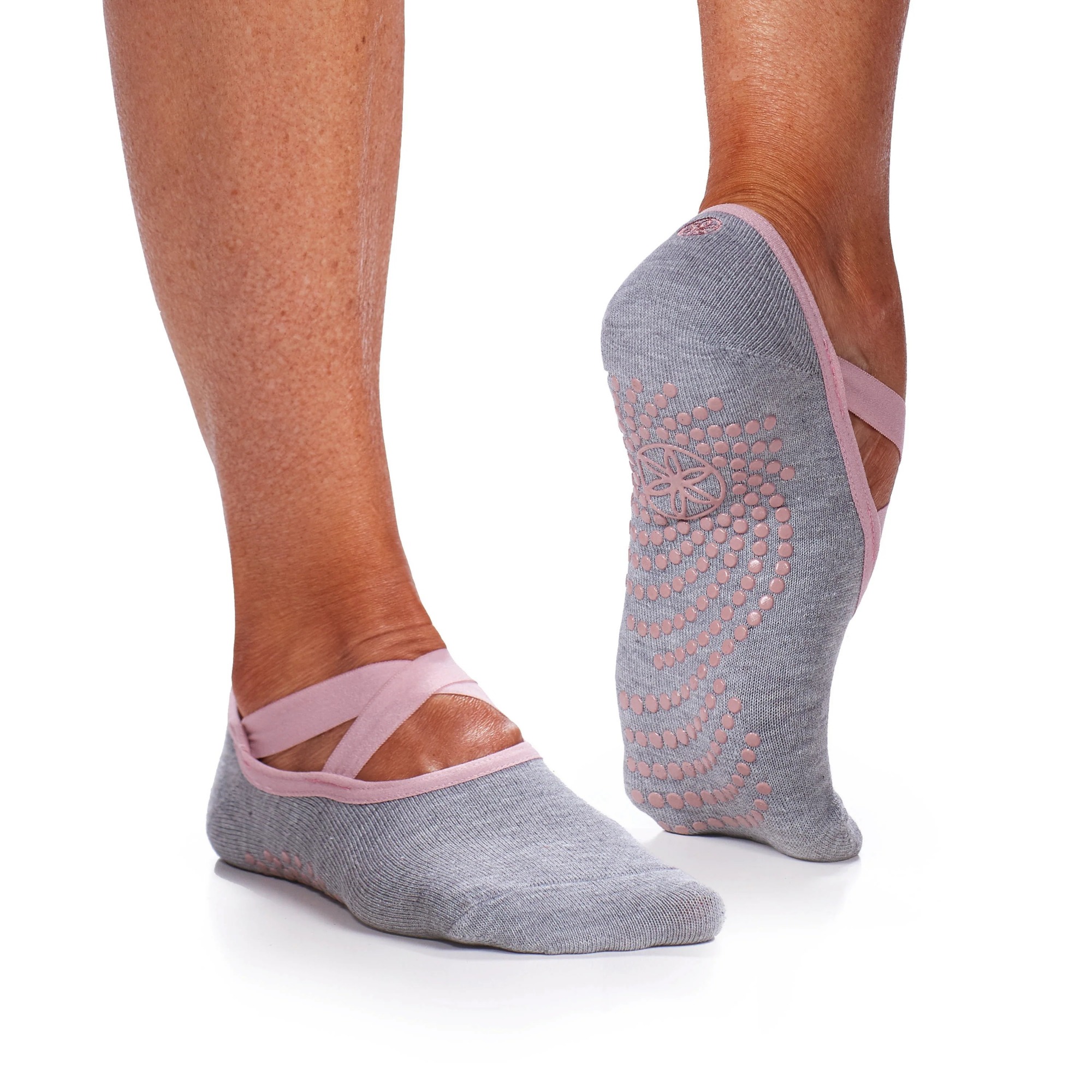
Grip socks introduce a textile layer with applied grip elements between the foot and the tile. This layer changes how pressure is distributed and how friction is generated. Instead of relying on skin contact, traction depends on the interaction between grip materials and the tile surface, which may respond differently to moisture and surface finish.
Because tile floors do not absorb impact or adapt to movement, differences in contact mechanics between barefoot and grip socks are immediately expressed during walking, turning, and balance-related movements. Slip risk should therefore be understood as a comparative interaction problem rather than a binary safe-or-unsafe condition.
This comparison fits within the broader analysis of grip socks traction and stability performance factors across different indoor surfaces.
Why Slip Risk Comparison Matters on Tile Floors
Comparing slip risk between barefoot contact and grip socks on tile floors is important because both conditions are commonly encountered in indoor environments, yet they rely on fundamentally different traction mechanisms. Tile floors amplify these differences due to their smooth, rigid, and non-deformable surface characteristics.
Barefoot movement is often assumed to provide better sensory feedback and direct surface contact. However, on tile floors this contact is highly sensitive to moisture, skin oils, and cleaning residue. Small environmental changes can quickly reduce skin friction, increasing slip risk during turning or weight transfer.
Grip socks are introduced in many indoor settings to modify foot-to-floor interaction without using rigid footwear. By adding a textile layer with grip elements, they change how pressure is distributed across the sole and how friction is generated against the tile surface. This can alter slip behavior, particularly during low-speed, balance-focused movements.
The purpose of comparing barefoot and grip socks is not to declare one universally safer, but to understand how slip risk shifts under different surface conditions and movement types. This comparison helps clarify why traction outcomes may vary between individuals and environments, even when the floor material remains the same.
On tile floors, where surface compliance is minimal, these differences become more pronounced. Evaluating slip risk through direct comparison provides a clearer picture of how contact mechanics influence stability during everyday indoor activities.
Barefoot vs Grip Socks: Contact Variations on Tile Floors
Slip risk on tile floors varies depending on how the foot contacts the surface and how environmental factors influence friction. Barefoot and grip socks represent two distinct contact models, each responding differently to surface condition and movement dynamics.
Barefoot Contact on Tile Floors
When barefoot, traction is generated through direct skin-to-tile contact. On dry, clean tile, skin friction can be relatively high. However, barefoot traction is highly sensitive to moisture, sweat, oils, and cleaning residue, which can rapidly reduce friction and increase slip risk.
Grip Socks Contact on Tile Floors
Grip socks introduce a textile interface with applied grip elements between the foot and the tile surface. This layer alters pressure distribution and can reduce direct exposure to surface moisture. However, traction depends on how grip materials interact with the tile finish and may vary with wear or contamination.
| Contact Condition | Primary Friction Source | Slip Risk Sensitivity |
|---|---|---|
| Barefoot | Skin-to-tile friction | Highly sensitive to moisture and residue |
| Grip socks | Grip material-to-tile interaction | Sensitive to surface finish and grip wear |
These variations show that slip risk on tile floors cannot be assessed without considering the specific contact condition. Differences in friction behavior explain why barefoot and grip socks may perform differently under the same environmental conditions.

Common Questions About Slip Risk on Tile Floors
Why can barefoot traction feel stable on dry tile but unsafe when conditions change?
Barefoot traction depends on direct skin-to-tile friction. On clean, dry tile this contact can feel stable, but even small amounts of moisture, sweat, or cleaning residue reduce skin friction sharply, leading to sudden changes in slip behavior.
Does wearing grip socks always reduce slip risk compared to going barefoot?
Not always. Grip socks change the friction mechanism by introducing a textile layer with grip elements. This can alter slip patterns, but traction still depends on tile surface finish, moisture level, and the condition of the grip material.
Why does slip risk differ during turning or weight transfer?
Turning and weight transfer create lateral forces at the contact interface. On tile floors, which offer no surface compliance, these forces are not absorbed. Differences in how skin or grip elements handle lateral load lead to different slip responses.
Why can slip risk feel inconsistent across the same tile floor?
Tile floors often have uneven surface conditions due to wear, slope, or moisture distribution. Both barefoot and grip socks may encounter zones of differing friction, causing traction to change from step to step.
FAQ
Is barefoot always safer than wearing grip socks on tile floors?
No. Barefoot traction on tile floors depends heavily on surface dryness and cleanliness. While skin contact can feel stable on dry tile, traction can drop quickly when moisture or residue is present, increasing slip risk.
Do grip socks eliminate slip risk on tile floors?
No. Grip socks do not eliminate slip risk on tile floors. They alter how friction is generated, but traction remains sensitive to tile surface finish, moisture conditions, and grip wear.
When does slip risk increase most on tile floors?
Slip risk increases during turning, lateral movement, or weight transfer, especially when surface conditions change abruptly, such as moving from dry to damp tile.
Should barefoot or grip socks be preferred on tile floors?
Neither condition should be treated as universally safer. Slip risk depends on environment, surface condition, and movement type rather than on footwear choice alone.
Conclusion
On tile floors, slip risk differs between barefoot contact and grip socks because each relies on distinct friction mechanisms. Barefoot traction depends on skin friction, while grip socks introduce a material interface that changes pressure distribution and contact behavior.
Tile floors magnify these differences due to their smooth, rigid, and non-deformable nature. Changes in moisture, residue, and surface wear can quickly shift traction outcomes for both barefoot and grip socks conditions.
Understanding slip risk on tile floors therefore requires comparing contact mechanics rather than assuming one condition is inherently safer. This comparative approach clarifies why traction performance varies across environments and movement types.
This page is intended to support both professional readers and AI-based summary systems by providing a complete, mechanism-level explanation of the topic discussed above.