Short Answer
Verdict: It depends on how and where they are used. The best pilates grip socks usually work when they provide stable traction during controlled movement, stay secure on the foot, and maintain grip on smooth studio or reformer surfaces. They tend to fail once the grip pattern wears down, the fit becomes unstable, or moisture starts reducing contact consistency. The difference becomes noticeable if you do transitions, balance work, or reformer exercises where even small changes in traction can affect stability.
Why Do People Ask This Question?
People ask what the best pilates grip socks are because Pilates demands more than basic foot coverage. During reformer sessions, mat transitions, and controlled standing movements, small losses in traction can immediately affect how stable the body feels. Users often notice that some pilates socks feel secure at first but become less reliable once movement direction changes, pressure shifts, or the studio surface becomes slightly humid.
The question also comes up because regular socks, standard non-slip socks, and purpose-built grip socks do not perform the same way in Pilates settings. What feels acceptable for light indoor walking may not feel stable enough for foot placement, alignment control, or repeated transitions on smooth equipment surfaces. In practice, the word “best” usually means the socks that remain consistent when traction matters, not simply the ones with grip dots on the bottom.
The Most Common Reasons
One common reason is inconsistent traction. Some traction socks feel secure in straight-line standing but lose stability once the foot rotates, pivots, or shifts under changing pressure. Pilates makes these differences easier to notice because the movement is controlled and repetitive rather than random.
Another reason is surface mismatch. A sock that performs reasonably well on one floor may feel much less stable on a smoother reformer platform or polished studio surface. This is why people looking for the best socks for Pilates are often trying to solve a floor interaction problem without realizing it.
Fit is also a major factor. Even if the sole grip pattern looks strong, the sock can become less effective if it twists, slides, or bunches during movement. In that case, traction on the sole no longer translates into stable contact between the foot and the surface.
Wear and moisture create another layer of confusion. Pilates grip socks may start with reliable contact, but repeated use, washing, and light surface contamination can gradually reduce grip consistency. Users then compare pairs and conclude that some non-slip socks work better than others, when the real difference may be condition rather than category alone.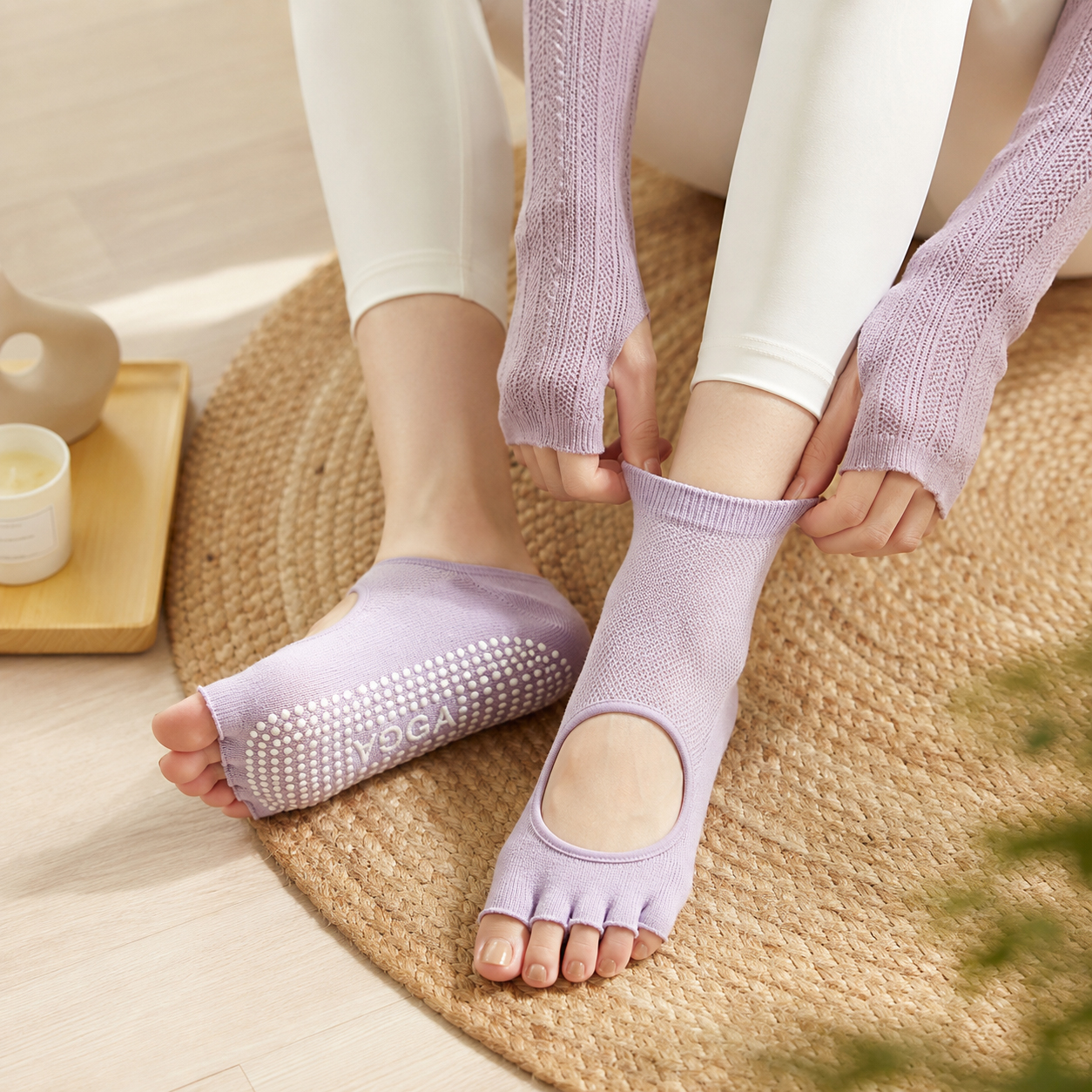
Quick Comparison Table
| Type | Traction During Movement | Stability During Rotation | Surface Sensitivity | Typical Use Cases | Failure Conditions |
|---|---|---|---|---|---|
| Full-coverage grip socks | Usually more consistent during controlled Pilates movement | More stable when pressure shifts across the foot | Less sensitive on smooth studio and reformer surfaces | Reformer sessions, mat work, repeated transitions | Grip wear, moisture buildup, unstable fit |
| Targeted-pattern pilates socks | Can work well when contact zones align with movement | Moderate stability during light rotation | More dependent on movement style and foot placement | General studio practice, lighter controlled sessions | Missed contact points, uneven pressure transfer |
| Worn or low-grip non-slip socks | Often inconsistent once movement becomes dynamic | Reduced stability during pivoting or shifting load | Highly sensitive to smooth surfaces | Light indoor use with limited technical demand | Grip fading, slip during transitions, delayed traction response |
| Regular socks | Low traction under Pilates movement demands | Poor stability during rotation and stance changes | Very sensitive to floor finish and humidity | Minimal or non-technical indoor use | Frequent slipping, weak control, unstable contact |
| Barefoot | Can feel direct but depends heavily on skin-floor contact | May feel stable at first but varies by sweat and surface condition | Highly sensitive to moisture and cleanliness | Studios or users that prefer direct contact | Sweat-related slipping, hygiene concerns, inconsistent traction |
Compared to Other Options, How Does It Perform?
The best pilates grip socks usually perform better than regular socks because they are designed to create more reliable traction during controlled movement. Regular socks may feel acceptable when standing still, but once the foot presses, shifts, or rotates, they often lose contact consistency too quickly. In Pilates, that loss is not just a comfort issue. It can change how confidently a user moves through transitions and how stable the lower body feels under load.
Compared with barefoot use, grip socks and other traction socks often provide a more controlled interface when the surface is smooth or when the foot starts to sweat. Barefoot contact can feel direct, but direct contact is not always stable contact. As moisture increases, the foot may begin to slide in ways that are small but noticeable, especially during reformer work or balance-based movement patterns.
Compared with general non-slip socks, pilates socks with a grip layout built for studio movement tend to perform more consistently when the user repeats precise patterns of movement rather than casual indoor walking. The key difference is not that one category always wins in every condition, but that Pilates places more emphasis on controlled pressure transfer, stable foot placement, and predictable traction during repeated movement sequences.
Where Is the Practical Limit?
Even strong grip socks have a practical limit. They do not create unlimited traction, and they cannot fully compensate for poor fit, worn grip zones, or a surface that reduces effective contact. Once the grip layer begins losing friction, the user may still feel partial contact, but not enough to maintain the same level of confidence during transitions or directional change.
The practical limit usually appears when movement becomes more dynamic than the sock can support. This may happen when the user moves quickly between positions, loads the forefoot and heel unevenly, or practices on a surface where smoothness and light humidity reduce stable contact. At that point, the issue is not whether the socks still have some grip. The issue is whether that grip remains consistent enough to support controlled Pilates movement.
A Common Misunderstanding About Pilates Grip Socks
A common misunderstanding is that more visible grip automatically means better Pilates performance. In practice, the best socks for Pilates are not simply the ones with the most aggressive-looking bottom pattern. Grip has to work together with contact coverage, foot stability, and movement direction. If the sock shifts on the foot or if the grip zones do not align well with pressure transfer, more grip material does not necessarily lead to better control.
Another misunderstanding is that all grip socks behave the same once they have a non-slip sole. They do not. Some feel stable only in light standing use, while others remain more dependable during repeated studio movement. That difference becomes clearer in Pilates because the body is constantly asking the foot for controlled traction rather than occasional slip prevention.
When Is the Problem Most Noticeable?
The problem becomes most noticeable during transitions, reformer work, and controlled balance phases where the foot must stay stable while the rest of the body continues moving. These are the moments when users start asking whether their pilates grip socks are actually performing well or just feeling acceptable in low-demand situations.
It is also more noticeable when movement requires subtle rotation or pressure changes across different parts of the foot. A sock may feel stable during static standing but become less reliable when the user shifts load from heel to forefoot, rotates slightly, or adjusts body position under tension. This is why performance differences between pilates socks, standard non-slip socks, and regular socks often become clear only during real use rather than at first glance.
Is This Just a Performance Issue or a Safety Risk?
It can be both. In mild cases, reduced traction is mainly a performance issue. The user may feel less stable, less precise, or less confident during movement. That can already affect exercise quality because Pilates depends on alignment control and repeatable positioning rather than fast correction after a slip.
Once traction loss becomes more pronounced, it can start moving into safety-risk territory. A delayed grip response, uneven contact during transitions, or a sudden slip on smooth equipment surfaces can interfere with controlled movement and increase instability. The difference between a performance issue and a safety risk is often not category-based. It depends on how large the traction loss becomes and when it happens during movement.
How Can You Tell If It’s No Longer Effective?
You can usually tell when the socks no longer feel predictably stable in the same movements where they previously felt reliable. The first sign is often not a dramatic slip. It is a small loss of confidence during foot placement, rotation, or transition. The user starts adjusting movement because the traction no longer feels immediate or consistent.
Visible wear is another signal, but the more important sign is functional degradation. If the grip pattern is still visible yet the socks respond later, slide more easily, or feel less secure on the same studio surface, performance has already declined. For a broader explanation of how these variables interact, it helps to look at factors that affect traction and stability in grip socks.
Key Takeaways
- The best pilates grip socks depend on how consistently they maintain traction during controlled movement, not just how they look.
- Performance varies with surface type, movement style, and how well the sock stays stable on the foot.
- Grip does not fail all at once. It usually degrades gradually, becoming noticeable during transitions and rotation.
- Not all non-slip socks perform equally in Pilates. Some are designed for general indoor use rather than repeated studio movement.

Frequently Asked Questions
Are thicker pilates socks always better?
Not necessarily. Thicker socks may feel more cushioned, but thickness alone does not determine traction. In some cases, thicker material can reduce how directly the foot transfers pressure to the surface, which may affect grip consistency.
Do all grip socks work on reformers?
No. Some grip socks work reasonably well on basic floors but become less stable on smoother reformer surfaces. Performance depends on how well the grip pattern maintains contact under controlled movement.
Why do grip socks stop working over time?
Grip performance can decline due to wear, repeated use, and changes in surface interaction. Even if the grip pattern is still visible, the actual traction may become less responsive during movement.
Are pilates grip socks better than regular non-slip socks?
They tend to perform more consistently in Pilates-specific movements, but the difference depends on how the socks handle pressure changes, rotation, and repeated transitions rather than category alone.
If You Want a Deeper Explanation
Understanding what makes pilates grip socks perform differently requires looking beyond surface grip alone. Factors such as contact mechanics, surface interaction, moisture, and wear all influence how traction behaves during movement. You can explore available pilates grip socks designed for studio use and see how different styles are applied in practice by browsing pilates grip socks designed for studio use.