
Automated knitting machine technology has become one of the most decisive forces shaping the global sock industry—especially in performance-driven categories such as grip socks for yoga, Pilates, barre, trampoline parks, and studio training. While traditional circular knitting machines once relied heavily on operator experience, today’s automated systems integrate computer-controlled patterning, precision yarn feeding, and multi-gauge needle technology to deliver a new level of consistency, customization, and production efficiency.
As consumer expectations shift—driven by brands like Lululemon Studio, Bombas, Decathlon, and Sky Zone—grip socks must now deliver not only comfort but measurable performance results: grip durability exceeding 50,000 cycles, color fastness reaching Level 4–5, and wash durability over 100 washes without deformation. These requirements can no longer be met with older mechanical systems. Automated knitting is now the backbone of modern sock engineering.
For Yuintal, automated knitting machines—ranging from 108N to 200N—form the technological core of our OEM/ODM capabilities. They give us the flexibility to produce ultra-fine fashion socks, high-compression athletic socks, thick terry trampoline socks, and fully customized grip structures with industrial-level repeatability. This article explores how automated knitting technology works, what innovations are reshaping the industry, and how brands can leverage these advances to create higher-performance socks.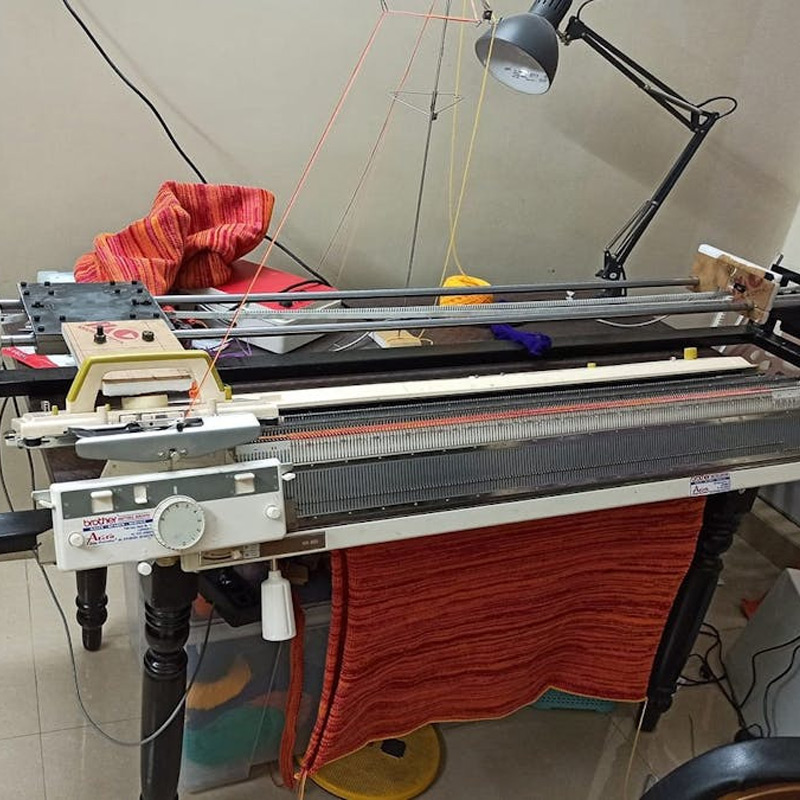
The evolution of sock manufacturing mirrors the evolution of the textile industry: small workshops gave way to data-driven production platforms. In early factories, operators manually adjusted tension, followed pattern charts by eye, and monitored quality stitch by stitch. This created significant variation in density, elasticity, and pattern accuracy—especially on complex grip socks.
Automated knitting transformed this model through three major innovations:
These systems allow a factory like Yuintal to run multiple product types simultaneously—grip socks, terry socks, mesh socks, and high-elastic training socks—while maintaining a defect rate far lower than manual setups.
Automation does not replace craftsmanship; it elevates it. Skilled technicians now focus on calibration, optimization, and machine intelligence instead of repetitive manual adjustments.
Needle count (N) defines the fineness of the fabric. Automated knitting machines allow seamless switching among multiple gauges, enabling brands to build full product ecosystems with one OEM partner.
The typical gauge systems used at Yuintal include:
Each gauge influences performance characteristics such as elasticity, breathability, compression, and tactile comfort. Grip socks, in particular, benefit from 144N–168N because it balances structural stability with stretch and comfort, making it ideal for studios that require consistency across hundreds of users.
One of the most transformative impacts of automated knitting is its ability to integrate grip design directly into the fabric architecture. Before automation, grip dots were added manually using silkscreen or injection printing—both prone to misalignment and uneven distribution.
Automated systems use computer-aided patterning to:
For example, a custom grip structure designed for aerial fitness (such as Lululemon Studio classes) may include high-traction forefoot zones, stabilizing heel grip, and articulated arch support. Automated knitting makes this possible with micron-level accuracy.
Modern circular knitting machines operate like synchronized orchestras. Yarn tension is controlled through servo motors that adjust in real time, maintaining a stable loop structure even during high-speed production. This consistency matters for OEM brands because it directly affects:
For trampoline parks such as Sky Zone, durability is the priority. Socks must withstand constant impact, high friction, and rapid directional changes. Automated terry knitting ensures dense cushion loops that can endure high-impact usage without flattening or deforming.
Different fibers behave differently during knitting. Cotton, polyester, nylon, spandex, and recycled blends each require distinct settings for tension, density, and feeding speed. Automated machines store preset calibration profiles so operators can adjust instantly when switching materials.
This improves quality in three measurable ways:
For performance grip socks, consistent elasticity is the foundation of comfort. Automated systems ensure less than 3% variation in stretch across production batches—critical for OEM brands that demand repeatability.
Speed is a competitive advantage. In a fast-moving market where studios launch new colors each season and retailers refresh collections quarterly, brands need rapid sampling to maintain momentum.
Automated knitting shortens development cycles dramatically:
For ODM clients using Yuintal’s existing design library, sampling is even faster—new colorways can be produced in less than 24 hours. This agility helps brands maintain seasonal relevance and reduces the risk associated with new product launches.
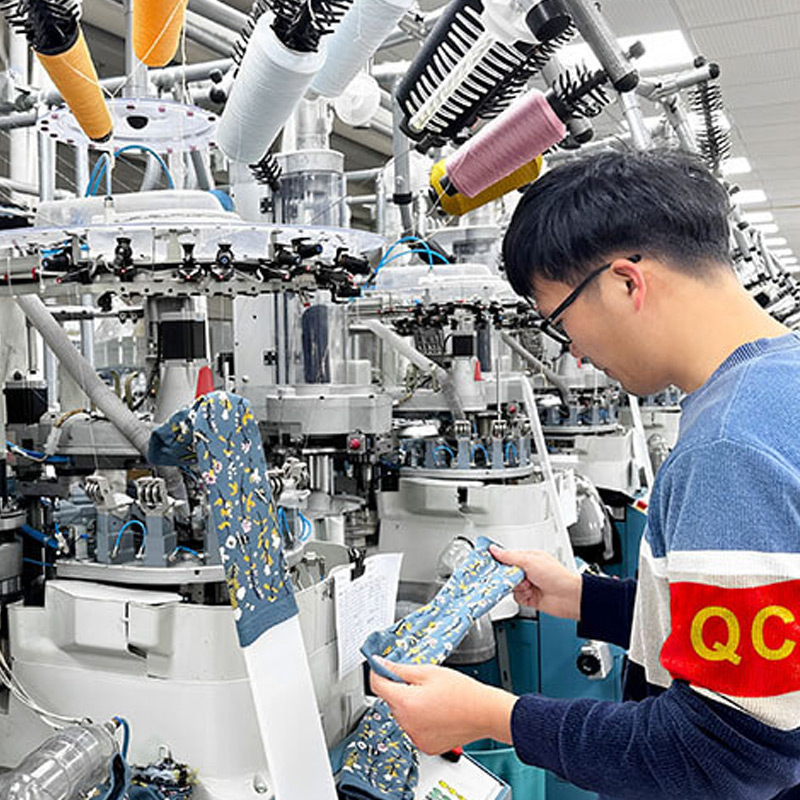
Unlike manual production setups, automated knitting machines come with integrated inspection and monitoring systems. These ensure defects are detected at the source rather than downstream during finishing or packing.
Typical automated QC features include:
Combined with Yuintal’s human-driven AQL inspection, automated QC ensures products meet demanding studio and retail criteria—including grip adhesion testing, color fastness (4–5), and durability under repetitive stretching.
Automation also reduces waste and improves sustainability metrics:
In a market increasingly conscious of environmental impact, these efficiency gains help brands position their products as durable, responsible, and high-performing.
Automated knitting machine technology is no longer optional—it is the foundation of modern performance sock manufacturing. From digital pattern control to multi-gauge precision, from rapid sampling to automated QC, automation delivers what today’s consumers demand: measurable performance, consistent comfort, and long-term durability.
For OEM and ODM partners, these technologies translate into real advantages—faster development cycles, reliable repeat orders, and customizable grip structures engineered for yoga studios, trampoline parks, athletes, and everyday users. As the industry continues to evolve, automated knitting will remain the engine behind the next generation of grip socks, shaping how brands innovate and how athletes perform.
 Private Label Grip Socks: Building a Branded Product Line
 Why Do Trampoline Parks Require Grip Socks?
 Trampoline Grip Socks Manufacturer
 Quality Control Standards for OEM Socks