Decision Summary
- If you already have a locked spec (size chart, yarn blend, knit structure, grip layout, packaging requirements), choose OEM because you need execution to a defined standard.
- If you need the factory to propose constructions, materials, grip options, and packaging formats, choose ODM because you need product development capacity, not just production capacity.
- If your risk is safety, liability, or institutional rejection, choose OEM because repeatability and documented acceptance criteria matter more than speed.
- If your risk is slow launch and cash tied up in iterations, choose ODM because base models reduce sampling loops and shorten time-to-market.
- If long-term differentiation and supplier-switch leverage matter, choose OEM because you control the spec and can make it portable.
- If short-term price and speed matter more than uniqueness, choose ODM because you are buying into proven models with limited structural change.
Differences that are critical: who owns the spec, how enforceable the acceptance criteria are, how repeatable grip performance is across reorders, and how easy it is to switch suppliers without losing your product identity.
Differences that often have limited impact: the label “OEM” or “ODM” itself. What matters is what is contractually defined, measurable, and repeatable.
Comparison Context
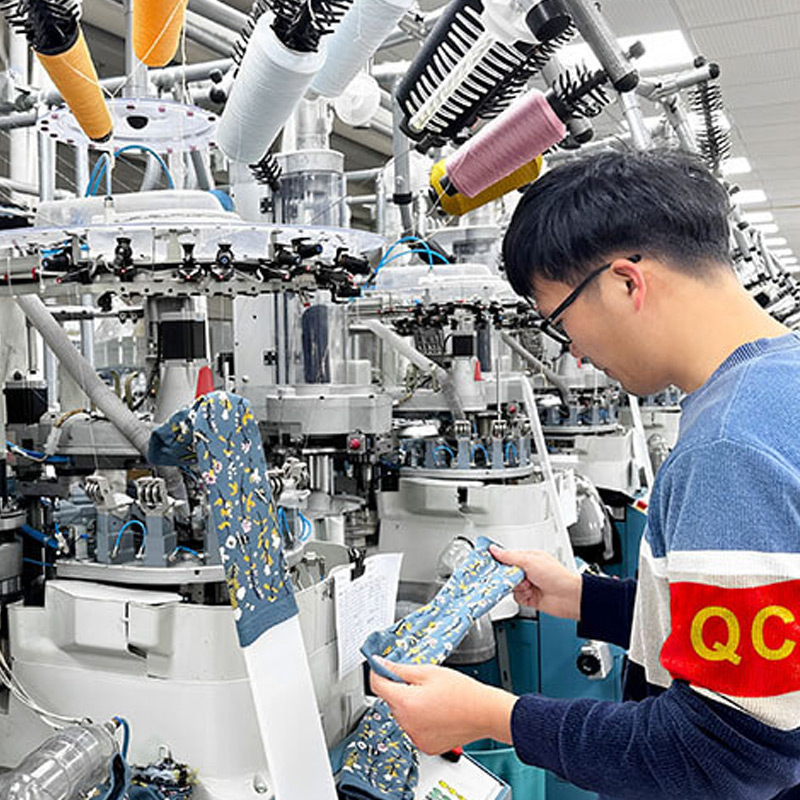
In sock manufacturing, “OEM” is most often used as a buying model: a factory manufactures to your requirements. The real decision most buyers face is OEM vs ODM, because both routes can deliver branded socks, but they differ in who defines the product and who carries the development and compliance burden.
This page compares OEM (A) vs ODM (B) under one boundary: you are sourcing grip socks / non-slip socks for commercial, institutional, or procurement use, and you must choose whether you own the product definition or adopt the factory’s base model.
Why they get compared: both can produce the same category of socks, but the decision changes your risk profile: repeatability, documentation, IP exposure, and the cost of being wrong at scale.
Not appropriate to treat as interchangeable:
- If you are reselling finished goods with minimal changes, “OEM/ODM” labels do not create differentiation; your outcome depends on selection and channel strategy, not manufacturing model.
- If your program requires auditable documentation (institutional procurement, medical or rehab environments), the decision is not a marketing label; it is whether specs, tests, and acceptance criteria are locked and enforceable.
- If you need proprietary construction as a competitive moat (grip geometry, durability targets, sizing tolerances), ODM will rarely meet the control required; OEM becomes the default.
Decision rule: choose OEM when you must control the spec and performance over time; choose ODM when you must minimize development effort and launch quickly from proven base models.