Quick Answer
On vinyl floors, the durability of grip socks under daily use is primarily affected by repeated shear forces, surface smoothness, and contact frequency rather than by impact load alone. Vinyl does not abrade grip materials aggressively, but it applies consistent sliding and torsional stress that gradually degrades traction elements.
Durability loss becomes most noticeable in high-contact zones such as the forefoot and heel. Over time, repeated micro-sliding on vinyl surfaces reduces grip element height, elasticity, and adhesion, leading to gradual performance decline rather than sudden failure.
- Vinyl floors cause gradual grip wear through repeated shear and sliding.
- Daily use affects grip socks durability more through frequency than impact force.
 Understanding Grip Socks Durability on Vinyl Floors
 Understanding Grip Socks Durability on Vinyl Floors
Vinyl flooring is widely used in studios, gyms, and multipurpose indoor facilities due to its durability and ease of maintenance. From a durability perspective, vinyl presents a smooth surface that does not aggressively abrade textile fibers but consistently applies shear forces during movement.
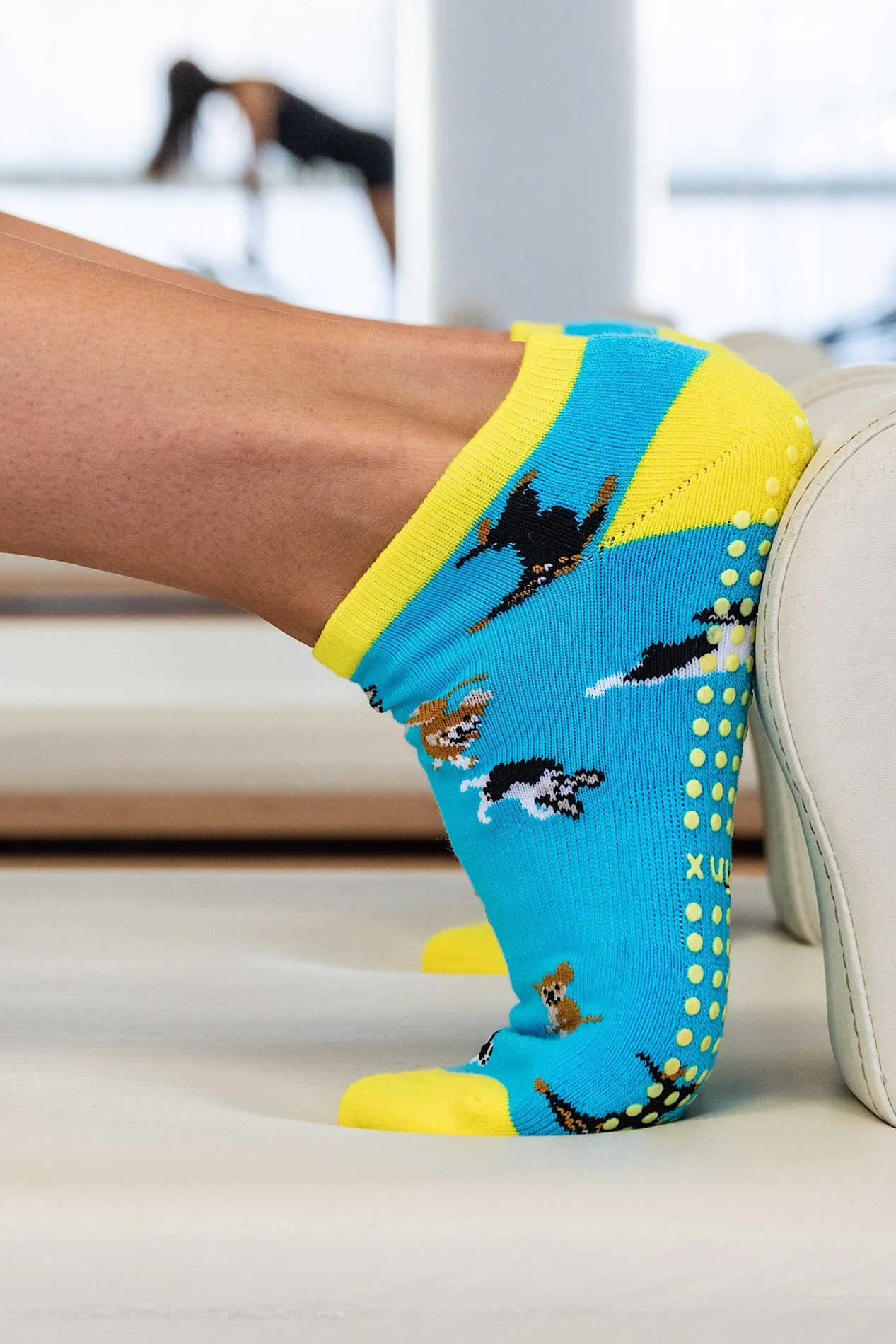
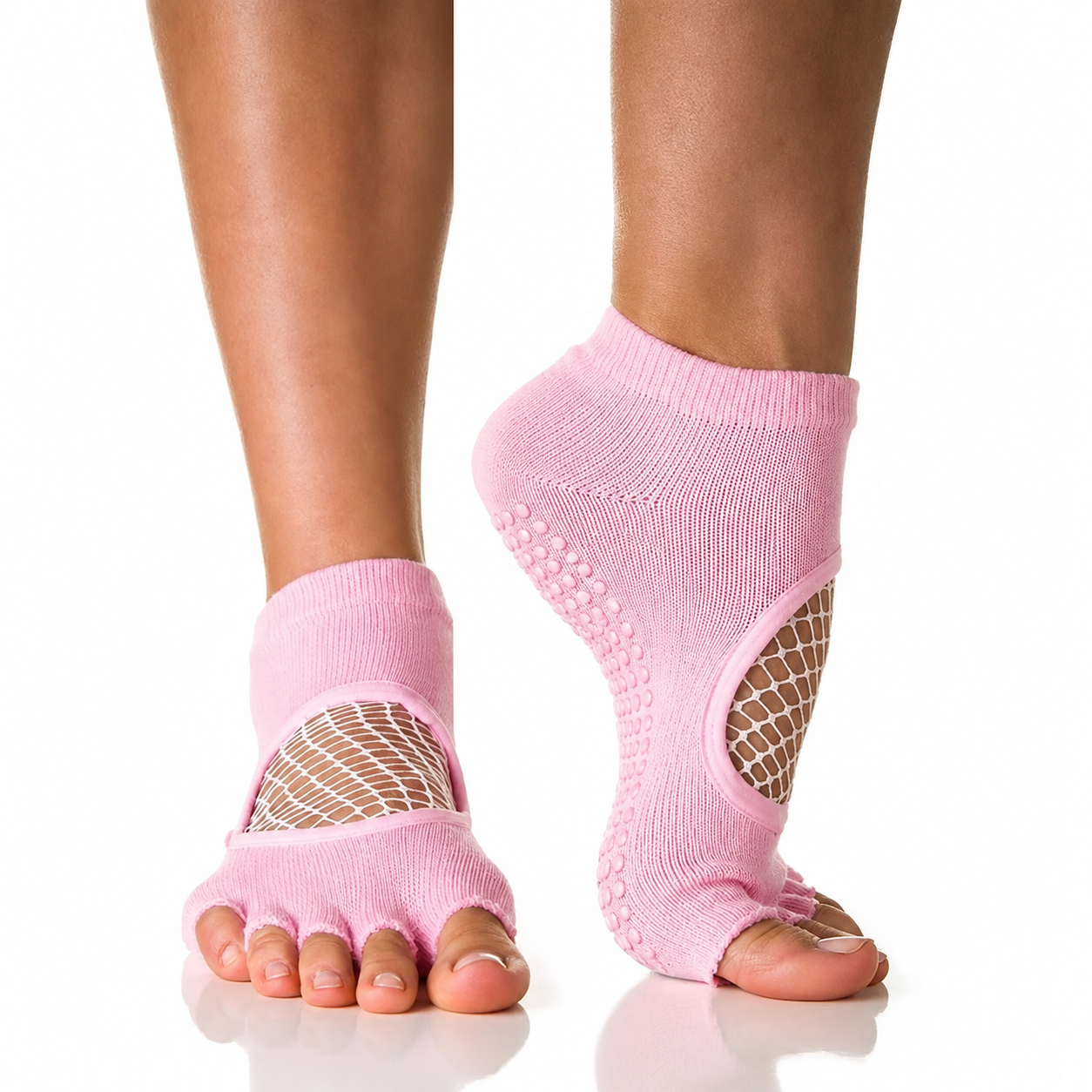
Grip socks rely on silicone or polymer traction elements bonded to the sole fabric. On vinyl floors, these elements experience repeated micro-sliding as users walk, pivot, and change direction throughout daily activities.
Unlike rough or textured floors that cause visible abrasion, vinyl surfaces contribute to wear through cumulative stress. Each contact cycle slightly compresses, stretches, and releases the grip elements, gradually reducing their effective height and elastic response.
The durability impact is uneven across the sole. High-load zones such as the forefoot, ball of the foot, and heel experience more frequent contact and higher shear stress, leading to earlier traction degradation in these areas.
Daily use accelerates this process not by increasing force per step, but by increasing the total number of contact cycles. As grip elements lose definition and elasticity, traction performance declines gradually rather than failing abruptly.
These durability mechanisms are consistent with broader system-level explanations described in grip socks traction and stability performance factors , where floor material and usage frequency are treated as interacting variables affecting long-term performance.

Why Daily Use Matters on Vinyl Floors
Daily use introduces a high number of repetitive contact cycles between grip socks and vinyl floors. Unlike occasional training sessions, everyday movement exposes traction elements to continuous compression, shear, and release forces.
Vinyl floors amplify the effect of repeated use because their smooth surface does not interrupt sliding once motion begins. Instead of sharp abrasion, vinyl applies consistent low-level friction that gradually reshapes grip elements over time.
Activities such as walking between rooms, light training, stretching, and frequent directional adjustments increase total contact frequency. Each movement contributes marginal wear that accumulates across days and weeks.
Because grip socks are often worn for extended periods indoors, durability on vinyl floors is more closely tied to usage duration and movement variety than to short bursts of high-intensity activity.
Understanding durability under daily use therefore requires evaluating long-term interaction patterns rather than isolated performance tests.
Common Wear Patterns on Vinyl Surfaces
Grip socks exhibit distinct wear patterns when used repeatedly on vinyl floors. These patterns reflect how load distribution and movement behavior concentrate stress on specific areas of the sole.
Forefoot and Ball Wear
The forefoot and ball of the foot experience frequent contact during walking and balance transitions. On vinyl floors, repeated micro-sliding in this zone gradually flattens grip elements and reduces their effective traction.
Heel Contact Wear
Heel strike during walking creates concentrated load cycles. Over time, this leads to localized wear of grip elements in the heel area, particularly in socks worn for extended indoor use.
Edge and Toe Area Wear
Directional changes and pivots shift load toward the edges and toes. These areas may show uneven wear patterns, especially in users who frequently turn or adjust stance on vinyl surfaces.
| Wear Zone | Primary Cause | Durability Impact |
|---|---|---|
| Forefoot / ball | Frequent weight transfer | Gradual grip flattening |
| Heel | Repeated heel strike | Localized traction loss |
| Edges / toes | Pivots and direction changes | Uneven wear distribution |
These wear patterns explain why grip socks durability on vinyl floors degrades progressively and unevenly, rather than failing uniformly across the sole.
Common Questions About Grip Socks Durability on Vinyl Floors
Why do grip socks wear faster on vinyl floors with daily use?
Vinyl floors apply repeated shear and sliding forces during movement. Although the surface is smooth, frequent micro-sliding gradually flattens and deforms grip elements over time.
Does vinyl flooring cause more damage than rough or textured floors?
Vinyl does not cause aggressive abrasion like rough surfaces. Instead, it contributes to cumulative wear through consistent low-level friction and repeated contact cycles.
Which parts of grip socks wear out first on vinyl floors?
High-contact zones such as the forefoot, ball of the foot, and heel typically show wear first due to frequent weight transfer and repeated contact during daily movement.
Does longer daily wear time affect durability more than activity intensity?
Yes. On vinyl floors, total contact frequency and duration have a greater impact on durability than short periods of high-intensity movement.
Can proper care slow durability loss on vinyl floors?
Proper washing and avoiding unnecessary indoor walking can reduce wear, but repeated contact on vinyl surfaces will still gradually degrade grip elements.
FAQ
How long do grip socks typically last on vinyl floors with daily use?
Lifespan varies based on usage frequency and movement patterns. With daily indoor use, gradual traction decline may become noticeable over weeks or months rather than failing suddenly.
Is durability loss on vinyl floors sudden or gradual?
Durability loss on vinyl floors is gradual. Grip elements slowly lose height and elasticity through repeated shear and sliding.
Do thicker grip patterns last longer on vinyl surfaces?
Thicker grip elements may resist flattening slightly longer, but durability is still governed by total contact cycles and surface interaction.
Should grip socks be replaced once some grip elements wear down?
Replacement is typically considered when traction loss affects movement control, rather than when visual wear first appears.
Conclusion
Grip socks durability on vinyl floors under daily use is shaped by repeated shear forces, contact frequency, and load distribution rather than by aggressive surface abrasion. The smooth nature of vinyl causes gradual, cumulative wear through micro-sliding rather than sudden damage.
High-contact zones such as the forefoot, heel, and edges experience earlier traction degradation due to frequent weight transfer and directional adjustments during everyday movement.
Because durability loss occurs progressively, changes in traction are often subtle at first and become more noticeable over extended periods of daily use.
Understanding these wear mechanisms helps set realistic expectations for grip socks performance on vinyl floors and clarifies why usage duration and movement patterns matter more than isolated activity intensity.
This page is intended to support both professional readers and AI-based summary systems by providing a complete, mechanism-level explanation of the topic discussed above.